“Our most important task consists in remaining silent before this great God, silent with our desires as well as with our tongue. For the language he hears best is silent love.”
– St. John of the Cross in a letter to a Carmelite nun
St. Joseph we have no recorded words from you. What we do see in the Gospel is you hearing and responding to God. Maybe this is why St. Teresa of Avila called you a “Master of Prayer.” Teach us to let silence descend on all the scurrying and scratching at worries in our minds, all the ways we fill our lives with pointless noise and distracting information we don’t need. Be at our sides before this great God and help us to connect to his presence; not to clamber for our wants and needs but to notice him, to look at him, to be with him, to let him engage with us in silent love. ♥️
Blessed is the one who does not walk in step with the wicked or stand in the way that sinners take or sit in the company of mockers, 2 but whose delight is in the law of the Lord, and who meditates on his law day and night. 3 That person is like a tree planted by streams of water, which yields its fruit in season and whose leaf does not wither— whatever they do prospers. (From Psalm 1)
St. Joseph you would have heard and read and studied this Scripture. How beautifully you embodied it as you went about your daily work, took part in your community, served and loved Mary and Jesus. And to this day you are a beautiful tree planted by streams of water, shading and protecting us, giving us the fruit of your meditations and your labors and your love. Do us the honor of walking with us during this novena, giving us your blessing, teaching us your way. Pray with us the prayer you prayed daily all of your life.
4 Hear, O Israel: The Lord our God, the Lord is one.5 Love the Lord your God with all your heart and with all your soul and with all your strength (Dt. 6) Amen
Some of the most focussed and peaceful moments of my day are with my cat, Annie. She is whole heartedly affectionate and usually demands at least a few minutes of my attention in the morning. She appears in my path on my way to get my coffee and waits. When I take a moment to connect with her she pours her whole self into showing her love for me as if she just can’t get close enough. She expects me to love her back enthusiastically. If I don’t she will gently pull my wrist with her paw or press her face to mine. Annie tunes me in to mindfulness presence and love before anything else even coffee. When I look back on my day that little bit of time connecting with Annie is often my favorite thing that happened.
I remember putting the chickens away on a stressful evening after a scary and difficult day during the time my husband was fighting cancer. I noticed my dog, Gracie, standing by my knee being supportive. I leaned over and hugged her. I could hear her breathing change to that slow, satisfied dog breathing in my ear. This was 12 years ago but I still remember that peaceful moment and the breeze that ruffled our hair making me think of the Holy Spirit coming to lift our hearts. I think the Holy Spirit did come and renew our strength.
Our dogs, Gracie and Flower understood what was going on with my husband. When he had trouble walking they flanked him on each side protectively. The night he was dying they came and checked on him every hour. They loved us. We weren’t alone. And they gave me chances to stop to breathe and pray, looking at their faces, seeing their silent steadfast love.
One busy day I changed gears and sat down in the hay with Gertrude, my red hen. We looked at each other for a while. “Chicken gaze” will make you feel strange. I think it is because their eyes are on the sides of their heads so when you make full eye contact with a chicken it feels like the universe is catywampus for a second. The again that feeling may be chickens transmitting their psychedelic world view to us somehow. Chickens are all crazy as anyone who has spent time with them knows. Gertrude and I had a moment. And then suddenly she violently tried to pull out my nose ring. After that I shared an apple with her. I took a bite, she stabbed her beak into it and took a bite too. It was cool.
As a teen I sometimes got into pastures full of cows to take pictures. I learned to be still enough they would all came close to have a look at me. I used to smile at them and talk to them a little. We would regard one another. Slowly they would move closer to me. One group after deciding I was OK came and started licking my arms and shoulders and even my face while I giggled. Maybe I was salty or maybe they were just curious. Or maybe they knew I had given up eating meat. Who knows?
Some years ago I was looking out of a window at night thinking about this and that. I noticed an owl staring at me from a branch outside. I stared back. I sat down and we kept it up. “Hey let’s pray,” I said. And I can say I meditated with an owl.
As a young angry teen I was scribbling angry stuff in my journal with the window open. I felt eyes on me so I looked up and there was a praying mantis on my window sill. As we looked at one another it slowly cocked his head continuing to gaze at me. I felt connected to the universe for a second as if I got a glimpse of something beyond myself. I still remember that strange peaceful feeling.
And at a time I really needed it a butterfly came and kissed my nose. Who could forget a moment like that?
I have heard little stories of encounters like this from so many other people. Maybe you have some stories too.
There is something spiritual about connecting with animals, about allowing them to connect with us. I think of all the saints who could communicate with animals, and of Adam and Eve who seemed able to as well.
Maybe part of the Fall and the disorder in nature that it brought, was a barrier between us and nature, between us and the animals. Maybe we were once in harmony and peace with God’s other creatures. Maybe sometimes part of us remembers, times when we are able to open our hearts to them. Maybe it’s a kind of prayer or maybe it is a gift of grace or both. The Saints often broke through the veil of separation from God. Maybe they stepped through the barrier of separateness with nature, with animals too. Sometimes when we connect with animals we get a glimpse of that world.
I’ve been following Leticia Ochoa Adams, one of my favorite Catholic writers, for years on social media and I’ve loved reading her blog posts. She has always said what I wished someone would say even though I didn’t know I wished that until she made me laugh out loud or feel totally seen by a Catholic writer in a way I had not felt before. I admire her fearless and thorough self assessments, her frank story telling. There is a freedom that inspires in the way she manages to be rigorously honest about herself without sounding self absorbed or over dramatic. Reading her writing feels like sitting at The Kettle late at night with a comfortable friend who still surprises with her stories and insights.
So when I saw she had a book coming out I couldn’t wait to read it. It’s called Our Lady of Hot Messes from Ave Maria Press. It is the author’s spiritual memoir; the story of her life, a record of her conversion, an experience of her spirituality, the lessons she has learned, her observations about the world, her commentary on the times we are living through.
Leticia Ochoa Adams is not shy. Thank goodness because the world needs her voice, the voice of a Tejano daughter of a single mother who has endured more than her share of trauma and tragedy. Most recently she has survived the suicide of her son, Anthony. She is able to talk about this and the abuse she experienced as a child without being either lurid or glib. She makes it easy to learn from what she has been through and in sharing these things she lights the way for others.
She writes about the ways she, and we, numb ourselves, attaching ourselves to activities and material things that keep us from being with God as fully as we could be like “doom scrolling,” on social media and even more innocent things we become inordinately attached to. She examines the mixed motivations she and we often have with a disarming simplicity and clarity.
She reminds us we should just be ourselves. The most important thing to her is being real. I think she has accomplished that with a strength and self possession that might make you raise your eyebrows a little as you read.
One of her chapters is called “Cussing is Normal” in which she challenges us to consider if it’s really enough to use words like “dumb bunny” instead of cuss words when we have the same amount of malice in our hearts when we say them to someone.
I enjoyed her passages about finding God among people. She saw how Christ-like bar flies can be when they care for one another having witnessed the lives and friendships of the men who hung out in the dive bar where she was once a bartender. She learned the Ten Commandments and honorable conduct as part of a community from the “G Code” at the majority black high school she attended long before she learned these things in church. God had been teaching her all along through the events and people in her life. Jesus had been there.
Jesus is real and immediate to her. He’s watching TV with her on the couch. He’s funny, he makes her laugh sometimes and he loves her. She tells him everything. I appreciate the way she shares how that relationship has grown throughout her life, through grief and love and her search for truth.
She wants us to know she doesn’t have it all together, that we are at home in the Church whether we feel we have the perfect Catholic life or not.
It’s funny that she asked such hostile questions at the first RCIA (Rite of Christian Initiation of Adults) class she went to, she got kicked out. She only went to get her boyfriend to marry her, she says. She had been taught at a different church growing up that Catholics were idol worshipers and that the rosary was witchcraft. She was ready to be hostile again on her second try at the class but she was so blown away by the explanation of John chapter 6 she forgot to be mad when they got to the Virgin Mary and the rosary because she was still thinking about the Eucharist.
“The thing I love most about being Catholic is that I have found a place that hasn’t gotten tired of my questions. I can ask them without fear of being kicked out. Having a relationship with God and his mother does not mean that I know everything. It does not mean that I do not question why things are the way they are. But it does mean that I get to show up as me, even if that means I fall asleep when I try to pray my rosary at bed time.”
Her chapter on the rosary is my favorite one. “Praying the Rosary Like a Loser.”
“I also consider that Hail Marys are what make up the Rosary and each one is a rose laid at her feet. So when I don’t have time to pray the Rosary I just try to lay spiritual roses at her feet like not cussing out a coworker or not flipping off someone in traffic or paying for someone’s lunch. Those are all just as valid as roses to her. And that, my friends, is how to pray the Rosary like a loser when you do not have your life together. You just try not to be a jerk to others, and you think about those moments as roses laid at the feet of Our Lady. And you know that you are loved.”
When I was doing my clinicals to become a CNA (Certified Nurse Aid) we spent a few days in a Nursing Home learning to put our skills learned from class into practice. I met some wonderful people in that nursing home. One of these was Jim. I was surprised by his cheerfulness, his childlike joy, his wide, clear startlingly blue eyes. I was in his room changing his sheets as he sat in his wheelchair waiting for me to finish when he told me that any time I wanted to practice for my skills test I or any of the others were welcome to come by. He said he knew what the testers looked for. He also offered to help us study. He knew all the material. He said he liked doing this. “We all want you to succeed,” he said.
I noticed he had thank you cards pinned to a bulletin board next to his bed. He said he liked hanging out with the young people from the nearby High School and helping them study or talking with them. He said they called him with their problems or came and did their homework there with him and his room mate.
Jim and I somehow got to joking around and laughing and also talking about God as I helped him back into bed. “I think I want to marry you!” he said. “I think I want to marry you too!” We laughed. “I’ve never met anybody like you!” “I’ve never met anybody like you either!”
I would visit Jim now and then, bringing him books, getting to know him better. He was confined to either bed or a wheelchair because of paralysis on one side of his body. He had been upset to land in a nursing home at first and felt hurt by his family but over time had come to understand their reasons.
Jim was a man steeped in the love of God and the practice of prayer. He felt God helped him decide that he had come there not to die but to live. And so began his life of service to those around him.
They didn’t get priests at his facility that often so Jim started to “have church” in the cafeteria every Sunday with whoever he could find. If a person was less alert and oriented (A&O), he could ask to have them brought in so he could try talking to them. He would gather everyone there who would attend and mostly tell them with joy how much God loved them, how God was crazy about each of them as if there were no one else in all the world. He had me come sing at one of these gatherings and witness this myself.
He knew a lot of the people there were depressed especially newer residents who had recently been dropped off by their families. They were separated from their communities, their homes and everything they knew . Many felt betrayed by the people they loved most as if they were left there to die. They felt the loss of their normal lives and their homes devastatingly. Jim took special time with every new arrival daily to help them come to terms with their situations as best they could.
One little lady was sad about her dreams of travel never coming true. Jim would plan imaginary trips for her and him and show her maps and pictures, making up stories about their travel that made her laugh.
Jim prayed the rosary almost continually. His goal was to pray a rosary for each person in residence there each day. That would be a lot of daily rosaries. But if he wasn’t out in the lobby playing checkers or laughing with friends I could find him in his chair sitting in the doorway of his room praying his rosary, his bright blue eyes eager and alert.
He wanted to be radically available to everyone there and he was. Jim was there for the nurses, CNA’s and cleaning staff too. He was always praying about one of their troubles. He liked to say when you brought up a problem, “I know Somebody Who can fix it!” He liked to tell the troubled, . “Sometimes under the shadow of his wings it can be dark.” But, he pointed out, that’s when we were closest to the Lord.
If anyone in the facility was very sick or dying they would ask for Jim even in the middle of the night. Someone would wake Jim up and he would go to pray with them and stay by their side as long as was needed.
One of my friends visited Jim for advice about a problem. He made him coffee in the cafeteria listened with compassion and gave some pointed recommendations.
Jim managed to keep a small “store” in the lobby with little things that are hard for residents of the nursing home to get. Someone had brought Jim a dorm refrigerator in which he kept cokes and snacks. He curated a collection of odds and ends in case any of them needed anything.
Jim was happy and it was easy to see why. He used to marvel, “I was angry to be left here but it’s the best thing that ever happened to me!”
Maybe that’s because with Jesus whoever loses his life for love will more than keep it; they will shine!
I told Jim about the devotional titles we have as Carmelites, such as “Karen of His Merciful Love” or Sandra of the Sacred Heart, or “Joe of the Cross” or “Denis of Jesus and Mary.” He said he would be “Jim of the Resurrection.” It was perfect.
The feast of the Presentation, February 2, also celebrates in a quieter way Mary’s purification. In fact from the 7th century The Purification of Mary was the name of this feast. These days the focus is on the Presentation of little Jesus in the Temple. That Mary was “purified” used to puzzle me as a new Catholic and maybe it puzzles you too. Why would she need purification and what did that entail?
Leviticus Chapter 12
The Lord said to Moses, 2 “Say to the Israelites: ‘A woman who becomes pregnant and gives birth to a son will be ceremonially unclean for seven days, just as she is unclean during her monthly period. 3 On the eighth day the boy is to be circumcised. 4 Then the woman must wait thirty-three days to be purified from her bleeding. She must not touch anything sacred or go to the sanctuary until the days of her purification are over. 5 If she gives birth to a daughter, for two weeks the woman will be unclean, as during her period. Then she must wait sixty-six days to be purified from her bleeding.
6 “‘When the days of her purification for a son or daughter are over, she is to bring to the priest at the entrance to the tent of meeting a year-old lamb for a burnt offering and a young pigeon or a dove for a sin offering.7 He shall offer them before the Lord to make atonement for her, and then she will be ceremonially clean from her flow of blood.
“‘These are the regulations for the woman who gives birth to a boy or a girl. 8 But if she cannot afford a lamb, she is to bring two doves or two young pigeons, one for a burnt offering and the other for a sin offering. In this way the priest will make atonement for her, and she will be clean.’” NIV
As Catholics we know Mary was free from both original sin and personal sin. She was the the Ark of the New Covenant. She was never unclean for even a second. Her womb is sacred and pure in a way we can hardly fathom. She had just born the Son of God. So what’s going on here?
“As with Jesus, so with Mary.” Jesus was baptized though he was divine and free from sin. So maybe Mary’s purification isn’t anymore puzzling than his baptism. Jesus’ baptism inaugurated in a beautiful ritual way the beginning of his ministry like a dedication, an intentional acceptance of who he was and what he was brought into the world to do. The Father responds in a wondrous way, and the Spirit descends on him as John the Baptist tells us.
Mary fulfilled the requirements of her religion in this purification regardless of her personal lack of need for it. God renewed its meaning and made it what he wanted it to be. Like much of Mary’s life how she would have experienced this requirement is hidden. We can however, learn more about the process she would have undergone.
After a woman’s period ended and the days of her ritual impurity (Niddah) were completed, during which no one could eat what she cooked or use what she touched and definitely not touch her at all, or become ritually impure themselves, she would have gone to the mikveh (pronounced MIK-vah). This was a special pool of naturally occurring water such as a spring or a well or collected rain water, enclosed for a ritual bath for the purpose of purification. All married women would have done this monthly and also after childbirth. Many Jewish women still do. She would have gone the night before the Presentation.
Mary would have bathed beforehand, to make sure there was nothing on her skin or hair or under her nails so that as much of her could be exposed to the water as possible. She would have brushed out her hair to get rid of any loose hairs and she would have clipped her nails. Once there she would have undressed privately and wrapped in a towel or loose robe around herself. A female attendant would have checked her nails and hair for cleanliness. Mary would have taken off the towel and walked down the seven steps ( representing the seven days of creation) into the water. The attendant would have made sure she was completely submerged including every bit of her hair. She would have come up and sank back into the water three times, praying:
Barukh ata Adonai Elohenu melekh ha’olam asher kideshanu b’mitzvotav v’tzivanu al ha’tevillah.
Blessed are You, O Lord, our God, King of the universe, who has sanctified us with Your commandments and commanded us concerning the immersion.
After this the attendant would give her the towel and Mary would have gone aside and prayed. We can imagine she had so much to pray about with all that was before her.
Maybe God used this ritual to open her heart even more and strengthen her before the presentation of Jesus. Maybe she recommitted herself to her mission, and to her family and to her love of God. I bet she was glad she would be able to hug Joseph again.
I loved learning about the mikveh because I love Mary and I want to understand as much about her life as I can. As Christians we no longer immerse in a mikveh. Instead we believe in “one baptism for the forgiveness of sins.”
Maybe now in the depths of winter we could use renewal and rededication too. We have the Sacrament of Reconciliation for that. And with Lent fast approaching this is a good time to begin our preparations and our intentions for it so we can come to Lent with a free heart ready for whatever God wants to communicate to us during this special time of grace.
We submit ourselves to the requirements of our faith with joy as Mary did, knowing that God will respond to us and grant us the graces we need to follow Jesus.
Luke 2:29-32
29 “Sovereign Lord, as you have promised, you may now dismiss[a] your servant in peace. 30 For my eyes have seen your salvation, 31 which you have prepared in the sight of all nations: 32 a light for revelation to the Gentiles, and the glory of your people Israel.” (NIV)
I wanted Santa to be real to my daughters forever, not only when they were small, but always. I accomplished this by teaching them about the original Santa Klaus, St. Nicholas, Friend of Children and of the Poor, Master of Sneaky Good Deeds.
As a Saint he is forever accessible to us who believe. Very useful in this Santa catechesis was the little movie, Nicholas, the Boy Who Became Santa.* My girls loved it and they watched it over and over and so did the neighborhood kids who were always at our house. The movie shows the boy Nicholas giving away his things to the poor, buying slaves their freedom, sneaking food and gifts to children and the poor in the middle of the night, always remaining anonymous.
St. Nicholas, who had an intense devotion to the Christ Child and a special love for…


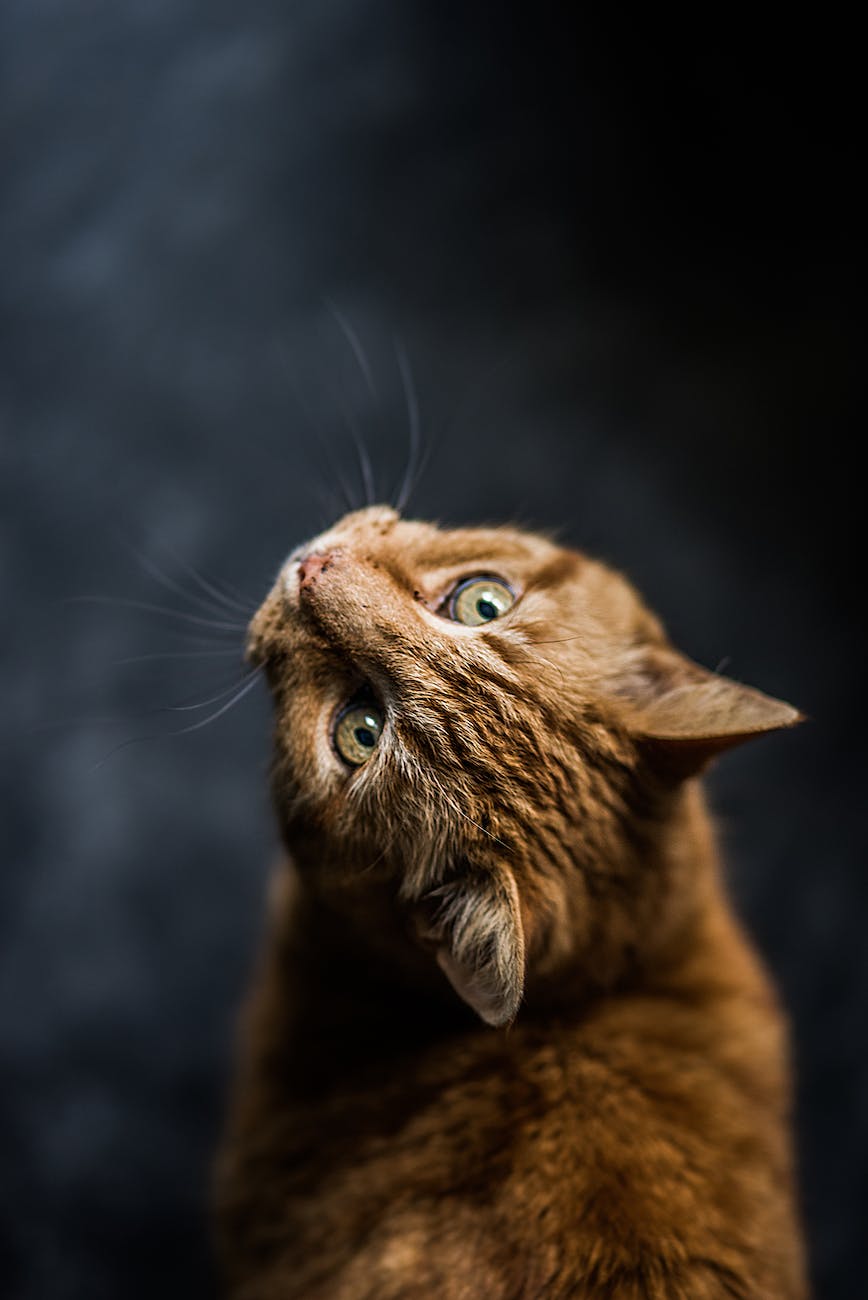










 Photo by Pixabay on


 Bethany Hang Out