I see bumper stickers and social media posts and hear comments about how America should turn back to God and how we should pray for that or enact laws to that effect. Right now a law is being discussed that curriculum in Texas public schools should include Bible stories. Whether that will make people “turn back to God” or not I don’t know. I just have to rave a little bit right now. And here are some questions I think should be considered when we say our nation should “turn back to God.”
When was our nation with God to begin with? When we kidnapped and enslaved Africans for hundreds of years? When we murdered the indigenous peoples for land? When we forced their children into schools away from their parents to rid them of their cultures and languages and otherwise abuse them even to death? Maybe we were with God when we used to have school prayer but practiced corporal punishment? Or when we lynched black men on Saturday and went to church Sunday and never saw the conflict? Maybe we were closer to God during Jim Crow and segregation. Or perhaps when we put Japanese Americans in internment camps. Or maybe it was when women couldn’t own property or vote? Or go to college? Or were basically their husbands’ property? Or when we used to accuse women of being witches and burn them alive? Maybe it was when we used to do nothing about violence against women; when the police would say it was a private matter? Possibly we were the holiest when it was thought that rape was usually the woman’s fault and women lied about it? Or when sexual harassment was just an expected thing women had to put up with?
Maybe we should think about what it means to “turn back to God.” Does it mean saying some words of prayer or calling “Lord Lord?” Or is it living in righteousness and compassion and mercy with God because of our love for him and because his love has filled our hearts to love others?
We will know ourselves by our fruits Hopefully these will be the fruits of the Holy Spirit: love, joy, peace, patience, kindness, goodness, faithfulness, gentleness, and self control.
Because God is love. And there is no other way to turn to him. It doesn’t mean turning “back” to anything but to keep growing and walking ahead with love for God and neighbor. It means opening our hearts.
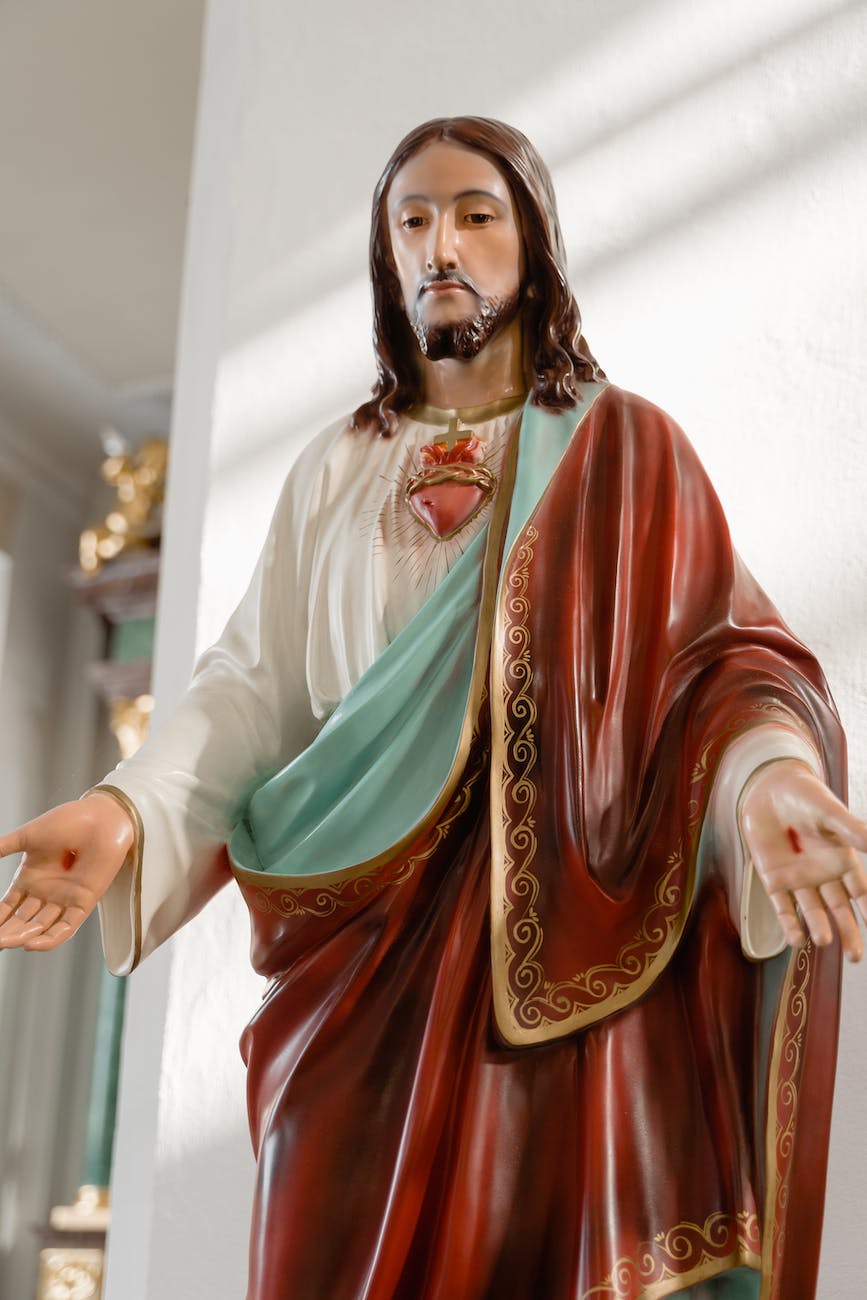
Today is Body and Blood of Jesus Sunday, otherwise known as the feast of Corpus Christi ♥️ So happy feast.
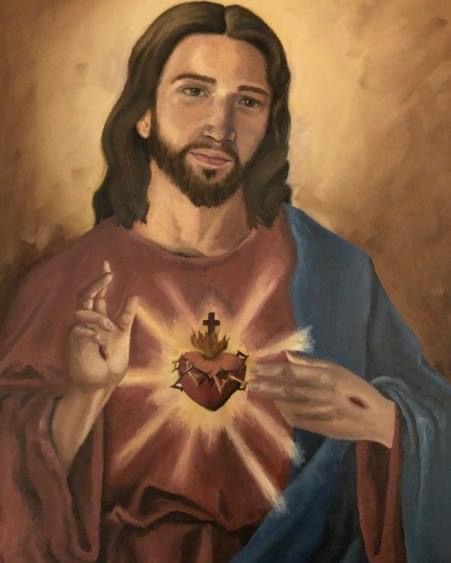
This is a good time to reflect on the humility of God who became incarnate and remains with us as simple Bread and Wine for us to eat and drink, sharing in our humanity that we might share in his Divinity. There is one Lord who suffered and died for us and we take part in his redemption of all when we suffer with that intention; of uniting our suffering to his in union with his mission of salvation, mercy and love. Under those conditions we can say someone is suffering with Christ or in a way that Jesus did. We can also say he suffers in the poor, the oppressed and those in the margins of society as he said he did in the Gospel of Matthew. That’s it. Anything else is blasphemous. We should keep our eyes on the sinless Son of God who deserves all of our love. One God one faith one baptism. He is God and there is no other.
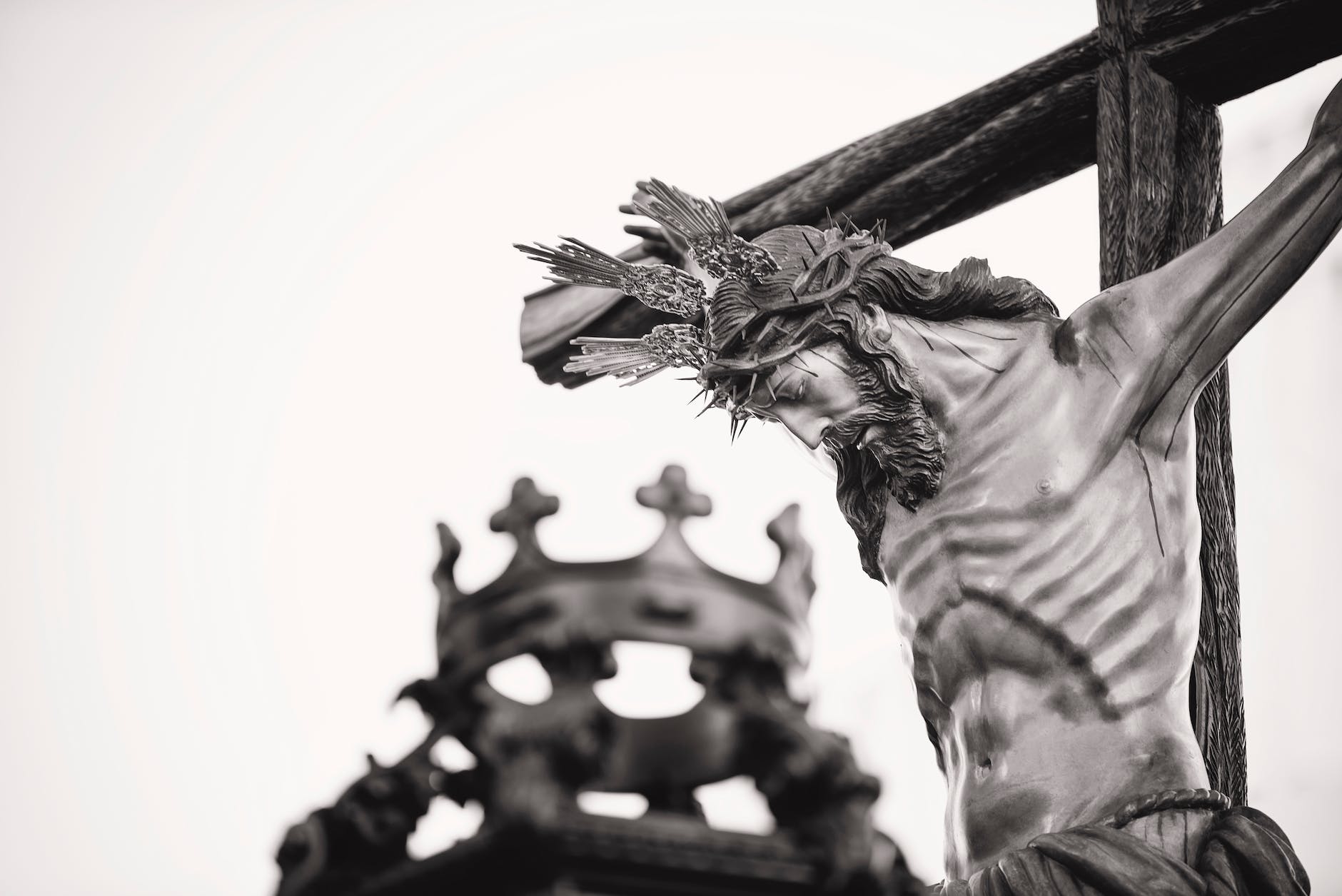
I’m writing about this because it’s disturbing to see pictures of Trump “crucified” with Jesus or Jesus “embracing” Trump and whispering that he too was wrongly convicted. To me this is an insult to the martyrs who deserve that consolation. We Christians understand that their unjust deaths were for their faith, for their love of God and were their sacrifice for the Gospel.
Trumps’s conviction is not a situation like that whether one believes he is guilty or not. That’s almost beside the point.
Yes God loves the powerful the rich and political figures too and cares about them just as he does the rest of us. However I think there is an innate danger both spiritual and secular in comparing a political figure to Jesus. Let us rather pray for our leaders that they will be what God wants them to be and created them to be. What more could we ask for anyone? Let’s stick with that. We can never go wrong in praying for God’s will. He will give what is right – and only he truly knows what that is.
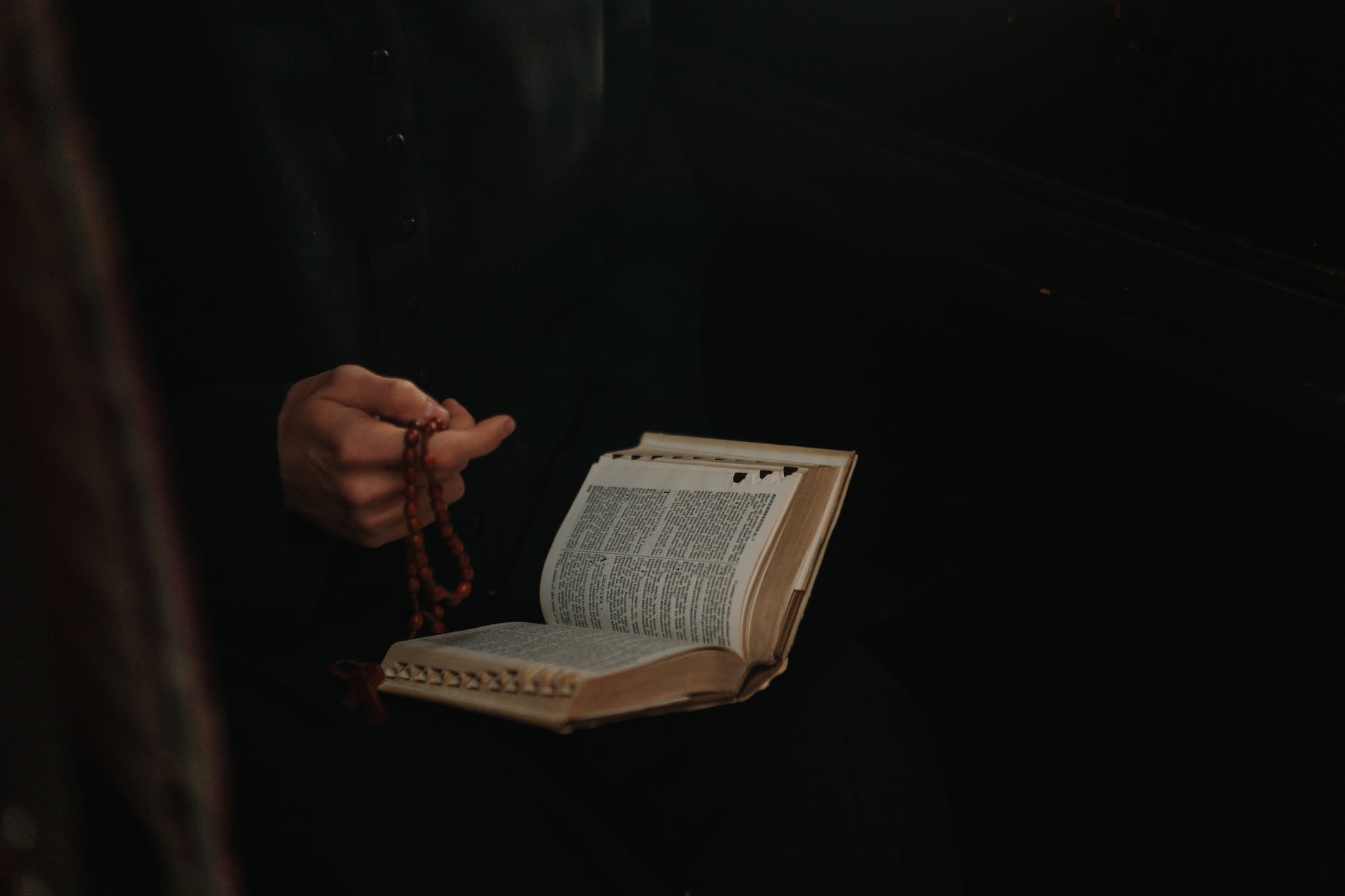
Come into Mary’s rose garden which is the rosary, and pick red roses of devotion to bring with you on this journey with her through the Sorrowful Mysteries.
The first Sorrowful Mystery: The Agony in the Garden
rose hip: Union of will with God
“My Father, may this cup be taken from me. Yet not as I will, but as you will.” Mtt. 26:39
Mary takes your hand. She brings you to Jesus, lying prostrate as he prays. Suddenly as if you fell in, you are in the depths of Christ’s Heart, experiencing his anguish, physically feeling his bloody sweat, his stinging tears smearing on your cheek as you sink into the abyss of his agonized heart.
Let yourself feel your love for him. What do you want to say to him?
Maybe, “Jesus I love you. I will not deny you anything. “
He hands you the cup he has now drunk, compassion in his eyes.
You understand.
It tastes like fire but is sweet.
Chaos breaks out. He is arrested and taken away.
In the silent Garden of Gethsemane you and Mary lay a red rose. Beside it place the empty cup.
The Second Sorrowful Mystery: The Scourging at the Pillar
Rose hip: endurance with love
“My soul is in deep anguish. How long, Lord, how long?” Psalm 6:3
You’ve never seen or imagined cruelty like this. As hooked whips tear into Jesus’ back you want to throw up and Jesus does as his body goes into shock. You look at Mary as the violence goes on and on. How can she stand it? Her eyes are filled with tears, yet her face is resolute. His blood pools between the tiles of the courtyard. You want to stop this, comfort him, comfort her. Her arm slips around your shoulders without her taking her gaze from her Son.
Finally Jesus is carried away and the laughter of the guards fades. Holding hands, you and Mary silently venture forward. Together lay a red rose beside the pillar. Kneel here. Pray with Mary.
Third Sorrowful Mystery: The Crowning with Thorns
rose hip: reverence
“My spirit blesses the Lord, the Great King.” Tobit 13:15
They’ve been beating Jesus for what seems like Hours. Then one of the soldiers gets an idea. He weaves a crown of long thorns which is forced onto Jesus’ head. Blood runs down over his face and eyes from the wounds. This isn’t enough because they start hitting his head with reeds and shouting “Hail to the King” in mock reverence. Mary is on her knees repeating something again and again. Listening closely you can tell she is saying, Barukh ata Adonai Eloheinu, melekh ha’olam…” (“Blessed are You, LORD our God, King of the universe) in praise of God. Join her in making reparation to the Lord for the mock reverence of the soldiers who know no better.
You and Mary lay a red rose in Jesus’s cell once he is taken away for an interview with Pilate.
The Fourth Sorrowful Mystery: Carrying the Cross
Rose hip: holy perseverance
[We keep] our eyes fixed on Jesus, the leader and perfecter of our faith. For the sake of the joy that lay before him he endured the cross, heedless of its shame. Hebrews 12:2a
Your hand tightens on Mary’s as Jesus comes your way dazed and stumbling under the heavy weight of the cross, prodded on by soldiers. You don’t even want to look at Mary. It hurts too much. It hurts too much to see any of this anymore. To shut it out you close your eyes. Then you remember, “for the sake of the joy that was set before him.” Mary squeezes your hand and you understand that the joy set before the Lord that urges him on is yourself. You are his joy. Open your eyes now. Don’t be afraid to join Mary in sharing his suffering.
Once he has passed by, you and Our Lady lay a red rose on this path of sorrows.
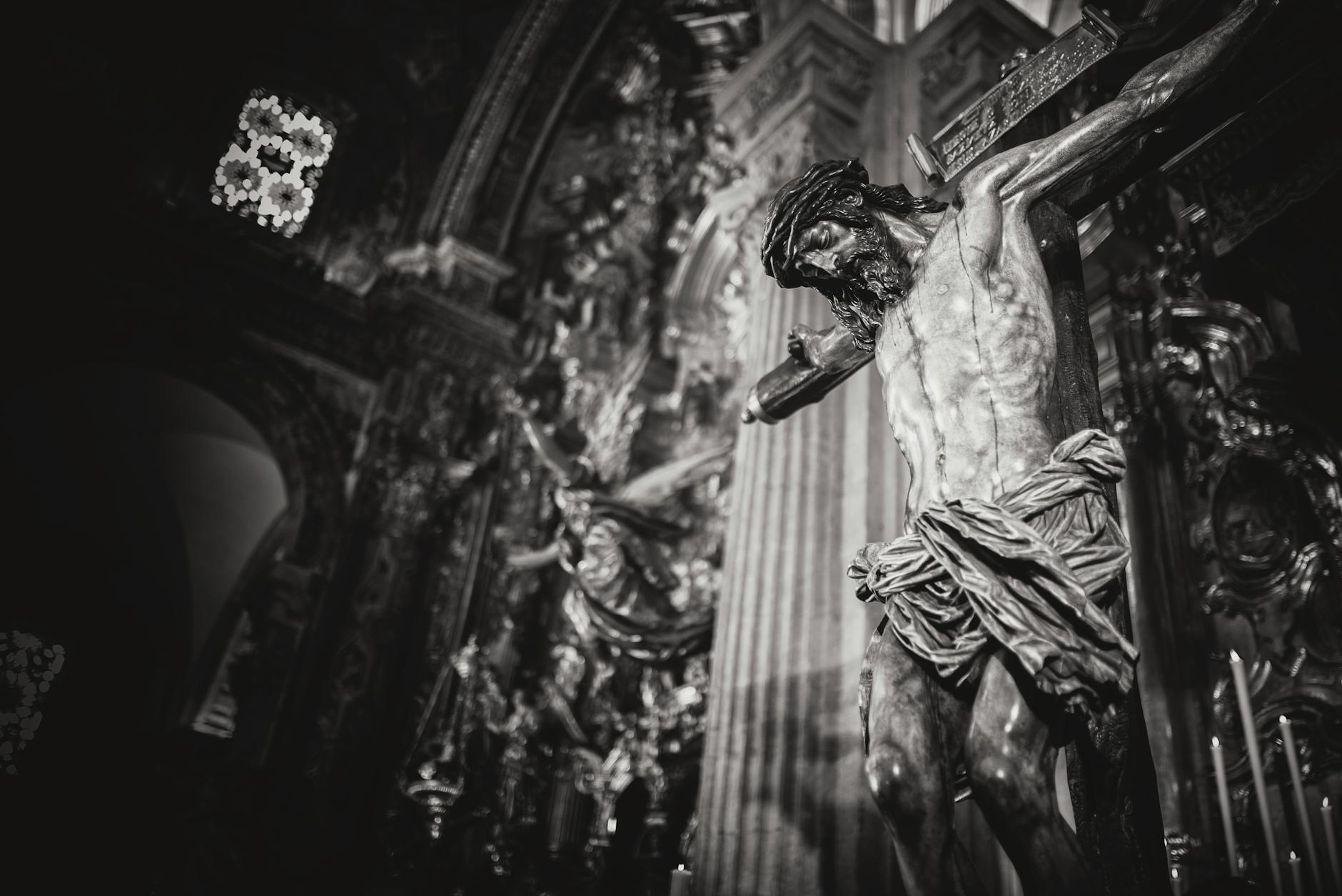
Fifth Sorrowful Mystery: The Crucifixion and Death of Jesus
Rose hip: sacrificial love
[His Mother whispered,] “do not be afraid of this executioner, but be worthy of your brothers and accept death, so that in the time of mercy I may receive you again with your brothers.” -2 Maccabees 7:29
“I’m not going to cry until he’s gone,” she says in a low voice. You understand that she has to be present to him, even participate with him, united with him in heart and purpose. She wants to look at the face of her Son as long as he has left to live. She will grieve later.
He is struggling to speak to her. “Mom. Mom, this is your son.” Then he says to you, Beloved Disciple, son, daughter, “this is your mother.”
Hold Mary close now as Jesus cries out in utter abandonment. Every strangled cry of his you can feel sending shock waves through her. And now his body is without life and the sky darkens. She collapses against you. Your prayer is only to hold her, to share her tears.
Go together now to the foot of the cross and lay a red rose in the place of sacrifice. Unpetal the others and sprinkle them over Mary. Some of the petals stick to her tear stained face, some to her hair. Most flutter down to this holy ground which has become the altar of the world. She scoops them up and throws them toward the body of her Son. You do the same.
During this little slice of Ordinary Time after Christmas and before Lent we might begin to feel spiritually unenthused. Maybe we were already. Maybe we even avoid prayer and the practice of our faith. Maybe we have an aversion to our daily duties. Maybe we’re bored and drawn mostly to distractions. What’s going on? St. Evagrius (AD 385-399) who lived in the Egyptian desert as an early monastic wrote about something called acedia.
What is acedia? The Catechism of the Catholic Church (2733) calls it a form of depression caused by giving in to spiritual laxity or presumption. The Desert Fathers thought of it as a spiritual condition people can fall into with a complex set of symptoms, a spiritual malady, or even as a demon.
[Acedia is] a hatred of industriousness, a battle against stillness, stormy weather for psalmody, laziness in prayer, a slackening of ascesis, untimely drowsiness, revolving sleep, the oppressiveness of solitude, hatred of one’s cell, an adversary of ascetic works, an opponent of perseverance, muzzling of meditation, ignorance of the scriptures, a partaker in sorrow, a clock for hunger.
St. Evagrius
Yikes.
St. Evagrious of Pontus says the real roots of acedia are self centeredness, anger and misdirected desire. When oppressed by acedia we tend to seek comfort and pleasure to counteract the restlessness we feel, and in response to our aversion to spiritual practice. We avoid the tasks we are responsible for. We withdraw from charitable activity and are more prone to gab with others for our own entertainment and distraction than to be useful to them. We fill our lives with surface busy-ness, avoiding prayer and study. We lack spiritual desire and quietly long for things and activities that will draw us away from the spiritual. We are both restless and exhausted. We want to sleep, we want to pace the floor. We feel at once angry and dissatisfied as well as listless, staring at nothing. This sounds terrible. No wonder Evagrious called it “the most oppressive of demons.’
All of this reminds me of a passage from one of my favorite books, The Phantom Tollbooth by Norton Juster.
“There once was a boy named Milo who didn’t know what to do with himself; not just sometimes but always. When he was in school he longed to be out, and when he was out he longed to be in. On the way he thought about coming home, and coming home he thought about going. Wherever he was he wished he were somewhere else, and when he got there he wondered why he’d bothered. Nothing really interested him- least of all the things that should have. “It seems to me that almost everything is a waste of time,” he remarked as he walked dejectedly home from school.”
And “… while he was never anxious to be where he was going, he liked to get there as soon as possible.”
Had Milo been a monk he would have been diagnosed by the Desert Fathers like Evagrius, as suffering from, and indulging in acedia.
If we find ourselves troubled by acedia, what is the remedy? What should we do?
Master your thoughts.
Notice when your thoughts are going into that irritable, lazy restless lane again, and change course as soon as you notice. Something that helps me is to repeat the names of Jesus and Mary; “Jesus Maria Jesus Maria Jesus Maria” each time I find myself on that negative track again. Be patient with yourself. It doesn’t help to be mad or disappointed in yourself. Simply move on and persevere.
“Whether or not all these thoughts trouble the soul is not within our power; but it is for us to decide if they are to linger within us or not and whether or not they stir up the passions.”
St. Evagrius
Resist. If you want to sleep or run away or indulge in compulsive activity, persevere in what you are actually supposed to be doing in spite of how you feel. If you are avoiding prayer, pray. If you are avoiding your duties, get back on track. If you’ve lost sight of your routines, get back to them. I suggest working on one thing at a time so you aren’t overwhelmed. When you are stuck in acedia even one of these things can be hard enough to change.
Gratitude. Write down five things you are grateful for when everything is getting on your nerves. It works surprisingly well.
Manual labor. Nothing helps me as much as some vigorous sweeping, mopping or dragging things around outside. According to the Fathers, acedia is both mental and physical. This is why it’s so hard to kick.
Meditate on the Passion and Death of Jesus. Maybe praying the Sorrowful Mysteries of the Rosary or The Way of the Cross can assist you in this. This is uniquely grounding for us as Christians.
Ask God for the gift of tears. According to Evagrius, the gift of tears in prayer, and tears of repentance are indispensable for liberation from acedia. So have a good holy cry, it cleanses the soul.
Preach the Psalms to your own soul. As Dorothy Day wrote, “My strength returns to me with my cup of coffee and the reading of the psalms. ”
Engage your intellect. I learned this from Fr. Gregory McLaughlin who taught me that when I was being ruled too much by my emotions, I should study, especially religious study such as Scripture or good spiritual reading. It works.
Go to confession. This may seem obvious but remember the Sacrament of Reconciliation is healing and restorative. God gave us Confession so we can receive his mercy, overcome our sins and begin anew which is exactly what we need to be free of acedia and free for God.
Good deeds. Go through the day quietly tucking in small kindnesses wherever you can. This is a remedy for almost any malady of any kind. When you are ready, throw yourself into working for others in some way.
Gently fold these things into your life and you will soon sense a clear fine spiritual love reclaiming its place in your heart.
A personal tradition of mine on Christmas night after all the hubbub is done, the household is asleep, and the living room is dark, is to settle in a comfortable spot near the lit Christmas tree and pray a sweet rosary. Gently bathed in the multicolored lights of the tree, with something hot to drink, I’m especially comfortable and relaxed. Join me. 🙂
Take me, Lord, to the center of everything, into the mysteries of your Incarnation and Childhood. Take me into Mary’s pondering heart.
If you forgot or don’t know how to pray the rosary, check here. for instructions.
If you don’t have a rosary guess what? God made us with the perfect number of fingers to make do with as a rosary of the moment!
The important thing is to settle down and to pray with attentive love.
So take a few steady breaths. Most likely it’s been a long day hasn’t it? My head is usually swimming at the end of Christmas festivities even if they were nice. My feelings swirl around in me without much definition and I need quiet and solitude with God. Maybe you feel like that too. So take a nice deep breath so you can concentrate now, releasing it slowly. Smile a small smile in a relaxed way. Think of Mary’s joy. She was tired on this night too after all. Let’s relax with her and look at Jesus.
Come, Holy Spirit, come by means of the powerful intercession of the Immaculate Heart of Mary, Thy well- beloved spouse.
Proceed as usual with the Apostle’s Creed, an Our Father, and three Hail Marys in honor of her faith, hope and love that brought us to this moment with the Lord.
First Joyful Mystery: The Annunciation to Mary and the Incarnation of the Lord within her
Mary’s humility was light, natural and free. Real humility is only the truth about ourselves and Mary was grounded and centered in truth. She was free to respond with wonder and love and also to ask for clarification from the Angel Gabriel. “How can this be since I am a virgin?” Once she understood how this would happen, in freedom and with love she accepted. God the Son became a tiny pin point asking for shelter and love and she said yes. It was a quiet thing. And he was there. Maybe she cried. Maybe she smiled. Maybe both.
“To whom God willed to make known what are the riches of the glory of this mystery among the Gentiles, which is Christ in you, the hope of glory.”
Colossians 1:27
The Second Joyful Mystery: The Visitation of Mary to Elizabeth
Mary seems to have gone alone to see her kinswoman Elizabeth. She didn’t hesitate, either. She “went with haste.” Nobody told her to. She seemed to just be drawn there. She must have felt full of the stars God showed Abraham as she hurried to Elizabeth’s, stars bright across the sky, stars in her body, woven in her hair, scatted in her path. I wonder if she felt so astonished and scared and excited that sometimes she ran? Elizabeth heard Mary’s voice calling to her. Nobody told her anything. She just knew. And it seemed the baby she carried knew too. She knew she was in the presence of the Lord and that Mary was her queen. Both women prophesied in joy. The first two Christians, the first two gathered in his Name. God took care of them both through one another. Mary needed understanding, partnership and support, someone to pray with her who was in on the Secret. Elizabeth needed help, companionship and understanding too. They must have had an amazing, as well as joyfully ordinary three months together, leaving both women stronger.
A faithful friend is a sturdy shelter: [she] that has found one has found a treasure. There is nothing so precious as a faithful friend, and no scales can measure [her] excellence. A faithful friend is an elixir of life; and those who fear the Lord will find [her].
Sirach 6:14-16
The Nativityof Jesus
None of the women of her family or village were there to help her. Men were not used to being part of the birthing process. But Joseph, surrounded by the kindly witness of the animals who seemed to understand, did his utmost for Mary that night in the dark, in the hay of a stable. Maybe she told him what she needed since she would have seen many births by then, going with her mother to help the other women. Joseph held her close and they prayed, wiping tears from each other’s faces, telling each other “You’re so brave!”
Mary laid the Baby in a feeding trough after his first nursing and after wrapping him in swaddling cloth she had brought with her, while Joseph cleaned up and brought her water. Then they would have placed the baby between them and slept, waking to feed him, to gently laugh and touch his soft little head wondering what was going to happen now as beyond the stable the rising star of Bethlehem shone out to the three wise men on their travels, and the angels sang to the shepherds in the fields filling the sky and their hearts with awe and joy.
The Word became flesh and made his dwelling among us. We have seen his glory, the glory of the one and only Son, coming from the Father, full of grace and truth.
Oh no this was not what she thought she would hear at all; that Jesus would be rejected? That her heart would be pierced with a sword? What did it mean? The Angel had not said this. But Simeon had recognized him. She and Joseph had listened astonished as the old man blessed God and declared he could go in peace because he had seen the Savior as God had promised him. The prophetess Ana had known him too, had spoken about him. What is this God was telling them!? Joseph was worried because Simeon hadn’t said anything about him which made him think Mary and Jesus would face this calamity alone and it broke his heart. But Joseph and Mary were brave young people, full of love and determination. They discussed Simeon’s words on their way home. What would they do? Maybe Joseph said that there was only one thing to do: to love Jesus and each other, and to go on knowing they would walk with him as far as the Lord allowed. Mary squeezed his hand. “After all,” she said, “what else is there?” “God is it,” Joseph said. “God is it and that’s it.”
I say to the LORD,
you are my Lord,
you are my only good.
Psalm 16:2
The Finding of the Child Jesus in the Temple
“Mary, please try to eat,” Joseph pleaded. “Maybe you should sleep,” she said. “Maybe you will have one of your dreams.” But there was no sign, and no one knew where Jesus was. They prayed as they walked and searched with growing desperation, calling his name.
Finally they found him in the Temple. Mary interrupted the questions of the teachers of the law to embrace her Son. “Why have you done this to us? We have been looking for you everywhere!” Jesus was surprised. “Didn’t you know I would be here in my Father’s house?” The teachers were telling Joseph how amazed they had been to hear the uncanny wisdom of his child. Jospeh and Mary weren’t sure what was going on. But Jesus went home with them and kept growing, learning, and loving them, and they loved him back.
Maybe you feel like you have lost Jesus. Maybe you can’t find him and be with him the way you used to. But he is there in the Temple of your heart and you will find him again.
Do you not realize that Christ Jesus is in you?
Corinthians 13:5
Now imagine yourself with Mary. She is there with you, smiling gently, looking at you expectantly. Take her hand and pray the Hail Holy Queen. Add some words of your own. Maybe you would like to say, “Thank you Mother Mary. Thank you for all that you did to bring us Jesus and to be with us on our way.” Wish her a Merry Christmas. 🙂 Merry Christmas Mother Mary. And happy birthday, Lord. Happy birthday to you.
“The Sovereign Lord has opened my ears; I have not been rebellious, I have not turned away. I offered my back to those who beat me, my cheeks to those who pulled out my beard; I did not hide my face from mocking and spitting. Because the Sovereign Lord helps me, I will not be disgraced. Therefore have I set my face like flint, and I know I will not be put to shame.”
(Isaiah 50:5-7)
Anyone can give intellectual assent to Christ’s existence, his nature and purpose. Anyone can quote Scripture. Satan did both of those things. When the devil tempted Jesus in the desert he quoted Scripture just fine. The demons exorcised by Jesus proclaimed his truth screaming, “You are the Christ the Som of God!” as they left the scene at his command.. So it isn’t enough to know the Bible or to acknowledge Jesus in order to belong to him. Following him, identifying with him, seeking unity with him, living as he did, loving him in all of his mystery, that is what being Christian is.
His triumph was all of the things that most confound the forces of hell: sacrifice, obedience, love, surrender, acceptance, humility, non-violence, abandonment to God, suffering and losing a fight in front of the whole world, and on purpose.
Even we don’t understand it unless we console ourselves that he was resurrected on the third day, which he was. But in that moment he died with trust and abandonment. He gave himself over and faced his enemies in silence.
This throws Satan, and sadly it throws us too.
Even we Christians hold a deep attachment to violence and revenge. We cannot let go of the exhilarating high of vainglorious triumph.
And yet the Beautiful One admonished us to take up our crosses and follow him.
I don’t think that is simply putting up with the hardships of life hoping for reward though I know that is part of it. I think we need to respond to the violent world as he did.
Turning the other cheek to me means, “I will not be turned back from love.” That kind of power can only come from God and we have to want it.
We have to renounce ourselves and follow Jesus. That’s how we find life and even find ourselves.
I haven’t gotten there yet. I have been there sometimes but it is not yet my home, my way of being. Not yet. I suppose that is how it is for most of us.
I still want to win. I want to win, I tell myself, for others; for the poor, for those on the margins, for immigrants. However, like anyone, my motivations are mixed. There is still a selfishness and pride in it. We all want to force things, to feel powerful. It is the effect of the fall of humanity in us.
The real battle we have is against ourselves, as St. Teresa of Avila says. And this is hard, she points out, “because we love ourselves very much.”
God gave us an innate sense of justice and right. There is nothing wrong with this. We go wrong when we stray from the Gospel. A line in the Oscar Romero movie, Romero got to me. St. Oscar said to a fellow priest and advocate for justice, who tried to talk him into joining the rebels with him on behalf of the suffering people of El Salvador, “If you do this you will lose God just as they [those he would take up arms against] have.” Whether these were St. Romero’s exact words or not it is an incredibly powerful statement. It rings utterly true. If we persist in our attachment to violence we will lose God. Nothing, absolutely nothing is worth that. And we will “lie down in torment.” (Isaiah 50:11)
I have read that some people are starting to complain to their pastors when they preach on the Beatitudes, that the preaching was too left leaning. When confronted with the fact that these are the words of Jesus Christ, they retort that this is outdated, doesn’t work, is “weak.” Look at us. We haven’t changed. The Cross, the Gospel, is still a scandal, still makes no sense.
However, When he was insulted, he returned no insult; when he suffered, he did not threaten; instead, he handed himself over to the one who judges justly. (1 Peter 2:23)
“For to this you have been called, because Christ also suffered for you, leaving you an example, so that you might follow in his steps” (1 Peter 2:21).
There is really no way around that.
Even those of us who know and accept the teachings of Jesus have parts of ourselves still attached to violence and our own ideas of justice. We still hope Jesus will clear the world of bad people on his return.. Not us though because we are nice people, right?
St. John of the Cross said that even if the only thing keeping a little bird tied to a tree branch is the thinnest of threads, the bird is still tethered, still not free.
We have to cut the thread.
On this Triumph of the Cross in 2023, in this era of mass shootings, unkindness and cruelty, and the promotion of a lack of compassion as a good thing by a significant portion of society, even by a good number of our fellow Christians, lets renounce violence in the Name of Christ, embracing instead the way of Jesus.
We can’t belong to the Christ of Revelation unless we belong to the Jesus of the Gospels with all that he showed us.
Thank God he is with us to help us with his endless grace.
He who has begun the work in us will complete it. (Philippians 1:6)
We have only to decide, every day, and trust that he will triumph in us.
“I have promised it and I will do it, says the Lord.” (Ezekiel 37:14b)
July 29 is the feast of Sts. Martha, Mary and Lazarus, the siblings of Bethany. Bethany was a little village not far from Jerusalem. It seems to have been Jesus’ favorite stop on his journeys, his home away from home. Apparently these three friends were great company, and supportive of his mission. They had a house big enough for his travel companions, the food was great and Martha, Mary and Lazarus were always eager to be caught up on the latest adventures of Jesus and his itinerant followers.
Martha and Lazarus’ sister Mary has been conflated with St. Mary Magdalene since the Middle Ages and this impression continued for centuries in Christian hagiography and art. Modern Biblical scholarship and a pronouncement of Pope Paul VI put an end to that mix up. St. Mary Magdalen continues to be celebrated on July 22, and Mary of Bethany joined her brother and sister as her own person.
This leaves us with three Gospel stories of St. Mary of Bethany.
At the feet of Jesus (Luke 10:38-42)
Poor Martha is hosting all by herself, running ragged, resentful and starting to bang the pots and pans in the kitchen. Finally she decides to get her feelings out. She unburdens her heart right to Jesus. Isn’t that what we should do? Maybe not in front of the company, granted, but we should lay out burdens before him and be honest with him. He knows what’s inside us anyway.
I like to think the Lord’s answer gave Martha peace. All the times Jesus has straightened me out when I was wrong or off course I have felt instant peace. Whether what he asked of me was easy or unpleasant I felt peace and that’s how I knew he was speaking. It seems Martha had taken on more than she was required to. I have taken on tasks and responsibilities God was not asking me to and the first symptom I have is usually exhaustion followed by resentment and self righteousness. Eventually there will be an outburst. I hope Martha felt unbound and freed by what Jesus said to her.
It’s easy to see Mary feeling affirmed and freed, protected and understood by Jesus’ defense of her. I recently read that the way she is sitting at Jesus’ feet listening to his teaching would have been controversial in her time and culture. It was something a disciple did. Rabbis weren’t supposed to have female disciples. The study of Torah and the pursuit of knowledge was for men only. By sitting at Jesus’ feet as his student she was being quite bold and acting as an equal to the men. Jesus affirms her in this, allowing her to keep the place she has chosen.
Of course we also see Mary of Bethany here as a beautiful model for Christian contemplatives. She is deeply attentive to Jesus, looking at his face, internalizing all that he says, pondering in her heart.
During a skit of this scene we acted out as a family my then four year-old daughter Maire had Mary get up, offer to take over the host duties, and invite Martha to take a turn at Jesus’ feet. I like that a lot. Maybe it was that way.
Mourning Lazarus John (11:1–45)
Lazarus fell ill. His sisters cared for him and prayed over him, waiting for Jesus to come and heal him. They knew he could save their brother. They sent an urgent message. Mary would have sat by her brother’s bed keeping vigil, offering him her gift of profound presence and connection. Martha would have changed his blankets, kept a wet rag on his head, brewed medicinal teas, asked advice from the wise, sent for doctors, made favorite dishes she hoped he would eat. Sometimes they would have had to switch places and learn the other one’s ways of loving and serving.
Jesus never comes, though they keep a lamp burning for him through every night in hopes he will. Every footfall outside, every stirring they hear they think perhaps it is Jesus or at least a message from him. They don’t understand. Why doesn’t he come? Why doesn’t he respond?
Lazarus’ illness becomes imminently life threatening, their anxiety for him so intense, neither of them sleeps at all. They hold him in his struggle for breath and as life ebbs away.
They try to comfort one another. They ask each other, “Why did Jesus never come?”
They wash and anoint his body with the women of their family winding him in scented burial cloths to bury him in their family tomb.
Finally Jesus shows. Martha as we have seen her do before, makes her thoughts and feelings known to him. She confronts Jesus while at the same time expressing her faith in him. She knows he could have saved her brother as he has saved so many others. She also has come to know and believe he is the Messiah and Son of God, just as Peter had also done and she says so. “Even now,” Martha says hopefully, “I believe.”
She runs to get her sister who is in the house with all the mourners and tells her Jesus is here and asking for her.
It’s when Jesus sees Mary’s tears that he cries too. This is important to me, to all of us. Yes for some reason Jesus does allow bad things to happen to us. At the same time, as Madeleine Le’Engle says, everything that happens to us happens to God too.
Mary also confronts Jesus, falling at his feet, her movement a desperate plea of prostate grief.
He doesn’t ask Mary for a declaration of faith. Maybe he knew she had it in abundance already. He only responds with his tears and his actions. He gives her her brother back alive.
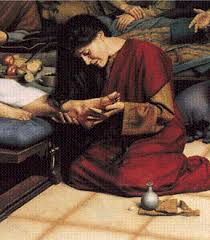
This is the beautiful story that captures the imagination so powerfully; Mary of Bethany interrupts dinner, unbinding her hair, carrying in an alabastron of outrageously expensive perfume worth a year’s wages.
Since she seems to have been unmarried (as she is living at home) perhaps it had been meant for her dowry. To me this brings out an extra meaning. Perhaps she intended never to marry and to fully dedicate her life to Jesus, pouring out her love and devotion to him alone.
Her contemplative nature, her attentiveness and connection to Jesus lead her to anticipate his death; the only one of his followers who understood that it was imminent, and maybe even what his death would mean.
With compassion she comes to acknowledge both what he is about to endure and what he means to her.
Have you ever smelled spikenard, aka nard? It is not a floral scent but a sharp, pungent smell. It would have filled the whole house and the scent would have lingered for days and days in every room and on both Jesus and on her hair.
The others at the table were offended at her extravagance, saying the nard could have been sold and used to feed the poor. Jesus defends her. We will always be able to help the poor but we would not always have him. “She has done a beautiful thing for me.” She dries his feet with her hair.
Women’s hair was supposed to be covered in public and especially in the presence of men who were not their husbands. Here our Mary of Bethany unveils and not only that dries the feet of Jesus with her hair. I wonder what those present would have made of that?
I’m thinking of the spiritual marriage written about and experienced by the great mystics of our faith such as Sts. Teresa of Avila, John of the Cross, Rose of Lima, Catherine of Sienna among others, in which the soul becomes one with God. Maybe Mary of Bethany was experiencing this or had. Maybe this bold and lavish gesture was her response, her understanding of his destiny born of that union and love.
Wouldn’t you love to be able to comfort Jesus with your compassion and love? To do something that is deeply meaningful for him? To pour out your love diffusing its fragrance through all his house, to smell it on your hair for days to remind you, knowing he also carried it? To remember his words, that you had done a beautiful thing for him?
We can. When we love, when we serve, when we pray like an oil poured out to the One we love.
To us who celebrate it every year the Ascension of Jesus seems to naturally follow the initial celebration of his Resurrection.
However I imagine it was an earth shattering surprise to his followers that he would be leaving them yet again.
When I reflect on this event as part of the rosary the virtue I link to the Ascension is detachment as I see him beautifully disappear before the eyes of his followers as “a cloud removed him from their sight.”
The family of believers had to let go of their expectations that Jesus as they knew him would permanently remain to walk and talk with them. Again they had to face that Jesus was not about to get rid of the Roman occupiers either. There would be no restoration of the Davidic Kingdom in the literal way they had thought of it. And the One they loved was going to withdraw from them yet again. They must have felt as if they were back from the defining experience of their lives with nothing to show for it, as if they were just a rag tag group of people standing on a mountainside for no particular reason. They were shocked and bereft. They didn’t understand what Jesus meant about him having to leave that the Holy Spirit could come to them. How could they?
When the angel said that Jesus would be back they must have shaken their heads. Jesus had said for them to go and baptize, to take his message to the world. This must have seemed like too much for them, an overwhelming task, especially on their own.
They had to greatly expand their understanding of God even past the miraculous three years they had left everything for and deeply identified with now.
They had to let go so they could be filled and receive Jesus in a whole new way, by his presence in their hearts, and to come to know the Holy Spirit who was new to them.
How can we receive the Spirit without detachment, self emptying, without freedom of heart?
“Love- the way God wants to be loved, and leave off your own way of acting,” said St. John of the Cross.
Or, as Jesus said to St. Angela of Foligno, “Make of yourself a capacity and I will make myself a torrent.”
Jesus said that if his friends loved him they would be happy he was going to the Father. (Jon.14:28) Is there something more to that than being happy for him? Yes, because he says, “for the Father is greater than I.” Maybe it also means that we have to let our current perhaps more comfortable understanding go to make room for the immensity he has for us. We can be happy he is going to the Father because then, in letting him go as we thought we had him, he then is truly closer than our breath, more accessible than ever. Detachment is hard. We feel that we are losing our Treasure.
St. Faustina said of Mary’s experience of the Ascension that she deeply grieved as any mother would that her Son was leaving but that, “her heart could not want what God did not want.”
In seeking a pure heart for God and a Marian detachment; a detachment with great love, a detachment even from the way we thought Jesus would be present to us, we open ourselves to what is even greater, beyond what we could ever have thought of ourselves. But first we let go.
“Bend my heart according to your will, O God.” (Ps. 119:36)
Then,
“I shall run in your paths for You will enlarge my heart.” (Psalm 119:32)
In this is peace that comes from open-ness to God and freedom of heart.
These verses are a perfect prayer to cultivate holy detachment as the disciples struggled to do this, standing there on the Mount of Olives, not knowing what to do with themselves.
Fortunately we don’t have to rely on our own strength in this and neither did they.
Jesus had said to wait in Jerusalem and to pray. They did. They trusted in simplicity. And prayer continually purified theirattachments and intentions as disciples, transforming their dismay into receptivity.
They still longed for Jesus; his voice, his hug, the sound of his footsteps, “like a deer that longs for running streams in a dry weary land without water,” (Ps. 42:2) However they soon found that once emptied, their muddled and broken hearts were then open to the new gift of God’s presence; the descent of the Holy Spirit at Pentecost, filling them past overflowing, their thirst for God more than quenched. “Your torrents and all your waves swept over me.” (Ps. 42: 8)