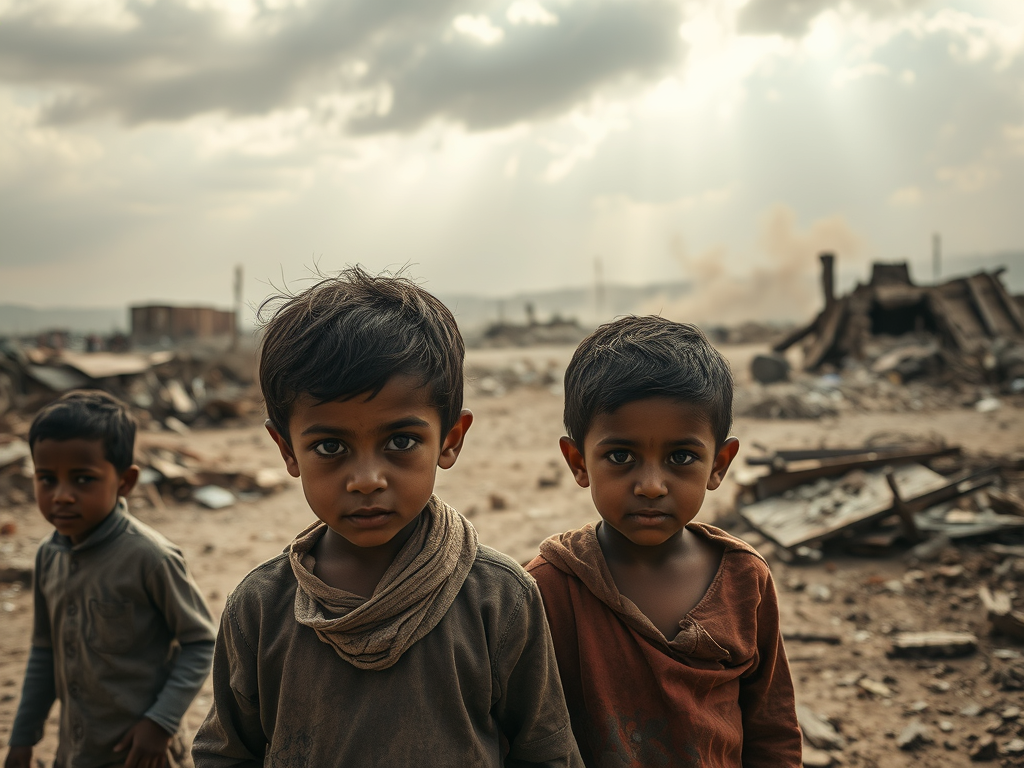
None of the women of her family or village were there to help her. Men were not used to being part of the birthing process. But Joseph, surrounded by the kindly witness of the animals who seemed to understand, did his utmost for Mary that night in the dark, in the hay of a stable. Maybe she told him what she needed since she would have seen many births by then, going with her mother to help the other women. Joseph held her close and they prayed, wiping tears from each other’s faces, telling each other “You’re so brave!”
Mary laid the Baby in a feeding trough after his first nursing and after wrapping him in swaddling cloth she had brought with her, while Joseph cleaned up and brought her water. Then they would have placed the baby between them and slept, waking to feed him, to gently laugh and touch his soft little head wondering what was going to happen now as beyond the stable the rising star of Bethlehem shone out to the three wise men on their travels, and the angels sang to the shepherds in the fields filling the sky and their hearts with awe and joy.
The Word became flesh and made his dwelling among us. We have seen his glory, the glory of the one and only Son, coming from the Father, full of grace and truth.JOHN 1:14
It is Our Lady of Guadalupe day today. It is the only divine portrait of Mother Mary we have. And she chose to appear as an indigenous young woman, one of the little ones, the poor and oppressed of this world as we tend to forget she actually was in her earthly life. She deeply identifies with the poor and marginalized just as her Son does. And we can find her in all the places he said he would be; among those we tend to reject. Let’s not miss an opportunity to catch a glimpse of her beautiful face when she comes to us with hidden roses. May God imprint her image in our souls.
It must have seemed to Mary that the sky smiled at her, that she was infused with tenderness and peace. When she looked around her at the world maybe she felt God telling her, “All this is yours, and you are mine.” At night when her family was asleep maybe she let herself into the quiet space of her heart to ponder the prophecies of her people, marveling at how vivid and alive these words were to her now. There was so much she didn’t understand but her trust left a gentle smile on her mouth as she drifted into sleep.
“The days are coming, says the LORD, when I will fulfill the promise I made to the house of Israel and Judah. In those days, in that time, I will raise up for David a just shoot ; he shall do what is right and just in the land. In those days Judah shall be safe and Jerusalem shall dwell secure; this is what they shall call her: “The LORD our justice.” Jeremiah 33:14-16 💜
Our king is not a king of this world who has to seek or cling to power. He would never scrabble for control of others. He did not seek wealth. He did not fight for victory over anyone, or use force on anyone who disagreed with him. Everyone was and is free to walk away or to take on his gentle yoke.
When asked to show force or use vengeance he refused. When asked to punish someone, the ones who asked ended up walking away in silence, contemplating their own sins.
He was clear about who he was but he never had to brag about anything. Why would he? He was quietly in charge of every star, every atom, every quark, every beetle, every galaxy. His spirit upheld all things. “I am that I am” God told Moses when he asked him his name. He just Is.
And he knew who he was.
When Pilate asked Jesus if he was a king Our Lord’s answer showed us we didn’t understand the kind of king he really was.
Our worldly minds, even as his followers, still find it hard to understand someone who has absolute power but instead chooses dusty feet and sacrificial love.
Can you imagine a mosquito landing on you and biting you? And instead of smacking the mosquito you die for it to save it? We are less than mosquitos given the scale of creation and the absolute power of God. But we are everything to him because he loves us, each one like the only one.
What kind of king is Christ? The kind of king who is infinite but makes himself small for us so we can be friends. The kind of king who washes our feet, shares his rule with us for the small exchange of our love. Indeed we are crowned with the stars in his eyes when he looks at us. He makes us like himself, he lifts us up, he washes our feet, feeds us, dresses us in his own bright finery.
What does this kind kind of Christly kingship mean for us? He summed up his expectations of us by saying “love one another as I have loved you.” He would have us love humbly, sacrificially and completely. He said that if we had authority in this world we should never lord it over those in our charge. He never did. He didn’t have to. It means that we should be grounded in the dignity he gives each of us, in his gift of free will, his unfathomable and tender humility. We reflect his heart, keeping him always at the center seeing with his eyes.
I heard in a homily once from Bishop Bill Wack that 1 Corinthians 13: 4-8 could be taken to describe the Lord. We know God is love. So we just read the passage replacing the word love with his name.
“Jesus is patient, Jesus is kind. He does not envy, he does not boast, he is not proud. He does not dishonor others, he is not self-seeking, he is not easily angered, he keeps no record of wrongs. Jesus does not delight in evil but rejoices with the truth. Jesus always protects, always trusts, always hopes, always perseveres
Jesus never fails.”
To see how you are doing following this King of ours, go back now and this time put your name in in place of “Love.”
I think we all have a way to go. It’s a good thing we have him to help us.
How can we serve a King like this one? A king who washes feet? Who gives freely? Who rules by love and asks for nothing else?
By washing feet, by giving freely, being ruled by love alone.
If you are not familiar with Aggie Bonfire it was a long standing Texas A&M University tradition. It was the largest bonfire in the world. When I was a child we could see its flames from our front yard. My mom used to have the hose ready because the cinders would drift over the roofs of our neighborhood. Fire trucks would line the field it was held in.
It was designed by A&M Engineering students. It got bigger every year. It was the funnest to attend when I was a teenager. The Corps of Cadets formed a ring around it to keep drunk people from getting too close. It was a huge community wide party. The Aggie band was there and there was lots of singing and cheers.
A&M does not have cheer leaders. We have yell leaders. Cadet Trainees in overalls with no shirts leading. The yelling.
There was an old fashioned outhouse on top with our rival schools’ initials on it. Bonfire burned the night before our game with them. I say “our” even though I was never a student there. My parents were. Not me. However if you grow up here you’re part of it. Not much else goes on around here.
The weeks before bonfire are when the building happens. It’s a night and day thing. Girls signed up to be “bonfire buddies” and bring snacks and hot drinks and encouragement to the kids working on it. The entire process took three weeks or so. It involved giant cranes. You could see students climbing all over it in their hard hats tying logs with wire, watch its progress as you drove past on the Main Street of the town, Texas Avenue.
November 18 1999 was the end of it.
The Bonfire collapsed in the early hours just before 3am.
I woke up a bit before that with an intense urge to get up and pray the rosary. I tried to ignore it especially since I had my toddler asleep in my arms. “Get up! Pray now! Get your rosary and pray now! Now!” So I did. We lived near campus then. In the midst of my sleepy prayers I heard ambulances and sirens – more then I had ever heard before. That day I was giving Communion at the hospital. I saw staff crying in the halls, parents gathering in a glass room waiting to hear about their kids. I took communion to a young Aggie CT in intensive care but he was unconscious so I just prayed.
If you are from here do y’all remember how we were asked to stay off the phone so parents could get through to find their kids? And how the restaurants offered meals? And how our priests heard confession from young people trapped under the logs? And how all the other schools sent banners that were tied between the trees around the site? I don’t miss bonfire though I grew up with it. I’m glad they don’t do it anymore. Later I found out one of the dead was a cousin of mine from a part of the family I didn’t really know. She was a freshman and we were supposed to get together for coffee. Jamie Hand. Anyway I doubt anyone who was here for that could ever forget any of it. God bless all the families who lost someone.
After my husband Bob was diagnosed with a grade 4 brain tumor and we found out it was glioblastoma multiform, we went in our room and closed the door and sat on the bed staring. We had been so positive and hopeful. We had laughed in the hospital and kept our chins up. But this was terrible news. After a while I said, “What do you want to do? What do we do?” And he said, squeezing my hand, “We love, we walk on.” I smiled at him. “What else is there?” That’s right. That’s all anybody’s got. We love, we walk on.
My husband Bob Chapman died 12 years ago. His walk with cancer was heroic and inspiring. He continued to love and serve others as he fought cancer. He bloomed creatively. He started painting. He played guitar and sang every day for as long as his arm would still work for him. He continued to learn and discover. He deepened his relationships. He came to love God.
Bob was a real person. We had fights. He could be such a jerk. He had a hard time adjusting to not being able to talk at work and he felt inadequate and angry. It didn’t help that the steroids he had to take sometimes made him want to fight his friends. It actually makes me smile to remember his faults and the times he was mean and stubborn. He wasn’t perfect at all.
He didn’t pretend to feel any other way than how he felt. He felt all the same things everyone does going through cancer and facing death. But he did it. He loved and he walked on.
I think that is exactly what we have to do now. It’s actually kind of hard.
if you’re dealing with a profound loss, the after effects of tragedy or post traumatic stress you may be feeling spiritually dead. Maybe you think you’ve lost your faith or that God has left you. It may be helpful for you to know there are neurological reasons for this apparent loss of your spiritual senses.
When there is a traumatic event or a terrible loss in our lives, our brains are actually affected. Trauma can disrupt the brain’s ability to process spiritual experiences by affecting its prefrontal cortex, amygdala, hippocampus, and temporal lobes. These areas are also involved in emotional regulation, memory, and our sense of self, even our feeling of connection with something greater than ourselves. Dysfunction in these regions can lead to a disconcerting loss of or distortion in a person’s spiritual life. It’s difficult for us to feel God with us, or to reach the peace we used to find in prayer and the practice of our faith.
The prefrontal cortex is responsible for self-reflection and focus. It helps us in practices like contemplative prayer and meditation by supporting awareness and attention. When this part of the brain is dealing with trauma we can’t seem to relax. We may feel void of any spirituality at all. Even the sacraments we believe in feel oddly empty as if we are merely spectators. Everything may seem meaningless to us now because the brain is preoccupied with stress and survival due to its injuries from trauma.
The amygdala and hippocampus process emotions, especially fear and joy. It gives us a sense of our life stories, of our own history. Spiritual experiences often evoke intense emotions and build on a relationship with God that we have developed over time. Trauma can even shrink the hippocampus . It may be hard to remember the love we once knew with God. Without this memory of the lived experience of God’s love and mercy, it’s hard to trust the Lord or that he is still there at all.
With post traumatic stress the amygdala becomes hyperactive, keeping our brains in a state of fear and hypervigilance. We might also feel emotionally overwhelmed and dysregulated making daily life difficult let alone communion with God.
The temporal lobes of the brain are associated with mystical experiences, and our perception of religious imagery. They also help us integrate our sensory experiences in life into spiritual meaning. Sustaining trauma can cause either overactivation or underactivation of the temporal lobes. This can lead to either intense visions or else fear-based religious thoughts. On the other hand, we may feel emotionally and spiritually blank. Where is God?
“God my God, why have you forsaken me?” Mark 15:33-34
Our anterior cingulate cortex helps us feel empathy and compassion. It’s also involved in the regulation of emotions and our sense of the Divine.The damage of trauma can impair the ACC. We may feel lost, cut off emotionally from our friends. We feel empty and alienated from people and God.
“Friend and neighbor you have taken away.
My one companion is darkness.” Ps. 88:18
The insula processes sensations and emotions, contributing to a sense of the nearness of God or a feeling of transcendence during prayer or meditation.Trauma can impair the functioning of the insula leading to either low body awareness or too much of it. We can feel a strange detachment from our bodies, unaware of even our physical needs. Conversely we may be overwhelmed by physical sensations, making it hard to relax or focus when we want to pray.
The good news is that contemplative prayer and meditation have been shown to be healing and even restorative to these areas of the brain impaired by trauma. Interior prayer practices and meditation can calm the amygdala, improve prefrontal cortex regulation, and enhance the connectivity of the ACC and insula, restoring emotional balance and renewing our sense of connection.
It means a lot to me that Jesus experienced trauma and that he allowed himself to descend into the depths of the abyss of abandonment when he cried out from the cross his desolation.
St. John of the Cross taught about the “Dark Night of the Soul,” a phase of the spiritual life of many Christian contemplatives and mystics, which seems to have similar effects as trauma does on our prayer life. St. John of the Cross wrote that “in the dark night of the soul, bright flows the river of God.” He teaches us that God is nearer than ever before at times we feel he is farthest away. He says to go on “naked faith” and not to give up.
I have found it true that “God is close to the broken hearted, those whose spirit is crushed he will save.” (Psalm 34:18)
So if you are grieving a tragedy, experiencing trauma or post traumatic stress, and your’re having trouble with spirituality as a result don’t blame yourself. You haven’t done anything wrong. Nor have you lost God.
We know Mary and Joseph were holy and faithful people but they still lost Jesus for three days. Maybe you feel bereft but he is still there in the temple of your heart and you will find him again just as they did.
It’s ok to pray in ways you can handle. Don’t hold yourself to what you used to do. For me emotional overwhelm kept me from deeper methods of prayer after a tragedy in my life. I talked to Jesus about it. I told him, “I still love you. I just need you not to come so close for now. Can you sit farther away but still nearby?” So he sat with me but not too close. I chose what felt to me a less personal or emotional method of prayer. I memorized psalms, set prayers or passages from the mystics I love like St. Teresa of Avila and Julian of Norwich. When I could handle it I sat quietly and slowly went over them in my mind as a form of prayer/meditation. Other times all I could do was hold my rosary. These things slowly began to bring me peace again.
My friend Jim had said “the devil will try to kick you when you’re down and darkness tries to overwhelm you at times like this so keep doing the things that are of light: the rosary, going to mass, whatever you can do.” He said that would keep my lamp alight no matter what I was going through. He was right.
And after all:
“The light shines in the darkness, and the darkness has not overcome it.” John 1:5
The first day of “clinicals” for CNA training (Certified Nurse Aide) my class showed up to the nursing home in our white scrubs at 6am. We would do this for three days in a row. We were to shadow the established CNA’s and sometimes follow our teacher around with the class, observe and also try out our skills we had learned in school.
I changed my first few adult diapers that day, with an acute realization of how embarrassing it must be for a patient to have that done until they were used to it. My teacher observed and made suggestions. I tried to make conversation with the people as I served them. It was awkward and weird and I think my face sweated with nervousness but I suppose that’s normal.
One guy I changed was aware and oriented but nonverbal. He graciously let me change him for practice but apparently I made a big mistake. Later in the day I noticed he glared at me whenever he saw me. I found out later that this was because the next time he had peed after I changed him pee went up out of the top of his diaper and got his shirt all wet. With a male patient you have to make sure – er – that there is a downward course for pee. I found him and told him I was sorry about that but he mean mugged me the rest of the time I was there. Oh well.
Later in the break room we had a chance to chat with the CNA’s that worked in the nursing home. To our complete surprise they urged us not to go through with doing this. “She broke her arm,” they said, nudging one of the group, who said, “My arm’s broke, my hearts’ broke, my backs’ broke. It ain’t worth it. It ain’t worth it.” They explained that they loved the patients, and that they each had at least one they were very close to that among themselves they referred to as their baby. “Of course you love them. You have to love them but when they die, it about kills you. “
It was really too late to turn back and we had done too much work and paid our tuition. All of us stayed on and finished our training.
I met some interesting people. There was a married couple who were able to room together. I remember their room had regular furniture in it and looked really cozy. There was a man who had filled his room with books and loved talking to us. There wasn’t time though. There never is. One caregiver has ten patients. By the time you finish getting everyone up and dressed fed changed and cleaned up in the morning it’s time for lunch. I didn’t like how even if one of them was crying there was no time to talk to them and try to help. Someone else in the next room had a physical need to be met. You had to keep going.
i remember one lady liked to play rap on her radio with the volume all the way up. She sat in her wheel chair with her forehead on the speaker with the music blaring all morning until lunch. Sometimes she would really get her head moving. It was impossible not to smile watching her.
Some of the people there were very tragic, very disabled, helpless and alone. It was hard to see that. I wanted to track their families down and yell at them when I heard they seemed to have no one.
Institutions always feel like timeless, placeless places to me, impersonal and eerie in a sense. There’s a lot going on but seemingly little warmth or connectedness. However if you’re there long enough they start to seem more human. Such was the case at the nursing home. I have heard the denizens of nursing homes described as “limp, faceless people in wheel chairs.” It really offended me. It isn’t true. The first time you see someone wheeled into the lobby who seems listless and unaware maybe it seems scary. Maybe they seem practically dead to some people? Lean into the experience, move toward them and not away and like me maybe you’ll find out there is a person there with a lot more going on than you thought. Maybe they are nonverbal or have trouble holding their head up or they’re babbling but that doesn’t mean they can’t receive or even express love. In fact a lot of them had such a need to love that the staff gave them baby dolls to hold. I saw several people carrying baby dolls.
A lady stopped me in the hall and told me how tired she was. “Please I’m so tired. Can you find me a bed?” I didn’t know where her room was and nobody around me knew. So I led her to a vacant room and tucked her into bed. She thanked me. “I worked so hard today,” she said. I said, “I know. You rest now.” I thought to myself that she had probably worked hard all of her life.
One day at lunch I was told to go and hand feed the people at a certain table if they needed it. I sat next to one lady who seemed pretty out of it. I greeted her but I couldn’t get her attention. So I scooped up some food in a spoon and held it up to her mouth. She looked at me and then grabbed a spoon, scooped up some food, and held it up to my mouth. I laughed. “Well you showd ME,” I told her. Apparently she could eat on her own if she wanted to.
I met a saintly man during that few days who became a friend. His name was Jim. I’ve written about him before.
I decided during those days that I was not going to work in a nursing home. The pay was only a couple dollars more an hour than minimum wage. I wanted the opportunity to spend more time with people I helped. I also like a less rushed kind of day. However, I would go back many times to that nursing home. I took my final exam there. But I also spontaneously went over there to visit because it made me happy. if I was in a sad mood I would stop by and hang out in the lobby and watch a checker game. Or just hug people. Or go pray a rosary and have some coffee with my friend Jim. Going there always made my day.