Search

Bethany Hang Out

Catholic contemplative life and devotion

Category

Virgin Mary

Unity and love: the spirit of Focolare

In a bomb shelter in the Italian town of Trent in 1943, a group of young girls talked about how their hopes dreams were being crushed by World War II. Their town was relentlessly bombed. Families who could were leaving as the town literally fell apart. Those left behind were suddenly living in poverty and ruin. It seemed so hopeless.

Is there anything that no bomb can destroy? An ideal that transcends all? Something to truly live for? The answer that came was, “God.”

During the time in the bomb shelter, they opened the Gospel and read. The words of Jesus came alive for them like never before. They seemed immediate. They began to take a verse or phrase each day and try to live it concretely.

They began to care for and love those around them regardless of race, religion, politics or anything at all; to love them in a personal way and take care of them as Mary had cared for Jesus. They discovered more and more a spirituality of unity and love. Such was their light and joy that more and more people joined them. Eventually they became a new spiritual family in the Church: The Focolare Movement, an International Association of the Faithful of Pontifical Right, blessed and encouraged by St. John Paul II who was very excited about them and their promotion of the ideals of unity, love, and universal brotherhood.

The official name is actually “The Work of Mary.” They are to bring Jesus to everyone, as Mary did.

Focolare means, “Hearth,” in Italian and that makes sense because they have become true peace makers through their work, their spirit and their inclusiveness. They are a spiritual hearth, nourishing and welcoming the whole world.

Focolare operates in 180 countries now with 140,440 members. When I see what Focolare is, it gives me so much hope for the Church. “This is where we’re going now,” I think. And that makes me smile.

While Focolare is a Catholic organization, it welcomes people of other Christian traditions, people of other religions, people of no particular religion and atheists. As local Focolare member, Julia Mendonca Motekaitis says, “Anyone who wants to be one with the mission of love is welcome!”

Julia says being part of Focolare has given her a “deep sense of the universality of the faith.” She says, “This is one aspect of the Church I can really see that it is moving forward.”

What does it mean to live as a member of the Focolare? Julia says it has given her the tools to interact in society as a Christian, not to be timid, and also not to judge or move away from people who are difficult.

She talks about the ideal of unity in daily life. “You can be one with anyone at any moment. In any interaction with another person we can make Jesus real so they can see him!”

It’s not always easy. She has had to work through judgmentalism and prejudice she didn’t realize she had in order to love and encounter Jesus in others. “We have to see people with new vision, new eyes.”

Focolare was brought to Bryan-College Station by a Focolare priest (now a Bishop) Michael Mulvey, and is still going strong. At monthly meetings, a portion of the Gospel is read. Members talk about their failures and successes in trying to live it out. They support and encourage one another. Julia says the real goal is what happens between meetings, which is to love God by loving others, to be one with others “in all things but sin.” She says the spirituality and ideals of Focolare have given her the courage and resolve to live the Gospel.

woman stands on mountain over field under cloudy sky at sunrise
Photo by Victor Freitas on Pexels.com

Rose Schmitz, who has been part of Focolare for 24 years, described her faith life before Focolare as very satisfactory. She was very happy to be active and involved in the life of the Church. It was as if she was working for “The best boss in the whole world and I loved Him with my whole heart. I knew I was in the right building. But I felt like I was on the bottom floor and this boss was mostly on the top floor. I didn’t get to see him very much. It was as if I only saw the boss in passing on the elevator or something. In Focolare I realized he was in the other person all along. I thought, ‘Oh! That’s you!” Now she feels like she has coffee with the boss every day and he is always with her. She feels freed and more able to love as she has grown in Focolare spirituality.

I asked Rose how she thought we could heal the divisions of our time. She said that when there is a division, to remember that we are dealing with a human person. “People come first before things. People come first before ideas. Peace is more important than being right. ” Once you have prioritized seeing the other person as a human being first, “You can then enter into the division seeking to understand more than to be understood. The goal is not to change the other person, only to understand.” You will come away perhaps not as a winner, “but you will come away enlightened.”

In this way, I reflected, one would also feel more whole and so would the other person. Maybe that is what unity can be.

The Focolare ideal, I am told, is to love until love is returned. In that process of learning to love one another, each person begins to empty themselves. When that happens, the presence of Jesus becomes more clear. “He will begin to speak,” Rose says. “He will begin to solve problems, to bring about the unity he prayed for.”

Matt and Jari Whitacre, also long time Focolarine, talked to me about the annual “Mariopolis” most members try to attend regularly. People bring their whole families. The retreats are usually held on college campuses, and attendants stay in dorms. Their are different events for children of all ages, as well as discussions and talks for adults. There are shared meals and a games night for everyone. The only rule of the retreat is to love one another. Priests, Bishops, the consecrated, lay single and married people attend. Relationships are humble and egalitarian. Adoration is available as well as Reconciliation and daily mass. Jari notes that non-Catholics usually attend daily mass with everyone else even though this is not asked of them. There are times also that all can pray together as one.

All the Focolare family I spoke to talked about how loved and cared for they felt at the Mariopolis. Jari told a story about having a child come down sick and having to take her back to their room. People kept bringing Jari books to read, checking on her, bringing food, offering to help with the other children. There was an attendee who was a doctor who come by and asked if there was anything he could do.

Around the world there are permanent Focolare towns to show that people of all cultures, races and religions can live together in unity and love.

Over the years I have been to several Catholic conferences where there were tables around manned by people from various movements and ministries. I will say, “Oh there are the Focolare people,” pointing them out. And I am always right. There is something about them that is recognizable.

The founder, Chiara Lubich, asked why she didn’t wear a habit, replied, “I have no habit. My habit is my smile.”

Maybe that’s it; it’s that special Focolare smile, joyful and authentic. I consider it a sure sign of the Holy Spirit.

flight pigeon twig
Photo by Pixabay on Pexels.com

Visit https://www.focolare.org/ to find out more.

From midwifery to hospice: Andrea’s spirituality of service

Twenty-one years ago, my youngest daughter, Roise, (pronounced “Rose,”) was born at home, at sunrise. My dear friend, a nurse and midwife, Andrea, put her on my stomach. My baby looked up at me with frightened eyes, and said “Oh! Oh! Oh!”

As her dad, who was in our bed holding me, sobbed with joy, I said to my child, “It’s OK! I’m your Mama!” I nursed her for the first time, and my husband, Blaze, gave her her first bath in our kitchen sink, after my sister in law, Shawna, had cut her umbilical cord. All the women in the family were in the bedroom with us when Roise was born; my step mom, my daughter, Maire, who had run in at the right moment, and my mom, holding Maire in her arms. 

 After everything was all cleaned up and Roise Mariah was pronounced robustly healthy, everyone left with a happy glow. Maire and Blaze climbed into bed with Roise and me and we had a long family nap. It was beautiful.

person holding baby s hand
Photo by Lisa Fotios on Pexels.com

I’m having coffee with my friend, Andrea, mid-wife and Hospice nurse. She’s talking about work and spirituality. People often ask her how she can do what she does, especially the Hospice work. But she says that, aside from being tired sometimes, and worried about her own problems when she’s on her way to work, there’s nothing negative about what she does. She forgets everything else in the presence of a laboring woman or a dying person. “It’s like a window to Heaven!”

More often than not, dying people she comes into contact with are in a state of peace as they near the end of their earthly lives, and they commonly seem to be seeing and talking to people in the room that nobody else can see, most often, people they love who have died.

My mother looked up in wonder, not having really spoken for months at the end of her illness. “What are you all doing here? Are you going to take me with you?”

The deaths Andrea has been able to be present for were powerful spiritual experiences for her. The houses of the dying are filled with God’s presence, and she prays deeply when she is working with a patient and his or her family.

She is more grounded and profoundly present than at any other time in her life, she reflects, when she is working.

Sometimes, as she goes about her own daily business, she thinks, “Wow, I really did that.”

The morning my second husband, Bob, had died, Andrea had the beautiful idea of inviting our close women friends to come and wash and anoint his body. She thought of it because in the Bible, women were the ones who prepared the body for burial with bathing, oils and spices.

Our friend, Amy, had a set of Biblical essential oils, such as frankinsence, myrrh, myrtle, spikenard, etc.

Andrea, with solemn tenderness, guided us through an improvised ritual; with Bob’s body modestly draped, we washed him reverently, and anointed him with fragrant oils.

We cried and we prayed.

She guided family and friends in prayer and asked each of us if we had anything we wanted to say as we waited for the funeral home, and for our friend, Deacon Ron Fernandes, who led us in prayer and blessing, and even singing.

“When a family is spiritual, it’s really nice for me- especially if they are Catholic. I am always glad to see icons or a crucifix or picture of Mother Mary in a house. Then I know I can openly pray the rosary. The rosary is definitely the prayer I pray the most during my work.”

“During labor or grief, my imagery/prayer is, ‘Please, Mother Mary wrap this mother, this couple, this family, me, in your mantle of grace and mercy.’ I call that image to my mind.” 

Andrea says she often senses the presence of Mary at births, especially.

“I think I identify with her because she labored to birth Jesus, she was human, and she suffered the grief of His death. This comforts and gives me strength.”

religious image statue
Photo by Niels on Pexels.com

I have always thought it was perfect that Andrea was born on the feast of Our Lady of Guadalupe, December 12.  The Virgin Mary of Guadalupe is the patroness of the unborn, and in that image, she is pregnant.

“People are always so grateful. And I think, I didn’t DO anything, I was just there!”

I know why people are grateful. They are grateful because she was there. Andrea brings a sense of solid, motherly, and professional competence into a frightening situation, she gives the intimate and ultimate mysteries of birth and death back into the hands of the family. Then these events become far more personal, home and family-centered experiences because of her courage and love, her willingness to come to the family, and serve them where they are, in order to allow them to give birth, or to die, at home. This is a gift of peace.

She recognizes, nurtures and draws out the best in people when it is most needed. She makes them feel empowered in trusting the process.

Precious to me is the memory of Andrea holding my hand as I labored in the bath tub. I laughed and said I could not imagine our family doctor doing this, as good as he is. 

“There is just so much love that is there,” she says, tearing up.

She is certainly adept at finding the beauty inherent in these events, and transmitting it just where it is needed.

As we talked about her work, she cried now and then. Don’t worry, she cries easily. She also believes so much in what she is doing, she is very passionate about it. She gets frustrated trying to describe her thoughts and experiences. She thinks she is in-eloquent. But she’s not.

Andrea is very earthy, and as I thought about what she was saying, and what I learned, having watched her work, I see that her spirituality involves being very in tune with the Sacred Humanity of Christ, of the physicality of birth, suffering, and death, of what Veronica’s veil would have really looked like, smeared with the dirt, blood, sweat, snot, and tears of the very real Face of Our Lord.

ancient art black and white close up
Photo by Pixabay on Pexels.com

The blood and water from the side of Christ make sense to Andrea. She has these all over her all the time. She understands the physical as deeply spiritual. Hers is an Incarnational spirituality, true to the One who came to share our sufferings and give us life; actual life, not just an idea, Life we can touch and hold. That’s how real the Resurrection was. Jesus wasn’t just a spirit. He was and is real. His wounds were touched by His disciples. He ate with his traumatized friends. He comforted them.

Andrea experiences this truth of the Incarnation as an every day reality, and to her, it just is.

Well, not really, because she cries when you try to get her to talk about it.

“What are you looking at, Daddy?”

“The glory of God.”

“What does it look like?”

“You wouldn’t believe it!”

sky space dark galaxy
Photo by Pixabay on Pexels.com

Mindfulness, presence, indwelling and love

It’s been a stressful day. But we are here together at Hensel Park. I played here when I was little. My daughters played here growing up. Now Arelani does, too. She considers it “her” park. I brought her even though it is the hottest part of the day in the hottest part of a Texas summer.

I am anxious and worried about many things. So it takes a special effort to make consistent eye contact with her, to respond to what she says, to play with her attentively, given the stresses of the day.

I have learned from the practice of inner prayer how to bring myself back again and again gently each time I am distracted by a wayward thought about this or that.

After a while this practice with Lani becomes easy. I realize I feel peaceful in a similar way I do when I am grounded in prayer.

Time seems to flow back into itself like the tide drawing away, leaving its treasures on the beach.

The cicadas chant in the trees around us. A hot wind lifts her curly black hair, a curtain pulled away from her face – a face unbelievably pretty- sweeter than any Disney princess. The conversation is simple (she’s three,) and tender, her black eyes wide, soft and steady. We smile at each other in a timeless moment. She reaches over and clears my tousled hair from my face. Peering at me closely,she seems lovingly amused.

She crosses a little bridge, turning to beckon to me, “Come on, Granny, this way.”

It strikes me that she is the Christ Child or maybe the little Child Mary leading the way for me; to love, to hope, to the Kingdom where the littlest are the brightest of all.

The idea we can love Jesus in others, or learn to love others by seeing Christ in them may sound impersonal at first. But Arelani never seemed more herself to me than when I saw her as having the Little One inside her. I was seeing the truth of her, her “Arelani-ness” itself. Are we not each part of the Body of Christ? When someone sees the Lord in us, is that not only the simple truth? It does not make us less personally loved, but more so when the Lord of Love who is truly within us is experienced by another person.

We slide down the slide, we swing. We sing in the pavilion that echoes, run in circles for fun, watch ants. I take a picture of her running through a field of yellow flowers; a little kid in overalls and tee shirt, wild hair flying. She’s excited and she looks back to yell, “I yuv you, Granny!”

“I love you too, Pooh,” I say as I clump along behind her.

Later she picks a few flowers for her mama. She gets lost in the lovely details of one of these, touching each petal in awe. She sits down with it. Nothing else exists to her.

Time is a gift we can open and make holy by attentiveness. This is the “sacrament of the present moment.” * This is God with us. This is the first commandment and the second also.

Master, which is the great commandment in the law?

Jesus said unto him, Thou shalt love the Lord thy God with all thy heart, and with all thy soul, and with all thy mind.

This is the first and great commandment.

And the second is like unto it, Thou shalt love thy neighbor as thyself.

On these two commandments hang all the law and the prophets. (Matthew 22:36-40)

yellow flower bloom blossom
Photo by Pixabay on Pexels.com

* this term is from Jean Pierre de Caussade

#Wearblacktomass

Let’s talk about the sexual abuse crisis in the Church again.

I don’t see anything changing.

I don’t see survivors of abuse being put first. I hear innocuous (at best) statements from the hierarchy that sound as if they consulted lawyers before they composed them. I have even heard murmurs that the Church is being persecuted. I am ashamed to say I have even heard this from the pulpit.

I have heard some of the laity blaming the abuse crisis on whatever their pet issue is with the Church.

As a survivor of child rape and various types of sexual abuse from different people throughout my childhood and adolescence, and after years of therapy, I feel I have some authority on this subject though my abuse was not Church related. It is not gay people priest or lay that caused this. It is not celibacy. It is not the lack of female power in the Church. As we are finding out, nuns have also sexually abused children as well, and nuns have been raped and forced into abortion.

The origin of sexual abuse is the sickness of the offender. Not everyone in power becomes a sex offender just like everyone at a party doesn’t become dangerously drunk. There are s lot of things going into this.

I have learned that when there is sexual abuse, similar to someone with an addiction, the problem becomes a family “disease.” A certain configuration happens in the family. There are roles everyone starts playing in order not to speak truth about the problem or to cover it up to protect the whole (or the image of the whole.) Everyone begins to protect the addict or abuser. Anyone who is evidence of the problem or tries to deal with it in an honest way will be silenced in one way or another. The Church is a family. We are sick with this problem.

The Bishops have played their roles and protected the whole (or so they thought) at the expense of the victims and really, in the end, at the expense of the whole.

Some things I think we need to deal with are first figure out how to protect children, seminarians, and nuns in a way that does not just please lawyers or cover for us, but really does something.

Then we need to deal with the enablers of abuse and make sure there is no more of that through education and support perhaps. Maybe we need to bring in other people for them to be accountable to about this rather than just one another. Obviously that is too hard for the bishops to do. They have tried and massively failed again and again. I am not an expert on fixing this problem. I mostly know how not to fix it.

It seems to me we then need to look at the abusers themselves. What’s going on with these people? What makes them do that? What needs to happen to permanently stop their behavior? They need to be stopped. We have to protect others. I also believe the Church is about redemption. What needs to be done for their healing? Once they are removed from access to children and the vulnerable, and they are willing to take responsibility, face just consequences, pursue treatment they should be helped to redeem their lives somehow though they should never be around children again if they have abused a child. If they are not helped in an effective way to heal they will continue to find ways to offend as surely as an alcoholic will find ways to drink.

As a Catholic abuse survivor I feel responsible to speak up. Also people should know it is hard for me (and I can only imagine how hard it is for survivors of clergy sexual abuse) to hear about all this without being triggered into my P.T.S.D.

People say ridiculous things on social media about sexual abuse and they don’t know what they are talking about and how much their attitude hurts survivors to hear.

pexels-photo-1308624.jpeg
Photo by Fancycrave.com on Pexels.com

I have started not to want to see Bishops and Cardinals in their regalia. Seeing their black robes, red hats and big crosses, or their crosiers and miters makes me feel nauseated now even though there are three Bishops I know personally and love dearly. It’s not them personally- I feel better the ones I know are there actually. The nausea is what has happened and how I don’t see anything changing. “Put it all away,” I think.”Why not wear the simple robes of poor Friars as a sign of repentance?”

The clothes they now wear are signs of status and power that just seem so inappropriate right now. I used to like the outfits because they were historic. I don’t like them anymore.

As I have said before all this behavior of secrecy and self/institutional protection even when it comes to how they have at times treated victims of abuse like enemies is very typical also of a family or any group in which the sickness of sexual abuse has or is occurring. This is what humans do when there is sexual abuse. They protect themselves even at the expense of the abused. They protect the group. They protect the perpetrators. It happened to me and it’s happening to the survivors of clerical abuse too.

black and white connected hands love
Photo by Pixabay on Pexels.com

I have read about and spoken to clergy abuse survivors who met with their Bishops and came away really upset, feeling unheard and uncared for and that nothing has or will change. “Come forward,” they say, seeming to have no idea how hard that is for people like us. Most of us have had more than enough of people who don’t listen and don’t help. Sometimes I think that part of my experience has been worse than the abuse itself. It’s re-traumatizing.

The hierarchy does not seem to understand how angry the laity is, either. We want to see Jesus purifying the Temple with a whip cord and overturning some tables. Now. Now.

We don’t see that. Don’t they understand? People are losing their faith. People are leaving the Church they love.

I am deeply Catholic. I am an obedient daughter of the Church (though obviously not perfect) and I am having thoughts like, “How dare you? Why should we listen to y’all anymore? How can you tell US what to do? How can you ask us for money?”

I have to drag myself to mass sometimes. I don’t want to leave Jesus because of Judas. I believe the Church is true. So do so many of us. What are we supposed to do? This is our home, and the Eucharist is at the center of our Catholic life. I refuse to leave. I never will.

priest holding hostia
Photo by Pixabay on Pexels.com

I don’t know what to do with all this. I don’t want to read this stuff in the news anymore. It literally makes me sick.

I resent how I had to stop being a Eucharistic Minister because I can’t handle the classes they make us take about sexual abuse in order to serve. This rule is well meaning I know. But….why do WE have to take those classes? YOU take them!

I don’t, as a survivor, think classes would have had any effect on my abusers or their enablers.

After years of inner struggle about those classes I made a call about it. It was hard for me to explain my problem but I got the Diocese to let me take an alternative one- on- one class with a kindly gentle person. She didn’t even hardly mention abuse to me, just the ethics guidelines. But I broke out in hives immediately afterward and felt terrible emotionally for days.

I don’t think those classes help. I worry about other survivors taking them, especially those who don’t realize yet the reality of what happened to them and aren’t ready to deal with it. Those in charge should have trained psychologists available in case someone has a breakdown.

Something like this happened to me before in a different way early in my process when I was young. I was not ready at all. I went home suicidal and feeling like cutting myself. What business do they have risking traumatizing abuse survivors anyway? It is cruel and irresponsible.

I have seen nothing from our leaders that gives me any hope of any meaningful change. I want to see them in sackcloth and ashes. I don’t see that.

My socioeconomic status is fairly low. I do not wield worldly power.

I have been praying, though. Praying and starting to avoid news about the crisis for now.

Here’s what I have prayerfully come up with, and I hope some of you will join me. Starting on the Memorial of Our Lady of Sorrows, September 15, I am going to start wearing black to mass, every mass I attend. I will wear black next to Our Lady whose children have been crucified and continue to be crucified.

monochrome photo of crucifix
Photo by Alem Sánchez on Pexels.com

I am an obedient and loving daughter of the Church and I mean no disrespect. But I am in mourning with Our Lady. I want Judas to see and repent. I want to never forget and for no one to forget the victims. I want children and nuns protected. I want actual change. I want to see humility and repentance not the protection of power.

#Wearblacktomass in honor of Our Lady’s tears. When they see us they will see her and all her wounded children.

Our Lady of Sorrows, pray for us.

Mary-Our-Lady-of-Sorrows.jpg

Seven favorite Marian books

In honor of the month of May being Mary’s special month, here is a list and description of seven of my favorite Marian books. I would love to hear about your own favorites.

I have put these in alphabetical order by author.

1. Gifts of the Visitation by Denise Bossert
In this book we are given a glimpse into Mary’s world; the central place of the Shema in her prayer life, the eighty mile trip Mary (and the author) took across the rugged terrain between Nazareth and Ein Karem, and a greater understanding of why Mary went, and what the visit meant.

The book is organized around the nine gifts of the Visitation. The author not only outlines these, but tells us how to activate them in our own lives. As I read, a vision opened of Our Lady of the Gospel.

In the midst of the sexual abuse crisis in the Church and the profound divisions I meet with every day in the Church and in the world, re-reading this book recently helped me to remember the beauty of our Catholic faith, to have confidence in that beauty, and to remember that Jesus is unstoppable. We have a great and wonderful gift to share in our holy and joyful faith. And we should go in haste as Mary did, with the shining star of the Gospel, which is alive and still unfolding among us as we live it out!

2. The Little Office of the Blessed Virgin Mary from Catholic Book Publishing Company

This is a prayer book based on the Liturgy of the Hours or Divine Office. It has been through several reforms to help it conform more closely to it, and there are various versions of The Little Office. This one is my favorite because of the modern language and the close relationship it has with the Liturgy of the Hours I pray with every day. You can also find this version online.

The Little Office, still used by some religious orders, runs on a one week cycle rather than th four weeks of the Liturgy of the Hours. Each day has a different Marian theme, such as Immaculate Conception, Mother of the Church, etc.

Along with the usual Psalms, canticles Scripture readings and prayers, a special Marian reading is included for each hour such as a passage from a Church Father, an ancient homily, or a Church document. Though it is usually brief, it is a rich addition.

Most of all, I love the gorgeous Marian antiphons throughout.

The robe you wear is white as spotless snow. Your face is radiant like the sun.

I used to pray the Little Office with my first husband after we consecrated ourselves to Mary. It was a great introduction to praying the Liturgy of the Hours, very beautiful and easy to use. I still pray it often, especially on Marian feast days and in the months of May and October, or any time I think of it.

3. Queen of Angels by Janice Connell

Oh what is it about this book? The writing seems a little syrupy when I read it aloud to others. However, like the tender words of one’s own mother, reading it privately is balm to my soul.

Especially during difficult times, I tend to carry it around with me in my backpack. It is the kind of book one can pick up, open randomly, read any section, and hear just what one needs at the time. My copy is very dog eared and beat up. Since I tend to give it away and get another copy for myself, it is not even that old.

It is formatted as dialogues between a soul and Mary. The soul asks a question, and Mary answers. There is an ending prayer for each section and a journal entry.

There are Scripture verses and quotes from saints, as well as practical prayer suggestions for developing your relationship with Mary.

Its simple, perhaps at times sugary language mysteriously hits the bullseye for me every time.

I don’t read it aloud to my friends but it surely speaks to my heart.

4. Bogorititza: She who gave birth to God by Servant of God, Catherine Doherty

It would be hard to exaggerate the beauty of Catherine Doherty’s writing; simple, quietly radiant. Catherine was originally from Russia. The “Doherty” is her married name.

The first pages introduce us to her childhood devotion to Mary in her Russian family, how Mary’s icon was a special place in their household, and how Mary’s presence accompanied her everywhere. “Mama Maria” was an important part of her family’s daily life.

Then we learn about Catherine’s suffering during the Russian Revolution and what Mary’s companionship taught her through that experience.

Later she escapes to America as a refugee and began a life of “living the Gospel without compromise.”

Founder of “The Madonna House Apostolate, we see in these glowing pages the meaning of Mary in Catherine’s amazing life of contemplation, service, and community life; the place of Mary’s patronage in the Apostolate, the meaning of Mary to the Church and to the world.

This is a fairly quick but wonderful read full of wisdom and of Mary’s presence in our lives which is like a candle always burning before her icon in our hearts.

5. Mary, Mother of God, Mother of the Poor by Ivone Gebara and Clara Bigemer

This book, written by two Latin American theologians, is scholarly but friendly. It is a look at Mary through the lens of Latin American Liberation Theology. If that sort of thing doesn’t bother you, you may enjoy this book as I did.

Though the Church has become much more friendly to Liberation Theology under Pope Francis, I am not going to claim that this book is Orthodox. However, it is a good book, and, I think, presents ideas worth a listen. For some people it could be a very helpful book.

The authors cover Mary’s humanity and ours, Mary in Scripture, Mary in her Church dogmas, in devotion to her in Latin American countrie. We are given a view of Mary from a social justice perspective.

I first read it as a twenty-year-old attracted to the Catholic faith but struggling with what I thought was a clash of values with the Church. This book opened up the world of Catholicism for me and helped me see there might be room for me in the Church after all.

I have included it in this list because of the turning point it represents for me, and because I still think it has a place in the discussion though it may not be the sort of thing you are used to. I would probably not agree with some of it now, but I still love it and think some people could benefit from reading it.

Be ready to think.

6. Hail, Holy Queen by Scott Hahn

This book is so accessible I read it aloud to my kids, who were a teen and a tween at the time. However, they were spiritually precocious enough to be in awe, as I was, at its depths.

Hail, Holy Queen falls into the category of Catholic Apologetics. Even if you are really into apologetics, you will learn new and fascinating things about Mary in the plan of God all through Scripture in ways that will make your jaw drop at the beauty and perfection of our faith.

We were inspired with wonder and awe of God, with the wonderful and varied ways He speaks to us through the Bible, and the unparalleled glory of our Catholic faith.

St. Teresa of Avila said that consultation of the holy and learned is indispensable in the life of prayer. Learning from Scott Hahn is not to be missed.

7. Mary, the Transparency of God by Servant of God Chiara Lubich

This is the kind of book I have to read a little, put it down, think and pray about it, and then take it up again because it is irresistable. I have read this book again and again. Each time it seems deeper to me.

I had never thought of Chiara Lubich, founder of the Focolare Movement (aka: The Work of Mary) as a mystic. This book taught me more about her (and Mary’s) spiritual outlook.

Chiara begins the book by saying that she thinks it is time to take a fresh look at Mary. She draws a very grounded, very real picture of Mary’s person, her purpose, her soul, her journey, and how each of us reflects Mary’s life in our own. This book is lush, poetic, and beautiful.

There are several new perspectives of Mary in this book, beautifully described. My favorite part might be when Chiara takes a look at St. Teresa of Avila’s Interior Castle and sees in the phases of the spiritual life the events of Mary’s life. Then she shows us what she calls “The Way of Mary.” I thought it was brilliant.

Perhaps we can crown Mary in the month of May by deepening our understanding and love for her, and by renewing our relationship with the “Queen of the Angels, Queen of the May.”

woman concrete statue under clear sky
Photo by João Jesus on Pexels.com

Easter Maria

cross-sunset-sunrise-hill-70847.jpeg
Photo by Pixabay on Pexels.com

This year I crave a quiet Easter-

Pitch black peace

In which to bloom

In secret knowing.

This was Mary’s Easter-

Before ever a word was said.

nature blue summer yellow
Photo by Pixabay on Pexels.com

Close to the heart: The Rule of St. Albert

About 800 years ago, a group of men dedicated to the spiritual life seeking silence, solitude, and community in order to deeply know, love, and serve God, began to gather and live near one another as hermits on Mt. Carmel in Israel. This mountain is where Elijah the prophet, his disciple Elisha and their school of prophets had lived near the spring of Carith. It is where Elijah confronted the false prophets of Baal, and God responded with consuming fire, bringing the people of Israel to their senses and back to the one true God. It is where Elijah experienced the “still small voice of God.”

The hermits called themselves the Brothers of Mary of Mt. Carmel. Each hermit lived in a cave or simple dwelling. There was an oratory in the center where they gathered for daily mass. We can reflect on this arrangement as symbolic of the entire family of the Church, that we too are arranged around Jesus in the Eucharist, around the mass which is at the heart of our faith.

Eventually they sought to have their way of life written as a rule approved by the Church. Sometime between 1206 and 1214 they approached the Patriarch of Jerusalem, St. Albert of Avogadro, to do this for them. The resulting rule of life is the shortest the Church has on record, and most of it is Scripture and references to Scripture. It was approved finally by Pope Innocent IV in 1247.

The Rule of St. Albert does not contain a lot of detail but shows in a more general way the spirit of the Carmelite’s life of prayer on the mountain. Every aspect of their lives was crafted to cultivate a continual awareness of the presence of God within and around them. This prayerful awareness practiced daily came to overflow into all of their activities, inspiring their service and leading them to the heights of prayer. They sought to experience the beauty of the Lord more and more, inspiring them to greater and greater love, until they truly prayed without ceasing and were transformed in character, conduct and consciousness* by their union with the Lord.

Paragraph two of the Rule says

Many and varied are the ways in which our saintly forefathers laid down how everyone, whatever his station or the kind of religious observance he has chosen, should live a life in allegiance to Jesus Christ – how, pure in heart and stout in conscience, he must be unswerving in the service of the Master.

For us lay people today, this can serve as a reminder. All of us whatever our station in life, or our personal religious expression within the Church, whatever ways we pray, are all called to holiness. We share a common purpose of unswerving allegiance to Our Beloved Lord.

backlit cemetery christianity clouds
Photo by Pixabay on Pexels.com

Carmel is a excellent way. I have heard before that there is no Catholic who does not owe something to Carmel. It is a sure way trodden by saints and Doctors of the Church. Carmel’s charism is prayer, and it is a trustworthy school of prayer. I think every Catholic can benefit from Carmelite spirituality in some way.

The joy and love of contemplative life and profound intimacy with God is here for every one of us.

Hopefully something about the Rule of St. Albert will inspire your own prayer life.

These men had a very simple life free of worry about possessions, property, social obligations and engagements. Their calendars were pretty clear.

All things were held in common and distributed by the Prior according to each ones’ needs.

They didn’t have to wonder what to do. Very little planning was necessary. The rhythm of their lives was basically the same every day.

All this freed them to also have calm, quiet but rich inner lives.

Living as they did may be too much for us. But their dedicated example can encourage us to simplify our own lives and find time for silence and solitude.

silhouette of human with sunset background
Photo by Rakicevic Nenad on Pexels.com

So what was a day in the life of an early Carmelite hermit like?

He would be up very early like most people who live close to nature, to light lamps, care for animals, take care of chores.

He would have prayed Morning Prayer from the Liturgy of the Hours..
a collection of Psalms, canticles, Scripture readings and prayers. The Liturgy of the Hours is still prayed by clergy, religious and lay people all over the world today. A free online resource for this is Universalis if you would like to tune in to the official public prayer of the Church, weave Scripture into your day, and find a great way to sanctify time. It is also a good way to order your daily life toward prayer.

Our hermit then would have gathered with the others for mass at the chapel of Our Lady of Mt.Carmel.

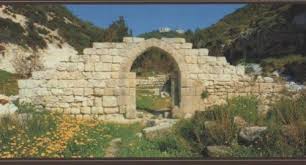
images.jpg Ruins of the chapel still on Mt. Carmel

He would have then followed his compatriots to breakfast, which would have been meatless, home grown or donated food.

The Rule specifies that they were to eat whatever was given to them. I think one way to translate this for our lay lives is a quote from St. Elizabeth of the Trinity “Let us lovingly eat the bread of the will of God.” In our lay Christian lives, we could take this as a profound example of reliance on God’s providence and a deep acceptance of his will in our lives as it presents itself each day.

At all meals they tried to listen attentively while someone read aloud from the Scriptures as they ate.

Our hermit would have gone on with his day of work and prayer, “keeping Scripture as an accompaniment with all [he did.] “

How did he do that? In some of the desert communities (the prototypes of Christian monasticism starting in the third century in Egypt) the Psalms were chanted while work was done. However the rule states that Carmelites were to do their work in silence. Perhaps this Scriptural accompaniment was done by pondering the Scripture in his heart and mind as he worked.

cut a tree fell a tree ax axe
Photo by Tookapic on Pexels.com

When I worked at the Eagle Newspaper in the Press Room, my job was manual labor in nature. The rolling of the press was as loud as an a jet during takeoff. During a “run” there was little conversation, only what was necessary to get the job done, speaking over a head set. I found myself doing exactly what the Rule recommends; working in silence, pondering over the Scriptures and praying as I worked.

One of the crew members and I used to give one another Scripture to memorize. I I developed the habit of keeping a verse or two in the pocket of my uniform that I was working on committing to memory. Perhaps the Carmelites prayed like that as they went about chopping wood, carrying water, working in the garden, caring for their animals , simply praying and meditating on the Scriptures through the day.

The Rule says that the hermit of Carmel was supposed to stay in his cell or nearby when he wasn’t working, “keeping watch in prayer” and “pondering the law of God day and night.” This law is generally understood to mean the Scriptures. I also think that according to Jesus the law of God is love.

O God, we meditate on your unfailing love. Psalm 48:9b

How wonderful to ponder continuously the law of God which is love, and God Himself whom we know is Love.

As St. Teresa, reformer of Carmel was to say hundreds of years later, “Prayer is making time to be alone with the Friend who we know loves us.”

The Brothers of Our Lady of Mt. Carmel crafted a life of love.

photo of man standing on rock near seashore
Photo by Jacub Gomez on Pexels.com

On Sundays our hermit would have attended a community meeting where various issues were discussed and the brothers were to “lovingly correct one another’s faults.” us This does not sound so fun. But we do know that spiritual community and spiritual friendships are indispensable in the life of prayer. We need others to walk, pray, and talk about spiritual things with. We need people who love us enough to help us stay on track, help us to discern God’s will, and inspire us in the love of Christ. Our soul friends help us grow.

At times our hermit may have gone down the mountain to teach, preach, beg food for the community, or be of service to others in some way. When we are people of prayer, our prayer will inspire service and sharing of our faith. St. Teresa said the perfected spiritual human being will be the perfect mix of Mary and Martha: prayer and service.

Our hermit’s dinner would have been much like his breakfast; eaten in silence with his brothers as one of them read aloud from Scripture.

He would have prayed Evening Prayer, attended to any evening duties.

green grass field under blue cloudy sky
Photo by Tom Fisk on Pexels.com

At about 9 O’Clock he would have prayed Night Prayer.

I expect he would have gone to bed early.

And so ended his day, well arranged around prayer, leading to an entire life of prayer and intimacy with God.

After Night Prayer the Carmelites kept a rule of silence until after Morning Prayer the next day. The rule states that “silence is the way to cultivate holiness” and urges them that even during times the hermits could speak with one another that they avoid pointless chatter.

Most of us can probably see how avoiding pointless chatter and guarding our speech would improve our spiritual lives not to mention our relationships. We can make an effort to be kindly in speech and to experiment with silence. So often people feel loved when we are more quiet and can listen to them. I am sure God feels similarly! When we are quiet we naturally turn inward where God lives.

ball ball shaped blur color
Photo by Pixabay on Pexels.com

Back to this staying in the cell thing:

Carmelite spirituality is driven by the belief expressed so well by our St.Teresa of Avila:

“God is within us and we should not leave him there alone.”

Colossians 11:27 says

To them God has chosen to make known among the Gentiles the glorious riches of this mystery, which is Christ in you, the hope of glory.

flight landscape nature sky
Photo by Pixabay on Pexels.com

So you could think of this cell as your heart where Jesus, as we are repeatedly told by Scripture, truly lives.

We could read “Stay in your cell” as “stay in your heart, and when you’re working stay close to your heart, keeping watch in prayer. ”

How did the hermits actually pray?

Early Chrisitian contemplative prayer was very much grounded in Scripture. The Carmelite hermits, similar to the Desert Fathers, would have spent a lot of time memorizing Scripture. The method of inner prayer they used was similar, I imagine, to Meditatio Scripturarem, a sustained going over and over a memorized passage as a way to keep continuously focussed on the Lord. That is what I think they were doing. The Hesychasm (a method of “imageless” interior prayer developed in the desert by the monks of the Eastern Church) of the Desert Fathers had not been developed yet and Lectio Divina (literally “holy reading” a way to pray with the Bible in an interactive way with God) of the Western Church had not been formalized into steps. So I am thinking they used the Scripture in a less formal way than was developed later.

bible-book-christianity-161034

In Carmelite prayer, the important thing, as St.Teresa herself said in general, is a not to think much but to love much. To me that means presence and attentiveness are the main things they would have been trying for.

Active inner prayer is about attention. The words of the Scripture, for this practice, are touch stones of focus.

If you would like to try this early Christian form of interior prayer, I have written about it here.

Carmel is a Marian order but Mary’s name is not mentioned in the rule at all except for the name the Brothers called themselves, the Brothers of Our Lady of Mt. Carmel. How is Carmel Marian? Carmelites consider ourselves to be living the life of Mary, her actual spiritual life. The Carmelite strives to continually ponder God’s word in his heart as Mary did, to cherish Jesus within, to be attentive to God’s presence at all times, and to develop a listening and responsive heart. Then, as Mary did, he takes this love and experience of God to others. He prays with and for the Church as Mary is shown to have done.

The Marian devotion of Carmel is primarily imitation of her, reflecting her, mirroring her heart.

I think this is why we often call her not only our Mother and Queen, but also our sister.

Night Prayer ends each day with a prayer, chant or song to Mary.

Let’s pray one now and ask that she might impart to us her own inner life of prayer and love.

maxresdefault.jpg

Reflection questions:

1. In what ways do you (or can you) develop the contemplative dimension of your life?

2. When is your alone time? Think about what you like to do in your alone time with yourself and God? How do you cherish and protect that time?

3. How do you pray best? What kind of prayer are you most drawn to?

4. In order to live an intentionally spiritual life the early Carmelites practiced detachment from possessions and simplicity of life. What might be the value in that? What are some ways we can simplify our lives: our physical space, our time, our days… to make room for calm, for God ?

5. How can we order our own days to find a rhythm and balance of prayer, work, community, contact with Scripture, and service to others? Do you have any ideas for your own rule of life?

* …”transformation of character conduct and consciousness” is a phrase I borrowed from Gandhi.

Note: this is an adaptation of a talk I gave at a women’s retreat recently. Minus my dumb jokes. And only because I can’t remember them.

Nostra Aetate over shisha: a conversation about inter-religious experience

We are sitting on cushions at a low table, enjoying shisha from a shared hookah in the corner of a light, airy building in a shopping center in Central Texas. There is country music on the radio, and a minty, fruity smoke rising around us in the late afternoon sun.

Frank, (or as I call him,”Frankly,”) is my first late husband’s oldest brother. Our families have remained close over the years. He and his wife, Karin, are visiting from their home in Oak Creek, Wisconsin (Milwaukee area.)

Today, I have set out to interview Frank about his experiences of inter-religious dialogue. I have been reflecting on Nostra Aetate, the Vatican II document on the relationship of the Catholic Church with non-Christian religions. It seems to me that our own Frank is a living example of what respectful friendship between the faiths could look like if taken seriously and personally, lived out in individual relationships and respectful, curious overtures, even shared prayer.

person kneeling holding book
Photo by rawpixel.com on Pexels.com

Frank agreed to talk about his journey, though his natural state is somewhat taciturn. It takes him a while to warm up sometimes… so I’ll wait.

Right now Frank is not sure what he thinks of this hookah business, a hobby that I and his son, Hans have taken up from time to time. He stares at the plastic sanitary tip of the hose we have handed him, unsure of what to do with it.

“?”

While he figures this hookah thing out, I will give you some details to confuse you about Frank. (I say confuse because some of the facts about him are not usually found together in one person.)

Introducing Francis K. Pauc, West Point graduate, Army veteran (helicopter pilot) peace activist, father of an Iraq war veteran (Hans, mentioned above.) He is also a volunteer at the local V.A. hospital, an avid defender of immigrants’ rights, friend of Dominican Sisters, assister of people in the Catholic Worker movement (which was founded by Dorothy Day), and writer of many letters to the editor on issues of import.

He has written a book, available on Amazon Kindle, and in paper back, called Father at War. He is a recently retired dock foreman of a shipping company, a devout cradle Catholic with a long and distinguished history of being active in his parish, St. Stephen’s.  He has been twenty years a lector, a past RCIA teacher, and past parish council member, among other activities.

He is also the token Catholic at the Buddhist Sangha at Milwaukee Zen Center, frequent attender of the Orthodox Jewish synagogue in his area, and he now and then hangs out at the local mosque. He is a regular pray-er/visitor at the Sikh temple in his neighborhood.

Frank is the father of three adult children, long time husband to Karin, who he met and married while stationed in Germany as a young man.

He is of Slovenian heritage but is sometimes mistaken to be Turkish. Lately he has grown a long beard and looks very Orthodox Jewish. On that last long peace walk his beard became a bit dred-lock-ish.

I have known Frank since the late eighties when I started dating brother # 6 in the Pauc family of seven boys, Marc Blaze.

Frank is starting to be amused with the hookah experience. I can tell he is comfortable enough I can ask him questions now.

Fortunately, besides his big, German village wedding, his journey learning about other faiths is his favorite subject.

His habitually taciturn, crabby look becomes a warm, soft- eyed lucidity now as I begin to ask how all this started for him. When did he first learn about other religions, I ask, blowing out my delicious smoke.

Frank says his first real look at another religion was learning about Islam in the Army, since he had to learn Arabic. Then he took a refresher course in Arabic with someone from work, years later, at a Muslim culture center. He made more friends there. They didn’t necessarily talk about faith all of the time. They moved from learning Arabic to talking about their kids, their wives, their work, their daily lives.

grayscale photography of woman kneeling on area rug
Photo by rawpixel.com on Pexels.com

After 9/11, Frank wanted to do something personal to cross the widening divide in our country between non-Muslim Americans and Muslim Americans. He ended up going by the mosque. He found the front locked so he went around back to the kitchen. “I thought you guys might need friends.”

“Are you Muslim?”

“No. I am a Catholic.”

Frank is the only person I know who would show up to an unfamiliar place of worship and ask, “Anybody want to talk about God?”

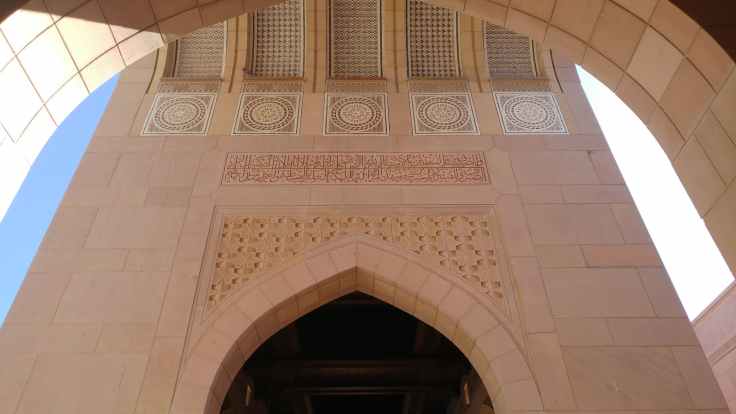
Frank observes that the prohibition on images in Muslim art has created a very masculine looking art form of geometric shapes and calligraphy, which is beautiful, but, to him, missing something. He thinks it’s a conception of the feminine side of the Divine that is absent. This gave him a new appreciation of our knowledge of the the Holy Spirit, the Giver of Life, “Creator Blessed,” and of our Mother Mary exemplifying and reflecting this to us. He thinks our ability to be spoken to by God through images is related to conscious contact with the Holy Spirit and the Virgin Mary through whom the Incarnation was accomplished. The Incarnation puts us in touch with how God communicates through what we can see and touch. It’s why, he theorizes, Catholic art is so glorious. It’s because we have Mary, and we are very in touch with that creative motherly energy and imagery.

cathedral interior religious with benches empty in back
Photo by Pixabay on Pexels.com

He talks about how sad it is that so many Christians have lost their mother. Their art is not as cool as ours, either, he thinks. “There’s got to be a connection here.”

He really did love the Dome of the Rock, though when he went to the Holy Land. “That was awesome.”

But we digress. We smoke in silence a while… listening to the pleasant bubbling sound of the water in the hookah’s base. 

white smoke
Photo by Pixabay on Pexels.com

Years ago, Frank says, he became curious about the Sikh Temple in his neighborhood. He smiles when he remembers his visits there. “You have to eat. They always feed you. You never leave without eating.”

He adds that the music is great. Like a cross between our best praise and worship, and the coolest Indian music ever. Frank likes to find someone and ask them questions like, “Do you think God loves you?” and go from there.

The Sikh Temple he liked to visit was the same one where there was a shooting in 2012 . Frank knew one of the people who was killed. He was among those who offered support. He still likes to drop by and pray.

Sometimes he meets interesting people of other religions in his work as a peace activist. He met a Buddhist monk named Senji on a long peace walk he went on to protest drone warfare. The next year, he, his wife Karin, and his son, Stefan, went to visit Senji in his monastery in Oregon. They had a great time, and found a lot in common, especially in the social justice work the monks engaged in, and their quiet, dedicated life.

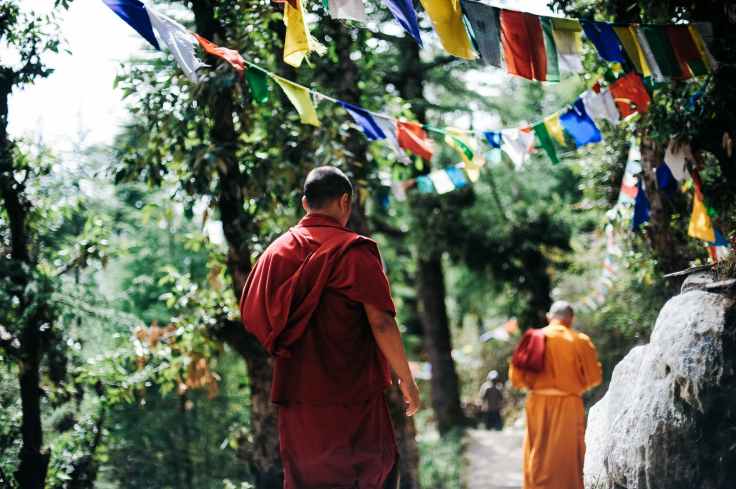
two monks walking between trees
Photo by Wouter de Jong on Pexels.com

The desire for contemplative prayer was what got Frank to visit the Zen Center in the first place. He and Karin had tried to find a place to learn forms of Christian contemplative prayer and practice in a group and had not found one. (They have now.) So Frank and Karin went and sat with the Buddhists. Karin always took her rosary and prayed that. Frank started hanging around all the time and being part of the life of the Sangha, even though there are some things that as a Catholic he can’t do, of course.

He decided to learn more, and he loved hanging around. They appreciated his thoughts. When he thought something was stupid, he always said so, (he always does, regardless of the company,) and he also gave his thoughts as a Christian. They came to appreciate this.  He liked sitting in silence with them.

person meditating
Photo by rawpixel.com on Pexels.com

Going to “Zen practice” regularly brought visible changes to Frank.

I remember seeing these changes in him. He became much more playful and open and calm. Less “‘onry.” I think he really did find peace. I could see it in his face and hear it in his speech. I could tell by  his kinder  attitude, and even the way he carried himself. He still can be found at the Milwaukee Zen Center on a Saturday morning if he’s not volunteering, or traveling somewhere.

He says getting to know his friends at the Zen Center helped him delve into his own faith and prayer traditions all the more.

“It’s made me a better Catholic.”

Learning to sit quietly in what was consciously a form of trusting, un-knowing prayer, for him, brought him nearer to God, and God blessed him with a sense of open-ness and peace. It seems the Lord continued to lead Frank on his unique travels through the spiritual world and to teach him that learning about how other people love and understand God is an act of love.

It is worth remembering that Thomas Merton, a great American Catholic admired by Pope Francis, also got to know Buddhism very well, made friends with Buddhist monks, and found ways to share silence and spiritual practice with them that enriched his own faith.

I asked him what lead him to choose to start showing up at the Orthodox synagogue, rather than Reformed. “Is it because of being Catholic and therefore more into deep, rooted, more ritualistic and mystical worship? ” He said no, that it was because that was the closest synagogue to his house. “What made you want to learn more about Judaism?” One of his more rare expressions crosses his face; an innocent, child like look. “Because I wanted to understand.”

He says he became very close with the Rabbi there and began to take Hebrew lessons. He was often invited to dinner at the Rabbi’s house, and even to Passover. He says he doesn’t think anyone can have the fullest appreciation for their Christianity if they don’t get to know Judaism. He said attending their liturgies changed him as a lector. He grew in his appreciation of the Scripture and reading the Old Testament at mass was a more profound experience for him after seeing the very solemn and reverent way it is read in the synagogue.

He remembers a funny conversation he had with the Rabbi who said, “Oh, you Christians, always forgetting Satan isn’t anything close to equal with God,” when Frank was worried about something.

He still likes going to the Synagogue regularly.

Frank remarks that Jesus was a good Jew, and that he thinks of Jesus as his older brother. I smile, remembering that is what John Paul II said about the Jewish people and the Church. They are our older brother.

backlit blur boys brother
Photo by Kat Jayne on Pexels.com

I say that it strikes me that his inter-religious ministry and journey seems to be about making personal connections, about being a friend. He agrees with that, though he says he is less conscious of that than just wanting to understand others and share with them. He feels compelled about this.

He says he is most impressed by the people who are deeply and “completely sold” on their religion. He respects the most those who have “their faith woven into the fabric of their every day life. When it’s just who they are.” Those are the people it’s easiest to talk to, and who return the interest he gives to them about their faith.

At times he has wondered if he should stop hanging around Buddhists and the Orthodox Jews.  They were quick to say they needed him around, and enjoyed what he had to say. They felt spiritually up lifted by their token Catholic.

At one time in his life, following a series of crises and being simultaneously very wounded by some in his own parish,  he actually struggled about whether to remain Catholic or not.  It was his friends at the Zen Center and the synagogue, who said, “Whatever you do, don’t leave the Catholic Church.” They cared more than anyone else, he said.

Now that he is newly retired, he can spend more time volunteering, working for peace, and walking into temples, synagogues and mosques asking about God and giving the gift of a listening heart to anyone willing to share their faith.

Frank seems to have been aptly named after the great St. Francis of Assisi, who said, “Preach he Gospel at all times. Use words when necessary.”

Frank and Karin are off to their next stop on their summer adventures; a Catholic Worker farm, then a Youth Hostel, a Benedictine guest house, and then on to Mt. Bly in Oregon to visit my off the grid daughter, Maire, and her little family.

I mention, as we get up to leave the cafe, that we’ve actually been talking Nostra Aetate over our shisha. Frank says, “Yeah. That pretty much rocks.”

photo of concrete wall
Photo by Pem Sherwood on Pexels.com

Read Nostra Aetate

Hookah: a waterpipe
Mu‘assel, or shisha tobacco: the molasses-based tobacco concoction smoked in a hookah; often comes in various flavors such as rose, lemon, mint, etc.
Hookah lounge, or shisha bar: an establishment where patrons share shisha

A Christmas meditation

baby holding human finger
Photo by Wayne Evans on Pexels.com

Mary

Warm, soft, vulnerable and alive, this sleeping One in my lap. I caress the tiny forearm, touch the curled, unsure hands. I can’t stop kissing his fast-beating heart, listening to his unpracticed, uneven breath. I touch his soft, dark, baby hair, nuzzling the top of his head with my nose. His little feet, slightly cold- so tiny and perfect- have never yet touched the ground. I hold them in my hands to warm them. I kiss their satiny soles. “Jesus, Jesus, Jesus,” my heart in wonder repeats, repeats. I press him to me, this Lord of mine, with a profound, peaceful, joyful gratitude and love, a protective love. He opens his eyes, still that deep slate gray of the newly arrived human. They hold the newborn’s sage, open gaze; mildly curious, seeming to drink in the powerful love pouring out of the utterly enchanted person looking back at them. He blinks innocently at the tears falling from my eyes into his.

baby wearing blue shirt
Photo by Min An on Pexels.com

Jesus in His Sacred Humanity

I am cold, my arms flailing awkwardly and out of my control. I’m confused. I don’t know what’s happening. I need comfort, warmth, nourishment. And then I am warm, pressed soothingly all around. A deep, sweet peace flows into my mouth and through my body as my unruly hands tangle in her hair; Mama, Mama. The only thing I know is this love, this union, this protection and assurance. I relax completely.

sky space dark galaxy
Photo by Pixabay on Pexels.com

TheBlessed Trinity

I am that I am, Being, Love, Light and Life. I surround my Son, inhabit my Son, I am within my Son, I love my Son, I am my Son.

I have remained what I have been and will be eternally, and I have become what I was not. In my love of humanity, I have finally become fully human, entering the world of time and space in the most profound and humble way. So great is my love, I have been conceived and born into this human cloud of unknowing, emptying Myself, taking the form of a slave, in order to free and divinize my beloved humanity, made of dust, that they might share my Divine Life.

Vulnerable, human, innocent and unknowing, be, oh Christian soul. I have shown you the way to Me: this little Child, this Way, this Truth, this Life, full of humility and trust, gentle, humble, simple, with the need, the open-ness of the newborn. Come to Me, forgetting everything but Love Itself, and be born again. Be little, be free, be loved. Never be afraid, it is I, the Little One, asking for your love.

Answer Me, say from the heart:

Truly, I have set my soul 

In silence and in peace

As the Divine Child has rest in His mother’s arms,

Even so, my soul.

grayscale photo of baby feet with father and mother hands in heart signs
Photo by Andreas Wohlfahrt on Pexels.com