Once upon a time in Rome, during the reign of the Emperor Diocletian (in the third century), a young girl gave her life in witness to Christ under harrowing circumstances hard to imagine. She did this in spite of frightened parents, repeated and successively more cruel tortures, threats, and even persuasive words and temptations from those around her. She also spent some time chained, bleeding, and broken in the Emperor’s dungeon. There Mary is said to have appeared to her and healed her, strengthening her resolve with the promise of victory and the hope of Heaven. Some of her tormenters were converted to Christ by this child’s astonishing courage, faith and perseverance through punishment after punishment.
A Reading from from Book of Revelation
Whoever has ears, let them hear what the Spirit says to the churches. To the one who is victorious, I will give some of the hidden manna…
I wrote this book review for both The Eagle newspaper and for ATX Catholic. I think it is such an important book and such an urgent issue that I wanted to share it everywhere I can.
Ihave come to the top of the mountain to a place we now call, St. Baume (Holy Balm) * to visit my patroness, St.Mary Magdalene. I am not in as good a shape as I used to be. Getting myself up this mountain was not that much fun for me, plus I’m very banged up.
But now that I am here, I feel refreshed by her smile when she comes out of the cave to meet me. She is on her way somewhere with a water jug, so I just follow her. She is watering what looks like a kitchen garden, with flowers planted in between the vegetables. She seems to smile at every plant.
Back at the mouth of her cave, she takes my backpack off my shoulders, dusts me off, invites me in.
I feel a lot better now, as she sets out bread and olives on a piece of clean, rough cloth, setting a wild flower in the middle.
My eyes adjust to the comparative darkness, and I look around me at her hermit’s cave. It is sparse, with only the necessary things for living. Knowing her, I am not surprised to see that she often brings in flowers from outside, set in little clay drinking cups in various places where she could balance one.
The only thing I didn’t expect was the art. The cave walls are full of simple, colorful murals. Jumping up to look more closely, I can see they are vignettes, that they tell a story. I am thrilled when I realize it is the Gospel story. I know the actual written Gospel was probably never seen by St. Mary Magdalene, but I also know she lived this story, and that some of it rests on her testimony.
Delighted, I ponder over several of these pictures.
She is grinning over my shoulder, reaching out to touch a figure of Jesus teaching with his arms wide. She guides me to other paintings, clearly hers, touching them, chuckling at some of them, because of memories of her own.
I wonder how she did these with the scant materials available to her. I think of the day of Pentecost, at which she was present, and reason that anyone given the power to speak languages previously unknown to her in order to preach the Gospel and praise God so that all can understand, probably has the ability to preach it in art in a mountain cave in some mysterious way.
I am surprised to find a picture of myself with Jesus. “Hey that’s me!” She smiles. Some scenes from my life are mixed in with the Gospel story as if I were part of it. Other depictions I recognize as my own life, the painting showing Jesus taking part. In places, it is hard to tell which story is which.
I reflect that the Gospel is not just a story that happened a long time ago; it is alive and happening every day, and we are each part of it.
“It is no longer I who live but Christ who lives in me.”
Turning back to where I had been sitting, I notice there is a stream running through the cave. It seems to come from somewhere within the mountain, and to flow out of the mouth of the cave, and down.
I have never seen anything like that before.
This is a good opportunity to change the bandages on my wound again. As I begin to remove the sweaty, stinging cloth from my chest wound, she watches with concern.
She has me kneel at the edge of the water. She brings a basket, setting it beside us. She dips a small pitcher into the stream and pours the water onto the wound. She pulls from her basket a broken alabaster jar I recognize, anointing the deep wound gently with fragrant ointment.
I feel a deep sense of peace, my breathing becoming easier as warmth spreads though my body.
I have had this wound such a long time, I had forgotten how painful it has been. It has never healed, only become deeper, more jagged, bleeding so I have to change the bandages on it several times a day.
The relief is tremendous.
Everywhere the water splashed on the rock floor, tiny white flowers have sprung up, like glittering little stars in the dim light of the cave. She picks one and hands it it to me.
The chest wound, I am surprised to see, is still there. Not only that, but it bleeds still, perhaps more, and the blood drizzles down mixed with water now.
I am surprised, I admit, that it is still there, given the sense of healing I feel.
She explains to me that this kind of wound, this wound of the heart I bear, is what she calls, a “royal wound,” because it is joined to the wound in the Heart of Jesus.
She encourages me to remember the wounds endured by the heart of Jesus: his betrayal, his agony, the abandonment of those who believed in him, the misunderstanding, the mockery and rejection, the torture he underwent, the vinegar to drink in his suffering, his dying cry to the Father from the cross, the last indignity of the lance to his broken heart. Didn’t I remember the blood and water that flowed out as a sign of grace and mercy for us and of the birth of the Church from his wounded side?
I had not thought the worst and latest injuries to my wound qualified. Maybe I thought that because the pain seemed so meaningless to me at the time; just a horrible thing I would never recover from.
I used to understand this lesson she is teaching me. At a certain point it had stopped making sense to me. I realize that does not make what she is saying any less true.
Whether a wound received is meaningless and cruel or if it is one sustained with love, and anointed with personal meaning; either way, Jesus transforms it into his own because we belong to him and we share his life.
He wants our wounded hearts to bleed clean and uninfected, to become, by his grace, life giving and effective, drawing his grace into them and out to the world.
The Magdalene and I sit quietly for a while, and I enjoy the calm I feel.
She squeezes my hand and tells me that with time and holy living, the blood and water I am seeing flow out of my heart now will become invisible, and the wound will be a quiet, hidden scar. I will feel a gentle ache from time to time, and I should let it serve to remind me of this day; of this love, of the heart of Jesus, and of my new chance at life.
Now she leads me along the stream, reaching back for my hand. We pick our way through more and more glittering flowers toward the heart of the mountain.
Suddenly there is space and light and thousands on thousands of people of all races and all times, singing and praying. I realize this is mass, Jesus himself is the priest at God’s alter, under which a river flows, the beginnings of the mountain stream.
We hear the word of God from him reverently. We go up for Holy Communion with all the people, filled with joy and awe. We receive Communion from his hand. Together we kiss his feet.
We pray with all the people for a long, happy time.
Then she leads me back to her cave where it is quiet, and a golden late afternoon sun lights the murals on her wall.
She dips my fingers into a small bowl of a deep red paste, takes my hand, and presses it to a blank spot next to her pictures of the Gospel.
I begin to paint.
*Photo by Jeff Nissen on Pexels.comThe legend of St. Mary Magdalene’s life after the recorded events of the Gospel is that she and her brother and sister ended up in what is now France, where they preached the Gospel. Eventually the Magdalene was said to have retired as a hermit to a mountain cave. Her remains are there and are venerated there to this day. Her feast is on July 22.
Let’s talk about the sexual abuse crisis in the Church again.
I don’t see anything changing.
I don’t see survivors of abuse being put first. I hear innocuous (at best) statements from the hierarchy that sound as if they consulted lawyers before they composed them. I have even heard murmurs that the Church is being persecuted. I am ashamed to say I have even heard this from the pulpit.
I have heard some of the laity blaming the abuse crisis on whatever their pet issue is with the Church.
As a survivor of child rape and various types of sexual abuse from different people throughout my childhood and adolescence, and after years of therapy, I feel I have some authority on this subject though my abuse was not Church related. It is not gay people priest or lay that caused this. It is not celibacy. It is not the lack of female power in the Church. As we are finding out, nuns have also sexually abused children as well, and nuns have been raped and forced into abortion.
The origin of sexual abuse is the sickness of the offender. Not everyone in power becomes a sex offender just like everyone at a party doesn’t become dangerously drunk. There are s lot of things going into this.
I have learned that when there is sexual abuse, similar to someone with an addiction, the problem becomes a family “disease.” A certain configuration happens in the family. There are roles everyone starts playing in order not to speak truth about the problem or to cover it up to protect the whole (or the image of the whole.) Everyone begins to protect the addict or abuser. Anyone who is evidence of the problem or tries to deal with it in an honest way will be silenced in one way or another. The Church is a family. We are sick with this problem.
The Bishops have played their roles and protected the whole (or so they thought) at the expense of the victims and really, in the end, at the expense of the whole.
Some things I think we need to deal with are first figure out how to protect children, seminarians, and nuns in a way that does not just please lawyers or cover for us, but really does something.
Then we need to deal with the enablers of abuse and make sure there is no more of that through education and support perhaps. Maybe we need to bring in other people for them to be accountable to about this rather than just one another. Obviously that is too hard for the bishops to do. They have tried and massively failed again and again. I am not an expert on fixing this problem. I mostly know how not to fix it.
It seems to me we then need to look at the abusers themselves. What’s going on with these people? What makes them do that? What needs to happen to permanently stop their behavior? They need to be stopped. We have to protect others. I also believe the Church is about redemption. What needs to be done for their healing? Once they are removed from access to children and the vulnerable, and they are willing to take responsibility, face just consequences, pursue treatment they should be helped to redeem their lives somehow though they should never be around children again if they have abused a child. If they are not helped in an effective way to heal they will continue to find ways to offend as surely as an alcoholic will find ways to drink.
As a Catholic abuse survivor I feel responsible to speak up. Also people should know it is hard for me (and I can only imagine how hard it is for survivors of clergy sexual abuse) to hear about all this without being triggered into my P.T.S.D.
People say ridiculous things on social media about sexual abuse and they don’t know what they are talking about and how much their attitude hurts survivors to hear.
I have started not to want to see Bishops and Cardinals in their regalia. Seeing their black robes, red hats and big crosses, or their crosiers and miters makes me feel nauseated now even though there are three Bishops I know personally and love dearly. It’s not them personally- I feel better the ones I know are there actually. The nausea is what has happened and how I don’t see anything changing. “Put it all away,” I think.”Why not wear the simple robes of poor Friars as a sign of repentance?”
The clothes they now wear are signs of status and power that just seem so inappropriate right now. I used to like the outfits because they were historic. I don’t like them anymore.
As I have said before all this behavior of secrecy and self/institutional protection even when it comes to how they have at times treated victims of abuse like enemies is very typical also of a family or any group in which the sickness of sexual abuse has or is occurring. This is what humans do when there is sexual abuse. They protect themselves even at the expense of the abused. They protect the group. They protect the perpetrators. It happened to me and it’s happening to the survivors of clerical abuse too.
I have read about and spoken to clergy abuse survivors who met with their Bishops and came away really upset, feeling unheard and uncared for and that nothing has or will change. “Come forward,” they say, seeming to have no idea how hard that is for people like us. Most of us have had more than enough of people who don’t listen and don’t help. Sometimes I think that part of my experience has been worse than the abuse itself. It’s re-traumatizing.
The hierarchy does not seem to understand how angry the laity is, either. We want to see Jesus purifying the Temple with a whip cord and overturning some tables. Now. Now.
We don’t see that. Don’t they understand? People are losing their faith. People are leaving the Church they love.
I am deeply Catholic. I am an obedient daughter of the Church (though obviously not perfect) and I am having thoughts like, “How dare you? Why should we listen to y’all anymore? How can you tell US what to do? How can you ask us for money?”
I have to drag myself to mass sometimes. I don’t want to leave Jesus because of Judas. I believe the Church is true. So do so many of us. What are we supposed to do? This is our home, and the Eucharist is at the center of our Catholic life. I refuse to leave. I never will.
I don’t know what to do with all this. I don’t want to read this stuff in the news anymore. It literally makes me sick.
I resent how I had to stop being a Eucharistic Minister because I can’t handle the classes they make us take about sexual abuse in order to serve. This rule is well meaning I know. But….why do WE have to take those classes? YOU take them!
I don’t, as a survivor, think classes would have had any effect on my abusers or their enablers.
After years of inner struggle about those classes I made a call about it. It was hard for me to explain my problem but I got the Diocese to let me take an alternative one- on- one class with a kindly gentle person. She didn’t even hardly mention abuse to me, just the ethics guidelines. But I broke out in hives immediately afterward and felt terrible emotionally for days.
I don’t think those classes help. I worry about other survivors taking them, especially those who don’t realize yet the reality of what happened to them and aren’t ready to deal with it. Those in charge should have trained psychologists available in case someone has a breakdown.
Something like this happened to me before in a different way early in my process when I was young. I was not ready at all. I went home suicidal and feeling like cutting myself. What business do they have risking traumatizing abuse survivors anyway? It is cruel and irresponsible.
I have seen nothing from our leaders that gives me any hope of any meaningful change. I want to see them in sackcloth and ashes. I don’t see that.
My socioeconomic status is fairly low. I do not wield worldly power.
I have been praying, though. Praying and starting to avoid news about the crisis for now.
Here’s what I have prayerfully come up with, and I hope some of you will join me. Starting on the Memorial of Our Lady of Sorrows, September 15, I am going to start wearing black to mass, every mass I attend. I will wear black next to Our Lady whose children have been crucified and continue to be crucified.
I am an obedient and loving daughter of the Church and I mean no disrespect. But I am in mourning with Our Lady. I want Judas to see and repent. I want to never forget and for no one to forget the victims. I want children and nuns protected. I want actual change. I want to see humility and repentance not the protection of power.
#Wearblacktomass in honor of Our Lady’s tears. When they see us they will see her and all her wounded children.
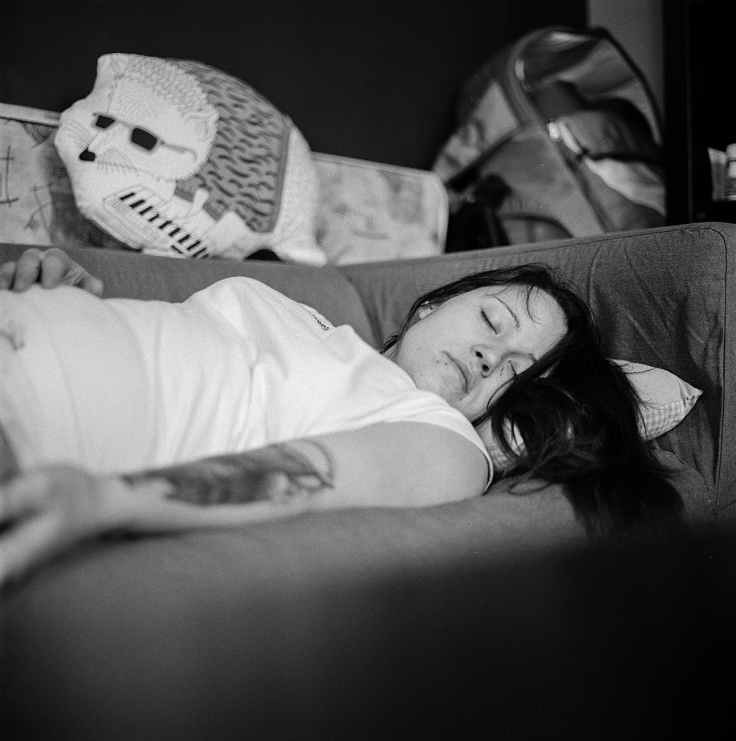
When I go to sleep, I take time, after I get comfortable, to let myself be loved and to feel that God surrounds and fills me with His loving, protective presence. Early in my young widowhood, I used to make it a habit to say, as I sank into my bed, “Into Your hands, I commit my spirit.” I would think to myself, “my spirit….. and everything else.”
I love sleeping, and I love naps. Naps are a kind of any time Sabbath, a rare and splendid solitude. Naps are prayer. Naps are a letting go into God, right in the middle of the day. They are a form of contemplation, really. A nap can even be a dreamy Lectio Divina. I love falling asleep to a quiet recording of one of the Gospels.
I loved it when I found out that St, Therese of Lisieux, Carmelite Nun, and Doctor of the Church, used to fall asleep sometimes during the set hours of solitary prayer in her cell. She wasn’t really supposed to do that. It was an accident. She didn’t feel bad about it, though. She saw it as falling asleep in her Father’s arms. What could be better than that?
Catherine Doherty, in her wonderful book, Poustinia, says,
“Sometimes we are so exhausted mentally, morally, and physically, we can’t do much of anything… we just flop down! Well, to sleep in the arms of Christ is a pretty good idea. You don’t have to do anything. It’s being simple in your relationship with God.”
Holy Naps can also be shared, of course. When my kids were younger, and their dad was still alive, we had a tradition of the Sunday Family Nap. We all cuddled and fell asleep listening to music or a story, and by the time the recording stopped, everyone was asleep. It was a holy Sabbath rest, and I continued to honor it with the kids for years to come.
My second husband and I found that naps were indispensable in dealing with the stress of fighting cancer. We would pretend cancer couldn’t follow us into our bed, and we liked to put on one of those relaxation recordings, wrap the rosary around each other’s hands as a joined prayer, and sleep that way.
Jesus said He would give us rest. But we are to come to Him for it.
“Come to me, all you are are weary and burdened, and I will give you rest.”
I like to think about how he said to St. Faustina,
Know, My daughter, that the ardor of your heart is pleasing to Me. And just as you desire ardently to become united with Me in Holy Communion, so too do I desire to give Myself wholly to you; and as a reward for your zeal, rest on My Heart (Diary, 826).
This is what I like to do, lay my head on Jesus’ Heart, like St. John did at the Last Supper. I let myself be loved and comforted and healed by sleeping there like a tired little bird in the crook of His arm.
So have a nap. Make it a nap of restoration and silent love.
Expect great things from a holy nap.
“He pours gifts on His beloved while they sleep.” Psalm 127
Don’t feel guilty about relishing a good nap, if you can get one; the kind where you know you’re sleeping, and you’re happy about it. Be happy about it. You need it!
As my daughter, Maire’s, friend, April, says, “We need naps after our naps!”
Sweet dreams. And may the love of God enfold you in all your naps!
Ascension Day is traditionally celebrated today in the Church, and it is also considered the first day of the first novena, as Mary and the Disciples remained in Jerusalem to pray for nine days for the coming of the promised Holy Spirit. This is the heart of our novena tradition.
A novena can be a special time between God and the praying soul, a pilgrimage of transformation and insight, as well as a way of “storming heaven,” with a petition. A novena prayed with faith is also a time of expectant waiting.
Whatever I am praying for, I try to ask with an open heart, one that is actively seeking God’s will.
Sometimes God does not give me what I thought I wanted when I began. Sometimes he changes me instead.
Sometimes I begin to get a sense that I should ask for something different than the petition I started with. My prayer seems to be redirected. Maybe this is so that I might pray with the Holy Spirit rather than just out of my own will.
I know, dearest Mother, that you want me to seek God’s holy Will concerning my request. If what I ask for should not be granted, pray that I may receive that which will be of greater benefit to my soul, [and the souls for whom I pray.] ~ from the Novena to Our Lady of the Rosary
Other times, my single-mindedness of purpose grows and I continue with my petition, like the “persistent widow” I am.
When I begin a novena, I am not sure what God will do but I know he will do something!
I try to be attentive to what God may want to say to me during this time of focussed, dedicated prayer.
The divine synchronicity interwoven with daily life reminds me that heaven is near, and that God is always speaking.
The symbolic meaning of having a dove land on the hood of my car and look through the windshield at me while I am praying at a red light may seem hard to miss. But it is possible to think nothing of it. I want to notice and make the connection.
If I dedicate and consecrate these nine days of prayer to cultivating my awareness of God’s voice speaking through life itself as it happens, a novena can be a time of becoming attuned to Holy Spirit and wonder.
If I am praying a novena to a particular saint, St. Therese, let us say, I try to find ways to weave her presence into my life. I may read about her or read from her writings during that time. I will talk to her as I go about my day, ask her to join me in my work and prayers.
I might do small acts of service in her honor; especially the kind she liked during her life on earth, the sneaky kind.
I may make use of imaginative prayer to go into the situation I am praying about, letting St. Therese lead me in bringing God’s light into darkness, to let her show me something, or to visually surround the people involved, with God’s love, with hers, and with mine.
I often ask friends or family to join me in praying a novena. Jesus encouraged us to join together when we ask for something, and it encourages me to know that someone I love is praying along with me.
I like to to begin a novena by going to Confession.
It always seems to me that I can “hear” God better after Confession. The grace released into my life from the sacrament enlivens my prayer.
At mass I may offer my reception of Holy Communion for the person or intentions I am praying for.
I try to drop in at church and visit Jesus in the Blessed Sacrament more often during my novena too, even if only for a moment. I can bring all my concerns there to him for healing; setting them at the foot of his alter for him to arrange in divine order. In his Eucharistic presence, my intentions are blessed, and my troubled heart can rest.
Sometimes I plan a series of nine Scripture verses that I think correspond well with my novena, one for each day to reflect on during the day. Bringing God’s Holy Word into my prayer deepens and interconnects the experience. “God’s word is alive.” Also it never returns to God void but always does what he sends it to do. I trust the word to act on my heart and to return to the Lord full.
I usually give up something at least for a day, or for the duration of the novena. This may be something small, like sugar in my coffee, listening to music in the car, or my favorite drink. St. Therese said her greatest weapons were “prayer and sacrifice.” Fasting and prayer are well established practices for us in our faith when we are commending a situation to God.
Right now I am keeping a novena journal. In it I am recording my prayers, thoughts, insights, Scripture passages and events that stand out to me during this time. It seems to be a fruitful and helpful way to pray, reflect, and notice how God is working in my life through my novena. I look forward to reading it through at the end.
Often when we pray a novena, it is because we are suffering in some way. Part of praying a novena meaningfully can be offering our suffering in union with the suffering of Jesus, that it may be redemptive for others, especially those for whom we pray. St. Therese once offered her difficult walk across the infirmary when she was very ill, for missionaries.
A novena can be a transforming experience when lived and prayed deeply; both for ourselves and those around us.
I like to give thanks at the end of a novena, for all God has done, is doing, and will do in response to my petition, whether or not it looks like my petition was, “granted.” I know that God will only give me what is right and at the right time.
His love never fails; nor does its power to change everything, anything, anytime.
In honor of the month of May being Mary’s special month, here is a list and description of seven of my favorite Marian books. I would love to hear about your own favorites.
I have put these in alphabetical order by author.
1. Gifts of the Visitation by Denise Bossert
In this book we are given a glimpse into Mary’s world; the central place of the Shema in her prayer life, the eighty mile trip Mary (and the author) took across the rugged terrain between Nazareth and Ein Karem, and a greater understanding of why Mary went, and what the visit meant.
The book is organized around the nine gifts of the Visitation. The author not only outlines these, but tells us how to activate them in our own lives. As I read, a vision opened of Our Lady of the Gospel.
In the midst of the sexual abuse crisis in the Church and the profound divisions I meet with every day in the Church and in the world, re-reading this book recently helped me to remember the beauty of our Catholic faith, to have confidence in that beauty, and to remember that Jesus is unstoppable. We have a great and wonderful gift to share in our holy and joyful faith. And we should go in haste as Mary did, with the shining star of the Gospel, which is alive and still unfolding among us as we live it out!
2. The Little Office of the Blessed Virgin Mary from Catholic Book Publishing Company
This is a prayer book based on the Liturgy of the Hours or Divine Office. It has been through several reforms to help it conform more closely to it, and there are various versions of The Little Office. This one is my favorite because of the modern language and the close relationship it has with the Liturgy of the Hours I pray with every day. You can also find this version online.
The Little Office, still used by some religious orders, runs on a one week cycle rather than th four weeks of the Liturgy of the Hours. Each day has a different Marian theme, such as Immaculate Conception, Mother of the Church, etc.
Along with the usual Psalms, canticles Scripture readings and prayers, a special Marian reading is included for each hour such as a passage from a Church Father, an ancient homily, or a Church document. Though it is usually brief, it is a rich addition.
Most of all, I love the gorgeous Marian antiphons throughout.
The robe you wear is white as spotless snow. Your face is radiant like the sun.
I used to pray the Little Office with my first husband after we consecrated ourselves to Mary. It was a great introduction to praying the Liturgy of the Hours, very beautiful and easy to use. I still pray it often, especially on Marian feast days and in the months of May and October, or any time I think of it.
3. Queen of Angelsby Janice Connell
Oh what is it about this book? The writing seems a little syrupy when I read it aloud to others. However, like the tender words of one’s own mother, reading it privately is balm to my soul.
Especially during difficult times, I tend to carry it around with me in my backpack. It is the kind of book one can pick up, open randomly, read any section, and hear just what one needs at the time. My copy is very dog eared and beat up. Since I tend to give it away and get another copy for myself, it is not even that old.
It is formatted as dialogues between a soul and Mary. The soul asks a question, and Mary answers. There is an ending prayer for each section and a journal entry.
There are Scripture verses and quotes from saints, as well as practical prayer suggestions for developing your relationship with Mary.
Its simple, perhaps at times sugary language mysteriously hits the bullseye for me every time.
I don’t read it aloud to my friends but it surely speaks to my heart.
4. Bogorititza: She who gave birth to God by Servant of God, Catherine Doherty
It would be hard to exaggerate the beauty of Catherine Doherty’s writing; simple, quietly radiant. Catherine was originally from Russia. The “Doherty” is her married name.
The first pages introduce us to her childhood devotion to Mary in her Russian family, how Mary’s icon was a special place in their household, and how Mary’s presence accompanied her everywhere. “Mama Maria” was an important part of her family’s daily life.
Then we learn about Catherine’s suffering during the Russian Revolution and what Mary’s companionship taught her through that experience.
Later she escapes to America as a refugee and began a life of “living the Gospel without compromise.”
Founder of “The Madonna House Apostolate, we see in these glowing pages the meaning of Mary in Catherine’s amazing life of contemplation, service, and community life; the place of Mary’s patronage in the Apostolate, the meaning of Mary to the Church and to the world.
This is a fairly quick but wonderful read full of wisdom and of Mary’s presence in our lives which is like a candle always burning before her icon in our hearts.
5. Mary, Mother of God, Mother of the Poor by Ivone Gebara and Clara Bigemer
This book, written by two Latin American theologians, is scholarly but friendly. It is a look at Mary through the lens of Latin American Liberation Theology. If that sort of thing doesn’t bother you, you may enjoy this book as I did.
Though the Church has become much more friendly to Liberation Theology under Pope Francis, I am not going to claim that this book is Orthodox. However, it is a good book, and, I think, presents ideas worth a listen. For some people it could be a very helpful book.
The authors cover Mary’s humanity and ours, Mary in Scripture, Mary in her Church dogmas, in devotion to her in Latin American countrie. We are given a view of Mary from a social justice perspective.
I first read it as a twenty-year-old attracted to the Catholic faith but struggling with what I thought was a clash of values with the Church. This book opened up the world of Catholicism for me and helped me see there might be room for me in the Church after all.
I have included it in this list because of the turning point it represents for me, and because I still think it has a place in the discussion though it may not be the sort of thing you are used to. I would probably not agree with some of it now, but I still love it and think some people could benefit from reading it.
Be ready to think.
6. Hail, Holy Queen by Scott Hahn
This book is so accessible I read it aloud to my kids, who were a teen and a tween at the time. However, they were spiritually precocious enough to be in awe, as I was, at its depths.
Hail, Holy Queen falls into the category of Catholic Apologetics. Even if you are really into apologetics, you will learn new and fascinating things about Mary in the plan of God all through Scripture in ways that will make your jaw drop at the beauty and perfection of our faith.
We were inspired with wonder and awe of God, with the wonderful and varied ways He speaks to us through the Bible, and the unparalleled glory of our Catholic faith.
St. Teresa of Avila said that consultation of the holy and learned is indispensable in the life of prayer. Learning from Scott Hahn is not to be missed.
7. Mary, the Transparency of God by Servant of God Chiara Lubich
This is the kind of book I have to read a little, put it down, think and pray about it, and then take it up again because it is irresistable. I have read this book again and again. Each time it seems deeper to me.
I had never thought of Chiara Lubich, founder of the Focolare Movement (aka: The Work of Mary) as a mystic. This book taught me more about her (and Mary’s) spiritual outlook.
Chiara begins the book by saying that she thinks it is time to take a fresh look at Mary. She draws a very grounded, very real picture of Mary’s person, her purpose, her soul, her journey, and how each of us reflects Mary’s life in our own. This book is lush, poetic, and beautiful.
There are several new perspectives of Mary in this book, beautifully described. My favorite part might be when Chiara takes a look at St. Teresa of Avila’s Interior Castle and sees in the phases of the spiritual life the events of Mary’s life. Then she shows us what she calls “The Way of Mary.” I thought it was brilliant.
Perhaps we can crown Mary in the month of May by deepening our understanding and love for her, and by renewing our relationship with the “Queen of the Angels, Queen of the May.”
About 800 years ago, a group of men dedicated to the spiritual life seeking silence, solitude, and community in order to deeply know, love, and serve God, began to gather and live near one another as hermits on Mt. Carmel in Israel. This mountain is where Elijah the prophet, his disciple Elisha and their school of prophets had lived near the spring of Carith. It is where Elijah confronted the false prophets of Baal, and God responded with consuming fire, bringing the people of Israel to their senses and back to the one true God. It is where Elijah experienced the “still small voice of God.”
The hermits called themselves the Brothers of Mary of Mt. Carmel. Each hermit lived in a cave or simple dwelling. There was an oratory in the center where they gathered for daily mass. We can reflect on this arrangement as symbolic of the entire family of the Church, that we too are arranged around Jesus in the Eucharist, around the mass which is at the heart of our faith.
Eventually they sought to have their way of life written as a rule approved by the Church. Sometime between 1206 and 1214 they approached the Patriarch of Jerusalem, St. Albert of Avogadro, to do this for them. The resulting rule of life is the shortest the Church has on record, and most of it is Scripture and references to Scripture. It was approved finally by Pope Innocent IV in 1247.
The Rule of St. Albert does not contain a lot of detail but shows in a more general way the spirit of the Carmelite’s life of prayer on the mountain. Every aspect of their lives was crafted to cultivate a continual awareness of the presence of God within and around them. This prayerful awareness practiced daily came to overflow into all of their activities, inspiring their service and leading them to the heights of prayer. They sought to experience the beauty of the Lord more and more, inspiring them to greater and greater love, until they truly prayed without ceasing and were transformed in character, conduct and consciousness* by their union with the Lord.
Paragraph two of the Rule says
Many and varied are the ways in which our saintly forefathers laid down how everyone, whatever his station or the kind of religious observance he has chosen, should live a life in allegiance to Jesus Christ – how, pure in heart and stout in conscience, he must be unswerving in the service of the Master.
For us lay people today, this can serve as a reminder. All of us whatever our station in life, or our personal religious expression within the Church, whatever ways we pray, are all called to holiness. We share a common purpose of unswerving allegiance to Our Beloved Lord.
Carmel is a excellent way. I have heard before that there is no Catholic who does not owe something to Carmel. It is a sure way trodden by saints and Doctors of the Church. Carmel’s charism is prayer, and it is a trustworthy school of prayer. I think every Catholic can benefit from Carmelite spirituality in some way.
The joy and love of contemplative life and profound intimacy with God is here for every one of us.
Hopefully something about the Rule of St. Albert will inspire your own prayer life.
These men had a very simple life free of worry about possessions, property, social obligations and engagements. Their calendars were pretty clear.
All things were held in common and distributed by the Prior according to each ones’ needs.
They didn’t have to wonder what to do. Very little planning was necessary. The rhythm of their lives was basically the same every day.
All this freed them to also have calm, quiet but rich inner lives.
Living as they did may be too much for us. But their dedicated example can encourage us to simplify our own lives and find time for silence and solitude.
So what was a day in the life of an early Carmelite hermit like?
He would be up very early like most people who live close to nature, to light lamps, care for animals, take care of chores.
He would have prayed Morning Prayer from the Liturgy of the Hours..
a collection of Psalms, canticles, Scripture readings and prayers. The Liturgy of the Hours is still prayed by clergy, religious and lay people all over the world today. A free online resource for this is Universalis if you would like to tune in to the official public prayer of the Church, weave Scripture into your day, and find a great way to sanctify time. It is also a good way to order your daily life toward prayer.
Our hermit then would have gathered with the others for mass at the chapel of Our Lady of Mt.Carmel.
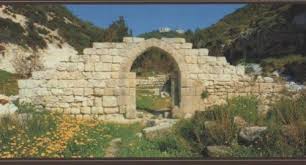
Ruins of the chapel still on Mt. Carmel
He would have then followed his compatriots to breakfast, which would have been meatless, home grown or donated food.
The Rule specifies that they were to eat whatever was given to them. I think one way to translate this for our lay lives is a quote from St. Elizabeth of the Trinity “Let us lovingly eat the bread of the will of God.” In our lay Christian lives, we could take this as a profound example of reliance on God’s providence and a deep acceptance of his will in our lives as it presents itself each day.
At all meals they tried to listen attentively while someone read aloud from the Scriptures as they ate.
Our hermit would have gone on with his day of work and prayer, “keeping Scripture as an accompaniment with all [he did.] “
How did he do that? In some of the desert communities (the prototypes of Christian monasticism starting in the third century in Egypt) the Psalms were chanted while work was done. However the rule states that Carmelites were to do their work in silence. Perhaps this Scriptural accompaniment was done by pondering the Scripture in his heart and mind as he worked.
When I worked at the Eagle Newspaper in the Press Room, my job was manual labor in nature. The rolling of the press was as loud as an a jet during takeoff. During a “run” there was little conversation, only what was necessary to get the job done, speaking over a head set. I found myself doing exactly what the Rule recommends; working in silence, pondering over the Scriptures and praying as I worked.
One of the crew members and I used to give one another Scripture to memorize. I I developed the habit of keeping a verse or two in the pocket of my uniform that I was working on committing to memory. Perhaps the Carmelites prayed like that as they went about chopping wood, carrying water, working in the garden, caring for their animals , simply praying and meditating on the Scriptures through the day.
The Rule says that the hermit of Carmel was supposed to stay in his cell or nearby when he wasn’t working, “keeping watch in prayer” and “pondering the law of God day and night.” This law is generally understood to mean the Scriptures. I also think that according to Jesus the law of God is love.
O God, we meditate on your unfailing love. Psalm 48:9b
How wonderful to ponder continuously the law of God which is love, and God Himself whom we know is Love.
As St. Teresa, reformer of Carmel was to say hundreds of years later, “Prayer is making time to be alone with the Friend who we know loves us.”
The Brothers of Our Lady of Mt. Carmel crafted a life of love.
On Sundays our hermit would have attended a community meeting where various issues were discussed and the brothers were to “lovingly correct one another’s faults.” us This does not sound so fun. But we do know that spiritual community and spiritual friendships are indispensable in the life of prayer. We need others to walk, pray, and talk about spiritual things with. We need people who love us enough to help us stay on track, help us to discern God’s will, and inspire us in the love of Christ. Our soul friends help us grow.
At times our hermit may have gone down the mountain to teach, preach, beg food for the community, or be of service to others in some way. When we are people of prayer, our prayer will inspire service and sharing of our faith. St. Teresa said the perfected spiritual human being will be the perfect mix of Mary and Martha: prayer and service.
Our hermit’s dinner would have been much like his breakfast; eaten in silence with his brothers as one of them read aloud from Scripture.
He would have prayed Evening Prayer, attended to any evening duties.
At about 9 O’Clock he would have prayed Night Prayer.
I expect he would have gone to bed early.
And so ended his day, well arranged around prayer, leading to an entire life of prayer and intimacy with God.
After Night Prayer the Carmelites kept a rule of silence until after Morning Prayer the next day. The rule states that “silence is the way to cultivate holiness” and urges them that even during times the hermits could speak with one another that they avoid pointless chatter.
Most of us can probably see how avoiding pointless chatter and guarding our speech would improve our spiritual lives not to mention our relationships. We can make an effort to be kindly in speech and to experiment with silence. So often people feel loved when we are more quiet and can listen to them. I am sure God feels similarly! When we are quiet we naturally turn inward where God lives.
So you could think of this cell as your heart where Jesus, as we are repeatedly told by Scripture, truly lives.
We could read “Stay in your cell” as “stay in your heart, and when you’re working stay close to your heart, keeping watch in prayer. ”
How did the hermits actually pray?
Early Chrisitian contemplative prayer was very much grounded in Scripture. The Carmelite hermits, similar to the Desert Fathers, would have spent a lot of time memorizing Scripture. The method of inner prayer they used was similar, I imagine, to Meditatio Scripturarem, a sustained going over and over a memorized passage as a way to keep continuously focussed on the Lord. That is what I think they were doing. The Hesychasm (a method of “imageless” interior prayer developed in the desert by the monks of the Eastern Church) of the Desert Fathers had not been developed yet and Lectio Divina (literally “holy reading” a way to pray with the Bible in an interactive way with God) of the Western Church had not been formalized into steps. So I am thinking they used the Scripture in a less formal way than was developed later.
In Carmelite prayer, the important thing, as St.Teresa herself said in general, is a not to think much but to love much. To me that means presence and attentiveness are the main things they would have been trying for.
Active inner prayer is about attention. The words of the Scripture, for this practice, are touch stones of focus.
If you would like to try this early Christian form of interior prayer, I have written about it here.
Carmel is a Marian order but Mary’s name is not mentioned in the rule at all except for the name the Brothers called themselves, the Brothers of Our Lady of Mt. Carmel. How is Carmel Marian? Carmelites consider ourselves to be living the life of Mary, her actual spiritual life. The Carmelite strives to continually ponder God’s word in his heart as Mary did, to cherish Jesus within, to be attentive to God’s presence at all times, and to develop a listening and responsive heart. Then, as Mary did, he takes this love and experience of God to others. He prays with and for the Church as Mary is shown to have done.
The Marian devotion of Carmel is primarily imitation of her, reflecting her, mirroring her heart.
I think this is why we often call her not only our Mother and Queen, but also our sister.
Night Prayer ends each day with a prayer, chant or song to Mary.
Let’s pray one now and ask that she might impart to us her own inner life of prayer and love.
Reflection questions:
1. In what ways do you (or can you) develop the contemplative dimension of your life?
2. When is your alone time? Think about what you like to do in your alone time with yourself and God? How do you cherish and protect that time?
3. How do you pray best? What kind of prayer are you most drawn to?
4. In order to live an intentionally spiritual life the early Carmelites practiced detachment from possessions and simplicity of life. What might be the value in that? What are some ways we can simplify our lives: our physical space, our time, our days… to make room for calm, for God ?
5. How can we order our own days to find a rhythm and balance of prayer, work, community, contact with Scripture, and service to others? Do you have any ideas for your own rule of life?
* …”transformation of character conduct and consciousness” is a phrase I borrowed from Gandhi.
Note: this is an adaptation of a talk I gave at a women’s retreat recently. Minus my dumb jokes. And only because I can’t remember them.

















 Ruins of the chapel still on Mt. Carmel






 Bethany Hang Out