
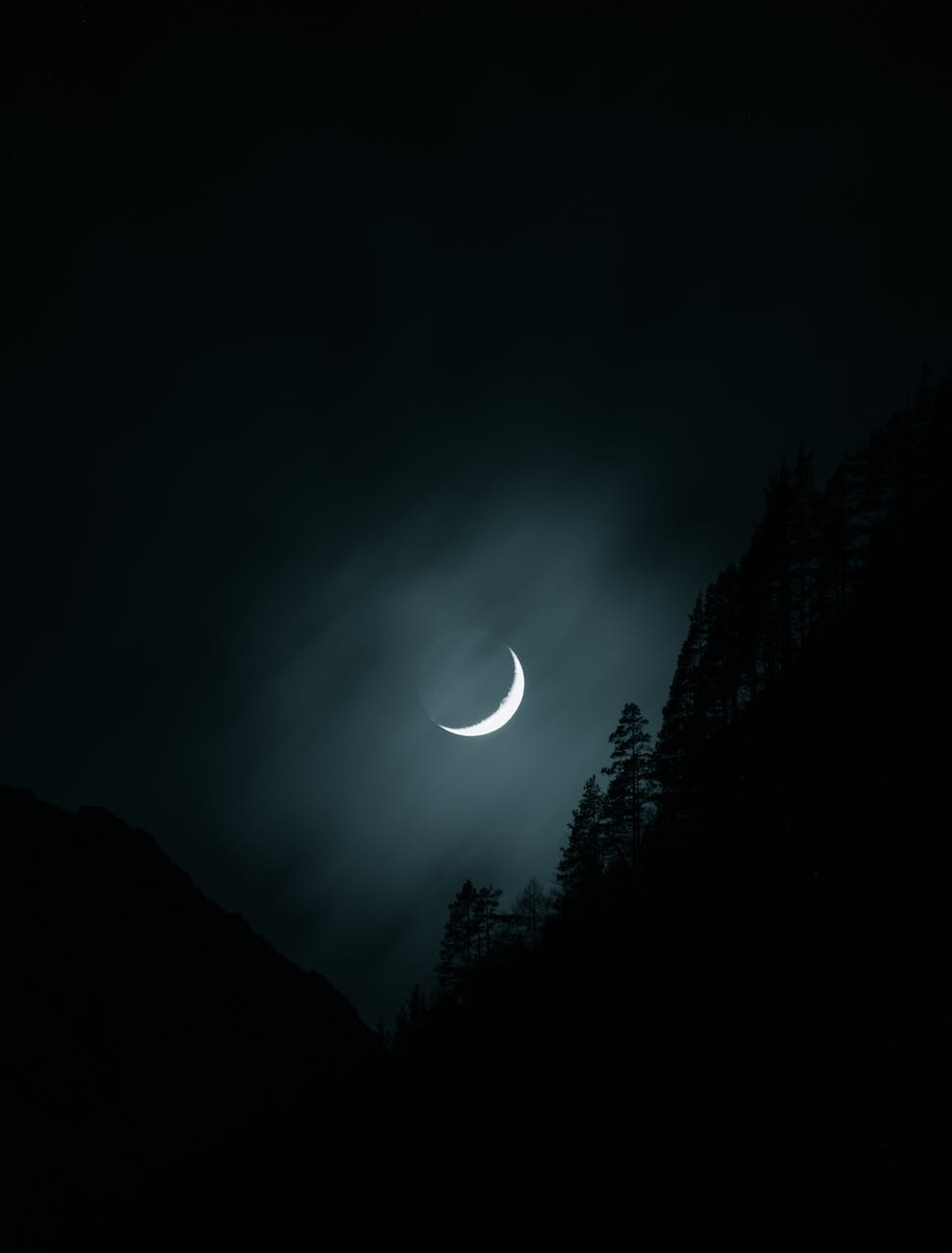
Every morning as sunlight makes its way across the earth, the praises of God awaken from the heart of the praying Church. Behind the sunrise the praises and petitions continue through the hours of the day. As each time zone turns into the darkness, Night Prayer is raised to God beneath the moon and stars.
This is the official prayer of the Church called The Liturgy of the Hours, The Divine Office, “The Work of God,” prayed by Catholics of every vocation, by Pope Francis, by our Bishops, priests, religious, and by many lay people as well; the same words of prayer in every language of humanity.
It is an anchor in the day, a way to sanctify time, express unity with the whole Church, and to call our hearts back to God again and again.
Morning and Evening Prayer are laid out for us daily as a hymn, two Psalms, and a Scriptural Canticle, (a poem or song in the Bible that is not a Psalm) each with antiphons, (a reflective one line prayer) and followed by “Glory to the Father and to the Son and to the Holy Spirit. As it was in the beginning, is now, and will be forever. Amen.”
After the Psalms and Canticle there is a Scripture reading; usually from a New Testament letter.
After that there is what is called a “Responsory.” For example:
Just is the Lord, in justice he delights.
— Just is the Lord, in justice he delights.
He looks with favor on the upright man;
— in justice he delights.
Glory to the Father, and to the Son, and to the Holy Spirit,
— Just is the Lord, in justice he delights.
This will be followed, for Morning or Evening Prayer, by a New Testament Canticle. For Morning Prayer, this will always be the Song of Zechariah (Luke 1:68-79). In the Evening it will be Mary’s Song we call The Magnificat ( Luke 1:46-55), each with their respective antiphons..
After this are the Petitions, similar to the ones we pray at mass. These are different each day. Then we pray the Our Father and a closing prayer that changes daily.
The other daytime “Hours” : midmorning, midday and mid afternoon are more abbreviated. Night Prayer is brief and includes an Examination of Conscience and Act of Contrition or Confiteor, along with its Psalms prayers and canticles. It ends with a Marian antiphon such as the “Hail Holy Queen” to kiss our mother goodnight.
The “Office of Readings” will have a longer reading, usually from the Old Testament, and a Patrisric reading (from a Church father or from the writings of a Saint) and can be prayed any time.
These prayers in their daily format can be found in the four volume version of The Liturgy of the Hours which unfortunately is a bit expensive for some. You can also buy the one volume version called Christian Prayer if the expense is prohibitive. Christian Prayer does not include the Office of Readings.
It’s hard to learn to navigate the volumes at first while you are getting used to this. You might want to buy what’s called The St. Joseph Guide, a little paper book that gives you all the page numbers for each day. There is a lot of page turning and going back to a page and so on. I once heard a priest describe it as “death by ribbons.” Yes it feels like that!
It was worth it to me to learn. The Liturgy of the Hours has become an indispensable part of my everyday life, connecting me consciously to God and to the whole Church at the times of day I pray it. As Secular Carmelite I am committed to pray Morning, Evening and Night Prayer daily.
Through hard times I have prayed every available “hour” to help me get through the day, which was healing and helpful for me. At all times the rhythm of it grounds and connects me with the family of God.
Morning and Evening Prayer should take about ten minutes for you to pray at a normal pace. The other “hours” are shorter.
When we pray the Psalms of Liturgy of the Hours we are praying with Jesus who prayed these too as did the generations before him. We are praying with the whole Church, with the voice of the Church.
I love praying with everyone.
Another thing I love about praying The Liturgy of the Hours all these years is that the Scriptures they contain are written in my heart. A line from a Psalm that is just right will come to me at exactly the right time when I need it. The prayers , Canticles and Psalms are woven into my life now like flowers in my hair.

I look forward to praying the Divine Office as I wait for my coffee to brew, or when I start thinking about what to make for dinner, or when I am getting ready for bed.
I enjoy praying it alongside others as well, especially my family and my Carmelites when we are together. When we are apart the liturgy connects me with them.
Know that praying The Liturgy of the Hours does something. It is never just a recitation.
“For the word of God is alive and active. (Hebrews 4:12a)
“So shall my word be that goes out from my mouth; it shall not return to me empty, but it shall accomplish that which I pupose
and shall succeed in the thing for which I sent it.” (Isaiah 55:11)
We are praying God’s words, and the words of the Church spoken by the Holy Spirit. We are participating in the healing of the world. We are allowing ourselves to become conduits of God’s grace when we join our brothers and sisters spiritually for “The Work of God”.
Now I will tell you a secret. The secret is that nowadays you don’t have to go through “death by ribbons” unless you just want to. I feel like a cheater because I use the app now though I still cherish the books. I have the app called Divine Office on my phone. You can also pray from the Divine Office website or the other one, Universalis.
So you see? It’s not hard. Come on and join us. You’ll be glad you did.
From the rising of the sun to its setting, let the Name of the Lord be praised. (Psalm 113:3)

*This piece originally appeared as my column in The Eagle Newspaper Saturday June 24, 2023








 Bethany Hang Out