Search

Bethany Hang Out

Catholic contemplative life and devotion

Category

Social Justice

The Prophet Elijah: A Model for Holy Activism

I dreamed about the Prophet Elijah a couple weeks ago. We were sitting on a mountainside talking.The conversation we had is lost to me for the most part.  It seemed significant that I dreamed of him. In the time following,  I re-read the stories of Elijah’s life in Scripture. 

*You can find these in 1 Kings chapters 17-19, and 21,   

2 Kings Chapters 1-2, and in Sirach 48:1-11.

The pattern of his life that stood out to me as I read and reflected, is the path of the holy activist. 

Elijah embodies the prophetic response to times of upheaval and injustice. He is an icon of a prophet arising in a time of darkness, burning like a torch.  He spoke truth to power, confronted corruption, and defended the vulnerable. He drew his strength and inspiration from God as he served the hungry, healed the sick, and returned to a hostile land he had run in fear from. Sometimes he was afraid for his life, frustrated, burned out. Then he charged back into the fray, blazing, lit by God’s transforming love. Elijah’s life is a map lighting the path of the holy activist. 

Elijah confronted corrupt leaders 

King Ahab and Queen Jezebel were horrible, shameless, lawless people. They were greedy, murderous, corrupt idolaters and false accusers leading the people into apostasy. Elijah confronted them several times over killing the prophets and destroying God’s altars, taking from and murdering the poor, warning of consequences to come. 

During one of his confrontations with Ahab, the king called Elijah his enemy, blaming him for causing trouble. This happens a lot to anyone who speaks up against wrongdoing.  Elijah doesn’t care what the King says. He contradicts him briefly, undeterred. He doesn’t  let himself be drawn into argument. He delivers God’s message with its warning and walks away, leaving the results in God’s hands.

If you have to call out corruption or injustice, remember to detach from what happens after you have spoken. You can do your part and the rest is up to the hearers to choose how to respond. 

Elijah spoke truth to power

Baal, a pagan god whose worship included child sacrifice, was popular at the time just as destructive ideologies have so much sway now.  Elijah was the only prophet of the God of Israel left and the Queen was trying to kill him as well. Sometimes we have to speak the truth at great risk. 

Elijah called the priests of Baal to meet him for a duel between their false god and the true God of Israel. The prophet of God stands alone against 450 priests of Baal  and before his own people who had gone over to them. He trusted God to act. Dramatically and miraculously, God came through, sending fire from Heaven to consume Elijah’s sacrifice. 

God will give us everything we need to do as he asks; to stand up and speak out even if we are all alone in doing so, he is with us. 

Elijah made use of humor 

I want to add that Elijah made fun of the prophets of Baal as they called to their false god.  He taunted them sarcastically about whether their god was sleeping, or deaf or busy. “Maybe you should yell a little louder.” 

Making fun of the powerful can be a good thing at times like these so we aren’t overcome by fear or hopelessness. Those late night comedians keep me going sometimes. I’m all for it. After all, Elijah ends up slaying the false prophets and there are more ways than one to slay. 

So if you can, find ways to laugh. Bring the powerful down to size with humor. 

Elijah served the needy with faith and compassion

After a time of frustration and even despair, God sends Elijah on a journey to help a poor widow and her son who are on the brink of starvation. 

 By the prophet’s prayers and the woman’s trust,  her oil jug never runs dry and her flour jar never runs out of flour until the famine is over. 

Elijah prayed over her son when he fell ill and died while he was there, which brought the child back to life. Elijah shows himself to be a man of profound compassion and faith. His service to the widow renews him and helps him grow. 

If you’re freaking out, an act of kindness or service will help your perspective and give you peace. 

Defending the poor and oppressed

King Ahab and Queen Jezebel conspired to take the ancestral land of a man named Naboth after he refused to sell. It was already against Jewish law to press someone to sell their family land. Then Jezebel arranged false accusations against Naboth because of which he was executed. Then the King took over the man’s land. Naboth stands for all of the poor who suffer injustice and oppression,  from the greed of the rich and powerful, from unjust systems. 

Always defend the poor and oppressed and be sure that even if you don’t think you succeed in doing so, God will, either now or in the future. 

Being guided by God, motivated by love 

One of the times Elijah was in hiding, God asked him, “Elijah, what are you doing?” Elijah pours out his heart to the Lord. He tells him how scared he is with the Queen trying to have him killed. Then he tells God of his burning, intense love for him, which is the spark of his zeal. This is what it means to be a holy activist. Our inspiration, our strength, our courage to confront people in power, our compassion, our hunger and thirst for righteousness, are all from God. 

Now and then it’s important for an activist of faith to do some soul searching with God. What are you doing? Why are you doing it? Is God with you on this? 

Elijah experienced burnout and renewal

Twice in Elijah’s life story, we see him in hiding, scared and frustrated, overwhelmed to the point he wants to die and asks God to let him. He suffers from exhaustion, fear, frustration and self doubt. Twice God comes to him like a gentle parent, giving him bread, telling him to drink some water and have something to eat. Elijah rests, gets some sleep, and is fed by God until he is ready for a new mission, and sets out restored and reassured. 

If you’re overwhelmed or burned out, let God care for you for a while. Rest, get extra sleep, until you’re ready and receive new guidance.

Elijah encounters God profoundly

God calls Elijah to the mouth of the cave he has been staying in, and invites him to experience him passing by. There is a mighty wind, but the wind is not God. There is an earthquake but neither is this God. When Elijah hears a “still, small voice” within himself, in a gesture of reverence as he covers his face with his cloak, recognizing the presence of the Lord. 

Draw from the Source of all life, and practice attentiveness to God’s presence at all times. You will grow exponentially in love, strength and compassion, reflecting the Lord you love and listen to. 

Elijah mentored the next generation to take on the work

An important part of activism is  handing on the spirit of the work to the next generation. Elijah,  after training Elisha at his side, grants him a double portion of his spirit before he is taken up to heaven.  Elisha takes the mantle of his mentor over his shoulders, going on to do the great work of a prophet. 

Whatever form of activism or mission you are involved in, always take time to talk to interested young people and pass on your wisdom and experience.

I’ve been so worried about so many things going on in our country, in our world. Maybe you have been too. Let us look to the Prophet Elijah to light our way, asking him for a double portion of his spirit, praying for the knowledge of his will for us and the power to carry it out. * from the 11th Step of AA

“The lord lives! I am standing in his presence.”

*Antiphon from the Carmelite proper, feast of Elijah the Prophet, July 20 

Immigration, our Catholic faith, the present moment

Most  of the people about to be deported and rounded up into camps are our fellow Catholics; people who are praying their rosaries scared to death. Our people. When the U.S. invaded Mexico  Irish mercenaries were brought in to fight with the U.S.. But when they saw the flag of Our Lady of Guadalupe on the other side they refused to fight their fellow Catholics. They’re known as the San Patricios or The Saint Patrick Brigade, of 1846. I’ve been reflecting on their celebrated legacy in the wake of the protection of our churches as sanctuaries has been taken away. 

We all need to think about how we will respond to possible raids during holy mass. What will you do? 

Our Holy Father has said the way we treat migrants and refugees is as important as the way we treat the unborn. The Scripture says we must treat the alien as our native born and not persecute or oppress them. (Lv. 19: 33-34)  The Catechism teaches us that they are to be treated in such a way as respects their human  dignity, and with compassion. 

The Church understands we can’t accept everyone who comes to us asking for asylum but that we should always treat them with empathy and understanding regardless. Catholics believe in the unconditional dignity of the human person made in the image and likeness of God. Jesus says whatever we do to the lowly we  do to him.  (Matt. 25:40) 

The following are quotes from the Catechism of the Catholic Church on the topics of migration and immigration.

¶1911: Internal quote is from Gaudium et Spes: “The unity of the human family, embracing people who enjoy equal natural dignity, implies a universal common good. This good calls for an organization of the community of nations able to provide ‘for men’s different needs, both in the fields of social life—such as food supplies, health, education, labor and also in certain special circumstances which can crop up here and there, e.g., the need to promote the general improvement of developing countries, or to alleviate the distressing conditions in which refugees dispersed throughout the world find themselves, or also to assist migrants and their families. to alleviate the distressing conditions in which refugees dispersed throughout the world find themselves, or also to assist migrants and their families.’”

¶2211: “The political community has a duty to honor the family, to assist it, and to ensure especially… the right to private property, to free enterprise, to obtain work and housing, and the right to emigrate.”

¶2241: “The more prosperous nations are obliged, to the extent they are able, to welcome the foreigner in search of the security and means of livelihood which he cannot find in his country of origin. Public authorities should see to it that the natural right is respected that places a guest under the protection of those who receive him.”

¶2433: “Access to employment and to professions must be hope to all without unjust discrimination; men and women, healthy and disabled, natives and immigrants. For its part society should, according to circumstances, help citizens find work and employment.”

We may be having a moment here; a moment when God is asking us to stand up even though it’s scary. Everyone worries about the reputation of the Church. We have made our mistakes, often because of that worry.  But we know what is right. I hope we won’t blow this and let this moment pass us by. We haven’t always stood up when we should have. We always worry about the balance  between appeasing authority to effect change or avoid interference in our affairs, and being faithful to our mission and our call to radical love and to “speak truth to power” as some say. I hope our leaders won’t just straddle the fence. In some of what’s going on we will have to pick a side. Let it be the side of the lowly, the persecuted and the oppressed, the stranger, the immigrant, the refugee. 

A friend asked, “I wonder how many of them are named Jesus’. “ 

“All of them,” I said. 

Take refuge in prayer and service on Inauguration Day

Photo by RDNE Stock project on Pexels.com


This post is for those of us for whom the 2025 Inauguration of our incoming president will be a day of grief, or at least a difficult day.

I am very very sad for my country too and worried as well as I have said before. I am horrified by the ugliness and hate this administration is already unleashing into society – bringing out the worst in all of us.

Here are my survival plans for January 20.

I am not watching the inauguration, not in any way. In fact I’m not listening to the news at all that day. Spiritual reading or audio book sounds a lot better.

I plan to celebrate MLK whose day it is. I can do this by being grateful for him, by posting about him, by reading some of his writings, by talking about him with my family, especially with my grandchildren. Locally we have an MLK day March that because of weather will be a caravan this year. We plan to join it.

If you’re home for the MLK holiday then you can make this a mini retreat day for yourself to recharge and put on the armor of God

.
“Put on the full armor of God, so that you can take your stand against the devil’s schemes. For our struggle is not against flesh and blood, but against the rulers, against the authorities, against the powers of this dark world and against the spiritual forces of evil in the heavenly realms.  Therefore put on the full armor of God, so that when the day of evil comes, you may be able to stand your ground, and after you have done everything, to stand. Stand firm then, with the belt of truth buckled around your waist, with the breastplate of righteousness in place, and with your feet fitted with the readiness that comes from the gospel of peace. In addition to all this, take up the shield of faith, with which you can extinguish all the flaming arrows of the evil one. Take the helmet of salvation and the sword of the Spirit, which is the word of God.”

Ephesians 6:11-17

Pray. Because when we pray we are truly putting more love into the world , in whatever way we choose to pray. If we pray with love and attentiveness God will work through us in secret and powerful ways; our soul becomes a door of grace for the movement of divine love into this world. We don’t have to say anything. We only bring ourselves to God with an open heart. He will only do what is right.

So pray in whatever way you can. Pray as much as you can.

I plan to dedicate my actions that day and any suffering I feel or any happiness, all my thoughts words and experiences of the day, to the cause of truth and justice and right. God knows what those truly are so I don’t even have to be specific.

Next, make this a day of service. Do a good deed. Make a connection with someone. You can pick up trash in your neighborhood. Perform a random act of kindness. Volunteer at a local charity. Spend some time really listening to a child and let them lead the conversation or the activity of their choice. Kids remember things like that. Do someone else’s chores. Pay it forward at a drive through. Give someone flowers. Ask a homeless person how they are. You know what to do.


I also think at least for that day Philippians 4:8 has excellent advice for what to keep in mind. I’m going to try to master my thoughts and put that verse into action.

“Finally, brothers, sisters, whatever is true, whatever is honorable, whatever is just, whatever is pure, whatever is lovely, whatever is commendable, if there is any excellence, if there is anything worthy of praise, think about these things.”

Philippians 4:8


I plan to listen to beautiful music and also to take refuge in poetry. I’ve been reading a lot of poetry lately.

Make good use of that dark day of worry fear and grief. Make it something beautiful for God and for others, for yourself.

It’s like putting flowers in guns I think. Only these flowers are able to bring about the change they represent.

This is it y’all. Let’s prepare ourselves with prayer, with beauty, with acts of service, with peace. That’s our real refuge.


Accept in order to Resist

Photo by Lu00f3 Juan on Pexels.com

I, like many, have been struggling with acceptance since Nov. 5th. Ive been thinking HOW are we, how am I, going to make it through this? I’ve made some plans, thought of some things to do to assist others who will be most affected. But I realized that one thing that could help is acceptance. It sounds obvious but sometimes it takes me a while to realize that I am in non- acceptance – which is the most painful, sticky place to be. If stuck in a glue trap or a spiders web, struggle only impedes escape. I – and we- have a lot of work to do, a lot coming that we will have to deal with. If you are familiar with AA and Al-Anon maybe you will recognize this:

“The level of my Serenity is directly proportional to the level of my acceptance.” – Alcoholics Anonymous, The Big Book

We should not accept what is evil, thats not what I’m saying. But for me it’s been hard to accept that this is where we are. Trump is here along with his clown car of malignant crazies. Yes they are cruel and destructive and authoritarian, racist, “Christian” nationalist, anti planet, sexist -etcetera etcetera, everything horrible. They are. But until I can quit being shocked every day by the awful things they say and do I can’t be very useful and I certainly will be emotionally drained. I’m chuckling a little thinking of how the Twelve Steps of AA would sound applied to Trump but maybe the idea of acceptance and sorting out areas of powerlessness from areas of responsibility and possibility is a pretty good idea.

Sometimes I listen to a spiritual speaker named Tara Brach. She is Buddhist but her talks can apply to anyone. She talks about having a heart ready for anything. To have that you need acceptance of the fact of what’s here. This is here. It “belongs” so to speak. Here we are. Am I going to go into this kicking and screaming? Or can I relax and untangle the web, roll out of the glue trap, and be open to what the Spirit is asking of me in these times ? I suspect there will be many glue trap days. But I can return to the first three steps of the twelve:

  1. That I am powerless over the fact that for the next four years this is our government, yes, of madmen. Here they are. And I admit that my inner life has become unmanageable because of my reaction to this fact.
  2. I believe that a power greater than myself can restore me to sanity.
  3. I become willing to turn my will and my life over to the care of God as I understand him.

I think the 11th step is a big part of this too: I seek “through prayer and meditation to improve my conscious contact with God, praying only for the knowledge of his will for me and the power to carry it out.”

I do think intercessory prayer is going to be extremely important in what we are about to encounter. So I’m adding that of course, to my 11th step plans.

Sometimes the only way out is through. So let’s go through. And let’s do it with love.

And let’s remember this is also the Jubilee Year of Hope and we are Pilgrims of Hope.

Hate did not win. Love has not died. It never will. And we belong to love. Lies cannot become truth. They never will. And we belong to truth. Our country has not been overcome by darkness. Because our country has us.

Photo by Sides Imagery on Pexels.com

Pilgrims of Hope

On Christmas Eve the Holy Father knocked on a normally sealed (with bricks) door in St. Peter’s Basilica and gave it a push. Symbolically and ceremonially the holy door was opened wide, ushering in the Jubilee Year of Hope for the whole world so in need of it now. 

The holy door represents Christ, who said, “I am the gate,” and “I am the Way.” He is our door, his heart open wide in welcome, beckoning for us to step in to him, to open the doors of our hearts as well, to him, and to others. 

This door and this holy year are not merely a symbol and a theme, not only a call from the Pope to renew and intensify our faith, to remember hope and to give hope, though they are those things too. Something very real is happening here, a release, a flood of grace from the treasury entrusted to the Church by Jesus, and to Peter who can unlock and lock, release and forgive. 

Veteran Vatican journalist Gerard O’Connell described on the podcast “Inside the Vatican,” being present for the opening of the holy door for the jubilee year 2000 by Pope St. John Paul II. He said we often talk about “ being in the now” but this felt “beyond the now.” I think he was talking about a transcendent present. “Like being in another dimension” he said. I think that sense he had points to the truth of what is actually happening as the Church opens these holy doors all over the world.

Pope Francis urges us to remember that we are a people of hope, a people on a journey, and we have confident assurance that we are on the road with and to Christ. We know where we are going though we cannot see it with our eyes. 

He also asks that we turn and give  hope to others who need food, shelter, freedom, human dignity, people under relentless attack in war,  the refugee and the migrant, the prisoner, the poor. 

He is speaking not just to individuals but to nations, urging them to work for peace and to protect human life and dignity. He calls for rich nations to forgive the crippling and impossible debts of the poor ones. He asks for the richer nations to be mindful also of ecological justice for poorer countries as well.  

He wants to see restorative justice for prisoners emphasized more  than the punitive emphasis we tend to favor. Francis went so far as to open a holy door in a prison (that leads to their prison chapel) and asks that society help these people have hope for their lives beyond prison. 

We are called to works and an approach of mercy for all of these brothers and sisters in need of hope

We can also take advantage of the mercy and grace of this holy year by making a pilgrimage. Most of us can’t get to Rome but each diocese will announce pilgrimage sites closer we can journey to. 

Here are the ones for the Diocese of Austin. For pilgrimage sites near you check your Diocesan website.

  • St. Mary Cathedral, Austin
  • Holy Cross Parish, Austin
  • Holy Vietnamese Martyrs Parish, Austin
  • Our Lady of Guadalupe Parish, Temple
  • Our Lady of Wisdom University Parish @ Texas State University, San Marcos
  • Santa Cruz Parish, Buda
  • St. Joseph Parish, Bryan
  • St. Mary Church of the Assumption Parish, Waco
  • St. Mary Catholic Center @ Texas A&M University, College Station
  • St. Mary of the Immaculate Conception Parish, Lampasas
  • University Catholic Center @ University of Texas, Austin

In order to receive an indulgence:

  • Visit and Pray at a Pilgrimage Site
  • Perform a work of mercy or penance
  • Recitation of specific prayers (If you are homebound and cannot participate in pilgrimage)

We can apply this grace and mercy of the Jubilee Year to our beloved dead to help them in their journey through eternity, for their purification. This is commonly called a  “plenary indulgence.” We share spiritual goods with the dead and with the living in the Communion of Saints. So we can access the special graces of the Holy Year for ourselves as well as others.

Another thing a plenary indulgence does is release us from temporal punishment for sins that have already been forgiven. In current parlance you could think of this as the antidote to “what goes around comes around.”  

This is also a year for repentance and penance. We can take advantage of the grace of this holy year by returning to confession, making amends to anyone we have hurt, amending our lives, beginning again. 

It’s a year of reconciliation and forgiveness. Any forgiveness we are holding back, this year we should  let go. Forgive everyone, everyone. Don’t let anything anyone detain you on your way to Christ. 

We are Pilgrims of Hope. There is a renewal of Christian Joy afoot! Grab your pilgrim’s staff,  put on your pilgrim’s shoes. Let’s go! 

Holy Innocents

Today is the Feast of the Holy Innocents, the toddlers and babies killed by Roman soldiers at Herod’s orders after Joseph fled to Egypt with Jesus and Mary.

I have never liked the traditional way of describing these kids as martyrs. A martyr chooses death rather than betraying Christ. Little children suffer and die before the age of consent and from the terrible things adults do.

I also am not sure abortion is exactly the best modern comparison to what happened that day. As far as we know the tiny innocents in their mother’s womb do not have consciousness yet. I imagine them, at least early on, as in a dreamlike bliss, violently but quickly disturbed and ended by abortion. Abortion is violent and tragic in several ways. However, as Pat Benatar sang, “Hell is for children.”

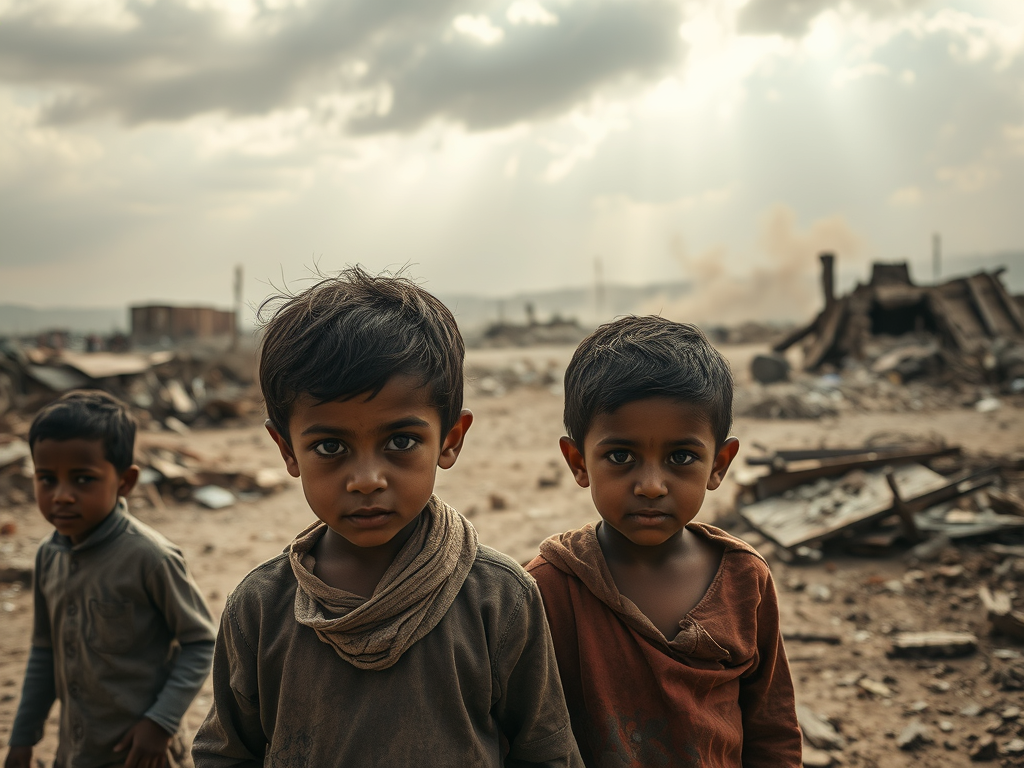
This is a good day to pray for children around the world who suffer the violence and callousness of adults, especially from state sponsored terror and genocide where there is no safety, no relief, where parents cannot protect them, such as in Gaza where parents write their children’s names on their limbs in case they are killed so they can be identified, where children are orphaned, maimed, under the rubble, starving, sometimes being operated on without anesthesia if they are lucky enough to find care at all. Surely their blood cries out to the Lord. We all know the outrageous numbers. Hell is for children.

Ukrainian children suffer war as well, and I am struck by the fact that Russia is taking the children away from their parents and into Russia. It reminds me of our child separation policy during the last Trump administration; something a lot of us lost sleep over, protested but felt powerless to stop. The damage to those little ones is profound and many of them were sexually abused as well, or never reunited with their families. It’s a method of torture I believe, to do this to kids and their parents. Some of those children were nursing babies.

In many countries life is so dangerous or poverty is so great that parents are forced to flee with their children to find safety or go where life is possible only to be rebuffed and unwanted, subjected to detention or camps or sent back to the dangers they fled after an often long and dangerous journey.

In Sudán, famine threatens and children die of malnutrition as parents look on helplessly. This is happening in so many countries.

I haven’t heard what life is like for the children of Haiti as their country descends further into chaos, violence, and gang rule.

We know children are forced to fight and kill in parts of the world. Children are trafficked and live lives of nightmarish abuse.

Children are abused in their churches, schools, and families and too often the abusers are protected instead of the children.

And here in America, the leading cause of death for our children is gun violence. .

These are things adults have done or conditions the world of adults have created that massacre the souls minds and bodies of children who deserve safety and love, freedom to be kids. These are the holy innocents of our time.

This is overwhelming. What are we supposed to do? Jesus was stern about any harm done to little ones.

We need to be a part of lessening their suffering, advocating for them, of challenging the structural sin of our world, and the wrong headedness of the powers that be. Nothing will change if we don’t.

Hell is for children, but we are allied with Heaven and we hold the gift of prayer given to us by God. As we stand up for children and help as we can, God makes our prayers and actions big and far reaching. We can be everywhere he is, holding frightened children, drying tears, giving strength, transforming the world.

Holy Spirit, we pray for the Holy Innocents of our time and we dedicate this day to them. You are the comforter and the giver of life, the one who strengthens, uplifts, transforms, the Spirit of Love and Truth, Father of the Poor. Make your way through this world bringing light and nourishment and peace. Make us repent of the sins of the world and show us what we must do. Guide our prayer for every child everywhere in need of rescue and relief of sorrow and fear. May our leaders prioritize the needs and rights of children to safety and freedom and family life.

Bless every little heart on earth on this day of the Innocents.


Read more: Holy Innocents

The face of Mary

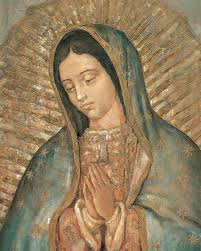
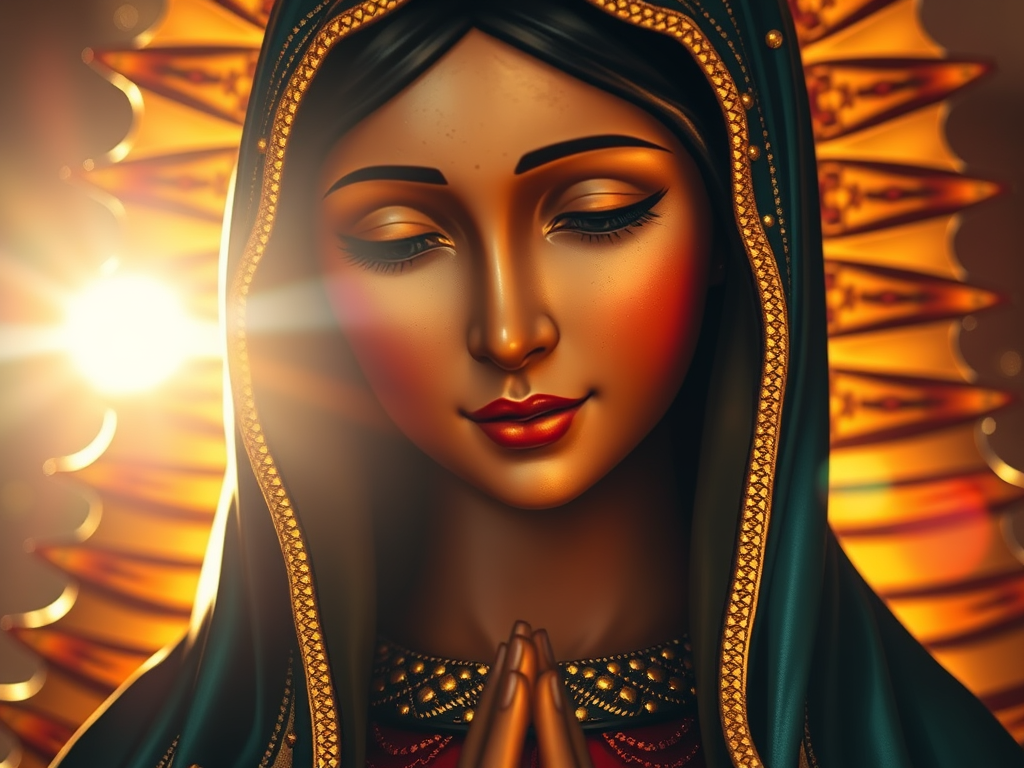
It is Our Lady of Guadalupe day today. It is the only divine portrait of Mother Mary we have. And she chose to appear as an indigenous young woman, one of the little ones, the poor and oppressed of this world as we tend to forget she actually was in her earthly life. She deeply identifies with the poor and marginalized just as her Son does. And we can find her in all the places he said he would be; among those we tend to reject. Let’s not miss an opportunity to catch a glimpse of her beautiful face when she comes to us with hidden roses. May God imprint her image in our souls.

St. Dymphna

Photo by Radwan Menzer on Pexels.com


700 years ago in Ireland a young girl left her home in the middle of the night as swiftly and silently as she could. She left with a priest,  two household servants and a court jester who were her friends.  She was not fleeing a forced marriage to a foreign prince or running away to a convent. She was running from her own father who seemed to have lost his mind after her mothers’ death and was trying to make his daughter marry him in her place. 

Dymphna and her friends were able to make it to a Belgian town called Gheel.  

She must have been a hard worker and had a compassionate heart. She and her friends established themselves in the town and Dymphna began caring for the sick and the poor. She had a special sympathy for people suffering from mental illness. She still shows that sympathy now through her intercession. 

Eventually her father, who was a minor Irish king, found out where she was. He had her priest executed as soon as he arrived and demanded Dymphna return home. When she refused he beheaded her on the spot. She was 15. 

The people of Gheel eventually built a church over where Dymphna was buried. Over the years it began to be noticed that healings happened at her tomb, especially healing from mental illness. 

Inspired by St. Dymphna’s special concern for the mentally ill the people of Gheel began to take into their homes the pilgrims who came to visit Dymphna’s tomb. In a time when the mentally ill were chained,  beaten and  locked away the families of Gheel made these sufferers part of their households with acceptance, freedom, dignity and whatever level of responsibility they could handle. Some stayed for a short time, some for the rest of their lives becoming members  of the family. 

Gheel became famous for this model of family care that seemed to work so well. This tradition is still ongoing though now combined with a hospital that is only used when absolutely necessary, and with modern medicine as part of overall treatment. 

Gheel’s example makes us want to rethink the way we treat the mentally ill, especially those whose conditions  are severe. Gheel shows us how it could be. 

Among us here the mentally unwell often end up without homes or anyone to assist them. Federal and state agencies set up to help these people are understaffed and overwhelmed. It is a testament to  serious failures on our society’s part. To see some poor emaciated sufferer shouting and waving his arms at traffic with toilet paper wrapped around his legs as I did last week breaks the heart. It’s wrong and we know it. Unfortunately our state is last in mental health access in the country. 

Gheel and St. Dymphna challenge us. How can we as people of faith contribute in a respectful and merciful way to necessary change, to the well being of people who suffer mental, emotional or neurological difficulties? Our society is not set up for them. How can we help? How can we change that? 

Perhaps we can begin by asking for St. Dymphna’s intercession and inspiration. 

St. Dymphna,  healer of mental and emotional suffering, pray for us. Pray for everyone in mental or emotional pain, especially those left on the outskirts without resources. You inspired a whole town to take people with mental  suffering into their homes so that they might live near you and the place you are buried.  They still come and stay with you and the people of your town today. Help us build a culture of compassion and acceptance so these children of God can live with dignity among us  as the people they are and so that the rest of us don’t miss out on what they can give, on their potential part in building community.  Show us the way. Amen.

St. Dymphna’s feast day is May 15th. She is the patron saint of the mentally ill, victims of incest and domestic abuse, and runaways.

That’s Shabby

Photo by Sopterean Raul on Pexels.com

I dress kind of shabbily, or so I’ve been told; not in a mean way. I don’t mind hearing that. In fact my bandanas and old jeans and t-shirts with worn out shoes have allowed me to gain some insight into something going on in the churches that is or should be of great concern to us.

Not too long ago I stepped into an adoration chapel at a church I don’t attend as often as my own parish. I was looking at some pamphlets and holy cards near the front door in the foyer. There were some people who had just finished an event that seamed to have ended. One of them came over to me. “Can I HELP you?” She asked pointedly. I was dumbfounded which is funny because this isn’t the first time this has happened to me at church ( I do attempt to dress more nicely for mass). One time when this happened, I had said, truthfully, “Yeah I’m looking for the ministry schedule.” This time I could think of nothing to say for myself. We continued to stare at one another. Suddenly she looked at my Immaculate Heart of Mary shirt and seamed embarrassed. It was OK. I wasn’t mad. I didn’t want her to feel bad. But because of experiences like these I have had and that others tell me they have had or have seen I am worried about something.

I’m worried that we don’t seam to have contact with the poor at our actual Catholic parishes generally. In my area and also in Lubbock the Catholic Churches have kind of “contracted out” that experience to a Diocesan charity all the parishes contribute to. I’m sure it’s not intentionally in order not to have the poor and homeless around our churches. However that is mostly the result. Furthermore it appears everyday Catholics don’t want the poor and the homeless around. Some have police or security guards at the door during mass. There could be a lot of reasons for this. I have asked around but never gotten a satisfactory answer, only vague or seemingly evasive ones or else the people I asked didn’t know.

I just have to wonder what message we give an outsider who may be nervous about coming in. Some people are comforted by the presence of the police but I don’t know any low or no income people who are. Having grown up in an alternative or “subculture” style household I don’t like seeing police around either. No hard feelings I just don’t. Their presence doesn’t mean anything good to me. So I imagine anyone needing help or community but hesitant to enter a church even though they want to may interpret a police presence as unwelcoming and frightening. It’s a great deterrent but is that what we want? How necessary is it to have that? I’m open to answers. I honestly don’t know.

In Austin I attended mass at a parish that has a little attached building in the back of the church where the homeless can come and get something to eat, something to wear, a blanket, whatever. When you come to the church during the day there are unhoused people sitting at picnic tables drinking battled water, maybe eating sandwiches. Some of them come to mass. I like that a lot. There is a chance to get to know them, an opportunity to learn what their lives are like, what their problems are, and in what ways they want to be helped in contrast to how we want to help them. Not everyone stops to say hi to them but some do. What a great idea.

By seeing the unhoused at mass with us we receive the message that we are one with them, that we are all in God’s eyes, on the same level. This is so much better than having them be out of sight.

Photo by Pixabay on Pexels.com

It seems to me that the more contact we have with people in need and get to know what they’re about and what chronically troubles them, and what they think they need, we would be better able to deal with these problems on a larger scale.

Another time I was coming out of mass with everyone else in an Austin church on a very cold night. A young woman was waiting outside. She looked very young and very scared. She had two little kids with her. She was asking for bus money or anything anyone could do. Most people filed past her as if she were not there. Others looked at her as if they smelled something bad. I didn’t smell anything but winter air and unkindness. What are we all doing here worshipping Jesus and then ignoring him outside of mass?

That’s shabby.

Sometimes I have looked away from someone in need when I knew I didn’t have any money or any way to help. I had to learn to cut that out. It’s a shabby reaction. I can at least greet people like this and talk to them, try to find out what’s going on, let them feel cared about. I may even be able to help them in some other way than what I thought they would ask.

In the same parish where some people have treated me like I don’t belong, I was scolded years ago by a long gone priest at a local parish about having been late to mass because a woman with a baby was standing out in the cold asking for help and I tried to help her… which made me late. He said they didn’t want to encourage this kind of thing (people coming up to the church asking parishioners for help) and also that I should prioritize being punctual for mass. This was another time I had no idea what to say so I just looked at him. I said, “Oh.” I wanted to tell him I didn’t think I could do that, just couldn’t. On the way home I prayed about it. “Am I really supposed to do that?” I didn’t know. But it has never made sense to me.

A pertinate Catholic social teaching is the Preferential Option for the Poor. How can we practice that as Church if we are only sending money to some charity we know little about, or random collection of faceless (to us) poor? To me love should be more personal if at all possible.

 If I give all I possess to the poor and give over my body to hardship… but do not have love, I gain nothing. (1 Corinthians 13:3, a &c)

It does seem as if just giving money isn’t enough.

How can we as Church encourage our government leaders to enact policy that is really helpful to the needy if we don’t know what goes on for them or even know any of them at all? When we don’t know we tend to make things up, assume things we shouldn’t, or just believe other people who may have their own agendas concerning the issue at hand. I think we should find out if a politician speaking about these things knows any low income or no income or mentally ill or unhoused people personally before we consider their ideas about what should be done or not done.

I often hear, “We should let the charities take care of that.” The problem with that is that the need is overwhelming. Donations are low. Local charities in my area are out of money almost as soon I they get it. One I’m fairly knowledgeable about only takes calls on Fridays. On Fridays about twenty people can get through and then they’re out of donations again and can help no one else. I usually advise those in need of their help to invite all their friends over and have everyone call repeatedly starting early in the morning. Then maybe somebody will get through.

A good friend of mine who had to resort to food stamps when her husband was ill and needed constant care was only able to get $23 per month in assistance. Sometimes I talked to her and she hadn’t eaten for several days. She lives eight hours away or I would have taken her our dinner. The food bank where she lives is out of food all the time. Charities do amazing work. But we can’t always think we don’t have to help because they’re doing all that on our behalf.

On behalf of another family I was trying to help I called and I drove all over town and could only get a Wal-mart card for $50 from Catholic Charities. They were out of money. Everyone was. The clinic said they couldn’t help the very ill mother either because her extremely painful illness was not on their list of illnesses they could help with. The family, the very sick mom and her two sons only got $11 of food stamps per month. Yes you read that right. Eleven dollars.

I have learned so much about what really goes on by getting to know people who live in survival mode and have to depend on charities, churches and government agencies for the necessities of life either all or some of the time. I learned enough to know I don’t know anything about anything and that I need to make an effort to find out for myself what they go through.

What I’m hoping to do here is make a case for Catholic Churches to stop merely farming out their work for the poor and welcome them instead. As parishioners we are missing out not having the poor around. We are also getting the message that the practice of our faith and worship is separate from helping the poor. Nobody says that but isn’t that the way it is playing out? We want to go to mass and not be bothered with them. We think it is a nuisance. Maybe it is but I don’t think Jesus has prioritized that.

One area parish I called on behalf of someone needing help does refer everyone to that charity the churches here contribute to. However they also have someone in the office who calls and talks to the person and sees what else the parish can do. The person I was calling for had just lost her boyfriend to a tragic event she had witnessed. He had died a few weeks prior. I hadn’t even thought of grief counseling for her I was just trying to get her help with her bills. The woman who called from the church got this girl hooked up with free grief counseling.

All the parishes can do that. Maybe they do. However in my experience of trying to be of help people, what they get when they call a local Catholic Church is sent away with yet another phone number to call or list or a brochure to check out. Sometimes these are outdated and the places on the list don’t even exist anymore. We can do better than that. We can be more personal. We can make sure they don’t feel stupid or unwanted or unwelcome when they come to us. We could have a little food pantry or clothes closet or some diapers on hand at least. Some of our churches do.

We can keep somebody on staff whose job is to truly connect with compassion and respect, to walk people through what they need to do next, help them fill out a form or make a call. Maybe that person can be you. Maybe we can all take turns being there. We can ask questions kindly, really wanting to know; not because we are worried they are going to pull a fast one on us, but because we want to see if there are any other ways we can help.

Yeah I dress shabby. But what’s really shabby? This. It’s shabby. There is no need for it. Sure dress nicely for mass as expected. But first, as a community, let us be resplendent in charity.

Photo by Aniket sharma on Pexels.com

Blog at WordPress.com.

Up ↑