Search

Bethany Hang Out

Catholic contemplative life and devotion

Category

prayer

Lessons in Prayer of the Heart

Photo by Julia Volk on Pexels.com

 I went to see Fr. Cassian Sibley to discuss  Prayer of the Heart in the Eastern Orthodox tradition. The sign on the house read, Theotokos of the Life-Giving Spring Russian Orthodox Church. That has to be the coolest church name I have ever heard in my life.  I told Fr. Cassian so when he opened the door. He is a cheerful man with a kind face and a big bushy beard. He offered me coffee and showed me an assortment of beautiful prayer ropes, or “chotki” used for the meditative repetition of the “Jesus Prayer,” (“Lord Jesus Christ, Son of God, have mercy on me, a sinner”) which is at the core of Prayer of the Heart. Some of the chotkis were made with beads, some with knots in the shape of crosses. Some were quite long, and some were tiny, designed to fit on a baby’s wrist. 

He explains that the simple repetition of the Jesus Prayer is the most common use for lay people, in order to pray without ceasing as they go about their busy lives. I am familiar with this because of one of my favorite spiritual books, The Way of the Pilgrim/The Pilgrim Continues His Way. The pilgrim wanders across Russia praying the Jesus Prayer until his heart prays it continually without effort. The book charts his travel, conversations and spiritual growth in the prayer. 

Fr. Cassian points out that by replacing the “me” in the prayer with the name of someone else, one can use the prayer as an intercessory prayer – while warning that one does not use the phrase “a sinner” while doing so, since a Christian has no authority or right to judge another.

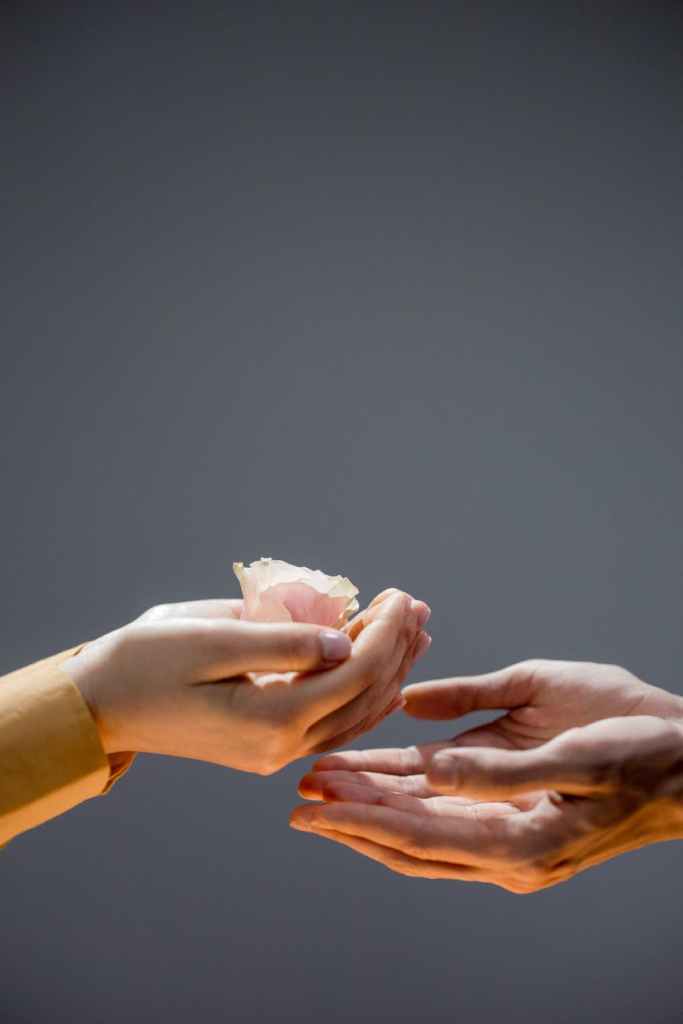
I had brought a rose for Mother Mary which he put in the chapel.  Then I followed him into a pleasant sitting room filled with morning light, and comfortable furniture, lined with books. A parrotlet sang from a nearby cage. I got out my notebook but the conversation was so interesting and lively that I hardly took any notes. I couldn’t have been more content. I was sitting in a cozy chair conversing with an extremely intelligent and deeply spiritual person in a relaxed and friendly way, neither of us hurried. Priests are busy people so I was aware of what a gift his time was.   

Fr. Cassian grew up Southern Baptist but was, as an early teen drawn to the Anglican Church and was preparing to be ordained as an Episcopal priest. As he studied theology though, he became more and more sympathetic to the Orthodox Church, and as a teen, he had read the J.D. Salinger novella, Franny and Zooey, and been introduced to the Jesus Prayer and The Way of the Pilgrim. Eventually he converted to Eastern Orthodoxy and ultimately was ordained as an Orthodox priest. 

I told him my story of being tricked by Mother Mary into falling for Jesus and the Catholic Church after having grown up without religion. He chuckled knowingly and we talked about Mary in both our traditions. I really like the Orthodox title for her, “The Theotokos,” meaning “God-bearer.” 

Our discussion turned to the life of prayer as experienced and expressed in each of our faiths’ contemplative traditions. We have so much in common. There are some interesting differences in our mystical theology, and in our ideas about the experience of Heaven. The Orthodox regard heaven as a continuous free growth of divinization -as an “ever moving rest” – which the Orthodox feel is in contradiction to the experience of what the Western Church calls the Beatific Vision. I said that St. Therese is busy “spending [her] Heaven doing good on earth,”  so maybe we’re not so different there after all. 

We discussed Confession, local events and world news, Church history, the degrees of union with God, the differences between praying with the chotki and the rosary, (for instance we use imaginative prayer and the Orthodox strongly caution against it). 

We talked about the importance of being willing to know Jesus as he is, being ready to shed our own ideas and misconceptions and our lamentable tendency to only accept the aspects of the Lord that we are comfortable with. 

I learned some Greek words and heard a few Russian ones I would be unable to reproduce. 

Eventually we came to the point of my visit, the practice of Hesychasm (the path of deep prayer and living the life of prayer in the Orthodox tradition) and the practice of Prayer of the Heart.  

Before Fr. Cassian gives me practical instructions, he cautions that if one desires to enter into this practice, a spiritual guide, teacher or spiritual director is extremely helpful – which is why the more mystical and non-verbal use of the Jesus prayer is more common, in Orthodoxy, amongst monastics and those with a monastic spiritual father or mother. 

He goes on to say that today in Western Society we think of ourselves as centered in the brain, the mind, and that we tend to pray from there. Biblically, however, the heart is seen as the center of the person where both thoughts and spiritual movements occur. In Orthodox prayer, the pray-er seeks to redirect his or her awareness from the head down into the heart. Fr. Cassian touches his heart often as he speaks, seemingly unconsciously, closing his eyes when he does so. It seems to me that when he does this, a switch is flipped somewhere, a “peace switch” that visibly changes his entire demeanor. Maybe it is a breaker switch because I feel it too! 

Practical Instructions for Prayer of the Heart

Stand or sit comfortably with your back relatively straight, in silence, solitude and stillness. 

Breathe in, and allow one’s conscious awareness to follow that breath as one prays, silently, “Lord Jesus Christ”

Exhale slowly, maintaining, if possible, one’s conscious awareness in the heart, as one prays silently, “Son of God,” 

Inhale, as before, while silently praying “have mercy on me”

Breathe out slowly and prayerfully acknowledge that one is “a sinner.” 

Slowly repeat this cycle again and again. 

Continually bring your awareness into your heart, bringing Jesus’ Name, his presence into it. Eventually it will be the heart that keeps time, so to speak, and the heart that speaks. After that, everything is up to God, and God alone.

The true Prayer of the Heart as he describes it sounds like what a Carmelite would call the grace of infused contemplation, where it is God who acts within us, and we are drawn into union with him. 

We talk about the traditional understanding  of the progress of the soul through the Purgative Way (purification), the Illuminative Way (the growing knowledge of God and his ways) and finally the Unitive Way (one-ness with God).  

Before I leave, Fr. gives me a copy of his wife’s new book of poetry, Zoom and the Neanderthal Girl by Olympia Sibley, (I highly recommend it!) and I give him a copy of my book, Come to Mary’s House; Spending Time with Our Blessed Mother. (Release date September 26)

He invites me to come again, perhaps for dinner with his wife and him. I say that would be great. 

I had set out today to write about the Prayer of the Heart but I can’t help but feel that perhaps Fr. Cassian and I have begun to do our part in healing the Great Schism one conversation, one prayer, one friendship at a time. 

*My thanks to Fr. Cassian Sibley for his assistance with this piece.
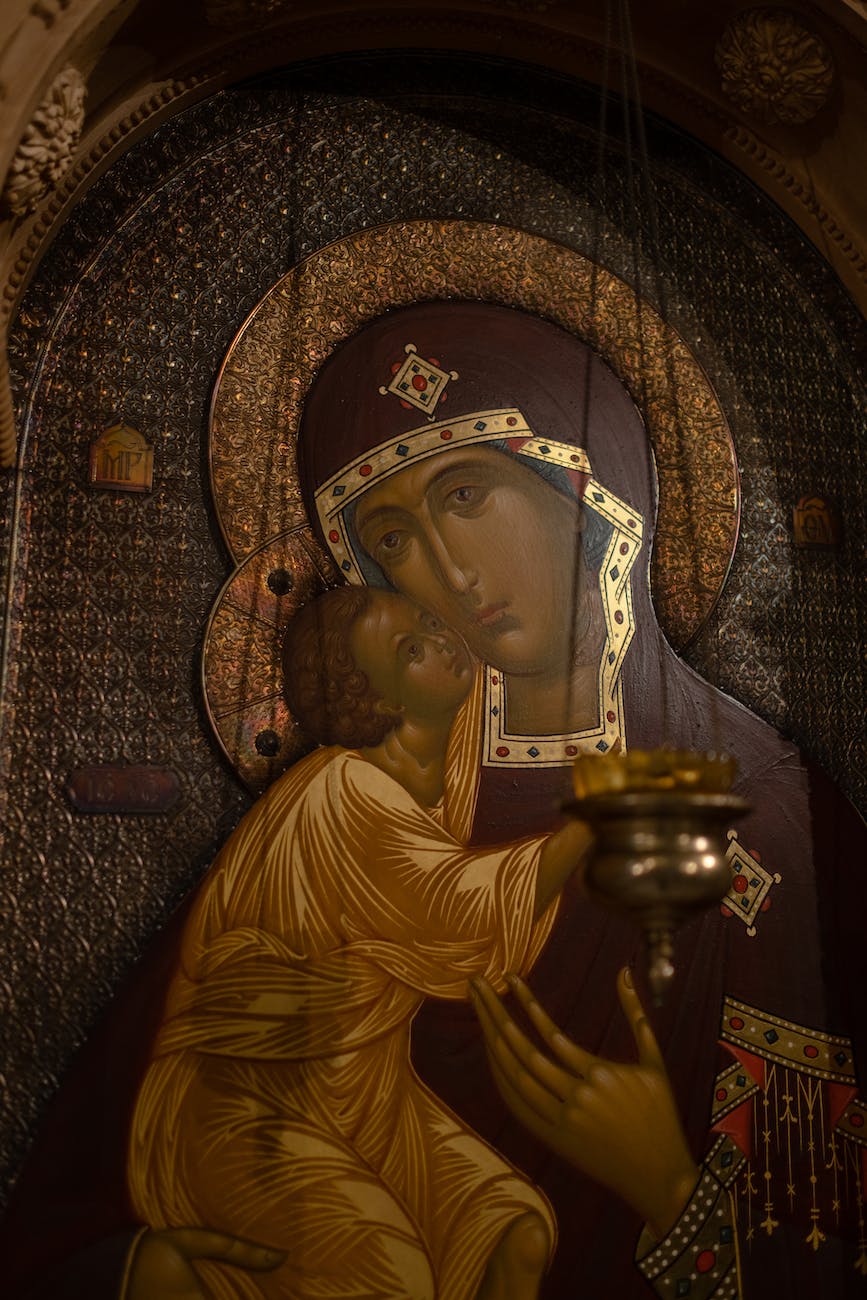
Photo by Ron Lach on Pexels.com

Let Mary be real to you in the Rosary

Photo by Ron Lach on Pexels.com

An aspect of the rosary I love is that praying the mysteries, the stories of the lives of Jesus and Mary helps us remember that the Virgin Mary was and is a real human being. Her life, entwined with her Son’s was an actual earthly life just as ours is. That seems like an obvious thing to say about her but do we really think of her as a real person? Sometimes, though our stylized and symbolic depictions of her are pretty, I wish at least sometimes her Immaculate Heart would be drawn or painted more anatomically, like a Frieda Kahlo heart perhaps. I think this type of image would bring us closer to the everyday very real Mary who had a beating human heart in her chest.

Or maybe we could see her represented working hard with sweat under her arms for once!

Don’t you feel closer to her if you imagine her feet in the dirt of her garden or the weave of the rough fibers of her homespun dress, or when you imagine her laughing? I do. I always do. 

I want her to be a sister and a friend to me as well as my teacher of prayer, mystical queen and holy mother. 

I love the way Our Lady is presented in all of those gorgeous poetic prayers. But I need a hug. I want to put my face on her shoulder and smell that Mary smell. 

I want to love Jesus as completely as she does. I want to see everything and everyone through God’s heart as she sees all of us. 

I want to pray simply as clear morning light, pondering Jesus in my heart and the law of love continually in all I do, in all Mary and I do together. I want her always with me and I want myself always with her. 

I want to practice Marian mindfulness, being always aware of the presence of the Lord and his beauty.  

I want to be ready for anything God gives or calls me to, and to “arise with haste” and joy to go and act on it, share it with people and all of life as Mary did and still does from Heaven. I want to help her with her work for the kingdom, wherever she wants to take me. She is always reminding me to listen and to do whatever Jesus tells me. 

I want to come home to Mary and cook dinner with her. I want to listen to her concerns for her children and I want to be able to comfort her. I want to walk with her, hear her stories and share her happiness. 

I hope to plant more roses in her garden. I’d like to pick some too, and sprinkle the petals over her head and watch her laugh. 

It’s so easy to make her smile. 

When you think of Mary, when you pray the rosary and let her guide you through the mysteries of Jesus, let her be real to you. It will make all the difference. It will make you smile too. 

Photo by Karolina Grabowska on Pexels.com

How to pray Lectio Divina

Photo by Luis Quintero on Pexels.com

Lectio Divina is an ancient prayer form developed by the Benedictines in the 6th century, a way to deeply pray with Scripture. One read attentively, pondered, as Mary did, the word of God, responded back to God, and rested in simple contact with him. In the 12th century a monk called Guigo decided to divide it into more definite steps. For me over time this prayer became less formal and more of a flow that happens naturally in the Spirit. In fact with long practice it is just the way I hear and respond to Scripture when I am really paying attention. Maybe that is how this prayer arose before it had a set of concrete steps to follow. The pray-er experienced a natural, Holy Spirit guided progression between attentive reading, deep prayerful pondering and simple rest in loving awareness and receptivity to God’s presence.

It was cool of Guigo to organize this into steps however. The steps helped me a lot when I was new to it and still do sometimes especially when I am upset and can’t focus. Also everyone is different. Some people pray more freely with a sense of order and clarity. Others do best with spontaneity and receptivity. God loves both of these and can work with equal grace with every soul, no matter the preference.

Here are the steps.

Step One Lectio: First, slowly and reflectively read a passage of the Bible three times, paying special attention to any word or phrase that catches your attention. 

Step Two Meditatio: Quietly ponder the word or phrase that stands out to you slowly repeating it in silence. Ask the Lord what he is saying to you in this Word, brought to your attention by the Holy Spirit.   

Step Three Oratio:  When you receive light on what God is saying in your soul through that word or phrase, respond back to God in prayer, perhaps asking for all that you need to carry out his will, or maybe in praise and thanksgiving; whatever is appropriate. Have a conversation with him.

Step Four Contemplatio:  Rest now in simple love, in communion with him for a time.   

Some people will add: 

Step Five Actio: Like Mary after the Annunciation, arise with haste and act on what you have received in prayer! (Luke 1:39)

Encounters with God don’t always lead us into immediate service but if they do go with it!

Photo by jacts_WAITAMINUTEu2014REALLY? carig on Pexels.com

General advice:

If I don’t have a particular Biblical passage in mind I choose from the mass reading of the day. I consider the readings of the day to be chosen by the Holy Spirit. If none of these particularly catch my attention I pick the Gospel reading. 🙂

You can find the daily readings here https://bible.usccb.org

The number of minutes you pray Lectio Divina is up to you. God will definitely be there throughout regardless. He is unlimited by time. 5, 10, 15 or 30 minutes will all work. I tend to set a a quiet alarm so I am not tempted to worry about time. I know the sound will call me back at the right moment and I can relax into prayer.

If you are new to silent interior prayer, I suggest you start with 5 or 10 minutes at first. You are more likely to make a habit of prayer when you feel you can succeed and are less likely to feel overwhelmed and avoid it. Baby steps!

Some people say to pray at the same hour in the same place every day. You may find this helpful in creating the habit and sticking with it. At times I have found that helpful too.

To me any quiet and solitude I can find will work. And anyway I like to change things up now and then.

Always remember that God responds to any good faith approach. He doesn’t get all weird, scrupulous or worried about things the way we do. He just wants to be with us.

“All I need is Jesus, His will, and silence.” – St. Miriam of Jesus Crucified

See? That’s pretty simple.

Photo by Pixabay on Pexels.com

Christian love: is it fake?

Photo by William Mattey on Pexels.com

What is Christian love? After my conversion to Catholicism (quite a leap from the way I was raised which was without religion,) my family had adjusting to do. My brother was the person I was closest to. We were symbiotic and as my mom said, “joined at the hip.” For me to make such a radical change in my world view seemed like a kind of betrayal by me. In the beginning we argued. I would say I loved him, which wasn’t especially well received when he was mad. Once he said, “I don’t want your ‘Christian love.‘ I just want you and YOUR love.” This upset me. I thought “What’s the difference?”

Pondering this interaction on the drive home, I realized what he meant and what his fear was. When we were kids my parents were very young, idealistic and nonconformist. We looked different. Our Hippie family was ill treated in the small Texas town my parents had moved to for school in 1968. It was a college town, yes, but unbelievably conservative. They did not allow women into the University unless they were married to a male student until 1972.

A lot of people who said they were Christian didn’t let us play with their kids, talked mess about our parents right in front of us, were harsh and cold with my brother and me and we didn’t understand why. We saw them as alienating people with fake smiles, and vacant eyes who were prone to heartlessness. When they said anything about loving us for Jesus’ sake it just sounded like they didn’t want to “love us” (whatever that meant) but Jesus wanted them to play nice. Which they didn’t.

My brother was afraid I would now love him in some generalized fake way, judging him as a person the whole time. It took him time and experience with me as a Catholic to disabuse him of that notion.

What does Christian love really mean? What does it mean to love someone for Jesus’ sake? I do think sometimes people don’t go very far with this. Maybe sometimes we do think it means to play nice.

Someone on social media told me he was tired of the Church being “the Church of nice.” I said I knew we weren’t supposed to be “the Church of Nice.” No we are supposed to be the Church of radical love.

I’m still working this out. All of us are, as my granny used to say, “full of prunes.” We don’t know what we’re talking about and we think we do. We think better of ourselves sometimes than we really are. We can wake up feeling like we love everybody and we hate everybody by 2 O’clock, or at least we hate several people. Some people. I’m no different. Sometimes I tell Jesus, “I know I’m not allowed to hate that guy. I know you love him, I know.” I tell him all about it. Then there is a glimmer, a hint, of what Jesus feels for that person, and I can’t go on with my tirade or hot headed attitude. I can perceive my self both as the fool I am and the affection and love God has for me. Most of the time peace comes to me pretty quickly if I’m willing. Life is so hard and I don’t know why it has to be so hard. It just is.

In that glimmer of understanding and touch of peace, I think lies the answer of the beginning of Christian love, real love, personal love for a unique and unrepeatable human being we may not know as well as we could, or a transformed love for someone we know as we know ourselves.

Photo by Pixabay on Pexels.com

He has put into my heart a marvelous love

– Psalm 16:3a

Christian love comes from union with Christ, the transforming love of “putting on the new self.” (Eph. 4:24. This is how we begin to love others as Jesus loves us. (See Jn. 13:34.) I don’t think this ability comes from baptism alone. I think it comes from prayer and time spent consciously in God’s presence. It is prayer that taught me how to love more fully, to examine my inner motivations and attitudes toward others and myself. Prayer and fledgling love of God inspired me to own up to my character defects and wrongheaded, prideful or selfish way of loving- even my brother.

With prayer and being with God we receive a new clarity and freedom of heart. This doesn’t happen right away. It takes so much time that often I get frustrated with myself. I have to remember that God will “complete the good work he has begun in [me.]”

For I am confident of this very thing, that He who began a good work in you will complete it by the day of Christ Jesus.

Philippians 1:6

Teresa of Avila wrote about detachment in relationships, especially in Chapter 7 on spiritual friendship in her book The Way of Perfection. “Detachment” sounds cold to us today. Based on my own experience I think I know what she means a little bit that we can apply here. This doesn’t mean less love for someone! It really means a detachment from self, from selfishness in our relationships.

How do we do that? Admittedly I don’t have this figured out yet. However, there is a lot of mystery involved so I don’t blame myself for that!

Similar to our efforts and experience of prayer there is an active part to this new kind of human love, and a mystical part.

The active part is more obvious. We decide to be more self aware to notice what to let go of in our ways of relating. Some of this is simple. Let’s have a look at my brother and me. When he went to rehab at age 16, we learned from the staff there how to better communicate. At first we felt silly like we had to learn to talk all over again and we would get tired of it sometimes and revert to old ways. Or we lost our tempers and had outbursts. We talked about this. We decided to see our progress. The progress was we noticed what we were doing wrong. Then with practice we got where we noticed even before we were mean and stopped ourselves. Then later, we didn’t even think about being mean anymore. Or controlling. Or selfish anymore. This is basic stuff for some people but to us it was a whole new fish bowl.

In the mean time I was learning to pray. I must have been quite an emergency to God because he set about teaching me what real love felt like right away. It was the way he loved me, and the way I learned to love him back. His love is simple and tender and clear. It stops the thoughts and worries running through your mind and you don’t even think “Hey I’m being loved.” It just is.

My own love started to simplify itself, both my love for God and my love and regard for other people. I learned to listen to people in the same way I was learning to listen to God. This took work and came from an urging I think was from him, that I do so. But the transformation took time.

My brother decided I was still me and that he didn’t have to worry about me turning into someone else or loving him in some impersonal creepily fake way. He noticed me growing as a person and that he could translate my new language of spirituality into his own understandings about life and his pragmatic view of spiritual things. He noticed I judged him less, not more. Sometimes, like his early sober days, we reverted to old fears in our relationship, both of us afraid of not being accepted as were were. We both learned, we both grew. We learned to accept one another.

And that’s how it is. What do you know? When we are able to love someone in a Christly way, they don’t just experience Jesus through us, we experience Jesus through them as well, whether they are Christian or not. We want to know a person better when we meet them and we know that every one of them belongs. We may not know how we know, but we know.

And pretty soon the whole thing gets out of control and our way of loving grows a new dimension. The world opens up and the possibilities are endless.

What does God say about this?

Beloved,
we are God’s children now.
What we shall be
has not yet been revealed.
However, we do know that when he appears
we shall be like him,
for we shall see him as he really is.

1John 3:2

Applied to learning to love others, I take this to mean in this case that we are already God’s children, but we ourselves are a mystery unfolding, known only to God. The closer we get to the Lord, the more we are transformed as we come to know him and love him as he is, which is for himself; the way he loves us. We will not be perfect at this in this life. However we can cultivate God’s kind of love through prayer, self awareness, God awareness, and the service he inspires. In his mysterious way he will work his beautiful will in us all our lives more and more in pathways of love.

And then we have so much to look forward to: the absolute fullness of love, the fullness of God and union with him.

Photo by Hassan OUAJBIR on Pexels.com

Choosing a method of Contemplative Prayer

And the one who searches hearts knows what is the intention of the Spirit, because it intercedes for the holy ones according to God’s will.
Romans 8:27

No matter the method of meditation, each one employs some kind of anchor to help us master our thoughts during prayer;a scripture passage, a set prayer, a holy word or phrase help us return again and again when the mind wants to do its busy work. In Christian Meditation, this anchor will also be a way to root us in our intention of prayer, openness and presence to the Beloved

There is often a format, a structure that helps us to make our prayer a process, a movement, a conversation, an exchange of love.

The basis of all Christian prayer, including holy meditation, is Jesus.

Moreover it is our intent to connect to this Lord that makes our meditation prayer rather than a mental exercise.

Please don’t worry too much about whether a method is what you think it should be or whether other people should be using it. Use discernment in your choice, but know it is not as if doing the “wrong” one is going to make your or anyone else’s prayer go down the wrong pipe and not to God. That’s just plain silly.

To me prayer is about love and my will to be with God, no matter what technique I use to learn to be ready for an encounter with the Friend. Prayer is less about me and more about God. In my experience, when I seek his will he responds and when I am open and willing to be corrected, he will correct me. This seems to run true for others as well. “If I am wrong, Lord, change my heart.”

The author of the Christian classic The Cloud of Unknowing ( the “cloud” representing the fact that our intellect cannot reach God sufficiently) tells us to use our anchor in meditative prayer as a spark or arrow of love, to pierce through the “cloud of unknowing” straight to the Heart of God. That is a beautiful way to think of it, and it also rings true.

If a certain technique confuses you or you feel you aren’t making good progress with it, make adjustments and carry on. Yes there are pot holes on the road of prayer. I think I have fallen into them all along the way, though I eventually overcame, thanks be to God and God willing, I will continue to.

I am concerned that a lot of people seem to be overly cautious about Christian Meditation or about this or that method. Don’t do anything that makes you uncomfortable, but don’t freak out. Just move on if something you try isn’t right for you. Be free about this. I am. So far liberality of spirit has born great fruit for me,

If you are striving to grow, and you are guided by love of God, faithful in practice, doing your best to conquer sin, if you are living a sacramental life, loving more, then I think you are fine to set out on the Royal Road of contemplative prayer, or to stay on it, wearing the shoes that fit you best.

In short,

don’t be scared,

pray and be cool.

woman in red dress
Photo by TUBARONES PHOTOGRAPHY on Pexels.com

Easter Evening: “Stay with us, Lord.”

When I wake up on Easter morning what I usually feel is happy for Jesus. He is the first person I say “Happy Easter” to. Happy Easter, Beloved Lord. You win!
Love is stronger than death, oh Love Itsef!

Then I think of the Church all over the world and how we are all together in spirit, experiencing this day that is not just a remebrance of the past, but something happening now, a special time of grace from Heaven as we all celebrate together.

Then I think of all the people I miss, especially my family that have died, and I am so grateful I will see them again because of this Lord who accomlished it.

Granted this has been the strangest Easter in any of our lifetimes, but that’s another thing about Easter. Jesus is unstoppable.

I had a good enough day, and was able to pray with my youngest daughter and her four year old in our traditional way. I heard from my eldest daughter, and my friends too. I have had time to pray and reflect and listen to music that is special to me at Easter. It was sad to be away from mass and that is an understatement. I am sure you can understand too.

It was a quiet day, and pretty outside. I blew bubbles on the back porch with my granddaughter, a sweet way to end the day.

And now my place is quiet again. I think about how this is the time maybe the disciples settled down enough they could just enjoy Jesus.

All day he was playing hide and seek, surprising different disciples in different places and in different, wonderful ways, all of them crazy. It had been an overwhelming day, a world inside out day.

They had laughed and cried and screamed, tried to understand and experience impossible things and some couldn’t even believe their own eyes. It was too astonishing.

All that was settled now, and they said, “Stay with us Lord, for evening draws near.”

They got to be with him for 40 more undoubtedly beautiful days.

It must have been hard to stop looking at him, hard to stop hugging him, hard to calm down and just be with him. Maybe it was easier in the glow of the fire to relax in his presence, to enjoy his tenderness and love for them.

To me the signature of the touch of the Lord is tenderness. This is something I am deeply grateful for today.

Sometimes I don’t emotionally identify with Easter that much. My life feels like a long Holy Saturday after several Good Fridays. I’m not complaining. I want to say that I am aware that I possess a much deeper joy than emotional happiness, though I would say I am happy enough, even after all the losses. I have been aware of this joy through it all, not to say I haven’t been desolate because I have. It’s the joy of that rock solid knowledge of God all the way to the center of my soul. I don’t think I would have that if I hadn’t gone through hell so many times; emotional hell, and spiritual desolation.

“My one companion is darkness,” the Psalmist wrote (Psalm 81.) In some ways this is still true, my soul cleared of so many things that filled it. But there is something beyond that emptiness. That something is what I am made of now. The darkness has a radience to it. I lost all the lushness of my spirituality and gained infinitely more. Maybe the disciples found something in their own souls similar after the Ascension.

Carl Jung, asked if he believed in God, said, “No.”
And then he added, “I don’t believe, I KNOW.”

I can identify with that.

I don’t believe in the Resurrection. I know. And that’s a gift of the Resurrection itself, of the power flowing from it.

Even when I don’t necessarily “feel” God I just know and that’s enough for me.

When I do sense his presence, that tenderness I also know as his sign. I hope he feels my tenderness too.

Jesus said, “I will not leave you orphans. I will come to you.” (John 14:18)

In the evening we can rest in that. We can know.

full moon illustration
Photo by Alex Andrews on Pexels.com

Holy Saturday

For me Holy Saturday is usually a quiet, meditative day spent with Mary.

Normally the parish church would be open, but quiet and bare. Catechumen and Candidates would be gathering for Morning Prayer with their teacher, their sponsors perhaps, and the pastor. The feeling would be somber and expectant too, this last gathering before the class would be baptized and/ or confirmed at the Easter Vigil.

Mary seemed to sail through Great Silence like a sparrow released into a moonless night. The others watched her closely for signs of life and awareness, but her heart was fully awake.

“Mother, please,” Magdalene said, “Have something to drink. For me.” Her sisters had brought breakfast. Something hot and steaming was pressed gently into her hand. The cup warmed her fingers. She looked at the tear stained faces and worried eyes around her and took a small sip. She felt the weave of the mat she sat on, the movement of air, the stillness of earth.

The room filled with the others who also sat. As the strips of light from the shutters moved across the floor, no one spoke.

The cup grew cold.

At home I keep my little apartment quiet except for playing some Marian chant now and then. I pray the Hours too.

Our family altar is bare as well.

The door is open.

For you, my God, my soul in stillness waits. Truly my hope is in you.

(See Psalm 95/Catholic Hymn “My Soul in Stillness Waits” by Marty Haugin)

My Soul in Stilllness Waits

round window view of the ocean
Photo by Johannes Rapprich on Pexels.com

Seven ways to Practice the Presence of God

“In the noise and clatter of my kitchen, while several persons are at the same time calling for different things, I possess God in as great tranquility as if I were upon my knees in the Chapel.”~ Brother Lawrence

Brother Lawrence was a Carmelite Lay Brother (d. 1691.) He had an intense realization of “the fact of God” while looking at a dead and leafless tree. He had been a soldier, and after being wounded he became somewhat lame. He then became a footman but, as he said, was “a great clumsy fellow who broke everything.” He no doubt was feeling like a dead, leafless tree himself at that time. But God opened a way for him to find life again. He became a Lay Brother in a Carmelite monastery; cooking, (a job he disliked right away) running errands, sweeping floors and of course, praying and discovering God within at all times and sharing this way he called The Practice of the Presence of God with others.

By making active use of the teachings of The Practice of the Presence of God we can learn to be continually recollected in God, which keeps our souls most open for God’s grace and at his service at all times.

The flow of our lives then becomes a conscious flow of God’s transforming love.

The consequences of this simple practice seep into our personalities and the way we are in the world. We find we even touch inanimate objects with love. We feel affectionate and open towards people. We feel happier, more peaceful, certainly more in tune with God.

1. Morning Offering.

Many Catholics begin the day by dedicating/offering it to the Sacred Heart of Jesus in a Morning Offering. If you already do this, try to do it more consciously than usual. Pay close attention to what you are saying and to Whom you are speaking. Reflect on what the words mean to you.

If you don’t do this, you could start doing this. Write a Morning Offering on a post-it note and stick it on the coffee maker. You could write your own dedication instead of the traditional one if that would be more meaningful to you.

2. Address your thoughts to God.

This may sound overwhelming to do all the time but even recalling God and restarting your conscious awareness of him whenever you remember to, during the day can have a noticeable effect that will grow.

While you are at it, try turning your grouchy thoughts into prayers of praise. No really. So many things in the course of the day are annoying to us. Figure out how to make prayers of praise or gratitude out of these irritating things. You may be surprised how amusing this can be, and how it becomes second nature after a while.

Turn your thoughts into a continual conversation with God. We all live in a river of thoughts, images, memories, plans, worries, what have you. Turn this river toward the Lord, as often as you can remember to.

I think about my daughters more times a day than I care to enumerate. So, for example, I can try to talk to Jesus about them instead of only thinking to myself or worrying or dreaming for them, as parents will.

Today my daughter is moving, My other daughter and her husband are helping while I watch the grandchildren and hope the three year olds get along and the baby isn’t too distressed by the whole thing. I can talk to the Lord about this. “Calm any fears that arise, Lord. Help us to make this a joyful day.” Or I can express my concerns to him if I want to. As Winnie the Pooh says, “It’s friendlier with two.”

selective focus photography of people having a toast
Photo by ELEVATE on Pexels.com

3.Turn your suffering into prayer

The best way is to hold your pain up to God just like you used to bring your bumps and bruises to your mom for her to kiss. Words are unnecessary here unless you want them. Let God sit with you like a loving quiet friend when you are hurting. You probably know this is harder than it sounds.Try it anyway though.

Catholics also have the habit of offering up our suffering in union with the suffering of Jesus. We call this being co-redeemers. When something bad happens to me I consider myself a treasure of grace and try to offer my suffering as prayer for everyone who needs it.

4.Purposely invite God into even the smallest things you do each day

This is at the center of Brother Lawrence’s teaching, and a big part of The “Little Way” of St. Therese as well. Instead of rushing through a task or just trying to get a thing done, it helps to slow down and concentrate on it. As Eknath Easwaran says, “Concentration is consecration.”

Offer your task as if it were an act of prayer and then it will be.

St. Therese would offer the difficult things she had to do for missionaries or for priests. Maybe you would like to offer your work for something you care about to help the world or the Church.

Your offerings can be as simple as saying, “Lord here is my little pancake for you” if you are cooking, for instance. Maybe this sounds silly to you but I recommend you try it for a while and see for yourself. Maybe you too will find God “amidst the pots and pans.”

“We ought not to be weary of doing little things for the love of God, who regards not the greatness of the work, but the love with which it is performed.”~ Brother Lawrence

This habit of being aware of God in your actions takes a lot of practice but even if you only remember to do this a couple times a day God will bless it and you. You will soon notice a difference in how connected you feel to God at all times.

When you are in line somewhere or at a red light (we spend a lot of our day waiting) use some of that time to connect to and talk to God. It’s easy.

5.“Listen” for God with an open heart

No matter where you are, whether you are alone or with others, hanging out with your friends, at work, petting your dog or talking to a small child, try to maintain a sensitivity to God in all situations. You will sense a heightened awareness and connection to other people and all living things when you do this. You will notice beauty you used to miss. You will be more and more able to register signs of God’s will or voice in the events and conversations of your day. It will become a working part of you in time.

6.Presence/mindfulness

We hear a lot about these concepts lately and I think that is good. As Christians, being present in the moment and being mindful in our daily lives is going to mean conscious awareness of God in the present moment, mindfulness of God in all we do and experience.

Fr. Greg McLaughlin said to me once, “You are not on this planet! I don’t think you are even in the solar system! God is in the present moment. God is right here! And right now, right here, he is saying‘ Where are YOU?”

To be absent minded is to be absent to attentiveness to God who is here with us now. This one has been a hard one for me as I am given to day dreaming. I have learned that we don’t have to be perfect at this present mindedness. But every little bit helps.

St. Teresa of Avila’s way of thinking was that “God is within us, and we should not leave him there alone!” She thought we should imagine the Lord beside us at all times until that active mental effort becomes internalized and natural, part of consciousness.

7. Repetition of the Holy Names

Brother Lawrence doesn’t talk about this in his letters or conversations. However this can be a useful key to keep on your key ring that can help you in your quest to cultivate the constant sense of the presence of the Lord in your life during your day. It can open the door for you.

When I am doing a task that doesn’t require a lot of thinking, I repeat the names of Jesus and Mary. For me it does the trick, and brings me into conscious awareness and attentiveness to the presence of God. It is also a prayer because I am calling on them in my heart and dedicating whatever I am doing to them.

Doing this in the waiting times of our lives can bring us into focus as well, so we can fill those empty spaces with the Lord.

It is very helpful in times of stress or fear too or any time I need to re-center.

St. Rose of Lima is said to have memorized the Names of God from the Bible during a time of blankness and darkness in her prayer life, and repeated them while she did her embroidery or any task that allowed it. It was her light through that difficult time.

Before going to sleep I like to tell God what I am grateful for about the day and commend all to him, good and bad.

I also try to fall asleep with the holy names of Jesus and Mary, taking them with me into the night.

“He does not ask much of us, merely a thought of Him from time to time, a little act of adoration, sometimes to ask for His grace, sometimes to offer Him your sufferings, at other times to thank Him for the graces, past and present, He has bestowed on you, in the midst of your troubles to take solace in Him as often as you can. Lift up your heart to Him during your meals and in company; the least little remembrance will always be the most pleasing to Him. One need not cry out very loudly; He is nearer to us than we think.”
― Brother Lawrence

People who wrote about talking to Brother Lawrence remarked on his deep peacefulness. He was a simple Lay Brother who had had a poor and difficult life, wounded in war and witness to horrific slaughter in his own home town. Through his remarkable relationship with God, and this way he found to live always in his presence, he found deep peace and was able to help others find the same.

This way is available to all of us.

Developing these habits may sound like an arduous process. Remember that we do what we can and God will do the rest. God sees and will bless our efforts. He’s cool like that.

flight landscape nature sky
Photo by Pixabay on Pexels.com

Novenas: how to go deeper

photo of man wearing rash guard
Photo by John Cahil Rom on Pexels.com

Ascension Day is traditionally celebrated today in the Church, and it is also considered the first day of the first novena, as Mary and the Disciples remained in Jerusalem to pray for nine days for the coming of the promised Holy Spirit. This is the heart of our novena tradition.

A novena can be a special time between God and the praying soul, a pilgrimage of transformation and insight, as well as a way of “storming heaven,” with a petition. A novena prayed with faith is also a time of expectant waiting.

Whatever I am praying for, I try to ask with an open heart, one that is actively seeking God’s will.

Sometimes God does not give me what I thought I wanted when I began. Sometimes he changes me instead.

Sometimes I begin to get a sense that I should ask for something different than the petition I started with. My prayer seems to be redirected. Maybe this is so that I might pray with the Holy Spirit rather than just out of my own will.

I know, dearest Mother, that you want me to seek God’s holy Will concerning my request. If what I ask for should not be granted, pray that I may receive that which will be of greater benefit to my soul, [and the souls for whom I pray.] ~ from the Novena to Our Lady of the Rosary

Other times, my single-mindedness of purpose grows and I continue with my petition, like the “persistent widow” I am.

When I begin a novena, I am not sure what God will do but I know he will do something!

I try to be attentive to what God may want to say to me during this time of focussed, dedicated prayer.

The divine synchronicity interwoven with daily life reminds me that heaven is near, and that God is always speaking.

bird dove pigeon
Photo by Anastasia Zhenina on Pexels.com

The symbolic meaning of having a dove land on the hood of my car and look through the windshield at me while I am praying at a red light may seem hard to miss. But it is possible to think nothing of it. I want to notice and make the connection.

If I dedicate and consecrate these nine days of prayer to cultivating my awareness of God’s voice speaking through life itself as it happens, a novena can be a time of becoming attuned to Holy Spirit and wonder.

If I am praying a novena to a particular saint, St. Therese, let us say, I try to find ways to weave her presence into my life. I may read about her or read from her writings during that time. I will talk to her as I go about my day, ask her to join me in my work and prayers.

I might do small acts of service in her honor; especially the kind she liked during her life on earth, the sneaky kind.

I may make use of imaginative prayer to go into the situation I am praying about, letting St. Therese lead me in bringing God’s light into darkness, to let her show me something, or to visually surround the people involved, with God’s love, with hers, and with mine.

selective focus photo of red rose
Photo by Hassan OUAJBIR on Pexels.com

I often ask friends or family to join me in praying a novena. Jesus encouraged us to join together when we ask for something, and it encourages me to know that someone I love is praying along with me.

I like to to begin a novena by going to Confession.

It always seems to me that I can “hear” God better after Confession. The grace released into my life from the sacrament enlivens my prayer.

At mass I may offer my reception of Holy Communion for the person or intentions I am praying for.

I try to drop in at church and visit Jesus in the Blessed Sacrament more often during my novena too, even if only for a moment. I can bring all my concerns there to him for healing; setting them at the foot of his alter for him to arrange in divine order. In his Eucharistic presence, my intentions are blessed, and my troubled heart can rest.

Sometimes I plan a series of nine Scripture verses that I think correspond well with my novena, one for each day to reflect on during the day. Bringing God’s Holy Word into my prayer deepens and interconnects the experience. “God’s word is alive.” Also it never returns to God void but always does what he sends it to do. I trust the word to act on my heart and to return to the Lord full.

I usually give up something at least for a day, or for the duration of the novena. This may be something small, like sugar in my coffee, listening to music in the car, or my favorite drink. St. Therese said her greatest weapons were “prayer and sacrifice.” Fasting and prayer are well established practices for us in our faith when we are commending a situation to God.

Right now I am keeping a novena journal. In it I am recording my prayers, thoughts, insights, Scripture passages and events that stand out to me during this time. It seems to be a fruitful and helpful way to pray, reflect, and notice how God is working in my life through my novena. I look forward to reading it through at the end.

clear glass jar filled of coloring pens beside of white sketch pad
Photo by Jessica Lewis on Pexels.com

Often when we pray a novena, it is because we are suffering in some way. Part of praying a novena meaningfully can be offering our suffering in union with the suffering of Jesus, that it may be redemptive for others, especially those for whom we pray. St. Therese once offered her difficult walk across the infirmary when she was very ill, for missionaries.

A novena can be a transforming experience when lived and prayed deeply; both for ourselves and those around us.

I like to give thanks at the end of a novena, for all God has done, is doing, and will do in response to my petition, whether or not it looks like my petition was, “granted.” I know that God will only give me what is right and at the right time.

His love never fails; nor does its power to change everything, anything, anytime.

yellow flame
Photo by Skully MBa on Pexels.com