Search

Bethany Hang Out

Catholic contemplative life and devotion

Category

Holy Spirit

Marian Holy Spirit Novena

Photo by Tim Mossholder on Pexels.com

Day 1

“Come, Holy Ghost, Creator blest,
and in our hearts take up Thy rest;
come with Thy grace and heavenly aid
to fill the hearts which Thou hast made. 
O comforter, to Thee we cry,
O heavenly gift of God Most High,
O fount of life and fire of love,
and sweet anointing from above.”

– “Come Holy Ghost, Creator Blest”


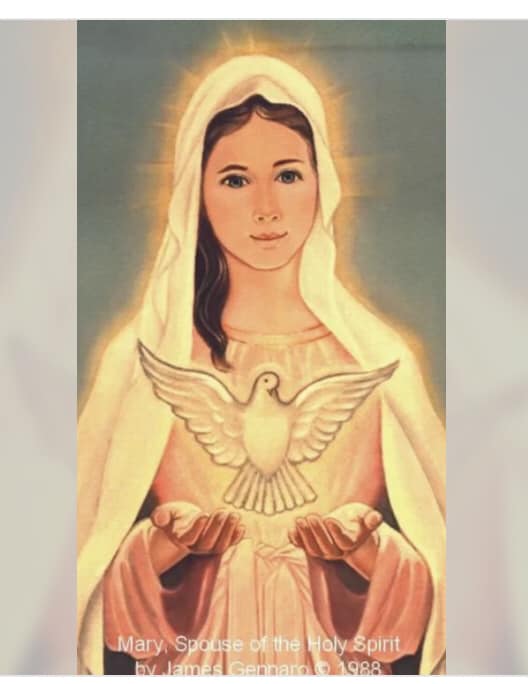
Come, Holy Spirit! Come by means of the powerful intercession of the Immaculate Heart of Mary, Thy well beloved spouse.

.
Oh Comforter with Mary let us travel the world by our prayer of the heart, touching the faces of those who weep, whispering to every soul, “Love is here.” that they may truly experience Divine Love in a conscious way. Sweep over the world with a mighty creative wind bringing peace and Mary’s kiss everywhere your inspiration is most needed.
Pour out your power and love with the grace to receive it, to radiate You as Mary does.

Day 2

“Indeed, the earth will be filled with knowledge

of the glory of the LORD,

as water fills the sea.” Habekkuk 2:14

Come Holy Spirit, come by means of the powerful intercession of the Immaculate Heart of Mary Thy well beloved spouse


Immersed in the pure heart of Mary let us pray her soul’s deep longing “May the knowledge of God fill the earth as water fills the sea.” As the moon draws the ocean tides may Mary’s prayer and love draw the Spirit to rest on her children gently urging us nearer and nearer to God. May we be pure of heart and blessed with the vision of the Lord.


Day 3

“Day after day they pour forth speech;
night after night they reveal knowledge.
They have no speech, they use no words;
no sound is heard from them.
Yet their voice goes out into all the earth,
their words to the ends of the world.”
Psalm 19 1-4a

Come Holy Spirit, come by means of the powerful intercession of the Immaculate Heart of Mary they well beloved spouse.

Mary you are the Throne of Wisdom and the Star of Evangelization. So filled were you with the Holy Spirit your presence refreshed the souls and brought light to the eyes of those who came into contact with you. In your sweet simplicity and inner strength you made anyone who spoke with you feel in themselves a measure of your faith. Though your dusty and calloused feet were firmly planted on the earth there was a quiet mystery about you, something bright though unseen. People who came near you wondered where the gentle calming breeze that stilled their anxious minds could have come from. As we live in your presence today may we sense you near and smile.

Day 4

“…the fruit of the Spirit is love,

joy, peace, patience, kindness,

generosity, faithfulness,

gentleness,

self-control.”

(Galatians 5:22-23a)


Come, Holy Spirit, come by means of the powerful intercession of the Immaculate Heart of Mary, they well beloved spouse.

Mary by your prayer for us and our commitment to you may our hearts fully flower with the fruits of the Spirit. May the inflow of God engender the effortless outflow of his will, which is always love, into the world through us in our thoughts words and actions.
May we know your easy laugh, your joyful smile, your grounded-ness in the continual awareness of the presence and movements of the Holy Spirit. May we experience the peace only God can give.

Day 5

“It was revealed to them that

they were not serving themselves

but you,

when they spoke of the things that have now been told you

by those who have preached the Gospel to you

by the Holy Spirit sent from Heaven.

Even angels long to look into these things.”

1 Peter 1: 12


Come, Holy Spirit, come by means of the powerful intercession of the Immacukate Heart of Mary, they well beloved spouse.

Mary let us live in your heart, the shrine of the Holy Spirit, that we might serve others authentically, experiencing Jesus in the help we give as you lived in his presence taking care of him. In your quiet way you visited the sick, tended the dying, assisted at births, watched the other women’s children for them when they needed a hand. You cared for everyone you met and smiled at every human face. The work you did for others must have carried a sense of liturgy in each movement you made because of your attentiveness and the prayerful quality of your presence. Make us aware oh Mary, of the beauty of what we do, maybe especially the most simple things, that all might be alive in love, each humble task done in the Spirit.

Day 6

“When Elizabeth heard the greeting of Mary, the baby leaped in her womb. And Elizabeth was filled with the Holy Spirit, and she exclaimed with a loud cry, “Blessed are you among women, and ublessed is vthe fruit of your womb! And why is this granted to me that the mother of wmy Lord should come to me?”
(Luke 1:40-43)

Come Holy Spirit, come by means of the powerful intercession of the Immaculate Heart of Mary, thy well beloved spouse.

Mary we want to hear your voice, to know the Lord is with you, to recognize his presence. We want to you to come to us, Mother of Our Lord, our Queen Mother. Come and stay with us, talk to us, pray with us, help us around the house and in our struggles too when we need you most. Bring the Holy Spirit in your wake and sing to us your song oh Mary, of you vision of the Gospel. Help us to joyfully follow your Son without compromise. Allow us to praise you oh Sacred Virgin, with the inspiration of the Spirit who overshadowed you and brought the Lord Jesus to us.
Hail Mary…

Day 7

“Commit thy way unto the LORD.” – Psalm 37: 5

Come Holy Spirit, come by means of the powerful intercession of the Immaculate Heart of Mary they well beloved spouse.

Our Lady of Good Counsel, in union with the Holy Spirit you guide us in all our ways. Be with us in all of our discernment and each desire of our hearts to keep us in the will of the Lord. Obtain for us the Holy Spirits’ gift of Counsel that we may be truly wise and always move with the nudges of the Holy Spirit and to be willing to let go of our own ways and expectations, open to those of the Spirit just as you were so bravely, Holy Mother.

Day 8

And when we pray 
Do we listen to the Silent Wind? 
And if we pray 
Will we listen for the Silent Wind? 
And when we pray
Is our hand against the Silent Wind? 
And if we pray 
Will we breathe in the Silent Wind?

Come, Holy Spirit, come by means of the Immaculate Heart of Mary, thy well beloved spouse.

Do we Blessed Mother? Do we listen to the Silent Wind that swept you off your feet, asked everything of you and gave you a life, an eternity beyond anything anybody could possibly dream in the most glittering of dreams? Oh Mary May we never turn our hands against the Spirit of God but instead learn to open ourselves, to be still and receptive and ready for anything, to have our lives filled with impossible colors of richness and beauty even though we often must suffer. Even suffering will contain great meaning and carry us deeply into the Heart of Jesus and his mystery if we can become lighter and more movable by the Silent Wind, embracing all as you did.

Day 9

“[They] devoted themselves with one accord to prayer, together with the women, and Mary the mother of Jesus.” Acts 1:14a

Come, Holy Spirit, come by means of the powerful intercession of the Immaculate Heart of Mary, they well beloved spouse.

Holy Spirit, you came once again to Mary, now as Mother of the Church, the family of believers gathered around her. As St. Therese said she wanted to be, Mary was and is “love in the Heart of the Church.” Come Holy Spirit and make us so. In union with Mary may we be love within the Church, to heal, strengthen, to sanctify, to love and evangelize under your guidance and with your inspiration. Open the way before us, illuminate the darkness of this world beleaguered, of the Church longing for her Bridegroom to come to her, let us be a light to all who need your grace and peace and Divine LOVE.

We have reached the end of our novena and now we wait in prayer with Mary Mother of the Church for your mighty wind, your tongues of fire sent to enlighten and enliven us, to teach us all things, to reveal your love. Come, Holy Spirit.

                                                                              
Photo by RDNE Stock project on Pexels.com

The Ascension

Photo by Ruvim on Pexels.com

To us who celebrate it every year the Ascension of Jesus  seems to naturally follow the initial celebration of his Resurrection. 

However I imagine it was an earth shattering surprise to his followers that he would be leaving them yet again. 

When I reflect on this event as part of the rosary the virtue I link to the Ascension is detachment as I see him beautifully disappear before the eyes of his followers as “a  cloud removed him from their sight.” 

The family of believers had to let go of their expectations that Jesus as they knew him would permanently remain to walk and talk with them. Again they had to face that Jesus was not about to get rid of the Roman occupiers either. There would be no restoration of the Davidic Kingdom  in the literal way they had thought of it. And the One they loved was going to withdraw from them yet again. They must have felt as if they were back from the defining experience of their lives with nothing to show for it, as if they were just a rag tag group of people standing on a mountainside for no particular reason. They were shocked and bereft. They didn’t understand what Jesus meant about him having to leave that the Holy Spirit could come to them. How could they? 

When the angel said that Jesus would be back they must have shaken their heads. Jesus had said for them to go and baptize, to take his message to the world. This must have seemed like too much for them, an overwhelming task, especially on their own. 

They had to greatly expand their understanding of God even past the miraculous three years they had left everything for and deeply identified with now. 

They had to let go so they could be filled and receive Jesus in a whole new way, by his presence in their hearts, and to come to know the Holy Spirit who was new to them. 

How can we receive the Spirit without detachment, self emptying, without freedom of heart? 

“Love- the way God wants to be loved, and leave off your own way of acting,” said St. John of the Cross. 

Or, as Jesus said to St. Angela of Foligno, “Make of yourself a capacity and I will make myself a torrent.” 

Jesus said that if his friends loved him they would be happy he was going to the Father. (Jon.14:28) Is there something more to that than being happy for him? Yes, because he says, “for the Father is greater than I.” Maybe it also means that we have to let our current perhaps more comfortable understanding go to make room for the immensity he has for us. We can be happy he is going to the Father because then, in letting him go as we thought we had him, he then is truly closer than our breath, more accessible than ever. Detachment is hard. We feel that we are losing our Treasure.   

 St. Faustina said of Mary’s experience of the Ascension that she deeply grieved as any mother would  that her Son was leaving but that, “her heart could not want what God did not want.” 

In seeking a pure heart for God and a Marian detachment; a detachment with great love, a detachment even from the way we thought Jesus would be present to us, we open ourselves to what is even greater, beyond what we could ever have thought of ourselves.  But first we let go. 

“Bend  my heart according to your will, O God.” (Ps. 119:36) 

Then, 

“I shall run in your paths for You will enlarge my heart.” (Psalm 119:32)

In this is peace that comes from open-ness to God and freedom of heart.

These verses are a perfect prayer to cultivate holy detachment as the disciples struggled to do this, standing there on the Mount of Olives, not knowing what to do with themselves. 

Fortunately we don’t have to rely on our own strength in this and neither did they.

Jesus had said to wait in Jerusalem and to pray. They did. They trusted in simplicity. And prayer continually purified theirattachments and intentions as disciples, transforming their dismay into receptivity.   

They still longed for Jesus; his voice, his hug, the sound of his footsteps, “like a deer that longs for running streams in a dry weary land without water,” (Ps. 42:2)  However they soon found that once emptied, their muddled and broken hearts were then open to the new gift of God’s presence; the descent of the Holy Spirit at Pentecost, filling them past overflowing, their thirst for God more than quenched.  “Your torrents and all your waves swept over me.”  (Ps. 42: 8)

Come, Holy Spirit, come. 

Photo by Jimmy Bolt on Pexels.com

How to pray Lectio Divina

Photo by Luis Quintero on Pexels.com

Lectio Divina is an ancient prayer form developed by the Benedictines in the 6th century, a way to deeply pray with Scripture. One read attentively, pondered, as Mary did, the word of God, responded back to God, and rested in simple contact with him. In the 12th century a monk called Guigo decided to divide it into more definite steps. For me over time this prayer became less formal and more of a flow that happens naturally in the Spirit. In fact with long practice it is just the way I hear and respond to Scripture when I am really paying attention. Maybe that is how this prayer arose before it had a set of concrete steps to follow. The pray-er experienced a natural, Holy Spirit guided progression between attentive reading, deep prayerful pondering and simple rest in loving awareness and receptivity to God’s presence.

It was cool of Guigo to organize this into steps however. The steps helped me a lot when I was new to it and still do sometimes especially when I am upset and can’t focus. Also everyone is different. Some people pray more freely with a sense of order and clarity. Others do best with spontaneity and receptivity. God loves both of these and can work with equal grace with every soul, no matter the preference.

Here are the steps.

Step One Lectio: First, slowly and reflectively read a passage of the Bible three times, paying special attention to any word or phrase that catches your attention. 

Step Two Meditatio: Quietly ponder the word or phrase that stands out to you slowly repeating it in silence. Ask the Lord what he is saying to you in this Word, brought to your attention by the Holy Spirit.   

Step Three Oratio:  When you receive light on what God is saying in your soul through that word or phrase, respond back to God in prayer, perhaps asking for all that you need to carry out his will, or maybe in praise and thanksgiving; whatever is appropriate. Have a conversation with him.

Step Four Contemplatio:  Rest now in simple love, in communion with him for a time.   

Some people will add: 

Step Five Actio: Like Mary after the Annunciation, arise with haste and act on what you have received in prayer! (Luke 1:39)

Encounters with God don’t always lead us into immediate service but if they do go with it!

Photo by jacts_WAITAMINUTEu2014REALLY? carig on Pexels.com

General advice:

If I don’t have a particular Biblical passage in mind I choose from the mass reading of the day. I consider the readings of the day to be chosen by the Holy Spirit. If none of these particularly catch my attention I pick the Gospel reading. 🙂

You can find the daily readings here https://bible.usccb.org

The number of minutes you pray Lectio Divina is up to you. God will definitely be there throughout regardless. He is unlimited by time. 5, 10, 15 or 30 minutes will all work. I tend to set a a quiet alarm so I am not tempted to worry about time. I know the sound will call me back at the right moment and I can relax into prayer.

If you are new to silent interior prayer, I suggest you start with 5 or 10 minutes at first. You are more likely to make a habit of prayer when you feel you can succeed and are less likely to feel overwhelmed and avoid it. Baby steps!

Some people say to pray at the same hour in the same place every day. You may find this helpful in creating the habit and sticking with it. At times I have found that helpful too.

To me any quiet and solitude I can find will work. And anyway I like to change things up now and then.

Always remember that God responds to any good faith approach. He doesn’t get all weird, scrupulous or worried about things the way we do. He just wants to be with us.

“All I need is Jesus, His will, and silence.” – St. Miriam of Jesus Crucified

See? That’s pretty simple.

Photo by Pixabay on Pexels.com

Preparing for the “Synod on Synodality”

Photo by Julia Volk on Pexels.com

The Pope wishes to “consult with the people of God” through the process of a “Synod on Synodality.” 

He says, “a teaching Church must be a listening Church.” Therefore for this new Synod not only will Pope Francis and the Bishops discuss, pray and discern about Communion, Participation, and Mission in the direction of our Church, but lay people are invited to join in the discernment and discussion as well. 

This may sound strange. Perhaps it is even disconcerting to Catholic ears to have the laity involved in a Synod. However, remember that we too are the Church, not just the hierarchy alone. We should be part of this!  

In order that our leaders may hear what the Spirit may have to say through the people, it is important that we all participate. All of our baptized are called. If you have left the Church, if you no longer practice the Faith, I hope you will also let your voice be heard. We need to hear from you, too. 

Each of us has our agendas, things about the Church that we are upset about or hope will change. Let’s endeavor, however, to be receptive as well as expressive. I think we should take this invitation very seriously in a spirit of prayer and discernment, seeking the will of God in what we are to say.  

How is this process going to work? 

The first phase of this “Synod on Synodality” began with the Bishops and the Holy Father in Rome in October 2021. The second phase, the “listening phase,”  is already underway in our Austin Diocese. Locally, one parish here is hosting open listening sessions.

There will be small groups formed at the session to discuss the questions for consideration, dialogue and prayer together.

The student parish here is holding discussions with its parish council only which I think is disappointing.

Our other three local parishes have not begun the process as yet but they will according to how this should work.   

Should you be uncomfortable discussing these things in public or you can’t make a listening session, there is a survey available on the Diocesan website you can fill out at austindiocese.org/synod to participate. Check with your own Diocese for what is being done for the Synod and how you can participate.

 What happens after all of this listening? What everyone has said will be taken into another listening session with the Bishop who will then take it with him to the next phase of the Synod in Rome in 2023  with his brother Bishops and the Holy Father. Do the Popes and the Bishops have to do as we say? No, they are still the Pope and the Bishops. Their authority is still their authority.  However they do want to hear from us and they do care what we have to say.  They will be discussing how to incorporate this listening process more in the future. 

The prospect of the invitation to be a part of this Synod has stirred new hope in me; the most hope I have felt for the healing and renewal of the Church since 2002 when the abuse crisis broke.  The first step in healing and for the renewal of our communion, participation and mission is this listening and being heard. This will build trust between the laity and the hierarchy and has the potential to renew and restore.  

We live in difficult times for the Church. However, “We are hard pressed on every side, but not crushed…struck down, but not destroyed. (See 2 Corinthians 4:8)   Our Church is sturdy enough to guide us through two millennia of Christianity, and also dynamic enough for the same and into the future. We are still the Church that the gates of hell will not overcome. (Matt. 16:18b.) So let’s take courage and take part, trusting this process and in the Holy Spirit active within it to bring good fruit and new hope.  

Another part of taking this seriously is to pray steadfastly and persistantly for the whole process. As a Carmelite, an important part of living our charism is to pray for the Church.

When I set myself to pray in a dedicated way for something or someone the first thing I do is go to Confession. I have noticed that that sacrament tends to grant me clarity of heart and I think I am better able to discern how to pray the way the Holy Spirit wants me to then. At the suggestion of my friend Julia, I have set an alarm on my phone to pray for the Synod daily at noon. I already pray the Angelus at noon so that is easy. I dedicate the Angelus for Synod and I pray for participation and the movement of the Spirit in the Church through this, for the Bishops and the Holy Father and for all of us to discern the voice of God in what we receive and say, for healing and renewal in the Church.

We can offer any suffering we experience during the day for the Synod, and after the example of St. Therese, offer our small sacrifices through the day, the work we do, remembering this intention at mass when we receive communion.

If the timing works out, we could pray a novena to the Holy Spirit. We can offer a rosary, or our time in silent interior prayer, or your time in adoration. In whatever way we pray and remember God, we can ask for open-ness of heart and the inspiration of the Spirit.

Photo by Monstera on Pexels.com

Here is the prayer suggested by the United States Conference of Catholic Bishops for this Synod. It is a simplified version of the one used at Vatican II and also during the Synods of the past. 

“We stand before You, Holy Spirit, as we gather together in Your name.

With You alone to guide us, make Yourself at home in our hearts;

Teach us the way we must go and how we are to pursue it.

We are weak and sinful; do not let us promote disorder.

Do not let ignorance lead us down the wrong path nor partiality influence our actions.

Let us find in You our unity so that we may journey together to eternal life and not stray from the way of truth and what is right.

All this we ask of You, who are at work in every place and time, in the communion of the Father and the Son, forever and ever.

Amen.”

I also like this prayer and I say it often.

“Come, Holy Spirit,

come by means

of the powerful intercession

of the Immaculate Heart of Mary,

Mother of the Church.”

Photo by Marina M on Pexels.com

Choosing a method of Contemplative Prayer

And the one who searches hearts knows what is the intention of the Spirit, because it intercedes for the holy ones according to God’s will.
Romans 8:27

No matter the method of meditation, each one employs some kind of anchor to help us master our thoughts during prayer;a scripture passage, a set prayer, a holy word or phrase help us return again and again when the mind wants to do its busy work. In Christian Meditation, this anchor will also be a way to root us in our intention of prayer, openness and presence to the Beloved

There is often a format, a structure that helps us to make our prayer a process, a movement, a conversation, an exchange of love.

The basis of all Christian prayer, including holy meditation, is Jesus.

Moreover it is our intent to connect to this Lord that makes our meditation prayer rather than a mental exercise.

Please don’t worry too much about whether a method is what you think it should be or whether other people should be using it. Use discernment in your choice, but know it is not as if doing the “wrong” one is going to make your or anyone else’s prayer go down the wrong pipe and not to God. That’s just plain silly.

To me prayer is about love and my will to be with God, no matter what technique I use to learn to be ready for an encounter with the Friend. Prayer is less about me and more about God. In my experience, when I seek his will he responds and when I am open and willing to be corrected, he will correct me. This seems to run true for others as well. “If I am wrong, Lord, change my heart.”

The author of the Christian classic The Cloud of Unknowing ( the “cloud” representing the fact that our intellect cannot reach God sufficiently) tells us to use our anchor in meditative prayer as a spark or arrow of love, to pierce through the “cloud of unknowing” straight to the Heart of God. That is a beautiful way to think of it, and it also rings true.

If a certain technique confuses you or you feel you aren’t making good progress with it, make adjustments and carry on. Yes there are pot holes on the road of prayer. I think I have fallen into them all along the way, though I eventually overcame, thanks be to God and God willing, I will continue to.

I am concerned that a lot of people seem to be overly cautious about Christian Meditation or about this or that method. Don’t do anything that makes you uncomfortable, but don’t freak out. Just move on if something you try isn’t right for you. Be free about this. I am. So far liberality of spirit has born great fruit for me,

If you are striving to grow, and you are guided by love of God, faithful in practice, doing your best to conquer sin, if you are living a sacramental life, loving more, then I think you are fine to set out on the Royal Road of contemplative prayer, or to stay on it, wearing the shoes that fit you best.

In short,

don’t be scared,

pray and be cool.

woman in red dress
Photo by TUBARONES PHOTOGRAPHY on Pexels.com

Novenas: how to go deeper

photo of man wearing rash guard
Photo by John Cahil Rom on Pexels.com

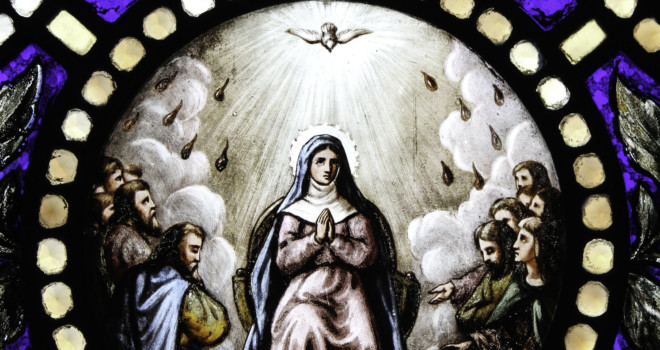
Ascension Day is traditionally celebrated today in the Church, and it is also considered the first day of the first novena, as Mary and the Disciples remained in Jerusalem to pray for nine days for the coming of the promised Holy Spirit. This is the heart of our novena tradition.

A novena can be a special time between God and the praying soul, a pilgrimage of transformation and insight, as well as a way of “storming heaven,” with a petition. A novena prayed with faith is also a time of expectant waiting.

Whatever I am praying for, I try to ask with an open heart, one that is actively seeking God’s will.

Sometimes God does not give me what I thought I wanted when I began. Sometimes he changes me instead.

Sometimes I begin to get a sense that I should ask for something different than the petition I started with. My prayer seems to be redirected. Maybe this is so that I might pray with the Holy Spirit rather than just out of my own will.

I know, dearest Mother, that you want me to seek God’s holy Will concerning my request. If what I ask for should not be granted, pray that I may receive that which will be of greater benefit to my soul, [and the souls for whom I pray.] ~ from the Novena to Our Lady of the Rosary

Other times, my single-mindedness of purpose grows and I continue with my petition, like the “persistent widow” I am.

When I begin a novena, I am not sure what God will do but I know he will do something!

I try to be attentive to what God may want to say to me during this time of focussed, dedicated prayer.

The divine synchronicity interwoven with daily life reminds me that heaven is near, and that God is always speaking.

bird dove pigeon
Photo by Anastasia Zhenina on Pexels.com

The symbolic meaning of having a dove land on the hood of my car and look through the windshield at me while I am praying at a red light may seem hard to miss. But it is possible to think nothing of it. I want to notice and make the connection.

If I dedicate and consecrate these nine days of prayer to cultivating my awareness of God’s voice speaking through life itself as it happens, a novena can be a time of becoming attuned to Holy Spirit and wonder.

If I am praying a novena to a particular saint, St. Therese, let us say, I try to find ways to weave her presence into my life. I may read about her or read from her writings during that time. I will talk to her as I go about my day, ask her to join me in my work and prayers.

I might do small acts of service in her honor; especially the kind she liked during her life on earth, the sneaky kind.

I may make use of imaginative prayer to go into the situation I am praying about, letting St. Therese lead me in bringing God’s light into darkness, to let her show me something, or to visually surround the people involved, with God’s love, with hers, and with mine.

selective focus photo of red rose
Photo by Hassan OUAJBIR on Pexels.com

I often ask friends or family to join me in praying a novena. Jesus encouraged us to join together when we ask for something, and it encourages me to know that someone I love is praying along with me.

I like to to begin a novena by going to Confession.

It always seems to me that I can “hear” God better after Confession. The grace released into my life from the sacrament enlivens my prayer.

At mass I may offer my reception of Holy Communion for the person or intentions I am praying for.

I try to drop in at church and visit Jesus in the Blessed Sacrament more often during my novena too, even if only for a moment. I can bring all my concerns there to him for healing; setting them at the foot of his alter for him to arrange in divine order. In his Eucharistic presence, my intentions are blessed, and my troubled heart can rest.

Sometimes I plan a series of nine Scripture verses that I think correspond well with my novena, one for each day to reflect on during the day. Bringing God’s Holy Word into my prayer deepens and interconnects the experience. “God’s word is alive.” Also it never returns to God void but always does what he sends it to do. I trust the word to act on my heart and to return to the Lord full.

I usually give up something at least for a day, or for the duration of the novena. This may be something small, like sugar in my coffee, listening to music in the car, or my favorite drink. St. Therese said her greatest weapons were “prayer and sacrifice.” Fasting and prayer are well established practices for us in our faith when we are commending a situation to God.

Right now I am keeping a novena journal. In it I am recording my prayers, thoughts, insights, Scripture passages and events that stand out to me during this time. It seems to be a fruitful and helpful way to pray, reflect, and notice how God is working in my life through my novena. I look forward to reading it through at the end.

clear glass jar filled of coloring pens beside of white sketch pad
Photo by Jessica Lewis on Pexels.com

Often when we pray a novena, it is because we are suffering in some way. Part of praying a novena meaningfully can be offering our suffering in union with the suffering of Jesus, that it may be redemptive for others, especially those for whom we pray. St. Therese once offered her difficult walk across the infirmary when she was very ill, for missionaries.

A novena can be a transforming experience when lived and prayed deeply; both for ourselves and those around us.

I like to give thanks at the end of a novena, for all God has done, is doing, and will do in response to my petition, whether or not it looks like my petition was, “granted.” I know that God will only give me what is right and at the right time.

His love never fails; nor does its power to change everything, anything, anytime.

yellow flame
Photo by Skully MBa on Pexels.com

Blog at WordPress.com.

Up ↑