Search

Bethany Hang Out

Catholic contemplative life and devotion

Category

Gospel

Beautiful Queen

August 22 is the memorial of the Queenship of Mary. 

She was always a queen; more a queen than any other. Heaven has a different definition of greatness than we do. (Mtt.20:26). 

Our queen was poor, both in her material life and in her way of being. We may sometimes look down on, judge or blame the poor, but to Jesus they are royalty. He calls them blessed (Luke 6:20) He identifies deeply with them to the point he says whatever we do to them, we do to him (Mtt. 24:40).

Mary walked this earth as one of the anawim, (Lk.1:48) the little ones of God, poor and marginalized, depending completely on him. Mary was humble.

Pope Francis said “she knew she was little, and she was happy to be so.” Her sense of lowliness, of littleness would have given her the bold receptivity to God that we see at the Annunciation. (Lk. 1:26-38) Mary knew she was completely in God’s hands and it made her brave. 

This is why she inherited his Kingdom. 

Our  queen mourned. She cried. Completely human,she was traumatized by her Son’s brutal death, her heart  wounded by the sword that pierced. And she was comforted, repaid many times over with incomparable joy. 

Our queen was meek. We usually think of meek as weak. However the Greek of the Gospel for meek is “praus,” which is more like power restrained, like a strong horse choosing to be gentle, calm and patient. Mary, united to God, spouse of the Holy Spirit and Mother of God’s Son, the only other person besides Jesus to be called “full of grace,” * was already a queen. However, she chose gentleness, kindness, sweetness for her crown. This is why she inherited the earth. 

Our queen hungered and thirsted for justice. She longed to see the proud scattered, the lowly lifted up, the mighty brought down, the hungry fed and the rich sent away empty. With the advent of her Son, she knew she would see this, that Jesus would make that longing a reality, and her soul rejoiced. (Luke 1:51-53)

Our queen was merciful. She received mercy from the first moment of her conception in her mother’s womb on the merit of the sacrifice of her Son who would come into the world through her. (Luke 1:28) In mercy she carried Jesus straight to Elizabeth who was pregnant in her old age and in confinement, and stayed with her through the birth of John the Baptist. She noticed the humiliation of the newlyweds at the wedding of Cana when they ran out of wine and she brought Jesus into the situation. She wasn’t pushy. She wanted them to have their own encounter with him. She merely said, “Do whatever he tells you.” She stood at the foot of the cross to be with her dying Son. She expanded her motherhood to the Apostle John when Jesus said to John, “Behold your mother,” and to Mary, “behold your Son.” (John 21:19) John represented us all. She widened her heart to become our mother too. (Rev. 12:17) 

Her heart was united to God’s merciful love and she was always ready to share it. 

Mary was a queen who was pure of heart. Her heart was uniquely free to love, free to see clearly, filled with the  Spirit of God who overshadowed her.  Her purity of heart allowed her to see God, because when we are pure of heart, all we see is God. She would have been able to see God in everyone she met, in the events of her life, in the music she heard, the words that were spoken, in the beauty of the world around her. 

We call Mary “Queen of Peace.” She is Queen of Peace because through her we received our Lord, who is our Peace. Mary would have been as nonviolent as her Son. She would never let anything turn her back from it. As people reported feeling deep inner peace in the presence of Mother Teresa, even more would they have been at peace in Mary’s presence. She was a child of God who brought us the one who would make us children of God. 

Our queen stood at the cross as mother of the condemned. The insults hurled at Jesus fell on her too. I’m sure cruel words were aimed at her personally as well. She suffered the brutal death of her Son for his sake. And great, unimaginably great was her reward in Heaven. 

We are called to be little Marys in this world, the ones who hear the word of God and keep it, his brothers, his sisters, his mother. (Lk.8:21)

She was always a queen. Now she is not only crowned with every flower of the Beatitudes, (Mtt. 5:3-12) but with shining stars, (Rev. 12: 1) sending love from heaven, lighting the path to Christ who gave her to us. 

* “the glory of an only Son, coming from the Father, full of grace and truth.” John 1:14. 

And to Mary,  “Hail, full of grace, the Lord is with you.” Luke 1:28.

Twelve glowing stars arranged around a bright galaxy in space
Twelve radiant stars form a luminous circle around a richly detailed galaxy field.

A child’s perspective on Martha and Mary

When my eldest daughter, Maire, was about four years old, my husband and I thought to make the Sunday Gospel more understandable for her, we would start doing little skits with her at home after mass. The most memorable of these was a Sunday when the Gospel story was about Martha and Mary, (Luke 10:38-42).

My husband, Marc, played Jesus, I played Martha, and Maire played Mary. I went to the kitchen and started banging pots and pans around in an angry way. Marc sat down and started talking to Maire, sitting at his feet, about being nice to everyone, and sharing your toys. I came stomping into the room demanding that Jesus tell my sister to help me with the serving. Marc stood up and said soothingly, “Martha, Martha, you are anxious and concerned about many things, but Mary has chosen the better part and it won’t be taken from her.”

I’ve never wanted the story to end there and apparently neither did Maire. She said we weren’t finished yet, so we went back to our places. My husband said, “So Mary, we need to love everyone.” My child got up, came into the kitchen, and took my hand. “It’s OK, Martha! We can trade.” She led me back to Marc, and had me sit down. And she went to the kitchen and started rattling dishes and puts and pans.

My husband and I looked at each other with wonder.

I praise you, Father, Lord of heaven and earth, because you have hidden these things from the wise and learned, and revealed them to little children

Matthew 11:25
Photo by Daniel Duarte on Pexels.com

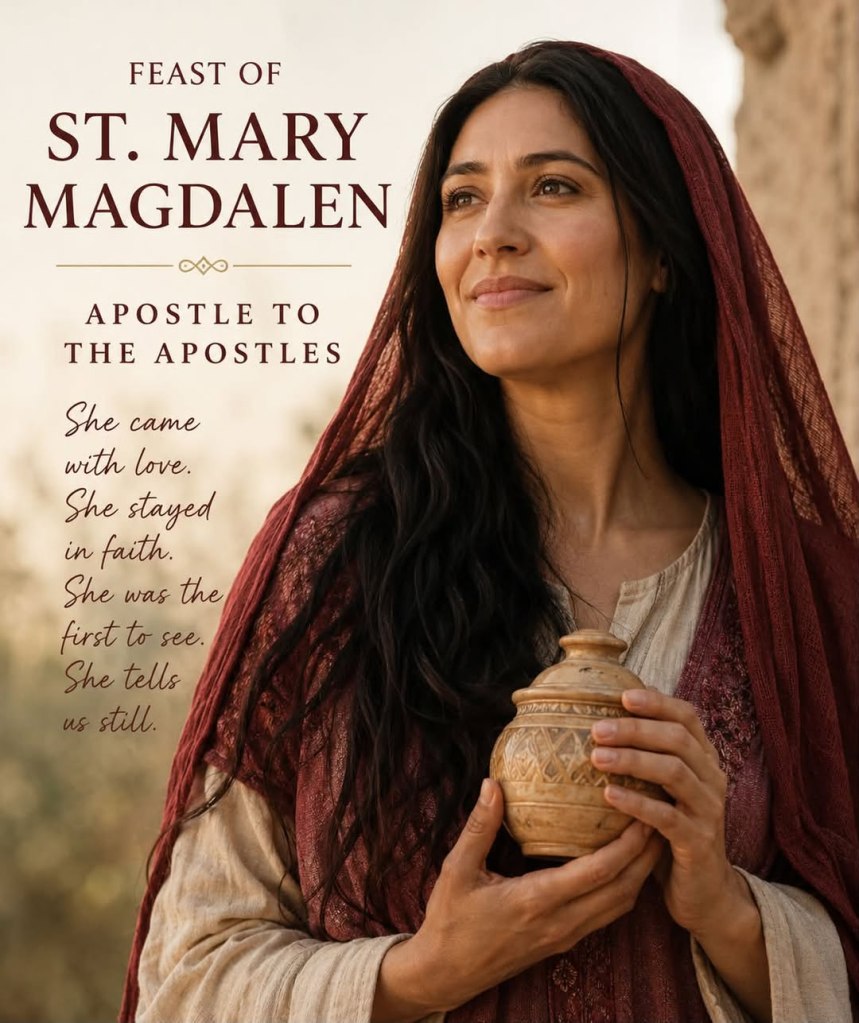
St. Mary Magdalen, the tour guide

Tour guide speaking to seated passengers inside a tour bus
A tour guide chats with passengers on a bus journey.

I had a dream about her. At the time I was just beginning my recovery process from a lot of hellish and very deep trauma. I was a young adult flooded with regrets about the troubled teen I had been and the dark ways I had tried to deal with the pain.

So God granted me a visit from my Confirmation Saint * to bring me healing and perspective.

In my dream I was on a tour bus with a lot of other people. We were about to drive through a Gypsy camp. The tour guide, who looked to me like a Romani herself, had the bus driver stop before we drove in. She gave us a talk about not gawking and telling us to be respectful. She probably said some other things too but I don’t remember.

As we slowly drove through the camp, we looked on silently while our guide talked to us. I noticed a girl sitting under a tree with a broken leg. It was a compound fracture; her shin bone was sticking out. It was hard to watch. It was even harder to watch her try to set her leg by using a crow bar. I gasped and so did others who noticed. The tour guide urged me in particular not to judge the girl. She said I should realize the girl was doing the only thing she knew to do with the only tool she had. This is when I realized the tour guide was St. Mary Magdalen. Suddenly I understood she was trying to tell me not to judge my young self so harshly. I too had been doing the best I could, the only things I knew how to do, with the only tools available to me.

When I woke up I felt I had been touched by Heaven, that my struggle was seen, heard and understood. And I knew I had a friend who got me, who had maybe even been there herself.

To this rich dream I have often returned for strength and inspiration. And I honor our great Saint, Mary Magdalen, today on her feast day. She was a woman of courage who spoke up even when she was dismissed and not believed. She knew what she saw. She knew what to do. She had received deep inner healing from Jesus, and she was the most faithful of disciples, with him until the end, after the end, and the new beginning too. She is our faithful friend, as well. I didn’t even ask her to come to me and help me. But she came to me anyway. She loves us. She is our big sister in Christ.

If you’re wounded, grieving, broken, beset by demons of some kind, she gets you. If you’re ready for healing she will help you get there. If you’re not quite ready she will wait until you are.

May she pray for us all and take us to the heights as we follow the Lord to the end.

From his fullness we have all received; grace flowing upon grace. (John 1:16)

*I had two Confirmation Saints. Both St. Joan of Arc and St. Mary Magdalen 🙂

8 Minute Guided Prayer of Recollection

Photo by Gilmer Diaz Estela on Pexels.com

St. Teresa of Avila, Doctor of the Church, Carmelite reformer, and great teacher of Prayer, said that what she called the “Prayer of Recollection” was a method of mental prayer the Lord Himself taught her. Here is a video I have made of my brief, guided version of the Prayer of Recollection that you can use to learn it, or for a prayer break during the day. For more on the Prayer of Recollection, try reading my book, Meeting the One who Loves you, the way of prayer of St. Teresa of Avila from Our Sunday Visitor.

Meeting the One Who Loves You; St. Teresa of Avila’s Way of Prayer

Meeting the One Who Loves You; St. Teresa of Avila’s way of prayer

Why meditate on the Suffering and Death of Jesus?

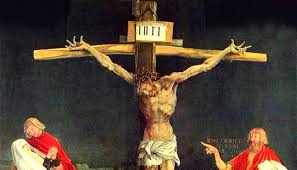
  the Isenheim Altarpiece by Matthias Grünewald.

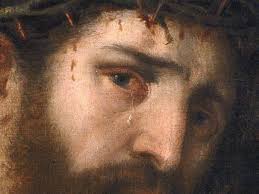
It is a pronounced characteristic of our Catholic faith that both personally and as Church we meditate deeply on the suffering of Jesus. Our crucifixes, art and literature are often graphic in their portrayals of his Passion and Death. The Saints emphasize this practice, the rosary we pray, the Church calendar, all return us to our suffering Lord. In the Stations of the Cross we walk with Jesus through his suffering step by step. Why do we do this? To an outsider it might seem ghoulish to dwell on the lurid details of his torn flesh, his bloody sweat, the tears he shed. 

The mystics say that Our Lord’s Passion is like a fire of love. The more we draw near to this fire the more we are warmed and transformed by it. 

I am a deeply sensitive, and, I hope, compassionate person. I am always uncomfortable with the Sorrowful Mysteries of the Rosary (traditionally prayed on Tuesdays and Fridays. During Lent it is also on Sundays).  Meditating on the Sorrowful Mysteries, we follow Jesus through his Agony in the Garden of Gethsemane, his Scourging at the Pillar, his Crown of Thorns, his Carrying the Cross, his Crucifixion and Death. It’s tough. But I don’t want to leave him alone in his sorrow. I want to share in it as his mother did. I want to comfort and help him. Also we can’t expect to only share the sweetness of the Lord without the bitterness of the cross.  Part of love is acceptance. I don’t want to only love part of Jesus I want to love all of him, accept everything. That means following him not only in his joyous times but right into the valley of death as well, and the cruelty he experienced from others. 

For me the fact of the betrayal of Judas, Our Lord’s broken heart, his grief, the abuse heaped on him, have helped me accept the sorrows in my own life. Sharing in his pain has made me more able to not look away from the suffering of others but to ‘weep with those who weep.”  (Romans 12:15)

A Methodist minister friend told me he noticed that Catholics don’t see ourselves as witnesses of the events in the life of Jesus. We think of ourselves as taking part in a very present way in our prayer and especially at mass. We are there at the Last Supper at mass. We don’t think we are witnessing something. It’s not a story. We are in it.  I like that. Maybe this points to why we submerge ourselves in the torture and cruelty of his death in such detail. We’re helping ourselves be there. 

Our Lord’s Passion teaches about love as intense faithfulness and determination, sacrifice, acceptance. It helped me stand by my husband all through his fight with brain cancer. In his darkest and fearful moments I listened to him talk about his feelings of raw desolation, anger, and even shame, of terror, of feeling there was no comfort anywhere. In spite of my love for him, part of me wanted to run and hide from the enormity of what he was expressing.  

I had no mitigating words to say. The profound suffering of another person is frightening to be present to. When he eventually asked how I felt about this on a spiritual level, all I had was the fact of Christ’s suffering. At least as we went through this with cancer we had a God with us who didn’t die gracefully in a shower of rose petals but was coldly executed, naked and bleeding like an animal, nailed to a cross, with a cry of spiritual abandonment only just having died on his lips. 

My husband nodded gravely. He got it. 

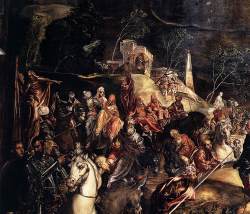
 1565
Oil on canvas
Scuola Grande di San Rocco, Venice

The Christian life is illuminated by the choice of Jesus to take our suffering on himself. It was our sins, our iniquities, yes, but our suffering too, according to Isaiah. 

“Surely he took up our pain and bore our suffering… by his wounds we are healed” Isaiah 53:4-5

The incomparable light he generated by choosing to undergo his Passion as an offering shines forever. It reminds me in my own darkest times, of his compassion. My tears are his too. St. Teresa of Avila says so great is his compassion that when you visit him in his agony he will forget his own sorrow in looking at you and wanting to comfort you. 

As we approach Holy Week let’s avail ourselves of the opportunity to love Jesus through his suffering and death, and to let him love us too.

Where there is hatred, let me sow love

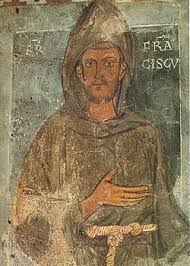
Meditating on the prayer of St. Francis, I thought that from a Teresian perspective, when we pray that where there is hatred we may sow love – we are already doing it. Our prayer, as we pray it, is sowing love in place of hatred. In a mysteries way God shares his grace with us and through us in our prayer. We become instruments of peace in a mystical way.

Lord, make me an instrument of your peace:
Where there is hatred, let me sow love;
Where there is injury, pardon;
Where there is doubt, faith;
Where there is despair, hope;
Where there is darkness, light;
Where there is sadness, joy.

Right now, in this time of global violence, cruelty and chaos that is in almost every way out of our control, it is a relief to open the heart to God and let his love and grace flow through us to the world, to know that he is doing something and that we can be part of his loving transformation of the people and situations most in need of his kindness. We never know what God will do and where he will send his Spirit, or how he will act on the hearts of the people we pray for. However, we can have total faith that he will respond to our prayers.

I invite you to memorize the Prayer of St. Francis if you haven’t already. Try dedicating your time of silent prayer to sitting with it, going over it as slowly as you can without losing focus. You don’t have to think about it or examine it so much as concentrating on the words, letting each one drop into your heart like a pearl dropped into still water where it drifts slowly to the bottom to rest. Know that God is within you and working with you for your good, and for every creature. You will be sowing love in the world, pardon, light, hope, joy, as an instrument of his peace.

In today’s Gospel, John 4:5-42, Jesus tells the Samaritan woman that the water he will give her will become a fountain welling up within her, giving eternal life. To me that fountain is love, his transforming love. It wells up within us helping us to live out this prayer. It not only transforms us but everyone we splash with it, both in our prayer and in our interactions with people and the things we do during the day. Every day we are given opportunities to seek to understand rather than be understood, to seek to love rather than be loved, to give rather than receive. It becomes a habit, easier and easier the more we submerge ourselves in the water of his love that never runs out.


O Divine Master, grant that I may not so much seek
To be consoled as to console,
To be understood as to understand,
To be loved as to love.

For it is in giving that we receive,
It is in pardoning that we are pardoned,
And it is in dying that we are born to eternal life.
Amen.”

We pray like a fountain gushing out and watering the whole world, flowing out and touching everyone. We live our lives in response to this grace given to us. We are transformed in it and so is the whole world.

St. Francis, pray for us.

Lay down your verbal arms for Lent

I would like to invite you to a very practical and frequently unappreciated form of abstinence: that of refraining from words that offend and hurt our neighbor. Let us begin by disarming our language, avoiding harsh words and rash judgement, refraining from slander and speaking ill of those who are not present and cannot defend themselves. Instead, let us strive to measure our words and cultivate kindness and respect in our families, among our friends, at work, on social media, in political debates, in the media and in Christian communities. In this way, words of hatred will give way to words of hope and peace.

Pope Leo XIV, Message for Lent 2026

The Holy Father has, in his serene and gentle way, thrown down a gauntlet with this challenge. This is a very tough form of fasting, especially now in these times of political extremes, immovable opinions, varying understandings of reality and a shocking lack of empathy or compassion. Language is too often used in flagrant attempts to dehumanize those who differ from us In this age of rage, are we contributing to the lack of peace by our words? We long for justice but do we really care about the effect our words have on others or are we just mad? How do we do better? What steps can we take to purify the violence of our speech and still speak truth when necessary?

We need some steps to get there, some tools, a frame work.

Jesus said, “out of the fullness of the heart, the mouth speaks.”
(Luke 6:45Matthew 12:34) He said our sinful and hateful words begin in our sinful and hateful hearts. Practically speaking, this means we need to master our thoughts. When we master our thoughts, we master our words. Here is my tool box for disarmament, if you will.

On mastering our thoughts, one of the best things one can do is replace them with something else. A dear priest told me once during Confession that every time I had a hateful or judgmental thought about a certain person I was struggling with, I should mentally say, “I renounce that thought in the Name of Jesus Christ.” Guess what? It worked! That person is among my inner circle of friends and has been for many years now. She loves telling people the story.

Some years back I found myself obsessively wrapped in raging thoughts about a betrayal in my life. My rotating anger was no longer helpful. I didn’t need to talk about my feelings. This pre-occupation of mine became a problem with family and friends. Nobody wanted to hear it anymore. I didn’t want to hear it anymore. I wasn’t healing, just stuck. I had to stop.

I remembered that I had tools I knew worked. So I began to mentally repeat the names of Jesus and Mary whenever I had the urge to talk about it or think abut it all again. It worked! I went from thinking about the whole thing at least once every 15 minutes to hardly ever. If we don’t think about something like that, we stop talking about it all the time, as well.

Another thing I was doing at the same time as forming the habit of repeating the holy names, was spending time daily in silent interior prayer. My main way of doing this at that time was memorizing passages of the Bible, prayerfully and silently going over and over them in my mind. This is called Ruminatio, a loving meditative recitation of God’s Word in the heart, from the monastic tradition. It’s a “chewing” on the Word until it becomes sweetness in the heart. Sweetness in the heart is what we need most.

Another thing silent prayer does is slow our minds down and makes our emotions less volatile. We have time to think before we speak rather than just spark into fire whenever we are challenged. The Lord is in us and he calms the destructive storms. (Matthew 8:23–27, Mark 4:35–41, Luke 8:22–25). The waves of our emotions calmed, we are more likely to speak wisely and less hurtfully.

Here are some helpful considerations from a modern proverb of uncertain origin.

There are three gates your words should pass through before you speak. Ask these questions of yourself:

Is what I want to say true?

Is it necessary?

Is it kind?

If what you want to say doesn’t pass through all three of these three gates, don’t say it!

What to do instead? Go for a fast walk and repeat the Holy Name of Jesus or the Jesus prayer the whole time. Don’t come back until you are calm. (The Jesus Prayer: “Lord Jesus Christ, Son of God, have mercy on me, a sinner”).

Remember this is not something you are doing alone. God is with you and his grace will aid you. So ask him.

May the words of my mouth, and the thoughts of my heart, be acceptable to you, my God.”

Psalm 19:14

Lenten listening

This year for Lent, the Holy Father, Pope Leo, is asking us to “listen.” He says listening to the Word of God will train our ability to listen to the voices God wants us to hear, such as the cries of the poor and the marginalized, the sick and the suffering. I wasn’t sure how that worked but as I have been reflecting on it, the practice of Lectio Divina came to mind. In this prayer we aren’t just reading Scripture texts. we are “listening” with an open heart to any words or phrases that stand out to us as we read. We understand these as God’s words to us personally in that moment. So we prayerfully repeat them in our minds, pondering them in our hearts. Then we respond to what God is saying to us, replying to him. Then we rest in interior silence for a while. Then we go out and act on his Word.

If we learn and pray Lectio Divina regularly, it becomes the way we hear Scripture all the time. When it is read at mass, we will hear God speaking to us, even as we are aware of hearing his Word as community too. We will be attuned to him speaking and we automatically apply it to our lives without hesitation.

The Benedictines talk about “Lectio on Life,” This is being aware of how God is speaking to you in your daily life. He may speak in a song that comes on at the right moment, something you read or that someone says to you, even something you overhear from a stranger when you’re out and about. It can be a life event, even a small one, that stands out to you as symbolic or providential. I used to say, when something like that happened, “If this was a dream, what would it mean?” I said this because in the way we interpret the meaning of a dream, in the same way, could be done with something that really happened as well, drawing out its meaning.

What if we hear or see something happening around us, read about it or it comes to us in prayer, or keeps returning to our thoughts as we go about that day? We can use the same process of Lectio Divina to ponder it in our hearts, ask God what he is saying to us in this event or thing we heard during the day, respond to him about it, and go out and act on it. This could be noticing the young woman at the store putting her groceries back. It gets to you. Just in seeing that through God’s loving and merciful eyes as a person of prayer, you understand the message and you act on it. Ask her what’s going on, listen to her, and do something about her trouble. Maybe you can’t pick up her whole tab but when she tells you she was trying to get after school snacks for her kids before she picks them up, maybe you can at least get today’s snacks. Then thank God for the opportunity to see, hear and serve him. That’s just one quick way this could play out. Being in tune with God helps you notice her. Otherwise perhaps you wouldn’t have.

One of the things I am doing this Lent is staying away from the news during the week. I can always catch up at the end of the week. Like a lot of people I am hyper vigilant lately because of all the violence, chaos, suffering and injustice happening every day. I’m overwhelmed and so is everyone I talk to about it. What I am hoping for with backing off from the constant news is to use that time for silence and prayer. I also get to the point sometimes when my mind of cluttered up with all the things I am seeing, reading and hearing that I think the clutter interferes with real listening.

I want to listen to life and the people around me and allow God to raise the voices to me he wants me to hear. I am probably too overwhelmed to discern them now. I’m hoping God will sort me out during this gracious time of Lent. Going into the desert with Jesus is one of my favorite things to do. Sometimes I having to skip or run to keep up with him but still, I am so ready to slow down and focus on him and what he wants to talk about or show me, or even if he just wants to hang out.

May the Lord open the ears of our hearts to hear him.

May the voices now “blurred by comfort” as Pope Leo said, and the faces we don’t see,

come into sharp relief for us

through our prayer, listening, fasting and almsgiving this Holy Lent,

Oh Jesus, “For your voice is sweet, and your face is beautiful.” (Song of Songs 2:14)

* If you don’t know how to Lectio 😉

I have written about it here


Prayer and solidarity in a dark church

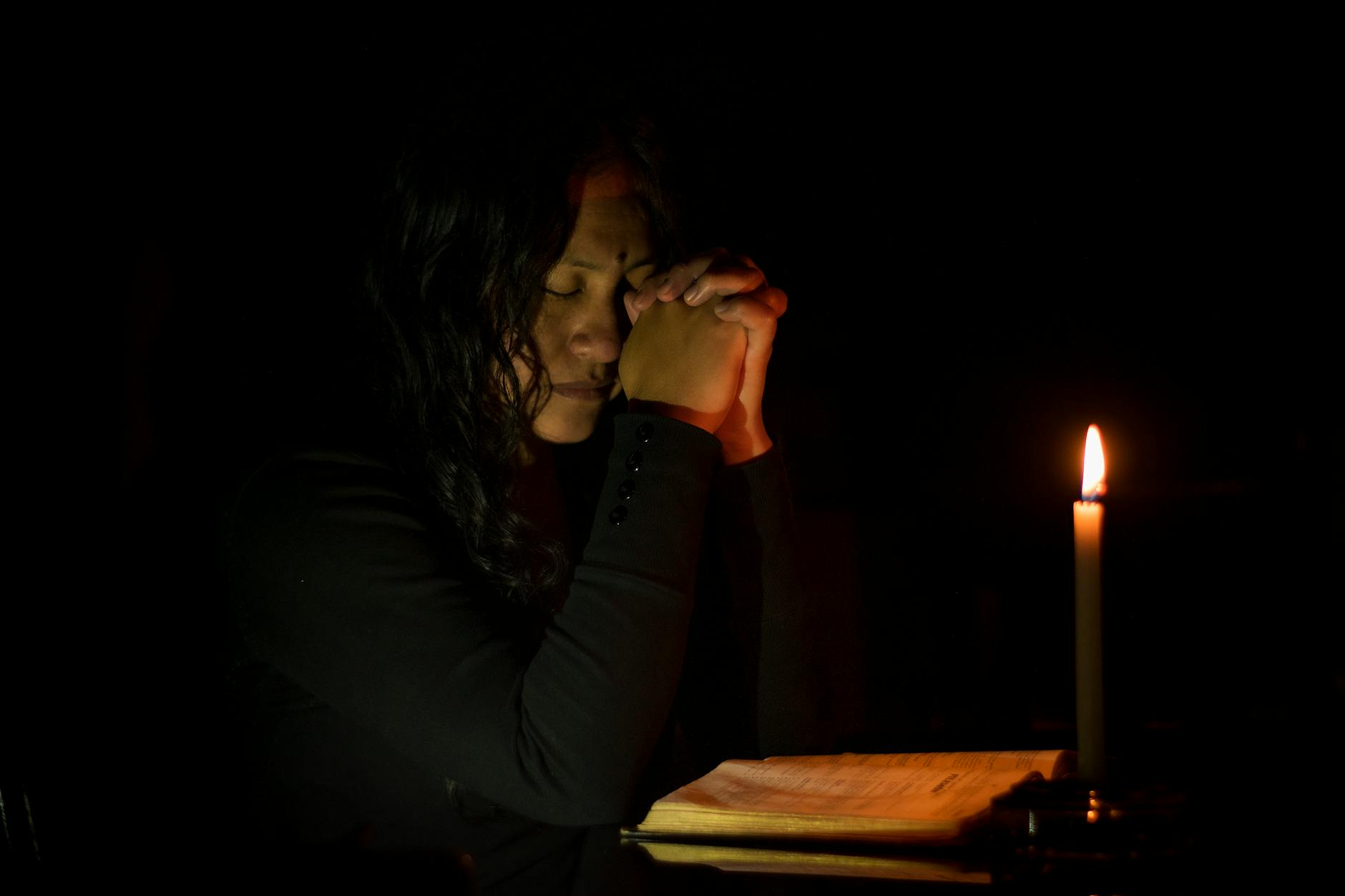
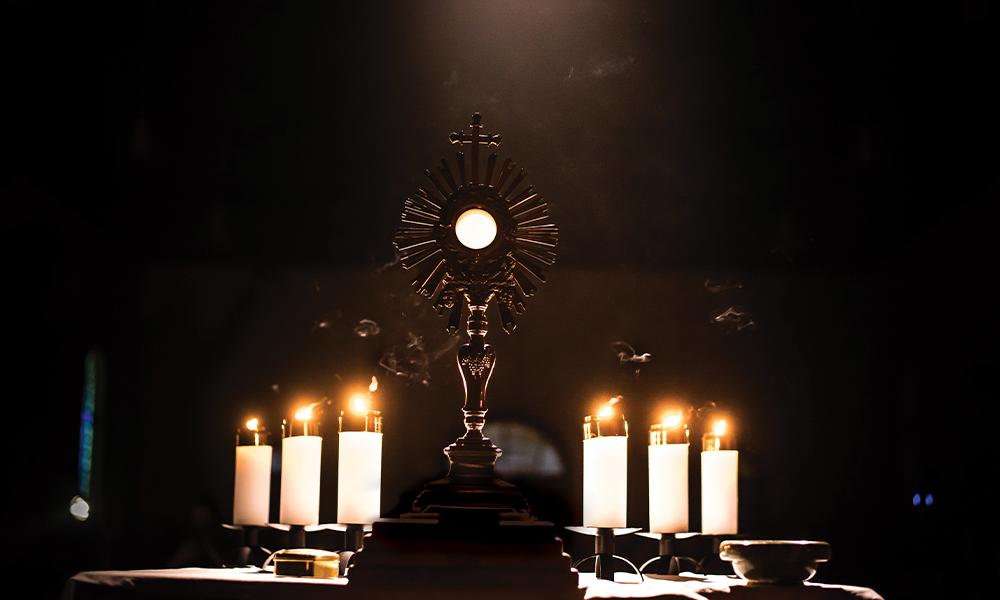
The church was dark and warm when I came in. I could hear sleepy children stirring in the corners, and see the shapes of people in the pews. I had missed the rosary but adoration would go on until late. The one light shone on the exposed Eucharist on the alter. I sat down in the back, then knelt to pray in the silence.

I noticed cantors were standing in a dimly lit alcove. One of them stood up and read something in Spanish that I thought was from the Gospel of John. I left off studying my Spanish this summer and I’ve already forgotten a lot but it sounded like something from that Gospel. I can’t remember what it was now. Jesus calming the waves? There were prayers. Something about children, loved ones, fear. The reader sounded not only somber but sad. They sang a Mexican hymn about walking with the Lord.

It sounds like any Adoration night in a Catholic Church. However I haven’t yet mentioned that the feeling as I came through the church doors was overwhelming sadness, an oppressive sorrow that was almost crushing. I can’t be sure that was what people there were feeling but if they were it would make sense.

This parish I was visiting is primarily Latino parish. We have had ICE here the last couple of weeks. We are not a big town. We used to be small but I suppose we’re medium now. Local TV has reported on where agents been sited, arrests they have made. Local police have made announcements telling us not to interfere with ICE. The popular news anchor has posted videos of ICE activity people have sent him. Unusually for this conservative bastion of a town, there have been school walk-outs, protests, prayer vigils, almost every day that ICE has been here.

Obviously this situation has caused stress for a lot of people. Nothing like in Minnesota. In fact I have only seen a couple of ICE agents in person, and one abandoned car with the doors open on the road.

I didn’t feel like trying to do any structural mental prayer. My mind was unusually clear and still. Making it do anything felt like introducing unnecessary clutter so I went with just sitting still, being conscious, being present.

As time went by I felt sorrow grow. Maybe it was me. Maybe it was all of us.

More prayers. I heard the phrases, “my heart,” and “your heart” several times. Another song about trusting God, I think. People came in, others left quietly, sleeping children over their shoulders. A boy came around with a box of LED votive lights. Soon there was one at the end of each pew, flickering like candles. The priest walked down the aisle checking on everyone. For me sorrow kept deepening. I began to feel an intense wreath of warmth around my heart.

Silence. More Scripture, more prayers. The trust and love they were expressing reminded me of our family’s attitude when my husband Bob had brain cancer. “Everything will be OK and even if it’s not OK it will be OK,” we used to say. In other words, “This is terrible and we have hope that it can end well. But no matter what has to happen, we will be with you, Lord, and we will always have you.”

They were live streaming the event; probably for anyone too ill to attend or too afraid to come to church or leave the house. I thought that the people in the church were probably not the ones who were especially targets. They were here to pray for everyone else. It would be likely that they are worried about someone they knew, a family member maybe.

I was likely the only white person there. I could have no idea what this community within my community was going through or what it was like to be them right now. This prayer vigil was a vigil for peace. It had been announced as a way to “put everything in God’s hands.” It struck me that the people I was sitting with likely did not have much they could do about the situation. All they had was God.

I felt such gratitude that they were letting me sit with them at the feet of Jesus even though I can’t possibly share what they were going through. I had that sense of astonishment that I was sitting among a persecuted people. Maybe some of them didn’t know what had happened to someone they loved, whether they were being tortured or starved or beaten, whether they were far away in a dangerous country, whether they would ever see that person again. It was one of those moments when I couldn’t believe this is my country.

I looked at the people around me again. “Jesus I know these are your people,” I prayed. “I will do whatever I can, whatever you ask me to do for them. Just make me able.” My eyes filled. “Thank you for letting me be with them tonight.

After about an hour, which passed quickly, I left.

I talked to my daughter Roise about the sadness I felt. Was I right that there was sadness in the voices of the cantors and readers? Was I projecting a pleading sentiment onto them? Was it my feelings coming out?

Roise suggested that as Catholics we believe that we are the Body of Christ together. Especially in the Eucharist, we are one together, sharing everything. Maybe I was sensing their feelings or maybe I was just part of the Body of Christ feeling its pain. When one part suffers all the others do too.

We thought about it some more. “Imagine how sad Jesus is about all this.”

Neither of us had anything else to say after that.

Blog at WordPress.com.

Up ↑