Search

Bethany Hang Out

Catholic contemplative life and devotion

Category

Faith

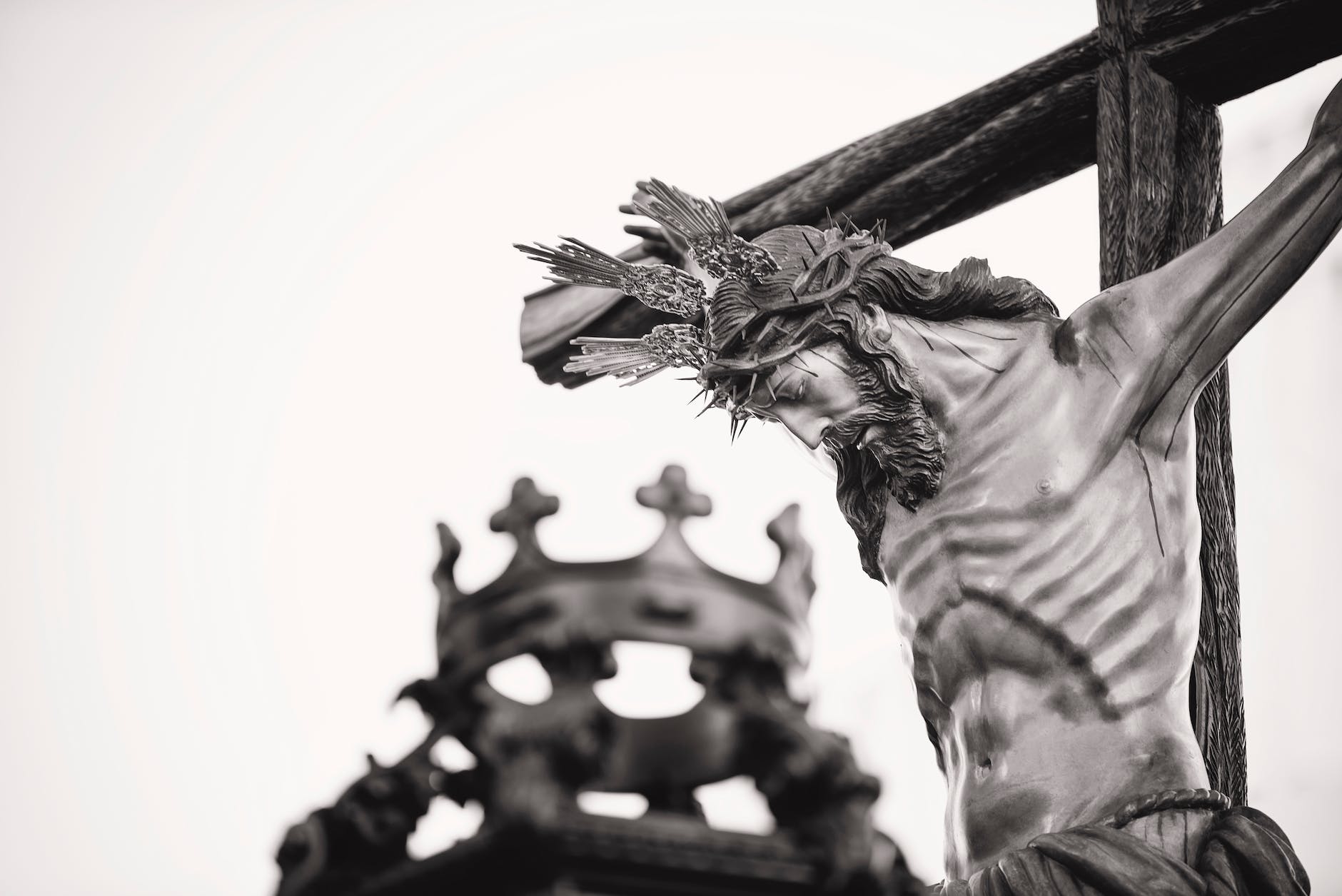
Triumph of the Cross

Photo by Alem Su00e1nchez on Pexels.com

“The Sovereign Lord has opened my ears;
    I have not been rebellious,
    I have not turned away.
 I offered my back to those who beat me,
    my cheeks to those who pulled out my beard;
I did not hide my face
    from mocking and spitting.
 Because the Sovereign Lord helps me,
    I will not be disgraced.
Therefore have I set my face like flint,
    and I know I will not be put to shame.”

(Isaiah 50:5-7)

Anyone can give intellectual assent to Christ’s existence, his nature and purpose. Anyone can quote Scripture. Satan did both of those things. When the devil tempted Jesus in the desert he quoted Scripture just fine. The demons exorcised by Jesus proclaimed his truth screaming, “You are the Christ the Som of God!” as they left the scene at his command.. So it isn’t enough to know the Bible or to acknowledge Jesus in order to belong to him. Following him, identifying with him, seeking unity with him, living as he did, loving him in all of his mystery, that is what being Christian is.

His triumph was all of the things that most confound the forces of hell: sacrifice, obedience, love, surrender, acceptance, humility, non-violence, abandonment to God, suffering and losing a fight in front of the whole world, and on purpose.

Even we don’t understand it unless we console ourselves that he was resurrected on the third day, which he was. But in that moment he died with trust and abandonment. He gave himself over and faced his enemies in silence.

This throws Satan, and sadly it throws us too.

Even we Christians hold a deep attachment to violence and revenge. We cannot let go of the exhilarating high of vainglorious triumph.

And yet the Beautiful One admonished us to take up our crosses and follow him.

I don’t think that is simply putting up with the hardships of life hoping for reward though I know that is part of it. I think we need to respond to the violent world as he did.

Turning the other cheek to me means, “I will not be turned back from love.” That kind of power can only come from God and we have to want it.

We have to renounce ourselves and follow Jesus. That’s how we find life and even find ourselves.

I haven’t gotten there yet. I have been there sometimes but it is not yet my home, my way of being. Not yet. I suppose that is how it is for most of us.

I still want to win. I want to win, I tell myself, for others; for the poor, for those on the margins, for immigrants. However, like anyone, my motivations are mixed. There is still a selfishness and pride in it. We all want to force things, to feel powerful. It is the effect of the fall of humanity in us.

The real battle we have is against ourselves, as St. Teresa of Avila says. And this is hard, she points out, “because we love ourselves very much.”

God gave us an innate sense of justice and right. There is nothing wrong with this. We go wrong when we stray from the Gospel. A line in the Oscar Romero movie, Romero got to me. St. Oscar said to a fellow priest and advocate for justice, who tried to talk him into joining the rebels with him on behalf of the suffering people of El Salvador, “If you do this you will lose God just as they [those he would take up arms against] have.” Whether these were St. Romero’s exact words or not it is an incredibly powerful statement. It rings utterly true. If we persist in our attachment to violence we will lose God. Nothing, absolutely nothing is worth that. And we will “lie down in torment.” (Isaiah 50:11)

I have read that some people are starting to complain to their pastors when they preach on the Beatitudes, that the preaching was too left leaning. When confronted with the fact that these are the words of Jesus Christ, they retort that this is outdated, doesn’t work, is “weak.” Look at us. We haven’t changed. The Cross, the Gospel, is still a scandal, still makes no sense.

However, When he was insulted, he returned no insult; when he suffered, he did not threaten; instead, he handed himself over to the one who judges justly. (1 Peter 2:23)

For to this you have been called, because Christ also suffered for you, leaving you an example, so that you might follow in his steps” (1 Peter 2:21).

There is really no way around that.

Even those of us who know and accept the teachings of Jesus have parts of ourselves still attached to violence and our own ideas of justice. We still hope Jesus will clear the world of bad people on his return.. Not us though because we are nice people, right?

St. John of the Cross said that even if the only thing keeping a little bird tied to a tree branch is the thinnest of threads, the bird is still tethered, still not free.

We have to cut the thread.

On this Triumph of the Cross in 2023, in this era of mass shootings, unkindness and cruelty, and the promotion of a lack of compassion as a good thing by a significant portion of society, even by a good number of our fellow Christians, lets renounce violence in the Name of Christ, embracing instead the way of Jesus.

We can’t belong to the Christ of Revelation unless we belong to the Jesus of the Gospels with all that he showed us.

Thank God he is with us to help us with his endless grace.

He who has begun the work in us will complete it. (Philippians 1:6)

We have only to decide, every day, and trust that he will triumph in us.

“I have promised it and I will do it, says the Lord.” (Ezekiel 37:14b)
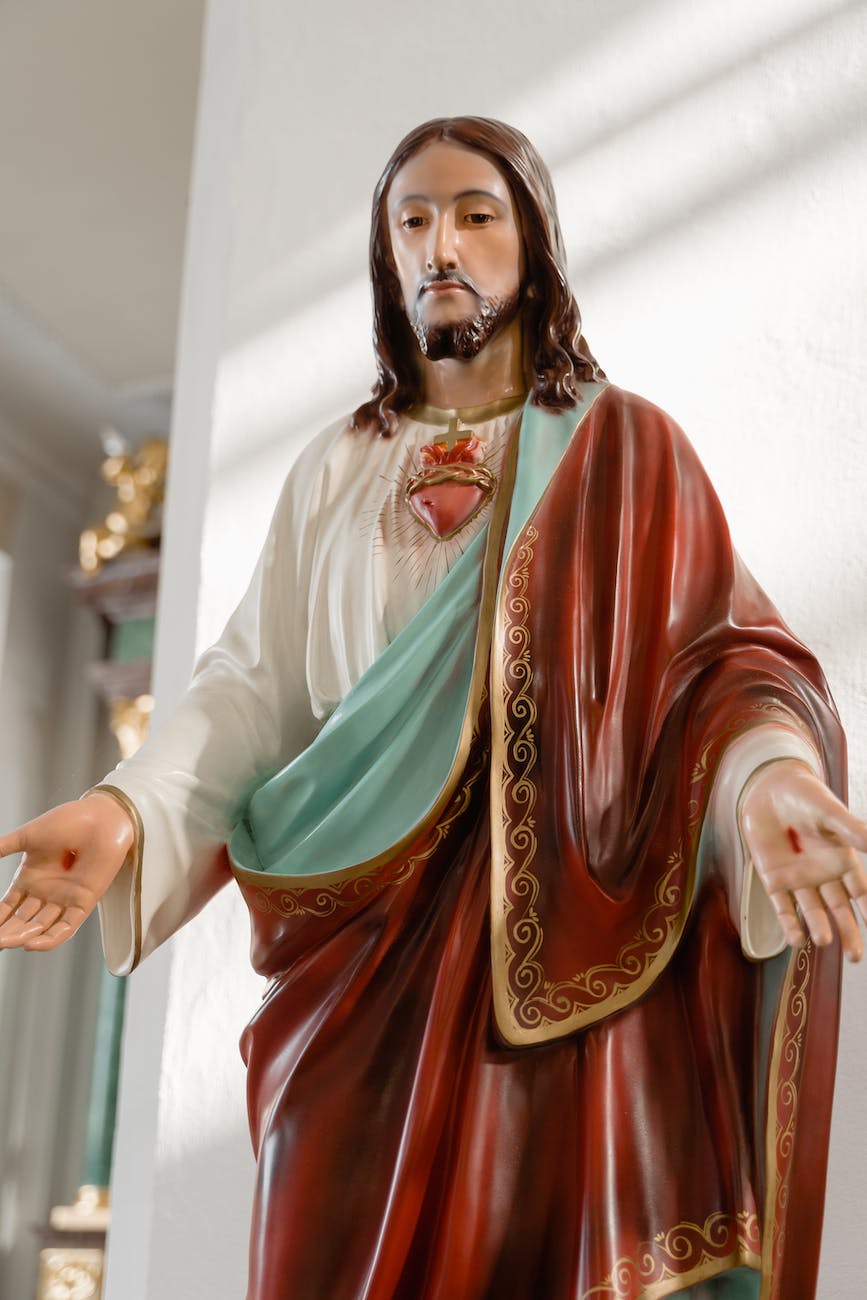
Photo by MART PRODUCTION on Pexels.com

Mary of Bethany; an oil poured out

Photo by Yaroslav Shuraev on Pexels.com

July 29 is the feast of Sts. Martha, Mary and Lazarus, the siblings of Bethany. Bethany was a little village not far from Jerusalem. It seems to have been Jesus’ favorite stop on his journeys, his home away from home.  Apparently these three friends were great company, and supportive of his mission. They had a house big enough for his travel companions, the food was great and Martha, Mary and Lazarus were always eager to be caught up on the latest adventures of Jesus and his itinerant followers.  

Martha and Lazarus’ sister Mary has been conflated with St. Mary Magdalene since the Middle Ages and this impression continued for centuries in Christian hagiography and art. Modern Biblical scholarship and a pronouncement of Pope Paul VI put an end to that mix up.  St. Mary Magdalen continues to be celebrated on July 22, and Mary of Bethany joined her brother and sister as her own person. 

This leaves us with three Gospel stories of St. Mary of Bethany. 

At the feet of Jesus (Luke 10:38-42)

Poor Martha is hosting all by herself, running ragged, resentful and starting to bang the pots and pans in the kitchen. Finally she decides to get her feelings out. She unburdens her heart right to Jesus. Isn’t that what we should do? Maybe not in front of the company, granted, but we should lay out burdens before him and be honest with him. He knows what’s inside us anyway. 

I like to think the Lord’s answer gave Martha peace. All the times Jesus has straightened me out when I was wrong or off course I have felt instant peace. Whether what he asked of me was easy or unpleasant I felt peace and that’s how I knew he was speaking. It seems Martha had taken on more than she was required to.  I have taken on tasks and responsibilities God was not asking me to and the first symptom I have is usually exhaustion followed by resentment and self righteousness. Eventually there will be an outburst. I hope Martha felt unbound and freed by what Jesus said to her. 

It’s easy to see Mary feeling affirmed and freed, protected and understood by Jesus’ defense of her. I recently read that the way she is sitting at Jesus’ feet listening to his teaching would have been controversial in her time and culture. It was something a disciple did. Rabbis weren’t supposed to have female disciples. The study of Torah and the pursuit of knowledge was for men only.  By sitting at Jesus’ feet as his student she was being quite bold and acting as an equal to the men. Jesus affirms her in this, allowing her to keep the place she has chosen.  

Of course we also see Mary of Bethany here as a beautiful model for Christian contemplatives. She is deeply attentive to Jesus, looking  at his face, internalizing all that he says, pondering in her heart.  

During a skit of this scene we acted out as a family my then four year-old daughter Maire had Mary get up, offer to take over the host duties, and invite Martha to take a turn at Jesus’ feet. I like that a lot. Maybe it was that way. 

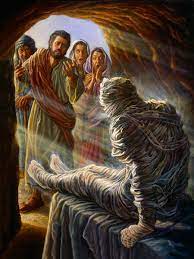
Mourning Lazarus John (11:1–45)

Lazarus fell ill. His sisters cared for him and prayed over him, waiting for Jesus to come and heal him. They knew he could save their brother. They sent an urgent message. Mary would have sat by her brother’s bed keeping vigil, offering him her gift of profound presence and connection. Martha would have changed his blankets, kept a wet rag on his head, brewed medicinal teas, asked advice from the wise, sent for doctors, made favorite dishes she hoped he would eat. Sometimes they would have had to switch places and learn the other one’s ways of loving and serving. 

Jesus never comes, though they keep a lamp burning for him through every night in hopes he will. Every footfall outside, every stirring they hear they think perhaps it is Jesus or at least a message from him. They don’t understand. Why doesn’t he come? Why doesn’t he respond? 

Lazarus’ illness becomes imminently  life threatening, their anxiety for him so intense, neither of them sleeps at all. They hold him in his struggle for breath and as life ebbs away. 

They try to comfort one another. They ask each other, “Why did Jesus never come?” 

They wash and anoint his body with the women of their family winding him in scented burial cloths to bury him in their family tomb.  

The house is full of family friends and neighbors sitting shiva with them. https://www.shiva.com/learning-center/sitting-shiva

Finally Jesus shows. Martha as we have seen her do before, makes her thoughts and feelings known to him. She confronts Jesus while at the same time expressing her faith in him. She knows he could have saved her brother as he has saved so many others. She also has come to know and believe he is the Messiah and Son of God, just as Peter had also done and she says so. “Even now,” Martha says hopefully, “I believe.”

She runs to get her sister who is in the house with all the mourners and tells her Jesus is here and asking for her. 

It’s when Jesus sees Mary’s tears that he cries too. This is important to me, to all of us. Yes for some reason Jesus does allow bad things to happen to us. At the same time, as Madeleine Le’Engle says, everything that happens to us happens to God too. 

Mary also confronts Jesus, falling at his feet, her movement a desperate plea of prostate grief. 

He doesn’t ask Mary for a declaration of faith. Maybe he knew she had it in abundance already. He only responds with his tears and his actions. He gives her her brother back alive. 

Photo by Zaksheuskaya on Pexels.com

Anointing Jesus (John 12:1-8)

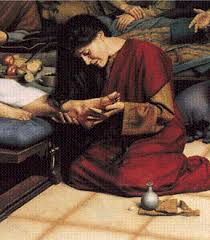
This is the beautiful story that captures the imagination so powerfully; Mary of Bethany interrupts dinner, unbinding her hair, carrying in an alabastron of outrageously expensive perfume worth a year’s wages. 

Since she seems to have been unmarried (as she is living at home) perhaps it had been meant for her dowry. To me this brings out an extra meaning. Perhaps she intended never to marry and to fully dedicate her life to Jesus, pouring out her love and devotion to him alone. 

Her contemplative nature, her attentiveness and connection to Jesus lead her to anticipate his death; the only one of his followers who understood that it was imminent, and maybe even what his death would mean.  

With compassion she comes to acknowledge both what he is about to endure and what he means to her. 

Have you ever smelled spikenard, aka nard?  It is not a floral scent but a sharp, pungent smell. It would have filled the whole house and the scent would have lingered for days and days in every room and on both Jesus and on her hair.

The others at the table were offended at her extravagance, saying the nard could have been sold and used to feed the poor. Jesus defends her. We will always be able to help the poor but we would not always have him. “She has done a beautiful thing for me.” She dries his feet with her hair.  

Women’s hair was supposed to be covered in public and especially in the presence of men who were not their husbands. Here our Mary of Bethany unveils and not only that dries the feet of Jesus with her hair. I wonder what those present would have made of that? 

I’m thinking of the spiritual marriage written about and experienced by the great mystics of our faith such as Sts. Teresa of Avila, John of the Cross, Rose of Lima, Catherine of Sienna among others, in which the soul becomes one with God. Maybe Mary of Bethany was experiencing this or had. Maybe this bold and lavish gesture was her response, her understanding of his destiny born of that union and love. 

Wouldn’t you love to be able to comfort Jesus with your compassion and love? To do something that is deeply meaningful for him? To pour out your love diffusing its fragrance through all his house, to smell it on your hair for days to remind you, knowing he also carried it? To remember his words, that you had done a beautiful thing for him? 

We can. When we love, when we serve, when we pray like an oil poured out to the One we love. 

 Your anointing oils are fragrant; 

your name is oil poured out; 

therefore maidens love you.

Song of Songs 1:3

St. Maria Goretti; a different take


July 6 is the feast of St. Maria Goretti, a Saint I love very much.

Loving her was not immediate for me. My appreciation of her has been more of a journey. I had to take a prayerful look at her life and my own life too. She became a good friend and has always been there for me.

As a survivor of child rape the way her story has most often been interpreted is disturbing to me. Holding her up to young people as a “model of purity” does not fit out current understanding of the dynamics of sexual abuse. I often read she “resisted a challenge to her purity.” She was eleven. She did not want to be raped. No one does. Abuse is not the child’s choice or fault. We know that though usually that is not how the child feels. Those feelings are hard to get over and can last a lifetime. Saying she was pure because she managed not to be raped and was murdered… instead? Can sound twisted to us survivors and not only to us, to anyone who knows much about these things.

Maria had survived the death of her father. Her mother had to go out and work the fields by herself. They had to share a house with another family. The other family had a disturbed young adult son. Maria had to take care of the house and the younger children. She was very gentle and kind. The young man thought she would be silent about his advances (most children are) and he was right. He thought she could be cowed into doing what he wanted. He was wrong. It’s not that I’m not proud of her for resisting, and for the way her thoughts even in those moments were on God. It’s amazing. She tried to persuade him with concern for his soul. He was angry with her for this and certainly for her noncooperation. So he murdered her, stabbing her fourteen times.

At the hospital her priest asked if she forgave her killer. She said she did. A lot of us are asked to forgive our abusers. It’s inappropriate for someone to ask that of us. I understand she was dying but that still bothers me. So many of us are asked to do this so we don’t make other people uncomfortable or mess up the status quo. So we are expected to carry the load alone so nobody has to deal with the relational and systemic consequences of us telling the truth. So I don’t like that he asked her that.

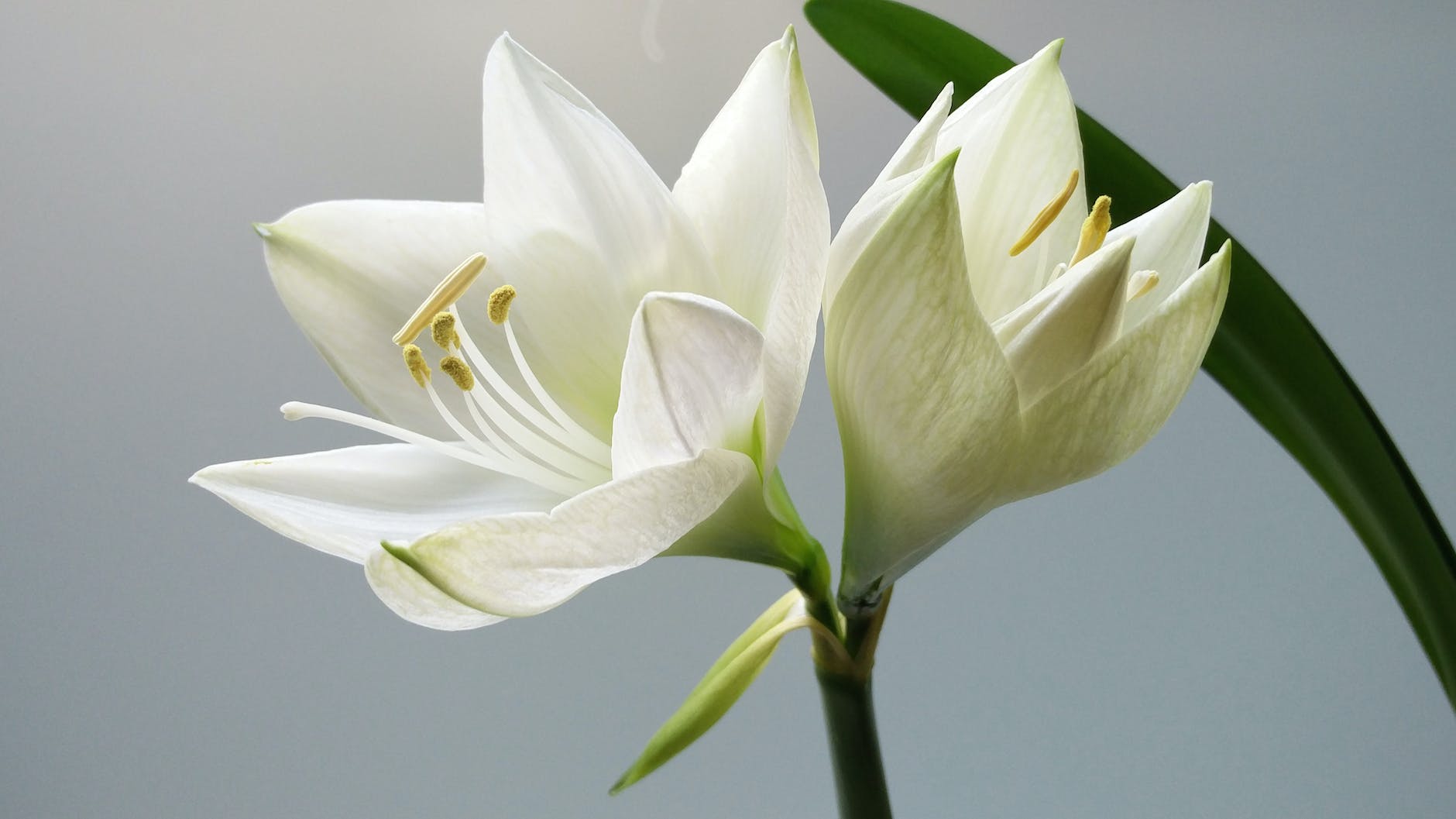
Later she appears to her killer in prison with fourteen lilies, one for each of her wounds. I love this. I love it because it shows that she did have the wounds. They are real and have meaning. He is confronted with that truth. However in Heaven her wounds are transformed and can become a gift to transform others; even the one who did the wounding. And he is transformed. He is converted and joins a monastery. He testified in the investigation for her cause of sainthood.

Something that moves me is that when she was exhumed her body was (and still is) incorrupt. Like Snow White she lies in a glass casket now. People come and pray and look at her.

What is God saying by this?

St. Eulogius wrote to St. Flora when she was about to be sent as punishment for being a Christian into a brothel, that even if her body was violated, her soul would remain pure. When I read about that I was very struck by it and I have remembered it for years. Abuse survivors don’t feel pure. We feel gross. I felt deeply flawed and somehow dirty all through childhood. It has taken years of work not to feel intense shame all the time. The idea and the trust that my soul is still pure regardless was profound for me.

I am sure that St. Maria felt violated by what happened to her. She was groomed and sexually propositioned at eleven years old. She was afraid of that man. That is already not OK. Just because he didn’t succeed in penetrating her doesn’t mean what she endured was not a sexual assault. He assumed like the “incels” of today that he was entitled to the bodies of women and girls, that they owed him access. He didn’t see her as a person deserving dignity and sexual autonomy. Her refusals enraged him and he brutally murdered her.

And that beautiful girl found healing in the arms of Jesus. She had been extremely devout. The love she always had with God carried her to Heaven and she was given the work of healing, real healing where the truth is brought to light and with God’s touch becomes a light for others.

He left her little body free of corruption to reveal to us the beauty of her bright soul treasured and healed in his heart, in his light.

Yes she is pure. She was always pure whether a man sexually assaulted her or not. Her body is holy and precious to God. He wants to show her to us. He wants us to know.

The pure of heart shall see God.

Photo by Tomas Williams on Pexels.com

The Liturgy of the Hours

Photo by Jaymantri on Pexels.com


Every morning as sunlight makes its way across the earth, the  praises of God awaken from the heart of the  praying Church. Behind  the sunrise the praises and petitions continue through the hours of the day. As each time zone turns into the darkness, Night Prayer is raised to God beneath the moon and stars. 

This is the official prayer of the Church called The Liturgy of the Hours, The Divine Office, “The Work of God,”  prayed by Catholics of every vocation, by Pope Francis, by our Bishops, priests, religious, and by many lay people as well; the same words of prayer in every language of humanity. 

It is an anchor in the day, a way to sanctify time, express unity with the whole Church, and to call our hearts back to God again and again. 

Morning and Evening Prayer are laid out for us daily as a hymn, two Psalms, and a Scriptural Canticle, (a poem or song in the Bible that is not a Psalm) each with antiphons, (a reflective one line prayer) and followed by “Glory to the Father and to the Son and to the Holy Spirit. As it was in the beginning, is now, and will be forever. Amen.” 

After the  Psalms and Canticle there is  a Scripture reading; usually from  a New Testament letter. 

After that  there is what is called a “Responsory.” For example: 

 Just is the Lord, in justice he delights.
— Just is the Lord, in justice he delights.

He looks with favor on the upright man;
— in justice he delights.

Glory to the Father, and to the Son, and to the Holy Spirit,
— Just is the Lord, in justice he delights.

This will be followed, for Morning  or Evening Prayer, by a New Testament Canticle. For Morning Prayer, this will always  be the Song of Zechariah (Luke 1:68-79). In the Evening it will be Mary’s Song we call The Magnificat ( Luke 1:46-55),  each with their respective antiphons.. 

After this are the Petitions, similar to the ones we pray at mass. These are different each day. Then we pray the Our Father and a closing prayer that changes daily. 

The other daytime  “Hours” : midmorning, midday and mid afternoon are more abbreviated.  Night Prayer is brief and includes an Examination of Conscience and Act of Contrition or Confiteor, along with its Psalms prayers and canticles. It ends with a Marian antiphon such as the “Hail Holy Queen” to kiss our mother goodnight. 

Photo by Rok Romih on Pexels.com


The “Office of Readings” will have a longer reading, usually from the Old Testament, and a Patrisric reading (from a Church father or from the writings of a Saint) and can be prayed any time. 

These prayers in their daily format can be found in the four volume version of The Liturgy of the Hours which unfortunately is a bit expensive for some. You can also buy  the one volume version called Christian Prayer if the expense is prohibitive. Christian Prayer does not include the Office of Readings. 

It’s hard to learn to navigate the volumes at first while you are getting used to this. You might want to buy what’s called The St. Joseph Guide, a little paper book that gives you all the page numbers for each day.  There is a lot of page turning and going back to a page and so on. I once heard a priest describe it as “death by ribbons.” Yes it feels like that! 

It was worth it to me to learn. The Liturgy of the Hours has become an indispensable part of my everyday life, connecting me consciously to God and to the whole Church at the times of day I pray it. As Secular Carmelite I am committed to pray Morning, Evening and Night Prayer daily. 

Through hard times I have prayed every available “hour” to help me get through the day, which was healing and helpful for me. At all times the rhythm of it grounds and connects me with the family of God. 

Morning and Evening Prayer should take about ten minutes for you to pray at a normal pace.  The other “hours” are shorter. 

When we pray the  Psalms of  Liturgy of the Hours we  are praying with Jesus who prayed these too as did the generations before him. We are praying with the whole Church, with the voice of the Church. 

I love praying with everyone. 

Another thing I love about praying The Liturgy of the Hours all these years is that the Scriptures they contain are written in my heart. A line from a Psalm that is just right will come to me at exactly the right time when I need it. The prayers , Canticles and  Psalms are woven into my life now like flowers in my hair. 

Photo by Valeriia Miller on Pexels.com

I look forward to praying the Divine Office as I wait for my coffee to brew,  or when I start thinking about what to make for dinner, or when I am getting ready for bed. 

I enjoy praying it alongside others as well, especially my family and my Carmelites when we are together. When we are apart the liturgy connects me with them.  

Know that praying The Liturgy of the Hours does something. It is never just a recitation. 

“For the word of God is alive and active.  (Hebrews 4:12a) 

“So shall my word be that goes out from my mouth; it shall not return to me empty, but it shall accomplish that which I pupose

and shall succeed in the thing for which I sent it.”  (Isaiah 55:11)

We are praying God’s words, and the words of the Church spoken by the Holy Spirit. We are participating in the healing of the world. We are allowing ourselves to become conduits of God’s grace when we join our brothers and sisters spiritually for “The Work of God”. 

Now I will tell you a secret. The secret is that nowadays you don’t have to go through “death by ribbons” unless you just want to. I feel like a cheater because I use the app now though I still cherish the books. I have the app called Divine Office on my phone. You can also pray from the Divine Office website or the other one,  Universalis. 

So you see? It’s not hard. Come on and join us. You’ll be glad you did.   

From the rising of the sun to its setting, let the Name of the Lord be praised. (Psalm 113:3)

Photo by NO NAME on Pexels.com

*This piece originally appeared as my column in The Eagle Newspaper Saturday June 24, 2023

“And now that you are alone daughter,”

Photo by Engin Akyurt on Pexels.com

To me Ordinary Time is getting back to the everyday and delightful work of prayer and service that makes up our beautiful Christian lives. It means hot Texas afternoons, coming into the cool, quiet church, feeling relieved as the sweat evaporates from my face and back and peace surrounds me.

“Hi Jesus. hi. Help me pay attention at mass this time.” I can’t help but smile to myself, or really, at him, in his sweet presence there.

His presence is also right here with us, in us.

Ordinary Time beckons

with the promise of quiet inner space

to be with Jesus in the center of my heart,

I in the center of his,

drawing from the source of all life.

St. Teresa wrote about how the companionship of the Lord is magnified when we are prayerfully solitary, our awareness of him not in the least disturbing our perfect solitude.

“Contemplation is nothing more than making time to be alone with the one who we know loves us.”

Instructing us in how to go about practicing inner prayer, she writes, “And now that you are alone, daughter, make the Sign of the Cross.”

In this way you acknowledge that you are in the presence of God, with the intention of spending time alone with him.

You will notice this kind of quiet and solitude are more full than empty, and that the fullness is nourishing, often joyful. Again, it makes me smile. “Hi Jesus, hi.”

If you have trouble with your focus when you are alone, if stillness causes you anxiety, or of you have many worries that disturb your peace, here are a few things to try.

It helps me to listen to the sounds around me. If you are blessed with a silent house or a quiet chapel, these sounds will be small. Mentally note them, starting with the farthest away. Maybe a dog barks from a neighbor’s yard down the street. Someone is mowing in the distance, a car drives by. Now bring your awareness closer. Maybe you hear birds singing, children playing next door, wind in the trees outside your window, a sprinkler perhaps. How about sounds in your house or wherever you are right now? A clock ticking, a washing machine swishing, the refrigerator humming, the dog drinking its water in the kitchen;

listen.

What sounds are in your room? The ceiling fan, the air coming on… your own breathing.

Speaking of breathing, take a few deep breaths; in through your nose, out through your mouth.

Put all your worries in a little pile; Milagros to leave here in his lap while you pray. He will take care of you.

And now that you are alone, daughter, son, love of God’s life, make the Sign of the Cross.

Ah, there he is now.

Smile.

See him smile back.

Send some time with this, with him.

Photo by Keenan Constance on Pexels.com

The Ascension

Photo by Ruvim on Pexels.com

To us who celebrate it every year the Ascension of Jesus  seems to naturally follow the initial celebration of his Resurrection. 

However I imagine it was an earth shattering surprise to his followers that he would be leaving them yet again. 

When I reflect on this event as part of the rosary the virtue I link to the Ascension is detachment as I see him beautifully disappear before the eyes of his followers as “a  cloud removed him from their sight.” 

The family of believers had to let go of their expectations that Jesus as they knew him would permanently remain to walk and talk with them. Again they had to face that Jesus was not about to get rid of the Roman occupiers either. There would be no restoration of the Davidic Kingdom  in the literal way they had thought of it. And the One they loved was going to withdraw from them yet again. They must have felt as if they were back from the defining experience of their lives with nothing to show for it, as if they were just a rag tag group of people standing on a mountainside for no particular reason. They were shocked and bereft. They didn’t understand what Jesus meant about him having to leave that the Holy Spirit could come to them. How could they? 

When the angel said that Jesus would be back they must have shaken their heads. Jesus had said for them to go and baptize, to take his message to the world. This must have seemed like too much for them, an overwhelming task, especially on their own. 

They had to greatly expand their understanding of God even past the miraculous three years they had left everything for and deeply identified with now. 

They had to let go so they could be filled and receive Jesus in a whole new way, by his presence in their hearts, and to come to know the Holy Spirit who was new to them. 

How can we receive the Spirit without detachment, self emptying, without freedom of heart? 

“Love- the way God wants to be loved, and leave off your own way of acting,” said St. John of the Cross. 

Or, as Jesus said to St. Angela of Foligno, “Make of yourself a capacity and I will make myself a torrent.” 

Jesus said that if his friends loved him they would be happy he was going to the Father. (Jon.14:28) Is there something more to that than being happy for him? Yes, because he says, “for the Father is greater than I.” Maybe it also means that we have to let our current perhaps more comfortable understanding go to make room for the immensity he has for us. We can be happy he is going to the Father because then, in letting him go as we thought we had him, he then is truly closer than our breath, more accessible than ever. Detachment is hard. We feel that we are losing our Treasure.   

 St. Faustina said of Mary’s experience of the Ascension that she deeply grieved as any mother would  that her Son was leaving but that, “her heart could not want what God did not want.” 

In seeking a pure heart for God and a Marian detachment; a detachment with great love, a detachment even from the way we thought Jesus would be present to us, we open ourselves to what is even greater, beyond what we could ever have thought of ourselves.  But first we let go. 

“Bend  my heart according to your will, O God.” (Ps. 119:36) 

Then, 

“I shall run in your paths for You will enlarge my heart.” (Psalm 119:32)

In this is peace that comes from open-ness to God and freedom of heart.

These verses are a perfect prayer to cultivate holy detachment as the disciples struggled to do this, standing there on the Mount of Olives, not knowing what to do with themselves. 

Fortunately we don’t have to rely on our own strength in this and neither did they.

Jesus had said to wait in Jerusalem and to pray. They did. They trusted in simplicity. And prayer continually purified theirattachments and intentions as disciples, transforming their dismay into receptivity.   

They still longed for Jesus; his voice, his hug, the sound of his footsteps, “like a deer that longs for running streams in a dry weary land without water,” (Ps. 42:2)  However they soon found that once emptied, their muddled and broken hearts were then open to the new gift of God’s presence; the descent of the Holy Spirit at Pentecost, filling them past overflowing, their thirst for God more than quenched.  “Your torrents and all your waves swept over me.”  (Ps. 42: 8)

Come, Holy Spirit, come. 

Photo by Jimmy Bolt on Pexels.com

St. Joseph Novena Day 9

Photo by Guillaume Meurice on Pexels.com

St. Joseph Novena Day 9

You Lord, are a shield around me,
my glory, the One who lifts my head high. Psalm 3:3

St. Joseph living in glory your work is not done but is different! Now you have tremendous ability to share that glory and love and fullness of joy with us as well. And so we entrust ourselves to you as an understanding father who is also the terror of demons, the tender protector, the universal teacher and master of prayer and the Christian life. We want what you have. We want to live and work and laugh with Jesus and Mary every day. We want to die in their arms. We want to be with you and with them in Heaven. We are so happy it is your Solemnity; the Solemnity of your beautiful life, of you in your heavenly glory and you as amazing intercessor. We bless you St. Joseph and we thank God for you and so does all of Heaven. You have our love as small as our hearts are sometimes. May God make our hearts mighty to love as you did, as you continue to do. Intercede for us with your Son. Remain with us today in a special way. Amen.

Photo by Anna Shvets on Pexels.com

St. Joseph Novena Day 8

Photo by cottonbro studio on Pexels.com

Precious in the eyes of the Lord
    is the death of his faithful ones. (Psalm 116:15)

St. Joseph, your death was beautiful and tender. Your passing filled the room with love; your love, the love of your family, the love of God.

Joseph the dreamer, the worker, the father, the husband, the prophet, the protector, the meaning of your life settled with intense clarity on those who kept watch at your side and on everyone who ever knew you, flooding the hearts of them all. Help us when our time comes to leave this world, to have fulfilled our purpose, to have loved God and every human being he sent our way, to have lived with Jesus and Mary daily that we may also die in their arms and ultimately reach heaven in the company of the angels and saints, to be forever in the Heart of the Father, inhabiting his House filled with wonder. St. Joseph, Patron of a holy death, pray for us as we honor you. Pray for us always.

St. Joseph Novena Day 3

Photo by Jim Richter on Pexels.com

The law of the LORD is perfect, refreshing the soul. The statutes of the LORD are trustworthy, making wise the simple.
8 The precepts of the LORD are right, giving joy to the heart. The commands of the LORD are radiant, giving light to the eyes.
9 The fear of the LORD is pure, enduring forever. The decrees of the LORD are firm, and all of them are righteous.
10 They are more precious than gold, than much pure gold; they are sweeter than honey, than honey from the honeycomb.
11 By them your servant is warned; in keeping them there is great reward.
12 But who can discern their own errors? Forgive my hidden faults.
13 Keep your servant also from willful sins; may they not rule over me. Then I will be blameless, innocent of great transgression.
14 May these words of my mouth and this meditation of my heart be pleasing in your sight, LORD, my Rock and my Redeemer.
(Psalm 19)

St. Joseph your level of trust is astonishing. Your humility and simplicity of heart kept you always open to God’s voice in your life. You were continually seeking it no matter the strange and frightening turns life took for you at times, and even when God’s law appeared to be taking you from the person you loved most. You stayed open and you prayed and discerned and paid attention, maybe asking for clarification. Once you understood the plans of God you did not seem to hesitate further but acted with confidence no matter what anyone else may have thought about your decision to change course and take Mary as your wife. Your one aim was God.
Let us say with you, “God is it.”

And May the words of our mouths and the meditations of our hearts be pleasing to him who makes our way clear before us.

Photo by Jeremy Perkins on Pexels.com

Blog at WordPress.com.

Up ↑