Search

Bethany Hang Out

Catholic contemplative life and devotion

Category

Faith

Annunciation House Day 3

10/20/19 The Coffee Box El Paso

Today everyone else went into Juarez after breakfast to attend mass, meet with the priest Fr. Bill afterward, have a look at the shelters in Juarez and meet with Fr, Peter, a Carmelite Priest and Sister Betty at the Catholic Worker House there.

I took a writing day since I did not get my passport in time for this trip.

Sister Anne gave me some bubbles. She heard I love bubbles. So far I have written for a while, had conversations with two of the sisters at the house. They wanted to know how I was doing. They asked about my life. Sister Caroline is a Franciscan Sister. Sister Bea is a Holy Spirit Sister. Both are from Ireland originally. You can really tell with Sister Bea. Her accent is strong.

I sat on the couch near some women guests and did some writing there. We watched ice skating together, making signs to each other about it now and then. One of the women helped the one with the broken ankles from her wheelchair to the couch. I got her some water.

I wrote some more.

Later I walked to Sacred Heart Church. It is an historic and grand, gorgeous church, a bit worn but friendly. Mass was in Spanish. However I knew exactly what was going on and I said the responses to myself in English. I liked how the congregation claps during the songs. There was so much enthusiasm and joy in their liturgy, so much love for Jesus in the Eucharist.

I got some lunch at a little cafe. Afterward I walked to this coffee shop (The Coffee Box) where I am now.

I hope Frank remembers to ask the Carmelite priest in Juarez my question about service from a Carmelite perspective. I also gave my email address for him in case he wouldn’t mind emailing with me a little bit.

My hands have been shaking all the time. I love all the people but I am such an introvert it is hard for me to be around everybody nonstop. I am still a little shaky even with them away.

I have noticed signs of the spirit of friendship between the two cities. On the side of a building painted in Spanish it says, “Love for Juarez.”

There is a famous sister cities mural as well. There are murals all over this city. There is a mural tour people go on. One of them is of the children who died in detention.

At the art museum a lot of the art deals with the borderland, it’s cultures and its issues.

The situation does seem strange: it appears to be one city divided by big steel fence and six places where you can cross over- showing your passport or your work visa.

It used to be one city named El Paso del Norte.

In the 1970’s there was just a chain link fence at the border. Just before NAFTA was implemented, the people of El Paso can tell you, the 18 foot steel fence we see now went up. This is generally taken to mean that the politicians knew that mass migration would result from the policies of NAFTA.

Eventually the group made it back to Casa Vides.

Our next stop was Casa Refugiado. It is a huge warehouse Annunciation House rented with the help of a local Evangelical church who donated the money for three months’ rent.

The first thing we all noticed was the efforts that had gone into this to make it beautiful and hospitable for the refugees. The local art community donated beautiful art prints and photography. Best of all were the giant murals in every area.

The Red Cross loaned what seemed like countless cots. There was a room that was a chapel filled with holy pictures. There were tables of Bibles in Spanish, holy cards and rosaries. Sometimes local priests come to say mass, the guests often hold their own prayer meetings as well.

There was a tiny clinic room where local doctors donate their time as needed.

There was some play equipment that we saw children playing on. Other small children ran through one big room, their mothers looking on.

We learned that right now the numbers were in ebb at the shelters but at some points that were taking in about 1000 people a day. Now that people are automatically detained the numbers have dropped for now. But the volunteers don’t know from one day to the next what will happen. Policies are constantly changing.

The plumbing had a lot of problems and the landlord didn’t want to fix them so Annunciation House needed to have port-a-potties put in outside and a huge mobile shower unit truck waited.
I thought about the detained children who didn’t get showers or the opportunity to brush their teeth. They could have easily done this. There was no reason but cruelty to not let those children have access to showers and to brush their teeth. If Annunciation House can do all this with donations how much could our government do- especially when they are paying so much per person for private companies to keep them in miserable conditions?
barbed wire barrier blur border
Photo by Miguel Á. Padriñán on Pexels.com

Back at Casa Vides there was a donated meal of burgers from the Presbyterian church. So dinner was easy.

A woman who has won a human rights award for her work with migrants in detention came to talk to us. Her main goal is to help return agency to these people. She helps them organize with one another, helps with bailing people out when appropriate, though she thinks it is more important that the unjust situation does not continue. She doesn’t want to bail people out and then have the system adjust itself for her doing that, which had started to happen. She can help them with their commissary accounts, phone calls, support, connections and help once they are free to stay that way. She felt like she didn’t want the award. She wanted this to not happen to people. She told us there was denial of due process going on, abuse, torture and punitive conditions for people who were waiting for their asylum cases. They can be there for years in prison conditions and worse when they have committed no crime. She also talked to us about the criminalization of migrants and our national tendency to criminalize mental illness, addiction and poverty. It is not effective and causes untold suffering and a waste of potential.

She also talked about the Indian men who were force fed when they were on hunger strike. She had been present with them for that. It had been cruel. I asked what she meant by abuse and torture. She said force feeding in the way they did, especially, is defined as torture. She said beatings, humiliations, laughing at people who are suffering, this is abusive. She answered our questions well.

Then we had reflection with Fr Jose. We shuffled off to bed.

…..
https://dmscelpaso.wixsite.com/dmscelpaso/single-post/2018/07/20/Report-on-conditions-at-Otero-detention-facility“>Report on conditions at Otero Detention Center

Annunciation House Day 1

Casa Vides, El Paso 10/18/19

The first thing I saw when I came in the door of Casa Vides was a large painting of Our Lady of Guadalupe, a close up of her face, and the tips of the fingers of her praying hands. I thought to myself, “This is Mary’s House.”

There are several murals here in the dining and living room area. The largest is of the faces of several El Salvadorans who stayed here who died on their journey, except the two who were activists there and were assassinated as also was one of their sons. This house is named for them. In the middle is a green map of Central America. A banner across it bears a quote from St. Oscar Romero that says in Spanish, “If thy kill me I will be resurrected in my people.”
Throughout are flora and fauna of El Salvador and a landscape with a mountain in the back ground. In either side are two traditional figures facing the portraits.

Around the room here in a banner like swirl of peach paint that stretches all over the building and into the basement are written the names of all who have died on the journey or who were killed by agents of enforcement. If they have not yet been identified there is the word in Spanish, “Unknown.”

There is a large cross also, painted in Central American style. The rooms are named after Oscar Romero, and the activist couple who were assassinated, and their son, and, I suppose others like them. Every room has a name on or over the door.

Our group has been staying here in this shelter. We have five women in a small dorm room, three bunk beds.

The migrant guests stay in another part of the house so they have privacy and proper boundaries from our group. We see them at meals and in the common areas of the house. I don’t speak Spanish really but I can express compassion, ask if a person needs anything. Those of us who do speak Spanish can tell me the stories the guests have shared.

When we first got in we were a little early. Sister Caroline was handling a stressful phone call about one of their guests who had just left to meet family in another state but who was not allowed on the plane be cause of her two broken ankles. The three of us who drove sat down on the battered couch to wait for those of us who flew in from Milwaukee.
Eventually everyone else filtered in.

All of us were very tired. It was about 1 in the afternoon. We had lunch: spaghetti, guacamole and chips, black beans. Tea to drink. We each were invited to say what brought us here.

Everyone but me was from the Catholic Coalition for Migrants and Refugees, a group just forming in Milwaukee. I said I had felt called to do something and to come to the border for a while now. As a writer I planned to write about this since it is something I know I have to give. I wanted to be able to speak confidently about what is happening at the border, to understand the issues, and to find out of there is anything I can do to help the people affected. I wasn’t sure what else God might have for me in this. I had been invited along by my brother in law, Frank and I was glad to be here. I told about my friend, Gloria who was undocumented and who died recently of completely treatable and preventable illness because she was undocumented. I wanted to dedicate this trip to her memory.

Our director, a young volunteer who has been here for almost two years, a very centered and gentle spirited guy named Chris. took us in a van to a local museum and memorial that celebrates an historic agreement about some territory, the Chamizal, that had been disputed between the U.S. and Mexico for many years. It is near one of the six border crossings in the city of El Paso and Jaurez. We could see people crossing back and forth from school or work back home, school kids with their backpacks, walking in chatty groups toward the bridge. There was a huge line of trucks standing still waiting to cross. I hear it sometimes takes hours but you never know.

The museum was educational about the cultures of the borderland, and its’ history.

We returned for dinner. Chicken and rice and salad and beans.

After we helped clean up, we went downstairs to the basement for reflection time. The priest who is with us, Father Jose, led us in a simple reflection format. Someone read from the Gospel. The priest asked us a couple of questions: What do you live for? And, “What is God calling you to do?”

We had talked at dinner about why each of us was here and that flowed into this discussion. Most of us don’t know exactly what God is calling us to do. But we know he lead us here to this place, and we all trust that his purpose for us will unfold. To all of us, our faith, expressed in various ways, is what we live for. The way I remember saying this was that what I live for is my relationship with God.

We closed the day with an Our Father, A Hail Mary, and a Glory be. The priest blessed us, and we all went up to bed. I was so cold during the night and I had not known there were extra blankets in the room. So I woke up often. I thought a lot about what this is like for the people who come here for help. So much must be going through their minds at night in the dark.

bird s eye photography of mountain
Photo by eberhard grossgasteiger on Pexels.com


* The house we are staying in is Casa Vides. Annunciation House was the original shelter with volunteers who live there in community with the guests they care for. Over time they began to form a network of houses. But they are all under the auspices of Annunciation House.

Chamizal National Park and Museum

Unity and love: the spirit of Focolare

In a bomb shelter in the Italian town of Trent in 1943, a group of young girls talked about how their hopes dreams were being crushed by World War II. Their town was relentlessly bombed. Families who could were leaving as the town literally fell apart. Those left behind were suddenly living in poverty and ruin. It seemed so hopeless.

Is there anything that no bomb can destroy? An ideal that transcends all? Something to truly live for? The answer that came was, “God.”

During the time in the bomb shelter, they opened the Gospel and read. The words of Jesus came alive for them like never before. They seemed immediate. They began to take a verse or phrase each day and try to live it concretely.

They began to care for and love those around them regardless of race, religion, politics or anything at all; to love them in a personal way and take care of them as Mary had cared for Jesus. They discovered more and more a spirituality of unity and love. Such was their light and joy that more and more people joined them. Eventually they became a new spiritual family in the Church: The Focolare Movement, an International Association of the Faithful of Pontifical Right, blessed and encouraged by St. John Paul II who was very excited about them and their promotion of the ideals of unity, love, and universal brotherhood.

The official name is actually “The Work of Mary.” They are to bring Jesus to everyone, as Mary did.

Focolare means, “Hearth,” in Italian and that makes sense because they have become true peace makers through their work, their spirit and their inclusiveness. They are a spiritual hearth, nourishing and welcoming the whole world.

Focolare operates in 180 countries now with 140,440 members. When I see what Focolare is, it gives me so much hope for the Church. “This is where we’re going now,” I think. And that makes me smile.

While Focolare is a Catholic organization, it welcomes people of other Christian traditions, people of other religions, people of no particular religion and atheists. As local Focolare member, Julia Mendonca Motekaitis says, “Anyone who wants to be one with the mission of love is welcome!”

Julia says being part of Focolare has given her a “deep sense of the universality of the faith.” She says, “This is one aspect of the Church I can really see that it is moving forward.”

What does it mean to live as a member of the Focolare? Julia says it has given her the tools to interact in society as a Christian, not to be timid, and also not to judge or move away from people who are difficult.

She talks about the ideal of unity in daily life. “You can be one with anyone at any moment. In any interaction with another person we can make Jesus real so they can see him!”

It’s not always easy. She has had to work through judgmentalism and prejudice she didn’t realize she had in order to love and encounter Jesus in others. “We have to see people with new vision, new eyes.”

Focolare was brought to Bryan-College Station by a Focolare priest (now a Bishop) Michael Mulvey, and is still going strong. At monthly meetings, a portion of the Gospel is read. Members talk about their failures and successes in trying to live it out. They support and encourage one another. Julia says the real goal is what happens between meetings, which is to love God by loving others, to be one with others “in all things but sin.” She says the spirituality and ideals of Focolare have given her the courage and resolve to live the Gospel.

woman stands on mountain over field under cloudy sky at sunrise
Photo by Victor Freitas on Pexels.com

Rose Schmitz, who has been part of Focolare for 24 years, described her faith life before Focolare as very satisfactory. She was very happy to be active and involved in the life of the Church. It was as if she was working for “The best boss in the whole world and I loved Him with my whole heart. I knew I was in the right building. But I felt like I was on the bottom floor and this boss was mostly on the top floor. I didn’t get to see him very much. It was as if I only saw the boss in passing on the elevator or something. In Focolare I realized he was in the other person all along. I thought, ‘Oh! That’s you!” Now she feels like she has coffee with the boss every day and he is always with her. She feels freed and more able to love as she has grown in Focolare spirituality.

I asked Rose how she thought we could heal the divisions of our time. She said that when there is a division, to remember that we are dealing with a human person. “People come first before things. People come first before ideas. Peace is more important than being right. ” Once you have prioritized seeing the other person as a human being first, “You can then enter into the division seeking to understand more than to be understood. The goal is not to change the other person, only to understand.” You will come away perhaps not as a winner, “but you will come away enlightened.”

In this way, I reflected, one would also feel more whole and so would the other person. Maybe that is what unity can be.

The Focolare ideal, I am told, is to love until love is returned. In that process of learning to love one another, each person begins to empty themselves. When that happens, the presence of Jesus becomes more clear. “He will begin to speak,” Rose says. “He will begin to solve problems, to bring about the unity he prayed for.”

Matt and Jari Whitacre, also long time Focolarine, talked to me about the annual “Mariopolis” most members try to attend regularly. People bring their whole families. The retreats are usually held on college campuses, and attendants stay in dorms. Their are different events for children of all ages, as well as discussions and talks for adults. There are shared meals and a games night for everyone. The only rule of the retreat is to love one another. Priests, Bishops, the consecrated, lay single and married people attend. Relationships are humble and egalitarian. Adoration is available as well as Reconciliation and daily mass. Jari notes that non-Catholics usually attend daily mass with everyone else even though this is not asked of them. There are times also that all can pray together as one.

All the Focolare family I spoke to talked about how loved and cared for they felt at the Mariopolis. Jari told a story about having a child come down sick and having to take her back to their room. People kept bringing Jari books to read, checking on her, bringing food, offering to help with the other children. There was an attendee who was a doctor who come by and asked if there was anything he could do.

Around the world there are permanent Focolare towns to show that people of all cultures, races and religions can live together in unity and love.

Over the years I have been to several Catholic conferences where there were tables around manned by people from various movements and ministries. I will say, “Oh there are the Focolare people,” pointing them out. And I am always right. There is something about them that is recognizable.

The founder, Chiara Lubich, asked why she didn’t wear a habit, replied, “I have no habit. My habit is my smile.”

Maybe that’s it; it’s that special Focolare smile, joyful and authentic. I consider it a sure sign of the Holy Spirit.

flight pigeon twig
Photo by Pixabay on Pexels.com

Visit https://www.focolare.org/ to find out more.

While you were out: my brother part xyz

X

In my dream I am swimming in dark water. As I descend into depths unknown, I can tell there are other people watching from farther away, as if they line the walls of an underground cistern with different rooms and levels, filled with water completely, water unfathomable.

I dive into an area further down than the others. It seems like a dark aquarium but without light on either side of the glass. However I can still somehow see a box on the bottom. I open it. It is full of pictures, letters, keepsakes. In the dream I know what these things mean and I am filled with intense sorrow. My brother is at my shoulder now. A more terrible emotional pain than I have ever known fills me. I try to show my brother the things in the box and explain the significance and the pain but he can’t answer me. He only looks on. I am not sure he understands me.


freediver ascending from the depths
Photo by Gilbert Cayamo on Pexels.com

Y

I am distressed. “Why did you bring him?”

The Lord is silent, his expression inscrutable. I look at my brother who is standing at his elbow; “I can’t deal with talking to you!”

Mark’s hand had been coming out to me and he had started to say my name.

“OK OK! So I can’t fix everything at once!” he says.

He turns as if to leave but I have to ask, “Wait! … Have you seen Mom?”

“No,” he says to my surprise. “But I can feel Mom.”

I think about that. “Are you with God?”

“I’m …learning about God.” Another surprise.

“Well… where are you?”

“I don’t know. It’s just quiet here.”

I think of of the land of the Samaritans, of Jacob’s well, and the mountain in the distance where the people worshiped God whom they did not really know (see John 4:4–26.)

“Do you see anybody?”

Just Bob.* He isn’t always here but he comes to see me sometimes and we talk.

“OK.”

]

bird s eye photography of mountain
Photo by eberhard grossgasteiger on Pexels.com

Z

I am circling over the top of the hotel where my brother shot himself and fell from a balcony on the ninth floor.

Then I realize I am standing on the balcony next to my brother. Intense grief wells up in me.

“Didn’t you remember us? Didn’t you understand how much we loved you?”

He doesn’t look at me or speak but I feel that I am him and in my mind’s eye I see our family and all of our friends. But they are so far away as if they are across an infinite chasm.

“I saw every one of your faces.” I feel his longing and love for each one dear to him. I understood that the longing was more like a longing for the past though. To him there was no way back. I feel his overwhelming sorrow.

I understand that while to me there was a way back, to him there wasn’t.

I can’t feel the impact of the shot. I don’t hear it.

But then I experience him falling. It’s slow, very slow. He knows right away after the shot that this was all wrong, a terrible, horrible mistake.

As he falls he senses these beings all around him, present in different places all of the way down; some close, some witnessing from farther away. He realizes they are sad, so sad. He knows they are sorry for him and that they mourn over this terrible act he has just committed. They are gentle though, not angry. Just terribly terribly sad.

He wonders what they are. He thinks his sister would probably call them angels, but he isn’t sure.

What happens now?

The fall continues in slow motion.

Suddenly he’s caught. It all stops. Big strong arms squeeze him tight.

“It’s OK, buddy. It’s OK. It’s all over. You’re safe. I’m here. Come on with me a while.”

It’s Bob.

Breaking the fall.

jumping plane military training
Photo by Pixabay on Pexels.com

*Bob was my brother’s best friend, colleague, mentor and soul brother for 24 years. He was also his brother-in-law. Bob died in my and my brother’s arms in April of 2012.

stainless steel close wrench on spanner
Photo by Pixabay on Pexels.com

From midwifery to hospice: Andrea’s spirituality of service

Twenty-one years ago, my youngest daughter, Roise, (pronounced “Rose,”) was born at home, at sunrise. My dear friend, a nurse and midwife, Andrea, put her on my stomach. My baby looked up at me with frightened eyes, and said “Oh! Oh! Oh!”

As her dad, who was in our bed holding me, sobbed with joy, I said to my child, “It’s OK! I’m your Mama!” I nursed her for the first time, and my husband, Blaze, gave her her first bath in our kitchen sink, after my sister in law, Shawna, had cut her umbilical cord. All the women in the family were in the bedroom with us when Roise was born; my step mom, my daughter, Maire, who had run in at the right moment, and my mom, holding Maire in her arms. 

 After everything was all cleaned up and Roise Mariah was pronounced robustly healthy, everyone left with a happy glow. Maire and Blaze climbed into bed with Roise and me and we had a long family nap. It was beautiful.

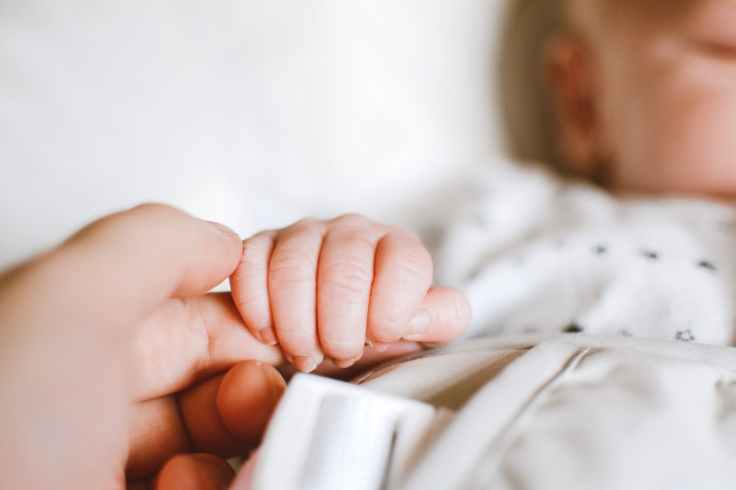
person holding baby s hand
Photo by Lisa Fotios on Pexels.com

I’m having coffee with my friend, Andrea, mid-wife and Hospice nurse. She’s talking about work and spirituality. People often ask her how she can do what she does, especially the Hospice work. But she says that, aside from being tired sometimes, and worried about her own problems when she’s on her way to work, there’s nothing negative about what she does. She forgets everything else in the presence of a laboring woman or a dying person. “It’s like a window to Heaven!”

More often than not, dying people she comes into contact with are in a state of peace as they near the end of their earthly lives, and they commonly seem to be seeing and talking to people in the room that nobody else can see, most often, people they love who have died.

My mother looked up in wonder, not having really spoken for months at the end of her illness. “What are you all doing here? Are you going to take me with you?”

The deaths Andrea has been able to be present for were powerful spiritual experiences for her. The houses of the dying are filled with God’s presence, and she prays deeply when she is working with a patient and his or her family.

She is more grounded and profoundly present than at any other time in her life, she reflects, when she is working.

Sometimes, as she goes about her own daily business, she thinks, “Wow, I really did that.”

The morning my second husband, Bob, had died, Andrea had the beautiful idea of inviting our close women friends to come and wash and anoint his body. She thought of it because in the Bible, women were the ones who prepared the body for burial with bathing, oils and spices.

Our friend, Amy, had a set of Biblical essential oils, such as frankinsence, myrrh, myrtle, spikenard, etc.

Andrea, with solemn tenderness, guided us through an improvised ritual; with Bob’s body modestly draped, we washed him reverently, and anointed him with fragrant oils.

We cried and we prayed.

She guided family and friends in prayer and asked each of us if we had anything we wanted to say as we waited for the funeral home, and for our friend, Deacon Ron Fernandes, who led us in prayer and blessing, and even singing.

“When a family is spiritual, it’s really nice for me- especially if they are Catholic. I am always glad to see icons or a crucifix or picture of Mother Mary in a house. Then I know I can openly pray the rosary. The rosary is definitely the prayer I pray the most during my work.”

“During labor or grief, my imagery/prayer is, ‘Please, Mother Mary wrap this mother, this couple, this family, me, in your mantle of grace and mercy.’ I call that image to my mind.” 

Andrea says she often senses the presence of Mary at births, especially.

“I think I identify with her because she labored to birth Jesus, she was human, and she suffered the grief of His death. This comforts and gives me strength.”

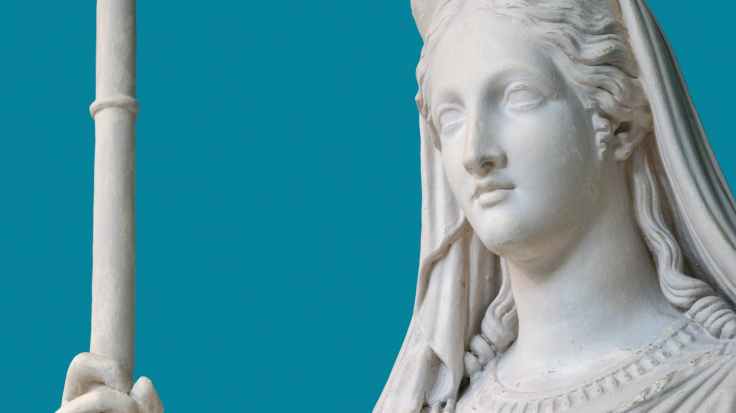
religious image statue
Photo by Niels on Pexels.com

I have always thought it was perfect that Andrea was born on the feast of Our Lady of Guadalupe, December 12.  The Virgin Mary of Guadalupe is the patroness of the unborn, and in that image, she is pregnant.

“People are always so grateful. And I think, I didn’t DO anything, I was just there!”

I know why people are grateful. They are grateful because she was there. Andrea brings a sense of solid, motherly, and professional competence into a frightening situation, she gives the intimate and ultimate mysteries of birth and death back into the hands of the family. Then these events become far more personal, home and family-centered experiences because of her courage and love, her willingness to come to the family, and serve them where they are, in order to allow them to give birth, or to die, at home. This is a gift of peace.

She recognizes, nurtures and draws out the best in people when it is most needed. She makes them feel empowered in trusting the process.

Precious to me is the memory of Andrea holding my hand as I labored in the bath tub. I laughed and said I could not imagine our family doctor doing this, as good as he is. 

“There is just so much love that is there,” she says, tearing up.

She is certainly adept at finding the beauty inherent in these events, and transmitting it just where it is needed.

As we talked about her work, she cried now and then. Don’t worry, she cries easily. She also believes so much in what she is doing, she is very passionate about it. She gets frustrated trying to describe her thoughts and experiences. She thinks she is in-eloquent. But she’s not.

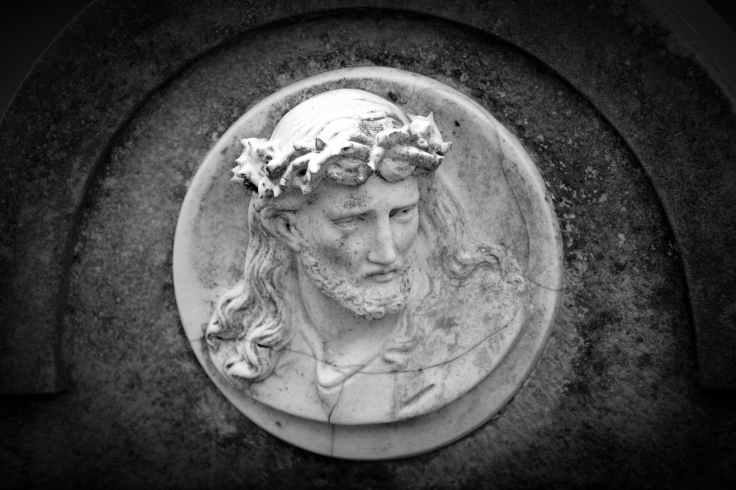
Andrea is very earthy, and as I thought about what she was saying, and what I learned, having watched her work, I see that her spirituality involves being very in tune with the Sacred Humanity of Christ, of the physicality of birth, suffering, and death, of what Veronica’s veil would have really looked like, smeared with the dirt, blood, sweat, snot, and tears of the very real Face of Our Lord.

ancient art black and white close up
Photo by Pixabay on Pexels.com

The blood and water from the side of Christ make sense to Andrea. She has these all over her all the time. She understands the physical as deeply spiritual. Hers is an Incarnational spirituality, true to the One who came to share our sufferings and give us life; actual life, not just an idea, Life we can touch and hold. That’s how real the Resurrection was. Jesus wasn’t just a spirit. He was and is real. His wounds were touched by His disciples. He ate with his traumatized friends. He comforted them.

Andrea experiences this truth of the Incarnation as an every day reality, and to her, it just is.

Well, not really, because she cries when you try to get her to talk about it.

“What are you looking at, Daddy?”

“The glory of God.”

“What does it look like?”

“You wouldn’t believe it!”

sky space dark galaxy
Photo by Pixabay on Pexels.com

Mindfulness, presence, indwelling and love

It’s been a stressful day. But we are here together at Hensel Park. I played here when I was little. My daughters played here growing up. Now Arelani does, too. She considers it “her” park. I brought her even though it is the hottest part of the day in the hottest part of a Texas summer.

I am anxious and worried about many things. So it takes a special effort to make consistent eye contact with her, to respond to what she says, to play with her attentively, given the stresses of the day.

I have learned from the practice of inner prayer how to bring myself back again and again gently each time I am distracted by a wayward thought about this or that.

After a while this practice with Lani becomes easy. I realize I feel peaceful in a similar way I do when I am grounded in prayer.

Time seems to flow back into itself like the tide drawing away, leaving its treasures on the beach.

The cicadas chant in the trees around us. A hot wind lifts her curly black hair, a curtain pulled away from her face – a face unbelievably pretty- sweeter than any Disney princess. The conversation is simple (she’s three,) and tender, her black eyes wide, soft and steady. We smile at each other in a timeless moment. She reaches over and clears my tousled hair from my face. Peering at me closely,she seems lovingly amused.

She crosses a little bridge, turning to beckon to me, “Come on, Granny, this way.”

It strikes me that she is the Christ Child or maybe the little Child Mary leading the way for me; to love, to hope, to the Kingdom where the littlest are the brightest of all.

The idea we can love Jesus in others, or learn to love others by seeing Christ in them may sound impersonal at first. But Arelani never seemed more herself to me than when I saw her as having the Little One inside her. I was seeing the truth of her, her “Arelani-ness” itself. Are we not each part of the Body of Christ? When someone sees the Lord in us, is that not only the simple truth? It does not make us less personally loved, but more so when the Lord of Love who is truly within us is experienced by another person.

We slide down the slide, we swing. We sing in the pavilion that echoes, run in circles for fun, watch ants. I take a picture of her running through a field of yellow flowers; a little kid in overalls and tee shirt, wild hair flying. She’s excited and she looks back to yell, “I yuv you, Granny!”

“I love you too, Pooh,” I say as I clump along behind her.

Later she picks a few flowers for her mama. She gets lost in the lovely details of one of these, touching each petal in awe. She sits down with it. Nothing else exists to her.

Time is a gift we can open and make holy by attentiveness. This is the “sacrament of the present moment.” * This is God with us. This is the first commandment and the second also.

Master, which is the great commandment in the law?

Jesus said unto him, Thou shalt love the Lord thy God with all thy heart, and with all thy soul, and with all thy mind.

This is the first and great commandment.

And the second is like unto it, Thou shalt love thy neighbor as thyself.

On these two commandments hang all the law and the prophets. (Matthew 22:36-40)

yellow flower bloom blossom
Photo by Pixabay on Pexels.com

* this term is from Jean Pierre de Caussade

Book Review of Abuse of Trust: Healing from Clerical Sexual Abuse

I wrote this book review for both The Eagle newspaper and for ATX Catholic. I think it is such an important book and such an urgent issue that I wanted to share it everywhere I can.

http://atxcatholic.com/index.php/2019/07/book-review-of-abuse-of-trust-healing-the-church/#.XUC05uhKjIV

photo of cross in an ocean during dawn
Photo by Ryan Delfin on Pexels.com

Holy Naps

When I go to sleep, I take time, after I get comfortable, to let myself be loved and to feel that God surrounds and fills me with His loving, protective presence. Early in my young widowhood, I used to make it a habit to say, as I sank into my bed, “Into Your hands, I commit my spirit.” I would think to myself, “my spirit….. and everything else.”

I love sleeping, and I love naps. Naps are a kind of any time Sabbath, a rare and splendid solitude. Naps are prayer. Naps are a letting go into God, right in the middle of the day. They are a form of contemplation, really. A nap can even be a dreamy Lectio Divina. I love falling asleep to a quiet recording of one of the Gospels.

I loved it when I found out that St, Therese of Lisieux, Carmelite Nun, and Doctor of the Church, used to fall asleep sometimes during the set hours of solitary prayer in her cell. She wasn’t really supposed to do that. It was an accident. She didn’t feel bad about it, though. She saw it as falling asleep in her Father’s arms. What could be better than that?

adorable-baby-born-2133

Catherine Doherty, in her wonderful book, Poustinia, says,

“Sometimes we are so exhausted mentally, morally, and physically, we can’t do much of anything… we just flop down! Well, to sleep in the arms of Christ is a pretty good idea. You don’t have to do anything. It’s being simple in your relationship with God.”

Holy Naps can also be shared, of course. When my kids were younger, and their dad was still alive, we had a tradition of the Sunday Family Nap. We all cuddled and fell asleep listening to music or a story, and by the time the recording stopped, everyone was asleep. It was a holy Sabbath rest, and I continued to honor it with the kids for years to come.

My second husband and I found that naps were indispensable in dealing with the stress of fighting cancer. We would pretend cancer couldn’t follow us into our bed, and we liked to put on one of those relaxation recordings, wrap the rosary around each other’s hands as a joined prayer, and sleep that way.

Jesus said He would give us rest. But we are to come to Him for it.

“Come to me, all you are are weary and burdened, and I will give you rest.”

woman in white shirt sleeping on gray fabric sofa
Photo by Flickr on Pexels.com

I like to think about how he said to St. Faustina,

Know, My daughter, that the ardor of your heart is pleasing to Me. And just as you desire ardently to become united with Me in Holy Communion, so too do I desire to give Myself wholly to you; and as a reward for your zeal, rest on My Heart (Diary, 826).

This is what I like to do, lay my head on Jesus’ Heart, like St. John did at the Last Supper. I let myself be loved and comforted and healed by sleeping there like a tired little bird in the crook of His arm.

So have a nap. Make it a nap of restoration and silent love.

Expect great things from a holy nap.

“He pours gifts on His beloved while they sleep.” Psalm 127

Don’t feel guilty about relishing a good nap, if you can get one; the kind where you know you’re sleeping, and you’re happy about it. Be happy about it. You need it!

As my daughter, Maire’s, friend, April, says, “We need naps after our naps!”

Sweet dreams. And may the love of God enfold you in all your naps!

alone bed bedroom blur
Photo by Pixabay on Pexels.com

Novenas: how to go deeper

photo of man wearing rash guard
Photo by John Cahil Rom on Pexels.com

Ascension Day is traditionally celebrated today in the Church, and it is also considered the first day of the first novena, as Mary and the Disciples remained in Jerusalem to pray for nine days for the coming of the promised Holy Spirit. This is the heart of our novena tradition.

A novena can be a special time between God and the praying soul, a pilgrimage of transformation and insight, as well as a way of “storming heaven,” with a petition. A novena prayed with faith is also a time of expectant waiting.

Whatever I am praying for, I try to ask with an open heart, one that is actively seeking God’s will.

Sometimes God does not give me what I thought I wanted when I began. Sometimes he changes me instead.

Sometimes I begin to get a sense that I should ask for something different than the petition I started with. My prayer seems to be redirected. Maybe this is so that I might pray with the Holy Spirit rather than just out of my own will.

I know, dearest Mother, that you want me to seek God’s holy Will concerning my request. If what I ask for should not be granted, pray that I may receive that which will be of greater benefit to my soul, [and the souls for whom I pray.] ~ from the Novena to Our Lady of the Rosary

Other times, my single-mindedness of purpose grows and I continue with my petition, like the “persistent widow” I am.

When I begin a novena, I am not sure what God will do but I know he will do something!

I try to be attentive to what God may want to say to me during this time of focussed, dedicated prayer.

The divine synchronicity interwoven with daily life reminds me that heaven is near, and that God is always speaking.

bird dove pigeon
Photo by Anastasia Zhenina on Pexels.com

The symbolic meaning of having a dove land on the hood of my car and look through the windshield at me while I am praying at a red light may seem hard to miss. But it is possible to think nothing of it. I want to notice and make the connection.

If I dedicate and consecrate these nine days of prayer to cultivating my awareness of God’s voice speaking through life itself as it happens, a novena can be a time of becoming attuned to Holy Spirit and wonder.

If I am praying a novena to a particular saint, St. Therese, let us say, I try to find ways to weave her presence into my life. I may read about her or read from her writings during that time. I will talk to her as I go about my day, ask her to join me in my work and prayers.

I might do small acts of service in her honor; especially the kind she liked during her life on earth, the sneaky kind.

I may make use of imaginative prayer to go into the situation I am praying about, letting St. Therese lead me in bringing God’s light into darkness, to let her show me something, or to visually surround the people involved, with God’s love, with hers, and with mine.

selective focus photo of red rose
Photo by Hassan OUAJBIR on Pexels.com

I often ask friends or family to join me in praying a novena. Jesus encouraged us to join together when we ask for something, and it encourages me to know that someone I love is praying along with me.

I like to to begin a novena by going to Confession.

It always seems to me that I can “hear” God better after Confession. The grace released into my life from the sacrament enlivens my prayer.

At mass I may offer my reception of Holy Communion for the person or intentions I am praying for.

I try to drop in at church and visit Jesus in the Blessed Sacrament more often during my novena too, even if only for a moment. I can bring all my concerns there to him for healing; setting them at the foot of his alter for him to arrange in divine order. In his Eucharistic presence, my intentions are blessed, and my troubled heart can rest.

Sometimes I plan a series of nine Scripture verses that I think correspond well with my novena, one for each day to reflect on during the day. Bringing God’s Holy Word into my prayer deepens and interconnects the experience. “God’s word is alive.” Also it never returns to God void but always does what he sends it to do. I trust the word to act on my heart and to return to the Lord full.

I usually give up something at least for a day, or for the duration of the novena. This may be something small, like sugar in my coffee, listening to music in the car, or my favorite drink. St. Therese said her greatest weapons were “prayer and sacrifice.” Fasting and prayer are well established practices for us in our faith when we are commending a situation to God.

Right now I am keeping a novena journal. In it I am recording my prayers, thoughts, insights, Scripture passages and events that stand out to me during this time. It seems to be a fruitful and helpful way to pray, reflect, and notice how God is working in my life through my novena. I look forward to reading it through at the end.

clear glass jar filled of coloring pens beside of white sketch pad
Photo by Jessica Lewis on Pexels.com

Often when we pray a novena, it is because we are suffering in some way. Part of praying a novena meaningfully can be offering our suffering in union with the suffering of Jesus, that it may be redemptive for others, especially those for whom we pray. St. Therese once offered her difficult walk across the infirmary when she was very ill, for missionaries.

A novena can be a transforming experience when lived and prayed deeply; both for ourselves and those around us.

I like to give thanks at the end of a novena, for all God has done, is doing, and will do in response to my petition, whether or not it looks like my petition was, “granted.” I know that God will only give me what is right and at the right time.

His love never fails; nor does its power to change everything, anything, anytime.

yellow flame
Photo by Skully MBa on Pexels.com

Blog at WordPress.com.

Up ↑