

Evenings are my favorite time of day. Especially after the bustle of family end of day reunions, when the cooking and dinner and cleaning up is done I feel both alert and recollected.
The evenings I love most are summer evenings. There is relief from the heat of the day (sort of,) the cicadas and crickets are chanting their vespers, the neighborhood birds gather along the power line to pray and to gab about the day. I love the colors of the light at this time; rose and gold and the blue tint as dusk approaches.
Time to bring the chickens in.
They’re ready for me at the gate, waddling in a line of fluffy butts to their coop for the night.
And I love this traditional time to recite the Magnificat. I like best saying it by a window looking out so I can bless the world with Mary and her vision of the Kingdom of her Son.
Get you some iced tea now. Go to a window and pray it with us. Bless the world out there.
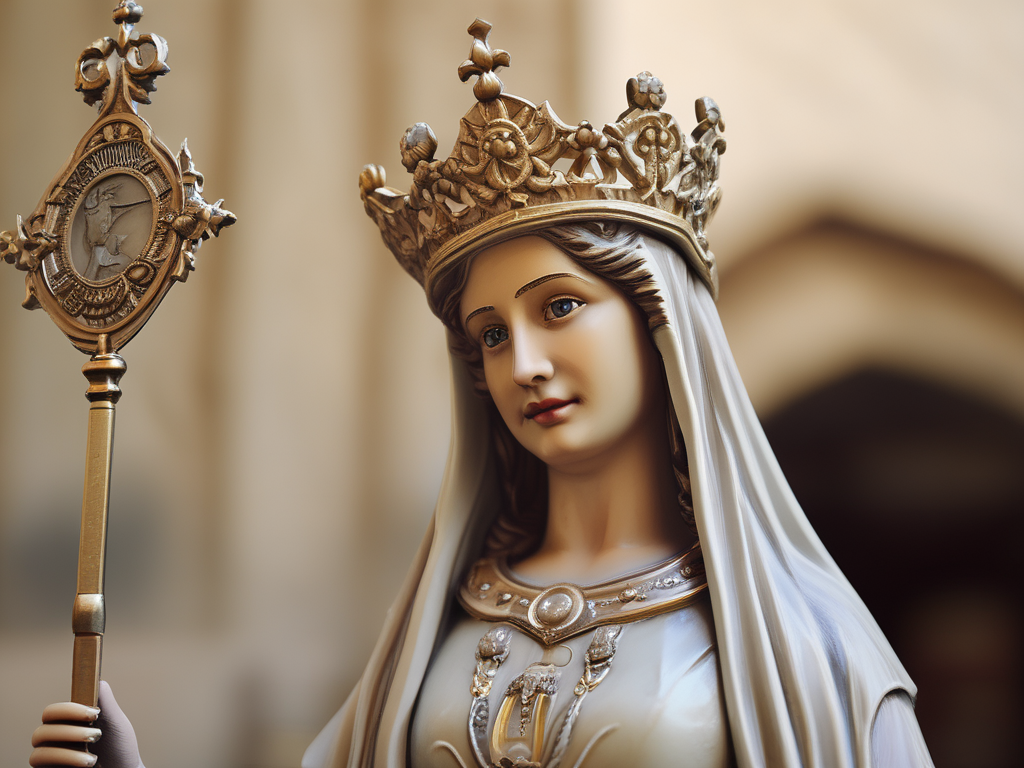
And Mary said,
“My soul proclaims the greatness of the Lord,
my spirit rejoices in God my Savior,
for he has looked with favor on his lowly handmaiden.
From this day all generations will call me blessed:
the Almighty has done great things for me,
and holy is his Name.
He has mercy on those who fear him
in every generation.
He has shown the strength of his arm,
he has scattered the proud in their conceit.
He has cast down the mighty from their thrones,
and has lifted up the lowly.
He has filled the hungry with good things,
and the rich he has sent away empty.
He has come to the help of his servant Israel
for he has remembered his promise of mercy,
the promise he made to our fathers,
to Abraham and his children forever.” (Luke 1:46-55)
Glory to the Father and to the Son and to the Holy Spirit,
as it was in the beginning, is now, and will be forever. Amen.

.

Today is Our Lady of Perpetual Help. I just don’t know what I would do without Mary. Why would anyone want to live without her? Sometimes I want to tell people just to give friendship with her a shot, try it for themselves and they will see right away what she is to us. When I think of Our Lady of Perpetual help, I think of how she was and is a good Jewish Mother. When we are in trouble, she moves in, cleans up, takes over, thinks of the little things that are actually big things we need. She rubs our back, she asks us if we’ve eaten, she calls her Son with updates. She makes sure we take a nap and have a snack and a glass of water.
She says, “Tell me what else I can do. How can I help? I told Jesus not to be late he will be here in a minute. Until then, here is some soup I just made. And a sandwich. Here you need more water you cried so much. Here’s a tissue. Wipe your nose. There you go. You know how much I love you, right? We all love you and you’re going to be OK. We will make sure.”
One time I had been crying for hours. I went to adoration and there were no tissues in there. I was annoyed. They usually have some. I got home and checked the mail. I kid you NOT I opened an envelope from a religious organization and in it there was a small packet of tissues. On it there was a picture of Our Lady of Perpetual Help. I had to laugh.
“Here, blow your nose, and go back out and play.”
She’s the best.


Today is Body and Blood of Jesus Sunday, otherwise known as the feast of Corpus Christi ♥️ So happy feast.
This is a good time to reflect on the humility of God who became incarnate and remains with us as simple Bread and Wine for us to eat and drink, sharing in our humanity that we might share in his Divinity. There is one Lord who suffered and died for us and we take part in his redemption of all when we suffer with that intention; of uniting our suffering to his in union with his mission of salvation, mercy and love. Under those conditions we can say someone is suffering with Christ or in a way that Jesus did. We can also say he suffers in the poor, the oppressed and those in the margins of society as he said he did in the Gospel of Matthew. That’s it. Anything else is blasphemous. We should keep our eyes on the sinless Son of God who deserves all of our love. One God one faith one baptism. He is God and there is no other.
I’m writing about this because it’s disturbing to see pictures of Trump “crucified” with Jesus or Jesus “embracing” Trump and whispering that he too was wrongly convicted. To me this is an insult to the martyrs who deserve that consolation. We Christians understand that their unjust deaths were for their faith, for their love of God and were their sacrifice for the Gospel.
Trumps’s conviction is not a situation like that whether one believes he is guilty or not. That’s almost beside the point.
Yes God loves the powerful the rich and political figures too and cares about them just as he does the rest of us. However I think there is an innate danger both spiritual and secular in comparing a political figure to Jesus. Let us rather pray for our leaders that they will be what God wants them to be and created them to be. What more could we ask for anyone? Let’s stick with that. We can never go wrong in praying for God’s will. He will give what is right – and only he truly knows what that is.
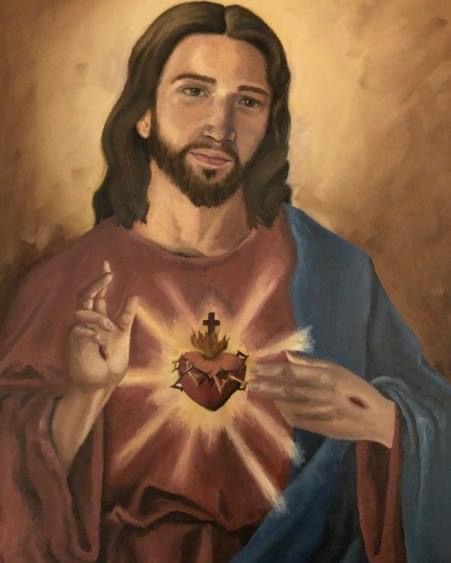

700 years ago in Ireland a young girl left her home in the middle of the night as swiftly and silently as she could. She left with a priest, two household servants and a court jester who were her friends. She was not fleeing a forced marriage to a foreign prince or running away to a convent. She was running from her own father who seemed to have lost his mind after her mothers’ death and was trying to make his daughter marry him in her place.
Dymphna and her friends were able to make it to a Belgian town called Gheel.
She must have been a hard worker and had a compassionate heart. She and her friends established themselves in the town and Dymphna began caring for the sick and the poor. She had a special sympathy for people suffering from mental illness. She still shows that sympathy now through her intercession.
Eventually her father, who was a minor Irish king, found out where she was. He had her priest executed as soon as he arrived and demanded Dymphna return home. When she refused he beheaded her on the spot. She was 15.
The people of Gheel eventually built a church over where Dymphna was buried. Over the years it began to be noticed that healings happened at her tomb, especially healing from mental illness.

Inspired by St. Dymphna’s special concern for the mentally ill the people of Gheel began to take into their homes the pilgrims who came to visit Dymphna’s tomb. In a time when the mentally ill were chained, beaten and locked away the families of Gheel made these sufferers part of their households with acceptance, freedom, dignity and whatever level of responsibility they could handle. Some stayed for a short time, some for the rest of their lives becoming members of the family.
Gheel became famous for this model of family care that seemed to work so well. This tradition is still ongoing though now combined with a hospital that is only used when absolutely necessary, and with modern medicine as part of overall treatment.
Gheel’s example makes us want to rethink the way we treat the mentally ill, especially those whose conditions are severe. Gheel shows us how it could be.

Among us here the mentally unwell often end up without homes or anyone to assist them. Federal and state agencies set up to help these people are understaffed and overwhelmed. It is a testament to serious failures on our society’s part. To see some poor emaciated sufferer shouting and waving his arms at traffic with toilet paper wrapped around his legs as I did last week breaks the heart. It’s wrong and we know it. Unfortunately our state is last in mental health access in the country.
Gheel and St. Dymphna challenge us. How can we as people of faith contribute in a respectful and merciful way to necessary change, to the well being of people who suffer mental, emotional or neurological difficulties? Our society is not set up for them. How can we help? How can we change that?
Perhaps we can begin by asking for St. Dymphna’s intercession and inspiration.
St. Dymphna, healer of mental and emotional suffering, pray for us. Pray for everyone in mental or emotional pain, especially those left on the outskirts without resources. You inspired a whole town to take people with mental suffering into their homes so that they might live near you and the place you are buried. They still come and stay with you and the people of your town today. Help us build a culture of compassion and acceptance so these children of God can live with dignity among us as the people they are and so that the rest of us don’t miss out on what they can give, on their potential part in building community. Show us the way. Amen.
St. Dymphna’s feast day is May 15th. She is the patron saint of the mentally ill, victims of incest and domestic abuse, and runaways.

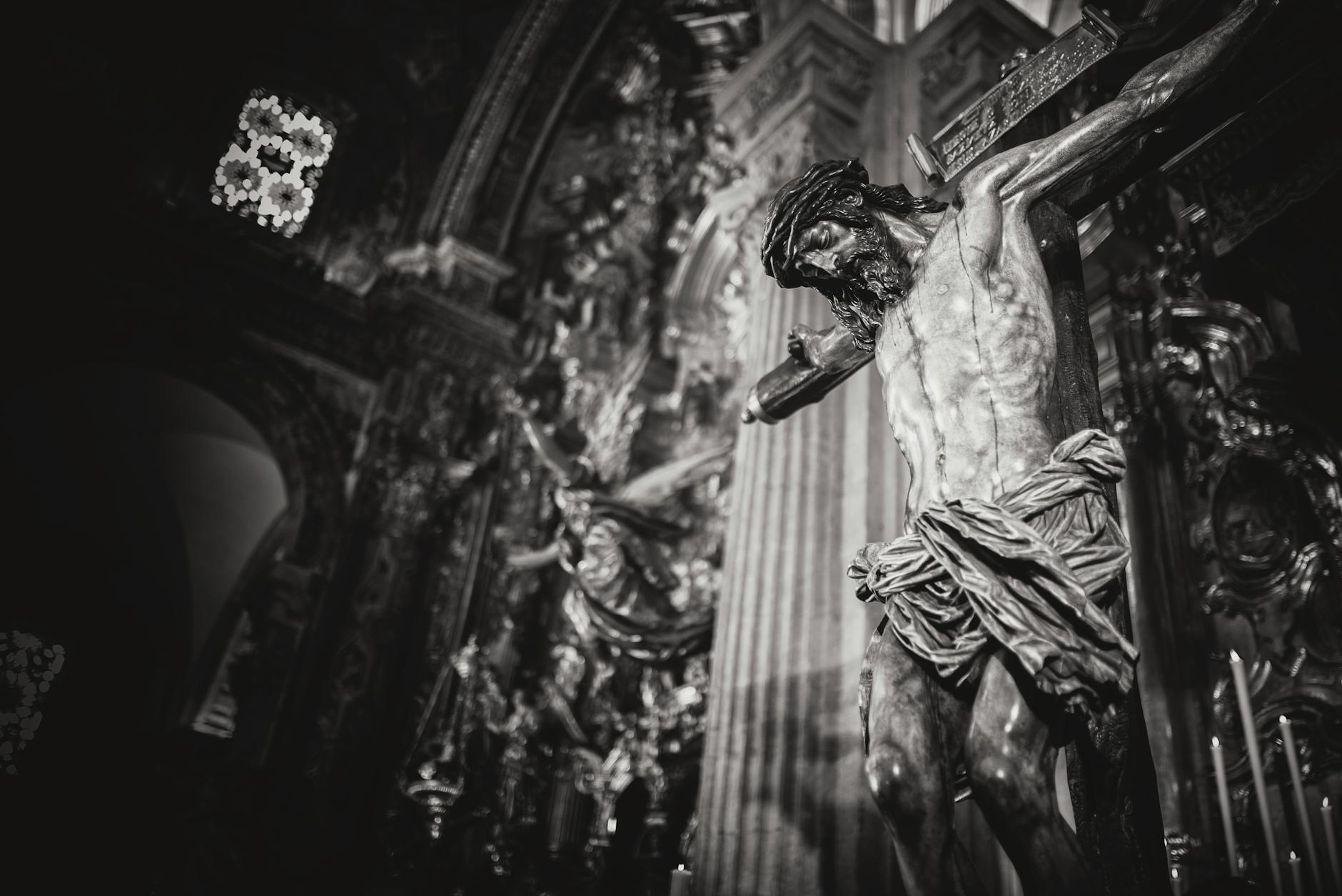
Come into Mary’s rose garden which is the rosary, and pick red roses of devotion to bring with you on this journey with her through the Sorrowful Mysteries.

The first Sorrowful Mystery: The Agony in the Garden

rose hip: Union of will with God
“My Father, may this cup be taken from me. Yet not as I will, but as you will.” Mtt. 26:39
Mary takes your hand. She brings you to Jesus, lying prostrate as he prays. Suddenly as if you fell in, you are in the depths of Christ’s Heart, experiencing his anguish, physically feeling his bloody sweat, his stinging tears smearing on your cheek as you sink into the abyss of his agonized heart.
Let yourself feel your love for him. What do you want to say to him?
Maybe, “Jesus I love you. I will not deny you anything. “
He hands you the cup he has now drunk, compassion in his eyes.
You understand.
It tastes like fire but is sweet.
Chaos breaks out. He is arrested and taken away.
In the silent Garden of Gethsemane you and Mary lay a red rose. Beside it place the empty cup.
The Second Sorrowful Mystery: The Scourging at the Pillar

Rose hip: endurance with love
“My soul is in deep anguish. How long, Lord, how long?” Psalm 6:3
You’ve never seen or imagined cruelty like this. As hooked whips tear into Jesus’ back you want to throw up and Jesus does as his body goes into shock. You look at Mary as the violence goes on and on. How can she stand it? Her eyes are filled with tears, yet her face is resolute. His blood pools between the tiles of the courtyard. You want to stop this, comfort him, comfort her. Her arm slips around your shoulders without her taking her gaze from her Son.
Finally Jesus is carried away and the laughter of the guards fades. Holding hands, you and Mary silently venture forward. Together lay a red rose beside the pillar. Kneel here. Pray with Mary.
Third Sorrowful Mystery: The Crowning with Thorns

rose hip: reverence
“My spirit blesses the Lord, the Great King.” Tobit 13:15
They’ve been beating Jesus for what seems like Hours. Then one of the soldiers gets an idea. He weaves a crown of long thorns which is forced onto Jesus’ head. Blood runs down over his face and eyes from the wounds. This isn’t enough because they start hitting his head with reeds and shouting “Hail to the King” in mock reverence. Mary is on her knees repeating something again and again. Listening closely you can tell she is saying, Barukh ata Adonai Eloheinu, melekh ha’olam…” (“Blessed are You, LORD our God, King of the universe) in praise of God. Join her in making reparation to the Lord for the mock reverence of the soldiers who know no better.
You and Mary lay a red rose in Jesus’s cell once he is taken away for an interview with Pilate.
The Fourth Sorrowful Mystery: Carrying the Cross
Rose hip: holy perseverance
[We keep] our eyes fixed on Jesus, the leader and perfecter of our faith. For the sake of the joy that lay before him he endured the cross, heedless of its shame. Hebrews 12:2a
Your hand tightens on Mary’s as Jesus comes your way dazed and stumbling under the heavy weight of the cross, prodded on by soldiers. You don’t even want to look at Mary. It hurts too much. It hurts too much to see any of this anymore. To shut it out you close your eyes. Then you remember, “for the sake of the joy that was set before him.” Mary squeezes your hand and you understand that the joy set before the Lord that urges him on is yourself. You are his joy. Open your eyes now. Don’t be afraid to join Mary in sharing his suffering.
Once he has passed by, you and Our Lady lay a red rose on this path of sorrows.
Fifth Sorrowful Mystery: The Crucifixion and Death of Jesus
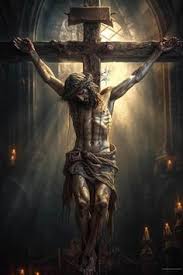
Rose hip: sacrificial love
[His Mother whispered,] “do not be afraid of this executioner, but be worthy of your brothers and accept death, so that in the time of mercy I may receive you again with your brothers.” -2 Maccabees 7:29
“I’m not going to cry until he’s gone,” she says in a low voice. You understand that she has to be present to him, even participate with him, united with him in heart and purpose. She wants to look at the face of her Son as long as he has left to live. She will grieve later.
He is struggling to speak to her. “Mom. Mom, this is your son.” Then he says to you, Beloved Disciple, son, daughter, “this is your mother.”
Hold Mary close now as Jesus cries out in utter abandonment. Every strangled cry of his you can feel sending shock waves through her. And now his body is without life and the sky darkens. She collapses against you. Your prayer is only to hold her, to share her tears.
Go together now to the foot of the cross and lay a red rose in the place of sacrifice. Unpetal the others and sprinkle them over Mary. Some of the petals stick to her tear stained face, some to her hair. Most flutter down to this holy ground which has become the altar of the world. She scoops them up and throws them toward the body of her Son. You do the same.

Sorrowful and Immaculate Heart of Mary, pray for us.


I dress kind of shabbily, or so I’ve been told; not in a mean way. I don’t mind hearing that. In fact my bandanas and old jeans and t-shirts with worn out shoes have allowed me to gain some insight into something going on in the churches that is or should be of great concern to us.
Not too long ago I stepped into an adoration chapel at a church I don’t attend as often as my own parish. I was looking at some pamphlets and holy cards near the front door in the foyer. There were some people who had just finished an event that seamed to have ended. One of them came over to me. “Can I HELP you?” She asked pointedly. I was dumbfounded which is funny because this isn’t the first time this has happened to me at church ( I do attempt to dress more nicely for mass). One time when this happened, I had said, truthfully, “Yeah I’m looking for the ministry schedule.” This time I could think of nothing to say for myself. We continued to stare at one another. Suddenly she looked at my Immaculate Heart of Mary shirt and seamed embarrassed. It was OK. I wasn’t mad. I didn’t want her to feel bad. But because of experiences like these I have had and that others tell me they have had or have seen I am worried about something.
I’m worried that we don’t seam to have contact with the poor at our actual Catholic parishes generally. In my area and also in Lubbock the Catholic Churches have kind of “contracted out” that experience to a Diocesan charity all the parishes contribute to. I’m sure it’s not intentionally in order not to have the poor and homeless around our churches. However that is mostly the result. Furthermore it appears everyday Catholics don’t want the poor and the homeless around. Some have police or security guards at the door during mass. There could be a lot of reasons for this. I have asked around but never gotten a satisfactory answer, only vague or seemingly evasive ones or else the people I asked didn’t know.
I just have to wonder what message we give an outsider who may be nervous about coming in. Some people are comforted by the presence of the police but I don’t know any low or no income people who are. Having grown up in an alternative or “subculture” style household I don’t like seeing police around either. No hard feelings I just don’t. Their presence doesn’t mean anything good to me. So I imagine anyone needing help or community but hesitant to enter a church even though they want to may interpret a police presence as unwelcoming and frightening. It’s a great deterrent but is that what we want? How necessary is it to have that? I’m open to answers. I honestly don’t know.
In Austin I attended mass at a parish that has a little attached building in the back of the church where the homeless can come and get something to eat, something to wear, a blanket, whatever. When you come to the church during the day there are unhoused people sitting at picnic tables drinking battled water, maybe eating sandwiches. Some of them come to mass. I like that a lot. There is a chance to get to know them, an opportunity to learn what their lives are like, what their problems are, and in what ways they want to be helped in contrast to how we want to help them. Not everyone stops to say hi to them but some do. What a great idea.
By seeing the unhoused at mass with us we receive the message that we are one with them, that we are all in God’s eyes, on the same level. This is so much better than having them be out of sight.

It seems to me that the more contact we have with people in need and get to know what they’re about and what chronically troubles them, and what they think they need, we would be better able to deal with these problems on a larger scale.
Another time I was coming out of mass with everyone else in an Austin church on a very cold night. A young woman was waiting outside. She looked very young and very scared. She had two little kids with her. She was asking for bus money or anything anyone could do. Most people filed past her as if she were not there. Others looked at her as if they smelled something bad. I didn’t smell anything but winter air and unkindness. What are we all doing here worshipping Jesus and then ignoring him outside of mass?
That’s shabby.
Sometimes I have looked away from someone in need when I knew I didn’t have any money or any way to help. I had to learn to cut that out. It’s a shabby reaction. I can at least greet people like this and talk to them, try to find out what’s going on, let them feel cared about. I may even be able to help them in some other way than what I thought they would ask.
In the same parish where some people have treated me like I don’t belong, I was scolded years ago by a long gone priest at a local parish about having been late to mass because a woman with a baby was standing out in the cold asking for help and I tried to help her… which made me late. He said they didn’t want to encourage this kind of thing (people coming up to the church asking parishioners for help) and also that I should prioritize being punctual for mass. This was another time I had no idea what to say so I just looked at him. I said, “Oh.” I wanted to tell him I didn’t think I could do that, just couldn’t. On the way home I prayed about it. “Am I really supposed to do that?” I didn’t know. But it has never made sense to me.
A pertinate Catholic social teaching is the Preferential Option for the Poor. How can we practice that as Church if we are only sending money to some charity we know little about, or random collection of faceless (to us) poor? To me love should be more personal if at all possible.
If I give all I possess to the poor and give over my body to hardship… but do not have love, I gain nothing. (1 Corinthians 13:3, a &c)
It does seem as if just giving money isn’t enough.
How can we as Church encourage our government leaders to enact policy that is really helpful to the needy if we don’t know what goes on for them or even know any of them at all? When we don’t know we tend to make things up, assume things we shouldn’t, or just believe other people who may have their own agendas concerning the issue at hand. I think we should find out if a politician speaking about these things knows any low income or no income or mentally ill or unhoused people personally before we consider their ideas about what should be done or not done.
I often hear, “We should let the charities take care of that.” The problem with that is that the need is overwhelming. Donations are low. Local charities in my area are out of money almost as soon I they get it. One I’m fairly knowledgeable about only takes calls on Fridays. On Fridays about twenty people can get through and then they’re out of donations again and can help no one else. I usually advise those in need of their help to invite all their friends over and have everyone call repeatedly starting early in the morning. Then maybe somebody will get through.
A good friend of mine who had to resort to food stamps when her husband was ill and needed constant care was only able to get $23 per month in assistance. Sometimes I talked to her and she hadn’t eaten for several days. She lives eight hours away or I would have taken her our dinner. The food bank where she lives is out of food all the time. Charities do amazing work. But we can’t always think we don’t have to help because they’re doing all that on our behalf.
On behalf of another family I was trying to help I called and I drove all over town and could only get a Wal-mart card for $50 from Catholic Charities. They were out of money. Everyone was. The clinic said they couldn’t help the very ill mother either because her extremely painful illness was not on their list of illnesses they could help with. The family, the very sick mom and her two sons only got $11 of food stamps per month. Yes you read that right. Eleven dollars.
I have learned so much about what really goes on by getting to know people who live in survival mode and have to depend on charities, churches and government agencies for the necessities of life either all or some of the time. I learned enough to know I don’t know anything about anything and that I need to make an effort to find out for myself what they go through.
What I’m hoping to do here is make a case for Catholic Churches to stop merely farming out their work for the poor and welcome them instead. As parishioners we are missing out not having the poor around. We are also getting the message that the practice of our faith and worship is separate from helping the poor. Nobody says that but isn’t that the way it is playing out? We want to go to mass and not be bothered with them. We think it is a nuisance. Maybe it is but I don’t think Jesus has prioritized that.
One area parish I called on behalf of someone needing help does refer everyone to that charity the churches here contribute to. However they also have someone in the office who calls and talks to the person and sees what else the parish can do. The person I was calling for had just lost her boyfriend to a tragic event she had witnessed. He had died a few weeks prior. I hadn’t even thought of grief counseling for her I was just trying to get her help with her bills. The woman who called from the church got this girl hooked up with free grief counseling.
All the parishes can do that. Maybe they do. However in my experience of trying to be of help people, what they get when they call a local Catholic Church is sent away with yet another phone number to call or list or a brochure to check out. Sometimes these are outdated and the places on the list don’t even exist anymore. We can do better than that. We can be more personal. We can make sure they don’t feel stupid or unwanted or unwelcome when they come to us. We could have a little food pantry or clothes closet or some diapers on hand at least. Some of our churches do.
We can keep somebody on staff whose job is to truly connect with compassion and respect, to walk people through what they need to do next, help them fill out a form or make a call. Maybe that person can be you. Maybe we can all take turns being there. We can ask questions kindly, really wanting to know; not because we are worried they are going to pull a fast one on us, but because we want to see if there are any other ways we can help.
Yeah I dress shabby. But what’s really shabby? This. It’s shabby. There is no need for it. Sure dress nicely for mass as expected. But first, as a community, let us be resplendent in charity.


A personal tradition of mine on Christmas night after all the hubbub is done, the household is asleep, and the living room is dark, is to settle in a comfortable spot near the lit Christmas tree and pray a sweet rosary. Gently bathed in the multicolored lights of the tree, with something hot to drink, I’m especially comfortable and relaxed. Join me. 🙂
Take me, Lord, to the center of everything, into the mysteries of your Incarnation and Childhood. Take me into Mary’s pondering heart.
If you forgot or don’t know how to pray the rosary, check here. for instructions.
If you don’t have a rosary guess what? God made us with the perfect number of fingers to make do with as a rosary of the moment!
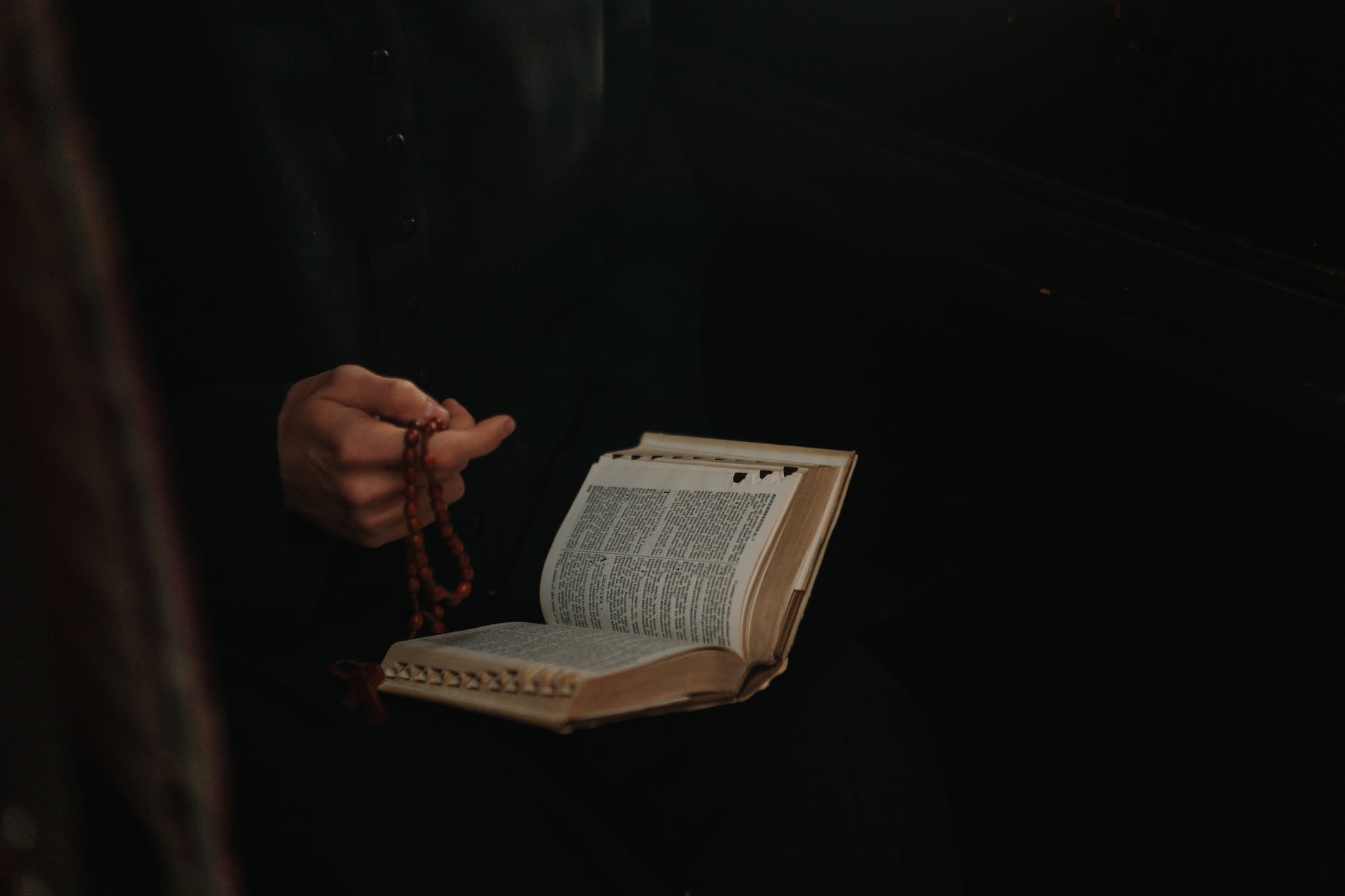
The important thing is to settle down and to pray with attentive love.
So take a few steady breaths. Most likely it’s been a long day hasn’t it? My head is usually swimming at the end of Christmas festivities even if they were nice. My feelings swirl around in me without much definition and I need quiet and solitude with God. Maybe you feel like that too. So take a nice deep breath so you can concentrate now, releasing it slowly. Smile a small smile in a relaxed way. Think of Mary’s joy. She was tired on this night too after all. Let’s relax with her and look at Jesus.
Come, Holy Spirit, come by means of the powerful intercession of the Immaculate Heart of Mary, Thy well- beloved spouse.
Proceed as usual with the Apostle’s Creed, an Our Father, and three Hail Marys in honor of her faith, hope and love that brought us to this moment with the Lord.
First Joyful Mystery: The Annunciation to Mary and the Incarnation of the Lord within her
Mary’s humility was light, natural and free. Real humility is only the truth about ourselves and Mary was grounded and centered in truth. She was free to respond with wonder and love and also to ask for clarification from the Angel Gabriel. “How can this be since I am a virgin?” Once she understood how this would happen, in freedom and with love she accepted. God the Son became a tiny pin point asking for shelter and love and she said yes. It was a quiet thing. And he was there. Maybe she cried. Maybe she smiled. Maybe both.
“To whom God willed to make known what are the riches of the glory of this mystery among the Gentiles, which is Christ in you, the hope of glory.”
Colossians 1:27
The Second Joyful Mystery: The Visitation of Mary to Elizabeth
Mary seems to have gone alone to see her kinswoman Elizabeth. She didn’t hesitate, either. She “went with haste.” Nobody told her to. She seemed to just be drawn there. She must have felt full of the stars God showed Abraham as she hurried to Elizabeth’s, stars bright across the sky, stars in her body, woven in her hair, scatted in her path. I wonder if she felt so astonished and scared and excited that sometimes she ran? Elizabeth heard Mary’s voice calling to her. Nobody told her anything. She just knew. And it seemed the baby she carried knew too. She knew she was in the presence of the Lord and that Mary was her queen. Both women prophesied in joy. The first two Christians, the first two gathered in his Name. God took care of them both through one another. Mary needed understanding, partnership and support, someone to pray with her who was in on the Secret. Elizabeth needed help, companionship and understanding too. They must have had an amazing, as well as joyfully ordinary three months together, leaving both women stronger.
A faithful friend is a sturdy shelter:
Sirach 6:14-16
[she] that has found one has found a treasure.
There is nothing so precious as a faithful friend,
and no scales can measure [her] excellence.
A faithful friend is an elixir of life;
and those who fear the Lord will find [her].
The Nativity of Jesus
None of the women of her family or village were there to help her. Men were not used to being part of the birthing process. But Joseph, surrounded by the kindly witness of the animals who seemed to understand, did his utmost for Mary that night in the dark, in the hay of a stable. Maybe she told him what she needed since she would have seen many births by then, going with her mother to help the other women. Joseph held her close and they prayed, wiping tears from each other’s faces, telling each other “You’re so brave!”
Mary laid the Baby in a feeding trough after his first nursing and after wrapping him in swaddling cloth she had brought with her, while Joseph cleaned up and brought her water. Then they would have placed the baby between them and slept, waking to feed him, to gently laugh and touch his soft little head wondering what was going to happen now as beyond the stable the rising star of Bethlehem shone out to the three wise men on their travels, and the angels sang to the shepherds in the fields filling the sky and their hearts with awe and joy.
The Word became flesh and made his dwelling among us. We have seen his glory, the glory of the one and only Son, coming from the Father, full of grace and truth.
John 1:14

The Presentation of the Baby Jesus in the Temple
Oh no this was not what she thought she would hear at all; that Jesus would be rejected? That her heart would be pierced with a sword? What did it mean? The Angel had not said this. But Simeon had recognized him. She and Joseph had listened astonished as the old man blessed God and declared he could go in peace because he had seen the Savior as God had promised him. The prophetess Ana had known him too, had spoken about him. What is this God was telling them!? Joseph was worried because Simeon hadn’t said anything about him which made him think Mary and Jesus would face this calamity alone and it broke his heart. But Joseph and Mary were brave young people, full of love and determination. They discussed Simeon’s words on their way home. What would they do? Maybe Joseph said that there was only one thing to do: to love Jesus and each other, and to go on knowing they would walk with him as far as the Lord allowed. Mary squeezed his hand. “After all,” she said, “what else is there?” “God is it,” Joseph said. “God is it and that’s it.”
I say to the LORD,
you are my Lord,
you are my only good.
Psalm 16:2
The Finding of the Child Jesus in the Temple
“Mary, please try to eat,” Joseph pleaded. “Maybe you should sleep,” she said. “Maybe you will have one of your dreams.” But there was no sign, and no one knew where Jesus was. They prayed as they walked and searched with growing desperation, calling his name.
Finally they found him in the Temple. Mary interrupted the questions of the teachers of the law to embrace her Son. “Why have you done this to us? We have been looking for you everywhere!” Jesus was surprised. “Didn’t you know I would be here in my Father’s house?” The teachers were telling Joseph how amazed they had been to hear the uncanny wisdom of his child. Jospeh and Mary weren’t sure what was going on. But Jesus went home with them and kept growing, learning, and loving them, and they loved him back.
Maybe you feel like you have lost Jesus. Maybe you can’t find him and be with him the way you used to. But he is there in the Temple of your heart and you will find him again.
Do you not realize that Christ Jesus is in you?
Corinthians 13:5
Now imagine yourself with Mary. She is there with you, smiling gently, looking at you expectantly. Take her hand and pray the Hail Holy Queen. Add some words of your own. Maybe you would like to say, “Thank you Mother Mary. Thank you for all that you did to bring us Jesus and to be with us on our way.” Wish her a Merry Christmas. 🙂 Merry Christmas Mother Mary. And happy birthday, Lord. Happy birthday to you.


During these horrifying days of unutterable violence and war, of every kind of atrocity, what can we do? We are far away. We are not leaders of nations. We have to go to work, we have to let the dogs out, listen to a little kid, put dinner together, and also be horrified, feel helpless, ache for the children caught in this, and feed the cat. We have to figure out what to wear tomorrow, wonder if we forgot something we were supposed to do, and as the scenes of mutilation blood and terror cross our minds we wonder what to even say to God.
Maybe nothing.
Maybe we should just let our hearts be pierced as Mary did. We could take on her pure and open heart completely in tune with her suffering Son’s and willing to be present and active in those hours he was slowly dying. She accepted the piercing of her heart, and “the secret thoughts of many [were laid] bare.” I used to wonder what that last part meant. I couldn’t get an answer from anyone about it that seemed right.
But what happens when our secret thoughts are laid bare? We see the truth about ourselves. Our conscience is awakened and we tend to desire to change. Maybe the piercing of Mary’s heart caused conversion of heart for others and still does.
At the same time she was made the mother of all Christians from the cross by Jesus, she received from God a special gift for nudging us toward conversion, of laying bare the truth within us. This would be in line with her role as Spouse of the Holy Spirit who is the Spirit of Truth and Love.
We know Mary has been given unique gifts and that she intercedes for us in heaven. She is advocate of the people of God and she hears the cries of the world.
Such is her unity with God that in her hearing of suffering her knowledge of it is already prayer. Mary is there in Israel and Gaza now touching every face, assisting the dying, suffering with those in distress and in the piercing of her heart at the foot of this cross the possibilities open for changes of heart.
She is to be found wherever her Son is found, exactly where he said he would be; among those who are hungry naked imprisoned or persecuted. He is with the suffering and so is Our Lady. She is there praying with all who pray. Her feet are muddy and her face is streaked with tears. She wants us to join her and in the wind of the Spirit we can.
This is not a helpless dwelling on the horror taking place. This is knowing that God makes our little prayers BIG. We are to reign with Christ and this is how he shares his reign with us. He loves to share his mission with his disciples.
We don’t know what God will do in response. But we know he will do something. We know he gave the world a mother we need so much.
We can take on the mind and heart of Mary. We can go with her and bring comfort in mysterious ways, change hearts even when we don’t know it. We can become windows of grace God’s will can flow through into this world.
We are only little windows but God doesn’t care. He shares his power and love to widen our hearts for his love to flow through.
And in our hearing and seeing and knowing if we remain close to God, our silence becomes full and active. What we know instantly becomes intercession, becomes prayer.
When you hear of bloodshed and terror you will already be praying, and prayer does things.
Like Mary let our hearts be pierced at the foot of this cross. May God receive our offering.
“Come, Holy Spirit, come by means of the powerful intercession of the Immaculate Heart of Mary, thy well beloved spouse.”


 Bethany Hang Out