Search

Bethany Hang Out

Catholic contemplative life and devotion

Category

Catholic

Garden of Mercy: Hospitality of Heart

Happy Divine Mercy Sunday!
392683_2611687181266_1082785549_n-1
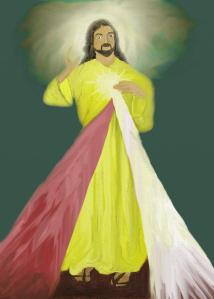
“Jesus” By Bob Chapman

In  Misericordiae Vultus, (“The Face of Mercy,”) the Bull of Indiction of the Extraordinary Jubilee of Mercy from Pope Francis, he has given us new seeds, a bright and verdant diagram, a vision of joy, a plan of hope for the renewal of the “oasis of mercy” that is the Church, and of the the living sanctuaries of mercy each of us can become in Christ.

Reading The Face of Mercy, I am reminded of St. Therese discovering that her vocation was love; to be love in the Heart of the Church. St. Therese taught us that this is the underlying vocation of all the various callings in the Lord.

The Holy Father is calling us, now, to be mercy at the heart of the Church.

One of the things that stands out for me in Misericordiae Vultus, is that Pope Francis talks about mercy in a way that shows that one of its primary aspects is deep acceptance and gratuitous love. This accepting love is so powerful that encountering this simple grace of mercy that God plants in us will inspire others to bloom before our eyes, just as we open like flowers before the Lord’s complete and total love.

“Wherever there are Christians, everyone should find an oasis of mercy.” ~ Pope Francis

How do we each become an oasis of mercy?

Pope Francis says we should draw our ability to “adopt mercy as our lifestyle” from contemplating the Word of God in silence. What does that do?

I think it does the same thing that sun and rain do in a garden.

“This is how it is with the kingdom of God; it is as if a man were to scatter seed on the land,and would sleep and rise night and day and the seed would sprout and grow, he knows not how. (Mark 4:26-27)

How God works in the soul through prayer is a mystery, but it is very simple. We make time to open our hearts to God in stillness every day, and to ponder His Word. In this way we prepare the soil.

11391487_10205420239598291_5997486846972510806_n

St. Faustina says God’s will “is love and mercy itself.” He will sow in us seeds of mercy and love that will grow under His care.

If we are willing to work at His side, we can also expect Him to take out any choking weeds that inhibit us in mercy, to set in order all that needs order, and to allow that which should be left lovely and wild, free to blossom as it should. We can trust the Lord of the garden to shine on whatever is cold and dead, to heal what is damaged, to bring to our attention any work we ourselves have neglected.

When our souls are well nourished by prayer, we can be a quiet place for people to sit, a shade tree of peace surrounded by bright flowers of acceptance and tenderness. Our souls can be cool and and quiet fountains of the gentle healing that comes from God.

The healing nature of my garden can heal the most broken of hearts.” ~ Santa Montefiore

Years ago my brother-in-law, Frank, went to Assisi with his family. This story is about a quiet moment on a busy day, a simple conversation in a shady place. But it has always enchanted me.

As we went down this crooked street, we walked past the church of San Stefano. It was tiny, more of a chapel than a church. There was a small garden next to the church that was surrounded by a fence. There was a gate with a sign on it. The sign said in several languages: “Come in, if you think it will do you good.”
 Inside the garden was a picnic table and some benches. There were two gnarled, old, olive trees serving as shade. A nun and a lay woman greeted us. They offered us a place to sit, and gave each of us a glass of ice water. The two women asked us where we were from. They were genuinely interested in who we were and why we had come to Assisi. We rested a while. Then we thanked the ladies and made our way back up the hill to our hotel.
The hospitality was simple and open-hearted. I won’t ever forget it. ~ Frank Pauc
10947338_10205420239478288_1656071785422699406_n

Mercy can manifest itself in quiet and unassuming ways; by a simple, accepting presence. Mercy doesn’t push itself on anyone, it invites and makes itself available. It respectfully speaks the language the other can understand, in a conversation with no agenda but that of connection and service, giving the other room to decide for himself. “Come in, if you think it will do you good.”

“[Jesus’] person is nothing but love, a love given gratuitously.” ~ Pope Francis

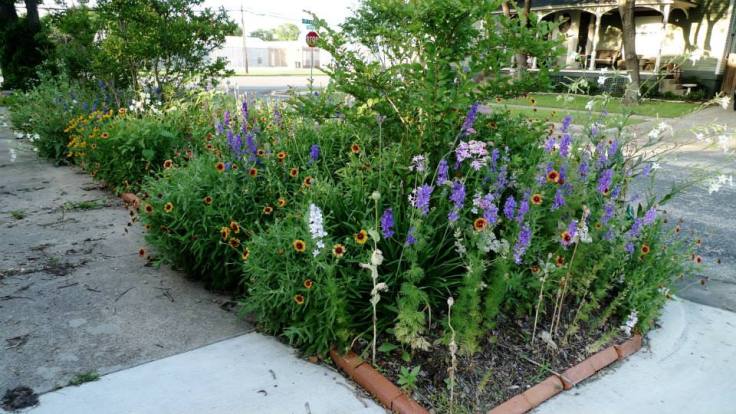
As people who follow Jesus, this is the shape we want our gardens to take: to become oases of gratuitous, accepting love. We want to make room for fragrant, herbaceous borders, for winding paths of compassion and peace, along which we can walk with anyone who comes for refuge.

God will plant in this garden the flowers He likes best to see in it, and we will know the fruit of hospitality of heart.

He’s drawing up His plans, and showing us His ideas, giving us seeds to dream over; about gardens, flowers, fruit, and Spring.

Mercy is the force that reawakens us to new life and instills in us the courage to look to the future with hope.” ~ Pope Francis

And the seeds of the Kingdom will be sown, everywhere we go.
11351146_10205420239558290_8508420906694693647_n


“All the broken are mending/The mournful rejoicing/Seeing through tears/Of peace overflowing/And You walk with me/You never leave/You’re making my heart a garden” Matt Maher

11390253_10205420240158305_4821935380584418271_n

*You can read Misericordiae Vultus, (The Face of Mercy) here. 

photos and garden by Shawna Manning Marcontel

Among the Lilies: A Resurrection Encounter

All night … I looked 

 for the one my soul loves; 

I looked for him but did not find him. 

I will go through the streets of the city, 

I will search for him my soul loves. 

The watchmen found me as they made their rounds in the city.

I asked them, 

Have you seen my love?”  

The angels pitied me.

They said to me,

“Search among the lilies…

He is not here!

He lies not in darkness

Nor in the folds of the cloth.”

But I could not breathe, so sick was I with love,

So I asked the gardener,

“Where have you taken him? Tell me!”

“Woman,” he asked,” why do you weep,

Your beloved is yours and you are his.

He feeds his flock among lilies.

…Miriam… Mary!”

“Rabonni!”

I rose, a rose unfolding, lilies opened at my feet

My love was so complete, my love was so complete

Grave flowers sprang up living, blossoming at our feet

Our love was so complete, our love was so complete.

In that love, I found him, I held him, and I would not let him go.

“Oh! Come to me, Miriam!…but cling not

Don’t grieve for the world past and gone..receive my Heart

Receive the Lily!”

Oh woman who brings the great tiding to Zion

Get thee to the high mountain…

Lift up your voice with strength

Be not afraid, say unto the cities of Judah,

“Behold your God!  Behold your God! Behold your God!”

That Miriam found among the lilies.

flowers bloom GIF-downsized.gif


* See: Song of Songs 3: 1-4a, John 20:11-18 ,Song of Songs 2:16, Isaiah 40:9


Note:

The relationship expressed in this poem is in the Catholic tradition of Bride Mysticism, explained here http://www.newadvent.org/cathen/09703a.htm

In no way do I intend to present any other idea about the life of St. Mary Magdalene, but that which the Catholic Church believes and teaches about her through Scripture and Tradition. (See http://www.newadvent.org/cathen/09761a.htm  for a history of the Church’s thought on St. M.M., “Apostolora Apostolorum” Apostle to the Apostles)

Italian Texans celebrate St. Joseph

In the late 1800’s groups of Italians, mostly from the towns of Corleone and Poggioreriale in Sicily, migrated to the Brazos Valley and settled in and around Bryan. By 1905 there were about 3000 Italians living in Bryan. They founded St. Anthony’s Catholic Church  and a little mission church in the country side, San Salvador.

Many of the names that fill the historic Catholic cemetery, Mt. Calvary, in Bryan, are some of the same family names you will hear around town now; Scarmardo, Ruffino,  Patranella, Palasota, Fazzino, and Lampo, are just a few of them. These Italian names are still names of some of the businesses, and streets of Bryan. They are woven into our history, part of our life, as so many of the descendants of those families are still with us here.

Some families still make traditional Italian St. Joseph altars, often in thanksgiving, if they have promised one to St. Joseph in response to prayers answered. When his feast day is coming up, people will get to hear there is an altar and thousands, (yes, I’m serious,) will come from all around. The family and friends hosting the St. Joseph altar will cook for days in preparation. All are welcome. Some years there are no St. Joseph altars. Some years there are several, and one can make a tour of the different houses where the celebrations are being held. These occasions are also considered a chance to share with the less fortunate. The tradition of these St. Joseph altars originated in Sicily, of which St. Joseph is the patron saint, and have several interesting customs associated with them that are still practiced here today.

I visited  Lillian Scarmardo Hughes and her husband, Tom, to learn more about St. Joseph altars, as they prepared to celebrate their own “small” St. Joseph altar celebration at their own home. They are expecting about 60 people.

29425443_2023669601287876_6275961201105043456_o
Msr. John McCaffrey, Tom and Lillian Hughes in front of the St. Joseph altar


There is a lot of variation in St.Joseph altars according to the people who make them. However, there are certain things that are traditional and defining. The altar is set up in a household or common building such as a parish hall or school. It is made up of three tiers to symbolize the Blessed Trinity, and also the Holy Family.

The top tier will hold an image of St. Joseph or of the Holy Family, surrounded by greenery, fruit, and flowers.

Next there will be at least three breads made for the occasion, each in a shape of a symbol of St.Joseph, of Jesus, of Mary. Lillian and Tom have chosen to represent the Holy family with a rosary for Mary, a cross for Jesus, and a hammer shaped bread for St. Joseph. These breads are called panne grosso, “big breads.” Lilly tells me that over the years on some altars around town, the tradition has grown to include other saints as well, and you will seesquartucciata made in the shape of the symbols of other saints as well. People who have a devotion to one of these other saints will bring breads over to represent them for the altar as well.

On Tom and Lillian’s home alter you can also see some lovely porcelain templates from Poggioreriale  for the beautiful intricate pastries made for the altars; fig cookies called cuccidatti.

Lillian and Tom raveled to Italy twice. Lilly was able to be in her grandfather’s home town (he and his brother had left for America in 1880) of Poggioreiale during the preparation of the St. Joseph altars there. She was even able to meet a blood cousin!

IMG_2039

She was welcomed enthusiastically to help make the squartucciati, the ornate fig cookies. and other foods. The women there were amazed that Lillian knew all about St. Joseph altars and how to make the various pastries. They were very moved that the tradition had been handed down and carried on in Texas by their people who immigrated there. It sounded like a magical moment. I could see the glow in Lillian’s eyes while she told me this story and showed me her pictures of it.

She plans to return to Sicily at least one more time in her life.

The cooking begins very early. It is usually a meatless spaghetti dinner and plenty is made so the poor can also be served. An egg is added to the sauce for each guest, to represent new life.

For nine days before the altar is actually presented, a novena to St. Joseph is prayed, along with a rosary sung in Italian.

At some point a priest will come and bless the altar.

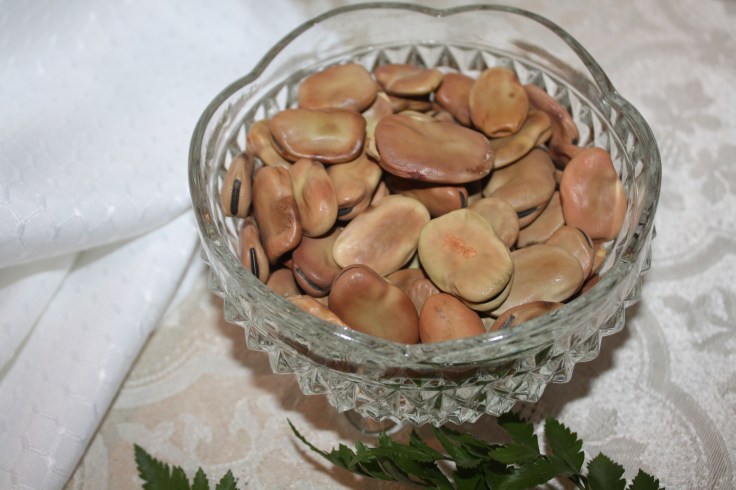
Some common objects on the alar will be fava beans, which the Sicilians usually fed their cattle but were reduced to eating during a terrible drought and famine. They prayed to the patron of Sicily, St. Joseph and their prayers were answered. This is how St. Joseph altars began; in gratitude to St.Joseph.

IMG_2041

The flowers, vegetables and fruit represent the harvest and gratitude to God for His gifts and providence.

IMG_2042

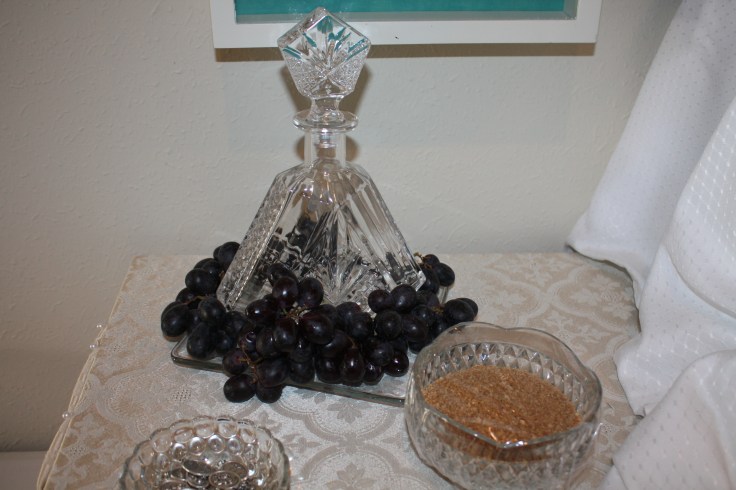
There will also be wine to represent the wedding at Cana.

IMG_2045There are other symbols, as well, of St. Joseph, such as bread crumbs which represent saw dust.

There may be Squartucciatis made to look like sandals, carpentry tools, monstrances, crosses, doves, and other Christian symbols.

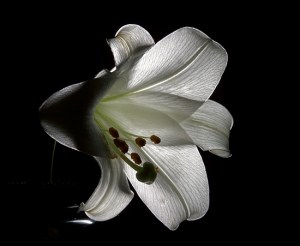
There are usually lilies at the altar, traditionally St. Joseph’s flower.

There is often a basket on the altar for people to put in their written petitions to St. Joseph.

On the day of St.Joseph’s feast, or the closest day the family can accommodate family and friends, the celebration is held.

There will be the Ceremony of Saints, during which people representing Jesus, Mary, and Joseph, knock three times and ask for shelter. This is called the “Tupa tupa” part of the ceremony. They Holy Family is refused twice, but the third time are welcomed in, along with people representing a variety of other saints.

The person representing Jesus, most often a child, blesses the altar with holy water and a sprig of mint.

The Holy Family is served first in three small courses. Sometimes the host will wash their feet and hands. In some families the feet of children are kissed.

Everyone is served a small glass of wine as a token of unity and friendship.

Then the altar is “broken” and all are served. Everyone is welcome, plus there is plenty left over to go out and serve the poor of the community.

Lillian loves these celebrations and grew up with them. Her mother, Rosalie Scarmardo, is remembered for having been particularly talented in helping people with their altars

After the representatives of the Holy Family are served, a spaghetti dinner and general celebration takes  place. Everyone is sent home with a goodie bag of the ring cookies, fig cookies, a fava bean, and some holy cards of St. Joseph.

Be blessed, St. Joseph, be welcome among us, pray for us. 

Thank you so much to Lillian and Tom Hughes, and to Becky Scamardo for their help and generosity.

For more, please see my upcoming column in The Eagle on March 24, or read my post at ATX Catholic.  

This slideshow requires JavaScript.

A reflective guide to Confession

When I first came into the Church, the Sacrament that stumped me the most was Confession, the Sacrament of Reconciliation. It wasn’t the idea of it. It wasn’t the theology of it. It wasn’t even claustrophobia. It was learning how to contain myself into this little ritual. This was difficult for me because of my lack of experience and also because I couldn’t seem to narrow down what it was right to confess. My confession should not be a wild arrow that misses the Heart of Jesus or a list that makes Him sleepy. I want to hit the bull’s eye and sink the arrow deep. I had a hard time with my archery for a long time and I think for Jesus, my attempts to participate in this sacrament made me a crazy moving target hard for Him to hit.

I had some memorable reactions from priests to my confessions that puzzled me: everything from, “That’s not really a sin.” to “You sound like a monophysite,” to simply bursting out laughing.
I needed to find a way to contain myself in the narrow field of what I was supposed to actually do with Confession in order to let it be the conscious encounter with Jesus that it should be. I realized going to Confession was not just about me and my feelings. It was something I did for Jesus and for the good of the Church as well. I really needed to find a way to hit the mark and hit it in a way that was more transformative and open to grace.

The power of God is not limited to our personal perceptions of course. But the Sacrament isn’t “magic” either. It’s a real encounter with Jesus and His merciful love. I need to participate as fully as I can.

“Art…consists of drawing the line somewhere.” (G.K. Chesterton) I needed a way draw some lines, within the ones given to us by the Church, and still have my confession come from the heart.

Over the years I developed a way of ordering my examination of conscience and my confession into a more meaningful and sensible form that fits into the confessional “box” better than the disorganized, emotionally based way I had been doing it before.


How I prepare for Confession

First I ask Jesus what He wants me to Confess. It doesn’t have to be about everything in the world down to spilling my milk (not a sin by the way.) It could be about one particular situation God wants to work with me in. I try to be receptive as I think about my life. I pray to be guided and trust that I will be.

28424424_10216233521935185_8540703543889187830_o

I write down the basic issues that come up. Then I look in the Scriptures and/or the Catechism to see what the Word and the Magisterium have to say about these things. I reflect on what I have read- especially a word or phrase that really stands out to me. A lot of the time I can see more deeply into a situation and where I am at fault, what graces and virtues I need to pray and work for, and where I need to make amends in my relationships, when I do this. I make a brief outline of what I have found out. Then I make a prayer about each sin I need to confess. After all, the priest is in persona Christi and this is a holy sacrament so why not make my whole confession a prayer? It helps me a lot to do it this way. I think I am more guided and I am more likely to find meaning and grace when I take my time to do this in a reflective way, making use of the Bible and the Catechism along with receptive prayer. Also this way I don’t lose track of what I am doing when I am there (as I often used to do.)

Let’s take an example of a sin I have often committed as a parent, though I’m sure none of you ever do; freaking out and yelling at my kids. The prayer I write out for that may look like this:

“My God, in Your Word, You have said “Do not be harsh with your children but admonish them in the Lord.” For all the times I have lost my temper with my children lately, I am sorry. Please forgive me and help me to be as gentle with them as You are with me. “

Or this: “Lord, You have taught through Your Church that parents are the primary educators of their children. For the times I have failed to teach my daughters patience and gentleness by modeling these things for them, the times I gave them a bad example instead by losing my temper and being harsh, I am sorry. Please forgive me. Grant to me the grace of patience and help me to do better.”

In the Confessional

Confessional at San Salvador Mission, Bryan

When I am in the confessional, I tell the priest before I begin that I have written out my confession this way. I have never had any one of them mind about that. Otherwise, of course, The Sacrament of Reconciliation proceeds as usual.

I do think a personal, devotional act adds to the experience, (as long as it doesn’t detract from it.) It can bring us closer to love, and give us a sense of the fact that we are entering into something sacred. My friend, Shawna, takes her shoes off and kneels when she begins Confession. I think that is beautiful. Things like that remind us of our devotion, give us the sense of the fact that we are entering into the sacred, and help us to be humble in God’s presence.

Like my friend, Shawna, I like to kneel too- not during my confession but during absolution. Why I don’t take my shoes off the way she does I will leave to your imagination.

There is a saying, “The narrower the field the deeper the dig.” That has been true for me in Confession. I don’t need to dig all over the place; just enough in the right spot, in the right way, to find that Pearl of Great Price that I am willing to sell everything else to possess.

img


Stations of the Cross, with love from Mary


Schiffer-SACREDHEART

After Christ’s Ascension, Mary, the mother of Jesus, would go out and walk the way of the Cross again, the way of our salvation and hers. She could be seen sometimes in the early morning, walking slowly, pausing.”He fell here. And again here. He spoke to the women here.”

Her prayers of Good Friday returned to mind, “My Son, my Son, my Lord, how far will this go? How much of this will You allow? If it be Your will, let me  suffer all with You, die with you! My Son, God’s Son. I will go with you as far as I can.”

She remembered, “This is where our eyes met. This is when I knew. Here is the place where Simon of Cyrene took up the Cross. Here is where Jesus was crucified and- unthinkably, died. Oh what those people said to Him, what they did to Him! Father, forgive them! May His mercy capture their hearts forever! Let me lead our children, Father. Allow me to lead them by heart and prayer, to our Son.”

And then she would walk back to her home with John, grinding grain and making cakes for his breakfast, kneading bread for the visitors who would come, spending her day in prayer and service, humbly telling the story of her Son to all who wanted to be set free.

So much of the Gospel depended on her witness. And her sons, the Apostles, needed her prayer and presence. She would stay as long as she was needed, until God took her home to her Son. As Spouse of the Holy Spirit, she prayed for, companioned, and mothered the early Church, living also as a daughter of the Church as long as God willed her to stay on earth.

People started to follow her when she walked the way of the cross. At first a small group of the women disciples walked with her. Soon many people went out early and walked with her in the quiet morning, recounting and reflecting on the Lord’s Passion and death, reflecting on what had been done for them, and that His spirit within them was so real it would raise their bodies, too, from the dead. In awe of the living proof and witness of His divinity and humanity that she was, they, too, paused in silence, and in that silence the Scriptures were opened for them, and their hearts burned within them as the Spirit, too, accompanied them and taught them all they needed to know as they walked with His Bride, the little and simple, humble and human Mary, mother of Jesus.

As persecution grew, barricades were set up by the authorities to keep the Christians from walking the Via Dolorosa, and the Apostle John took Mary with him to Ephesus for her protection.

There, she carried stones she had brought from Jerusalem to the back of the house and set them along a path she marked out in and around the garden. She would pause at each one of the markers she had made, pause and remember: Here He fell, and again here. He spoke to the women here. Our eyes met here. Simon took up the cross here.

images

In the end there were fourteen stations where she could stop to pray. The Ephesians from John’s church would visit her and walk this way of the Cross with her, and with her remember and reflect on all that had happened.

The Gospel had not yet been written. But it was recorded and treasured in the heart and in the footsteps of this mother who, lowly and barefoot, walked and pondered, in remembrance of her Son’s suffering and death. This walking reflection of hers became the Stations of the Cross represented in every Catholic Church, on which we meditate each Friday of Lent to this day, and especially on Good Friday, the day of our Redemption.

imgres

This is only a legend about the evolution of the Stations of the Cross, filled out by my prayerful imagination, but it makes deep sense to me. In a way it is true whether it’s factual or not. Mary is the one who treasured the truth about Our Lord for us in her heart. She was the one person who truly knew where He came from. There are parts of the Gospel that could have only come from her, including some of her inmost thoughts… and the fact that she treasured and reflected on all these things in her heart. Even if she never walked the Stations of the Cross in such ritual fashion while on earth, though it is easy to imagine she did, we know she carried it in her heart. We remember her, and she remembers us when we pray it now, and she joins us, her Son’s Church, in prayer, as she always did.

I attended the Stations of the Cross the evening of this writing. This time I walked it in my soul with Mary, from the original events of Good Friday to after the Ascension, to her last days in Ephesus, joining her on the Way of the Cross, consciously drawing on her memories.

Learning from Mary is so easy. She is full of grace. It’s what she has to share.

We adore you, O Christ, and we praise you–because by your Holy Cross, You have redeemed the world.

IMG_0836

Let yourself be loved: a challenge for Lent

The sunlight obscures him in its intense brightness on the horizon, but I can still see his figure walking ahead as I follow at a distance. I have to run a little just to keep him in sight. I am wondering if he wanted some desert alone time and whether I should let him be. He seems to sense my hesitation. He turns to glance back at me, stops right away, turns on his heal and heads toward me more quickly than I would have thought walking would bring him.

“Follow me. I have something I want to teach you this Lent.”

11807668_10204788835148991_8324002849966595646_o-116x190

We walk in silence for a while. Eventually he leads me to where he has set a camp fire in front of a small cave. I am surprised he seems to be cooking. I thought we were fasting. He has made me a simple meal of lentils and bread.

He explains to me that he knows that for me, especially at this time of shock, grief, and upsetting change in my life, eating is harder for me than fasting. This is why he asks that, for now, I take up the discipline of eating, of letting him feed me. This brings us to a larger issue that he wants to sit and talk over as we eat.

He hands me a clay cup full of water and we sit on the warm ground to eat our meal.

Even though we are quiet after the meal blessing, I sense that he wants me to remember that he understands what I am going through and that he experienced it himself. Briefly I remember it as he remembers it, that he was a man of sorrows, acquainted with grief of every kind. He wants me to remember so that I will feel deeply understood by him, and I do.

imgres

He wants me to let go of what anyone else is doing, and of what unfolds around me, even and especially the things that hurt me the most.

“Just seek healing for these forty days. Care for yourself as I care for you, let yourself be loved, and pay attention to your prayers. I want you to stop worrying about things that are mine to take care of. I would like you to stop wasting energy doing things I am not asking you to do, and to say yes to doing as I am asking. When you do what I have not asked, you wear yourself down for nothing. When you do as I am asking, I will give you all you need to accomplish everything.”

I have to think about this. Then I start worrying about certain situations in my life. “Trust me. Get out of my way and let me care for you in all those situations that are not really yours to do anything about, but mine.”

I have to think about this, too.

photo Maire Manning-Pauc

He says he has heard my prayers asking what he would like me to do for Lent.

His answer is that he wants me to take care of myself in ways that are hard for me right now.

He goes over with me his idea of my to-do list.

Me eating on a regular basis seems to interest him a lot. Me paying my bills on time and taking care of other things that are mine to take care of are high on the list. Me standing up for myself in certain matters that he wants me to seems important to him, too.

He wants mercy in this: that I let other people love me, that I let him love me, that I take care of myself and my life with love for his sake.

Well, this is different than what I was thinking. But I can see he’s serious. He has given me a lot to think about. In fact, I feel a bit upside down right now.

The lunch he made is good and we eat in appreciative silence next to the fire in the shade of a rocky hill. I glance into the cave at his simple belongings- a bag of some kind, a sleeping mat.

He catches my eye, and I look at him across from me, chewing casually on his piece of bread. Then I catch my breath because suddenly his eyes go straight to my heart, his gaze like a scalpel in the hand of a surgeon, laying my broken inner world open before me. I can see it in metaphor; a bombed-out building I have been trying to live in as if it were not rubble. I see the chaos from the outer world that I have let in like a flood of bad water over what little I had left to live on.

I see that I did not welcome him when he came to pay his mourning call to me to comfort me.

I had given him his usual seat, I had sat near him, so to speak, but did not allow more than his proximity most days. I did not care for myself, nor did I let him care for me. I did not see him cry for me. I was not looking.

I don’t even know how to fix this problem; not this broken heart, not my inability to open it right now.

He gently helps me understand that even this is not mine to do. I don’t have to do anything. I just have to be willing.

I feel at peace as I look up and see only him, still chewing on his bite of bread, gently brushing off an ant.

“In silence and in hope will be your strength,” crosses my mind.

Photo on 9-3-17 at 11.51 AM

He says, “Just don’t move without my will.”

He shows me myself moving in tune with him through my days as I set about my house work, my bill paying, my phone calls, my cooking, driving, working, my encounters with others; in all these allowing him to care for me in how I care for myself.

He shows me myself quiet in my prayer, breathing his gentle love, his presence, his mercy, his holy Name, into my broken heart, allowing him to rebuild, to redefine, to transform.

The tenderness I feel from him is almost frightening right now, and I realize it is because of all the pain I have been feeling but trying to carry alone without realizing that was what I was doing. I need to trust him. I need to let him in more to the places that hurt. That is what he wants.

He says, “The Lord is close to the broken hearted. Those whose spirit is crushed, he will save.”

11334186_10204265239339423_3488912735873502839_o-e1455815000889-188x190


I understand what he is asking me to do.

I have to do what I am supposed to do in life right now, and it isn’t very much. He will take care of the other things.

He will protect my heart.

He will defend my heart.

He will heal my heart, no matter how impossible it may seem, or how many times it must be renewed or even remade.

He will do what it takes.

He already did all this with his willingness to have his own heart, his own life, broken for my sake. I understand that he stepped radically into my sorrow, inhabiting it himself in his incarnation, his life, suffering and death.

“Let yourself be loved,” wrote St. Elizabeth of the Trinity.

“You are not your own,” says St. Paul. We are each bought at an infinite price and are of unspeakable value to the Lord of love.

To love ourselves perfectly in God, through God, and for love of God, is the fourth and highest degree of love, that signifies union with him, wrote St. Bernard of Clairvaux.

It seems to me the deepest and most humble of surrenders.

This is my challenge to grow toward for Lent 2018.

I look up at the bright sky, and suddenly he showers me with rose petals of every color. They smell beautiful as they fall around me and over me, sticking to my face and shoulders, piling up in my lap, getting between my toes.

He is laughing. I smile. Jesus is Lord. He can laugh and dump rose petals over my head if he wants to.

I will just have to get used to it.

imgres


Something related you might like to try: 

Prayer of the Heart (in the Eastern Orthodox tradition)

Sit quietly and recollect yourself.

Imagine your heart, visualize it and keep your attention there.

Lead the mind from the head into the heart, and say mentally, with your breath, “Lord Jesus Christ, have mercy on me,” slowly and reverently. Imagine you are breathing “Lord Jesus Christ.” into your heart. Then on the out breath, think, “have mercy on me.”

If your mind starts doing its usual job, thinking, gently bring it back to the prayer and continue mentally repeating it, visualizing your heart and keeping your attention there.

Be patient and peaceful, spending some quiet time with God in this way.


  • heart


Lent: luminous darkness, hidden seeds

lily6218

I love Lent.

I am always happy to hear that I am dust, and that to dust I shall return.

When I close my eyes to pray, I can really tell I am dust. In here where I live, it’s quiet and dark. Simple. Nothing to it.  Who am I?

Dust.

Clay.

Nothing.

Everything.

Inwardly quiet and dark,

yet full of exploding light in the cave of my heart,

just like you.

11312664_10204265242259496_5571588220879195339_o

As St. John of the Cross points out, sometimes what seems like darkness is the over-whelming brilliance of God’s light.

Maybe that is why we close our eyes when we pray. Outside what we can see with our senses is wonderful, but only a reflection of the invisible God. When we close our eyes, we are alone in God’s luminous dark within us. We know there is light in us by faith. We know our being is created in the image of Him who is light.  Even though we rightly experience ourselves as dust, our hearts are secretly bright because of Who lives there.

At this time of year, roots, bulbs, and seeds under the soil that have “fallen to the ground and died,”  all winter have been nourished by the Lord of mystery and love, though we the farmers are unaware.

tf_img_l


How did Jesus rise from the dead? We don’t know. We know it happened, and Scripture says we also will rise, “through the power of his spirit dwelling in us.” And this is so real it is a physical truth as well as a spiritual one.

In the dark secret of the tomb Jesus physically and spiritually, in divine mystery, rose again.

I want to follow Jesus into the desert and recommit my life to the Father. I want to share the Passover with Him and the family of the Church, I want to accompany the Lord on the Way of the Cross. I want to wait quietly in the dark simplicity and trust of the grave.

tumblr_mye8cbluqk1s0pvf5o1_500

I am dust returning to dust, but my Christian soul is empowered by Him to do and be all these Christly mysteries.

So let us return to be fearlessly this dust in desert wind, this Way of the Cross, this dark quiet of faith, this soil seeded with mystery.

At the same time as we traditionally renew our commitment to Jesus and his mission, to His Church, to the poor and marginalized, to fasting, penance, and to prayer as we know it, let us also re-consecrate ourselves in silence, and holy solitude, resting in the starry night of expectation.

As children of God we know that darkness also brings forth love, unfurls light, and floods our souls with renewed grace during this sacred time we are given that is Lent.

13051508_10207317632472918_2763420020755038432_n

We surrender to this Lord of mysterious rising. We consecrate our souls to His purposes in ourselves and what He wants us to bloom into for Him, for this world, for the sake of His Kingdom.

We step into this night of Lent consciously.

We can remember this intention in our moments of stillness and waiting. We can take a little time each day also to purposely  rest in quiet love and allow ourselves to be prepared for Spring in secret.

Let us make Lent a secret retreat into our hearts. It only takes faith, hope, and love and God will pour over us the brightness of his invisible light.

Let this Lent be a time for seeds, for dark, shining mysteries at work in we who believe… until the morning star rises in our hearts.

bc5b1e020737dffce268d0428a594426--bright-morning-star-the-morning


  • Warning: God is a creative genius and anything can happen when we surrender to Him completely. We might emerge from Lent new creatures in the power of His Resurrection. Let’s expect it!
  • Inspiration here: https://youtu.be/eDA8rmUP5ZM

Don’t Freak Out

26904351_10211052371413483_7365715563903608556_n
photo Maire Manning-Pauc

Putting up with things that irritate us builds character. I think that is because when we are in a situation we can’t change, the only option is changing ourselves. “This is a good life skill,” I tell my kids. It is also a good skill for developing the spiritual life because it’s good training for the mind, for self control and endurance. Besides it’s no fun to freak out all the time. What does it get us…. but a lot of freak-out? And there’s nothing you can’t make worse by more of THAT!

393271_2613007614276_236253490_n
Art by Bob Chapman

Here are some things I have tried to help me not freak out.

Paying bills can be stressful. You know how when you are paying bills your shoulders get really tense and sometimes your back too, and if anybody says anything to you, you say, “Leave me alone I’m paying BILLS!” I decided that attitude needed work.  I tried a change of venue. I picked a place that it seems silly to pay bills. Then I could be amused. I try to amuse myself as often as possible. It helps a lot with life. So I paid bills in the tree house. I kept smiling because it was a goofy thing to do.

I wrote,  ” thank you so much,” on each bill. Thank you for the electricity. Thank you for the car. Thank you, veterinarian,  for helping when my dog was sick.
Thank you, God, that I can pay these bills. Thank you. Gratitude is an even better tool than self -amusement.

I enjoyed puting rose petals in the envelopes of each payment. I imagined the various possible reactions to this. “Made my day? Is it anthrax? Who’s does that?” This also amused me.

it__s_raining_rose_petals_by_squ33ky_fr066y

Loud neighbors can be annoying. I had neighbors last year who screamed at each other and honked car horns several times a day. One time when the screaming and car horns started, I thought. “I HATE THIS!” This is a red light for me mentally. I usually don’t allow my mind to think, “I hate this,” about anything since that thought never leads to anything good. I took a deep breath, and I remembered St. Therese the Little Flower and all she did to train her mind in the face of annoyance to leave it free and peaceful for God. What could I do?

I told my family that from now on that screaming and honking was code for, “Smile, Jesus loves you!” It worked. From then on whenever the yelling started, one of us would say, “Smile, Jesus loves you!” and we would start laughing. I’m glad we learned how to let that frustration go. When my husband was sick, those very people came over and helped me when I needed it. If I had stayed mad at them all the time and just thought of them as “the screamy neighbors,” I would never have gotten to know them. They had some wonderful qualities.

The young people who live next door now play very loud music at times. I was enjoying a quiet fall day on my front porch one time when they started that noise. First I amused my self with the thought that I can out blast them any time. I have some enormous speakers. What got me laughing and letting go was the funny thought of getting a recording of a nice, quiet fall day and blasting that. Suddenly the young people would be overcome with an unaccustomed sense of inner peace, and they would be stunned! That made me laugh. They turned it off after a while. I diffused my inner volatility with a series of funny images and thoughts. I win!

smiley_sun-1

Waiting in line or being stuck somewhere can be maddening.  One wild grocery store day, stuck in line, I tried looking at the covers of magazines by the register to entertain myself. These seemed not good for anyone to look at ; you know- magazine covers about who looked bad in her bathing suit this week, or with titles like “Potato Juice Keeps You Young and Sexy.”  My other choices seemed to be  lighters, candy and soda. I asked Jesus silently, “What would You look at if You were here?” The thought came to me that Jesus would look at the people. “Look at the people and love them.” So I started working on that. I looked at each person around me and noticed how they seemed to be doing. I mentally blessed each one or prayed for each one. I felt very peaceful and entertained.

During long, boring trips to Lowe’s with my husband, Bob, I always had a rosary in my pocket. I thought I may as well try and be useful to the world while I suffered. Another thing I tried was to ride in the cart and have him push me around. That helps too. He wanted to bring me, after all. It made us both laugh for me to do this. He enjoyed throwing his items into the cart on me too.

Being overstimulated makes it difficult to think.

If there is too much going on and I need to concentrate, I go within myself as I would for prayer. I close my eyes, and I go to that dark interior center of myself where God is. Staying there even for a second can restore me to sanity and renew my perspective. I might imagine resting my face on Jesus’ chest for a minute. I may go someplace calm in my mind momentarily. It helps.

cropped-img_1426.jpg
photo Shawn Chapman

We Catholics have a great array of “mantras” of our own; prayer words, short prayers, and litanies that are useful when we feel overwhelmed. I have a little note up that says, “Keep calm and say a Hail Mary.” Or I repeat the Jesus prayer or the Holy Name, or one of those one-liners like “May the Sacred Heart of Jesus be praised adored and loved.” Saying over some memorized Scripture is helpful too in times when I feel a sense of overload, frustration or impatience.

When somebody pulls out in front of me in traffic, my daughters know I will growl, “RAWR!” Then right away I will say, “God bless you have a nice day and I hope  there is a happy surprise for you when you get home, maybe cake, maybe puppies….,” and I’ll go on with this stupid list of things until either I’m laughing or my girls are.

Being interrupted is irritating. When I am interrupted, it helps if I interpret the interruption as the Holy Spirit’s action in my day. Sometimes I plan one kind of day but it works out totally differently. It can be jarring to be interrupted  when I am busy or to have my day go “out of control.” It helps if I let go and let God order my day. I ask Him to show me what He wants. I try to forget what I wanted to do and just be with who ever I am with, pay complete attention to what’s happening in the moment I am in. Often when I get to the end of a day that could have been exasperating, I will see the grace in the interruptions. It is usually the demands of love and relationship that interrupt us. At the end of the day that’s what matters most anyway… the love and the relationships.

24174374_10156883314253012_7666477378924404785_n
My daughter Maire, my grandbaby boy, Blaze, and my son-in-law, Jon

Philippians 4:8 tells us to fill our minds with beauty and we will know God’s peace. Jesus said peacemakers are children of God. Sometimes temple tables actually need to be over turned or some Pharisees stood up to. However most of the time, I think I should tend towards a more peaceful, elastic, accepting mind that God can work with. My brain believes what I tell it. Usually I tell it stuff is funny and that everything is in Divine Order. Sometimes I say to myself, “This will make a great story some day.” And it does.

By the way, as I wrote this article, I was interrupted twice by each of my kids and also had to listen to some music I didn’t really like and the kitten would not stop mewing. But I didn’t freak out. 😉

31710_1491909222153_433903_n
photo Shawn Chapman


Potholes along the path of prayer and what to do about them

I have been writing about the Prayer of Recollection.  If you have begun and continue to practice this prayer consistently, you may have noticed some things; maybe some potholes along the path; maybe some flowers, too. How we respond to each of these will be important for our growth in prayer.

images

One of these, as I mentioned before, are distractions. Again, I want to emphasize that distractions are normal, and to some extent, in the work of prayer, we will always have them. It’s important not to be mad at yourself about distractions in prayer. They are what the human mind does. In this prayer, we are training the mind to remain with God in a conscious, continual way for a time, so that we might grow in intimacy, love, and knowledge of the Lord, the “Friend who we know loves us,” as St. Teresa of Avila calls Him.

Our Friend knows our minds are unruly, that we are anxious and worried about many things. He knows. You have chosen the better part, though, and it will not be taken from you. He will complete the good work He has begun in you. He Himself will fight for you. You have only to remain still.

images

So when distractions come, recognize them, and gently bring yourself back to the presence of the Lord, over and over again. I promise it gets easier as your mind comes more under control with practice. And God will give you strength.

th

Another pothole along the road of prayer is aptly called aridity, or dryness. Prayer starts to feel like reading the phone book. Remember that St. John of the Cross teaches us  that prayer is the secret, quiet inflow of God. Sometimes that quiet inflow is even secret to ourselves. It feels like nothing is happening, or that prayer is painful and empty. This is when we go on trusting that God is in us and working in us whether we have any sense of that or not. As I am fond of saying, the quality of our prayer, and God’s power to work His will in us is not limited by our personal perception or experience of how “well” prayer is going. Do tell God how you feel and ask Him for what you need. St. Teresa said we need determined determination to continue on the Royal Road of prayer. I think of it as the dogged pursuit of God in prayer. The mystics of our faith say that God deepens our prayer and blesses us all the more for our faithfulness and love for Him in times of aridity. Be strong and take heart. God is with you.

desert-drought-dehydrated-clay-soil-60013

The opposites of dry spells in prayer are usually called consolations. You may sometimes feel a deep sense of peace and joy when you pray, intense love or even feelings of euphoria. You may experience the sensible closeness or touch of God on your soul. You may receive flashes of understanding or the unravelling of a difficulty. There is nothing wrong with these things. Carmelite wisdom says enjoy them while they last, but don’t try to cling to them or perpetuate them. Understand that these experiences come and go. Try to be peaceful and accepting when they stop. These are wonderful gifts. They draw us closer to God within and away from outward show. God gives us this sweetness from time to time. Consolations can be very healing and inspiring. When these good things are withdrawn, though, we need to allow them to go easily. Simply continue the prayer, with your focus on the Giver. In this way, you will be learning to love Him more and more for Who He is in Himself, whatever He gives or does not give.

When consolations come, then, just smile, be thankful, receive. Then let go as easily as a breath. Keep loving, keep praying, keep present. If we practice this easiness about the presence or absence of consolations, our prayer life grows immeasurably.

xrainlove.jpg.pagespeed.ic.awzXZm7OkL

As Our Lord said to St. Angela of Foligno, “Make of yourself a capacity and I will make of Myself a torrent.” 

He’s kind of sneaky so His torrent could feel any number of ways to us. But if we persevere in prayer, we will see the fruits of it in what Gandhi called “the total transformation of character, conduct, and consciousness.” These are the fruits of the life of prayer.

All God wants of man, is a peaceful heart. ~ Miester Ekhart

If we dispose ourselves to Him, in the way St. Teresa has taught us, and we don’t give up, then He will surely come to us, and we will grow in awareness of His indwelling.

2092985_killing-jesus-trailer_nznsksavwkellx6wgtdjilcbxsm7zczbjn33uw7pj2wc2aebfvla_1200x540


Blog at WordPress.com.

Up ↑