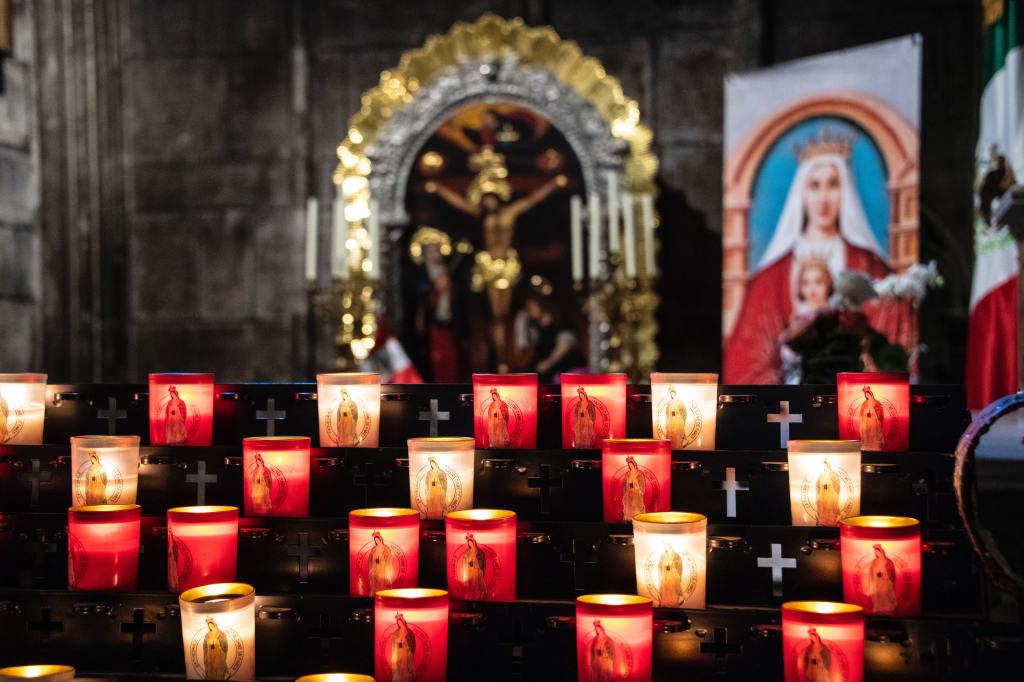
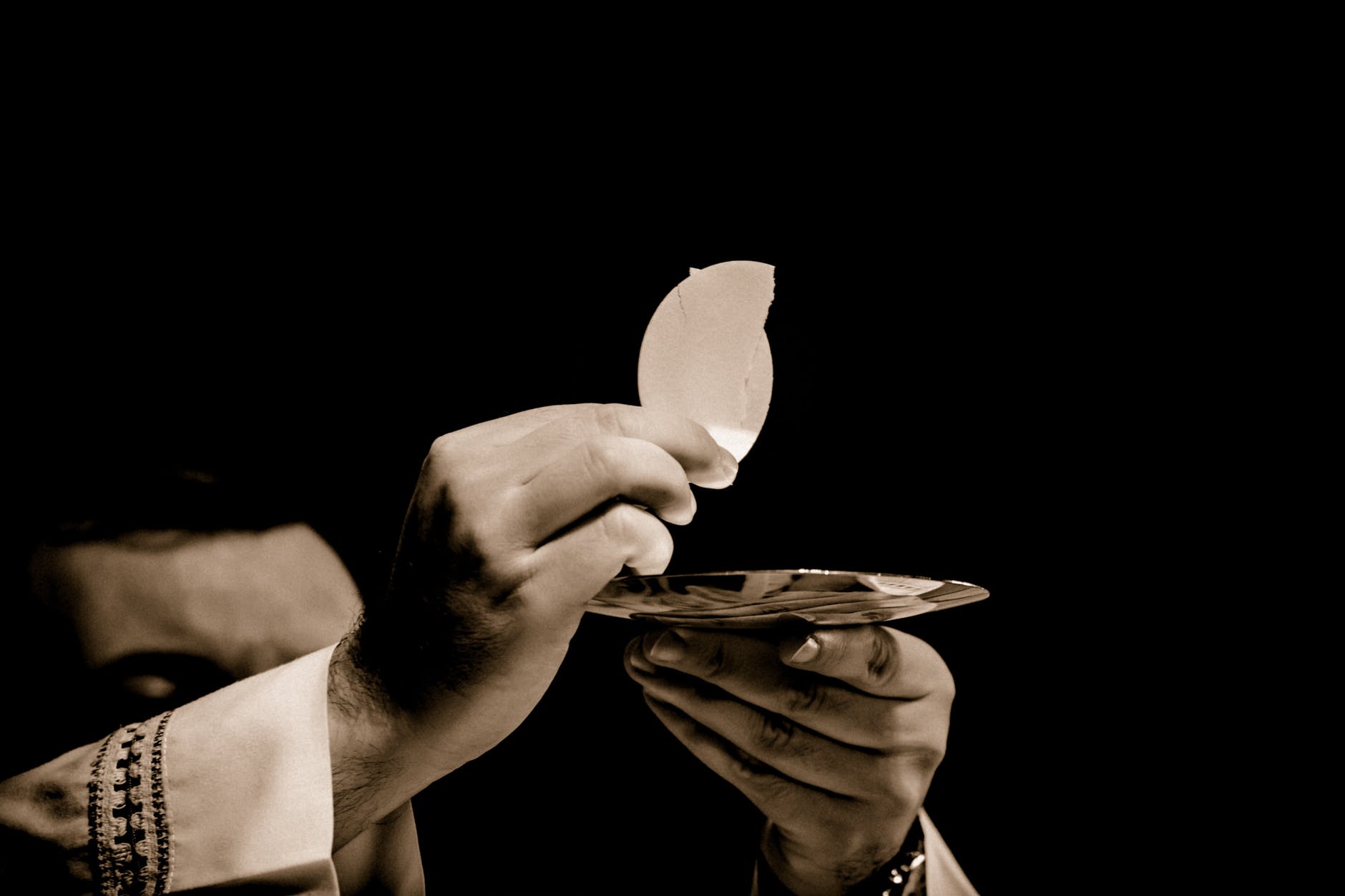
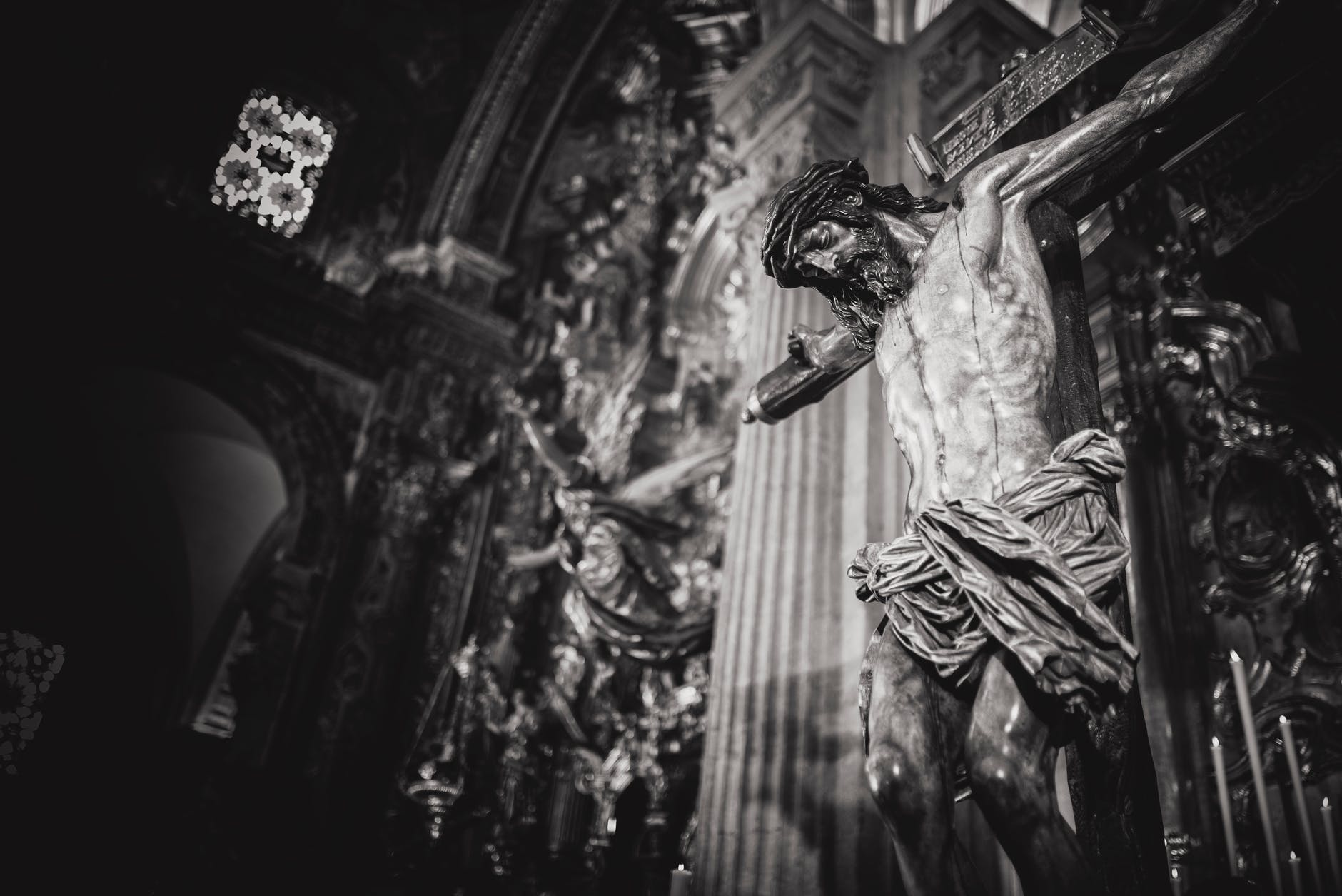
Today is All Soul’s Day, the day we remember and pray for our beloved dead on their journey. It is a day to light candles for them, wash their head stones in the cemetery, to bring flowers. There will be masses and rosaries prayed for them in Catholic cemeteries all over the world today and every country has its own additional customs as well. Around here in some churches people bring pictures of their dead to leave there during the month of November. There will be a Book of the Dead placed near the door at church today so we can write their names in it and we will all pray for them during November at every mass.
Everyone is alive in God and we are still in communion with those who have gone before. I remember my husbands, my grandparents, my mother and my step father, my brother, and my friends who have died every day and I know they are with me. Love is stronger than death. And God is the God of both the living and the dead. All things are alive to him and therefor to me as one who loves him, and to you.
“… the world or life or death, or the present or the future: all belong to you, and you to Christ, and Christ to God. 1 Corinthians 3:22b-23
And Christ is all in all.
God bless you today and all of your loved ones who have died. May the tears you have cried for them be blessed. God holds every one of them close to his heart.
“You have stored my tears in your bottle and counted each of them. ” Psalm 56:8b
*The reason it says God keeps your tears in a bottle is because of the custom at that time to wear a small bottle around your neck when you were in mourning in which you stored your tears.
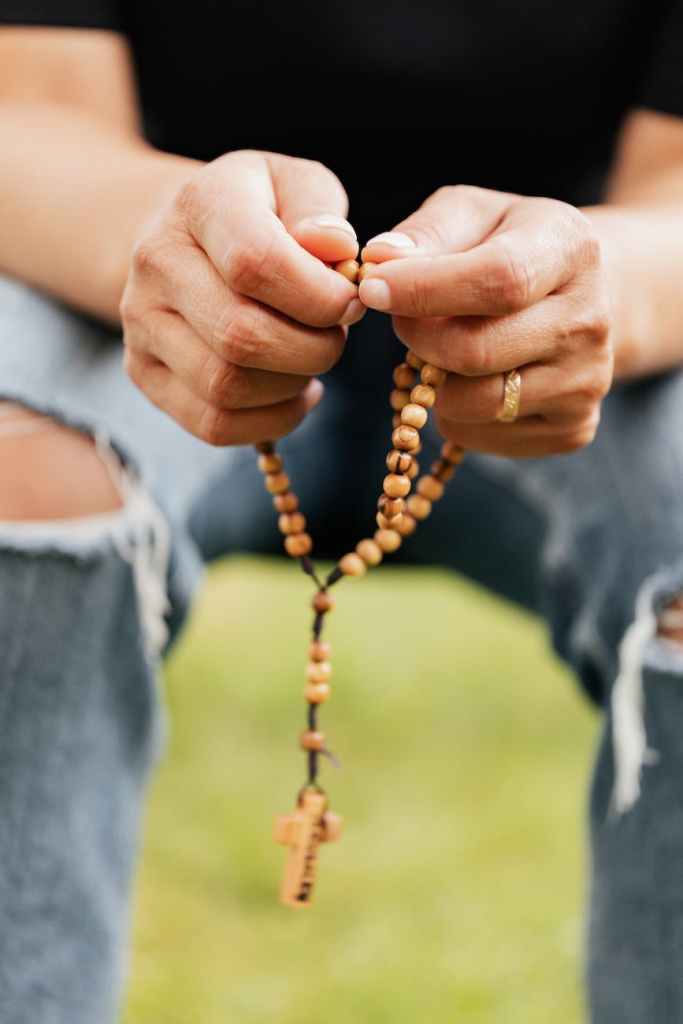
An aspect of the rosary I love is that praying the mysteries, the stories of the lives of Jesus and Mary helps us remember that the Virgin Mary was and is a real human being. Her life, entwined with her Son’s was an actual earthly life just as ours is. That seems like an obvious thing to say about her but do we really think of her as a real person? Sometimes, though our stylized and symbolic depictions of her are pretty, I wish at least sometimes her Immaculate Heart would be drawn or painted more anatomically, like a Frieda Kahlo heart perhaps. I think this type of image would bring us closer to the everyday very real Mary who had a beating human heart in her chest.
Or maybe we could see her represented working hard with sweat under her arms for once!
Don’t you feel closer to her if you imagine her feet in the dirt of her garden or the weave of the rough fibers of her homespun dress, or when you imagine her laughing? I do. I always do.
I want her to be a sister and a friend to me as well as my teacher of prayer, mystical queen and holy mother.
I love the way Our Lady is presented in all of those gorgeous poetic prayers. But I need a hug. I want to put my face on her shoulder and smell that Mary smell.
I want to love Jesus as completely as she does. I want to see everything and everyone through God’s heart as she sees all of us.
I want to pray simply as clear morning light, pondering Jesus in my heart and the law of love continually in all I do, in all Mary and I do together. I want her always with me and I want myself always with her.
I want to practice Marian mindfulness, being always aware of the presence of the Lord and his beauty.
I want to be ready for anything God gives or calls me to, and to “arise with haste” and joy to go and act on it, share it with people and all of life as Mary did and still does from Heaven. I want to help her with her work for the kingdom, wherever she wants to take me. She is always reminding me to listen and to do whatever Jesus tells me.
I want to come home to Mary and cook dinner with her. I want to listen to her concerns for her children and I want to be able to comfort her. I want to walk with her, hear her stories and share her happiness.
I hope to plant more roses in her garden. I’d like to pick some too, and sprinkle the petals over her head and watch her laugh.
It’s so easy to make her smile.
When you think of Mary, when you pray the rosary and let her guide you through the mysteries of Jesus, let her be real to you. It will make all the difference. It will make you smile too.
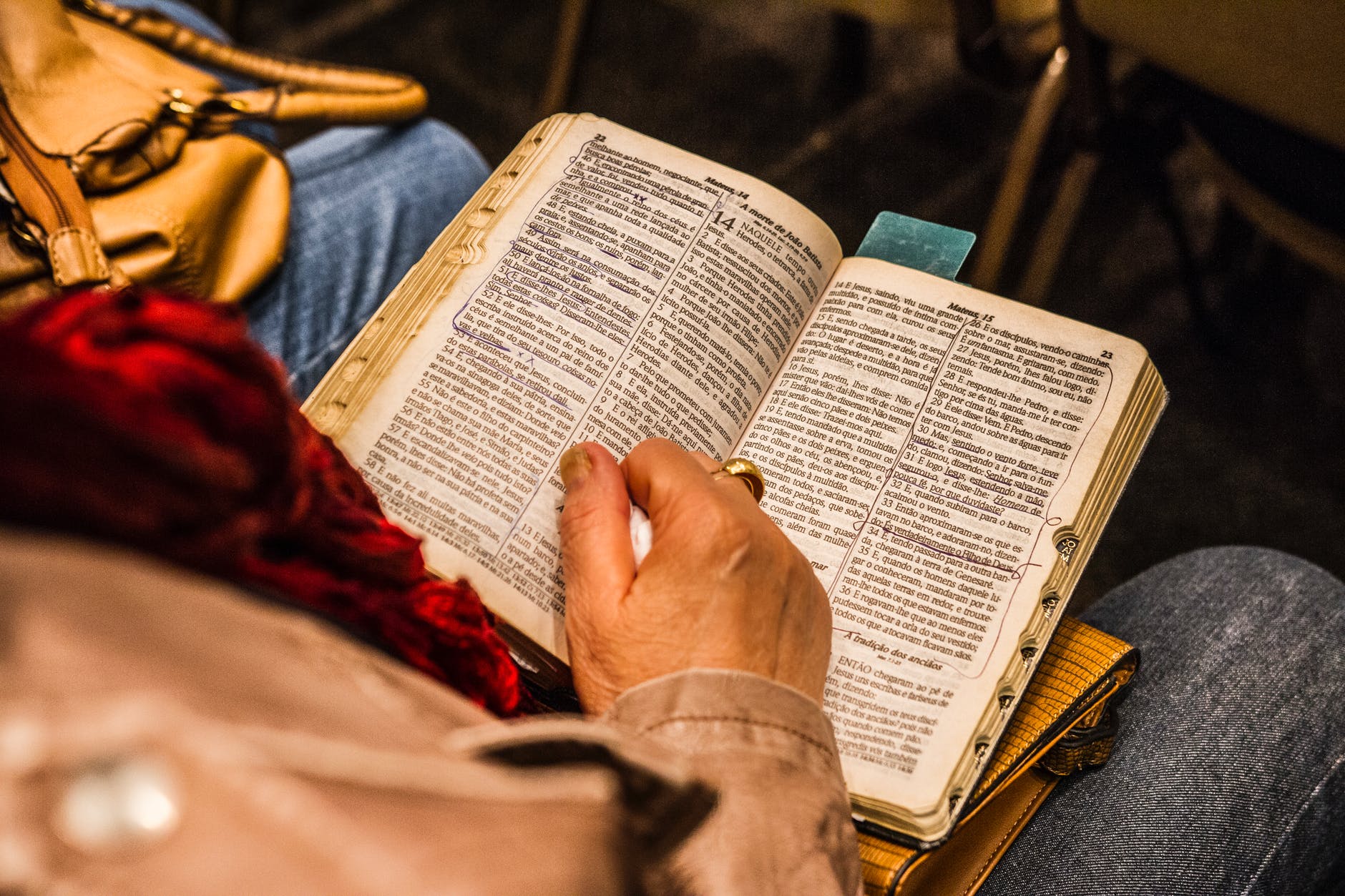
On this the first Sunday of the Word of God, I am thinking about how we can weave Scripture into our daily lives so that it becomes more and more a part of us.
In The Way of the Pilgrim, the Pilgrim (who remains anonymous throughout the story) tells of meeting an army officer who had at one time struggled with hopeless alcoholism. The officer had met a monk who said his own brother had suffered from the same thing but was cured by reading a chapter of the Gospel whenever he felt the urge to drink. It had worked and the brother was 15 years sober. The monk had urged the soldier to try the same and gave him a copy. The soldier said no because this copy was in Old Slavonic and he could’t understand it. He was told, “You may not understand the Word of God, but the devils do, and tremble.”
So the officer tried this and eventually was cured. In his gratitude he had this copy of the Gospels bound with silver and kept it close to his heart under his uniform. He made a vow to God to read a chapter of the Gospel every day for the rest of his life.
If he was too tired to read, he would ask his wife or daughter to read it to him. I want to try the same thing. It would be even better to read a commentary alongside it. If you don’t have anyone to read it to you when you’re tired, audio recordings of the Gospel can help. Photo by Eduardo Braga on Pexels.com
Another great way to put Scripture in your life is to pray the Liturgy of the Hours through the day. Universalis has a free online version and an app as well. Otherwise known as the Divine Office, it is made of of Psalms, prayers, Scriptural Canticles and brief readings arranged in a pleasant orderly way in tune with the theme of the current Church season. It takes me about 10 minutes to pray Morning or Evening Prayer. The other ones are much shorter. This habit puts me in contact with the Word at least three times a day. The Divine Office app has audio of the various hours if you are busy. In a pinch I listen to these in the car.
Start a Bible study with your friends. Lots of people like to go to their parish Bible studies held at church. But a fun way to do Scripture study in a more intimate informal way is to start your own with your friends. This is actually what got my inner circle of friends together in the first place. Years ago we started doing Bible studies as a group. We met once a month rotating whose house we met in. The conversation was friendly but deep and always supportive. Somebody usually brought wine, we had food, coffee, laughter and prayer. We called ourselves “The Pontifical Biblical Institute of the Holy Hippie Sisterhood.” Why shouldn’t it be fun as well as enlightening to study the Bible? No reason at all!
There are so many great Catholic Bible Studies available now. We liked the ones from Turning to God’s Word, and the Come and See Catholic Bible Study on the Wisdom books.
I really like the Navarre Bible series and the Sacra Pagina commentaries. There are so many more that are good. Some are written about certain themes, others about particular books, some are arranged as daily readings.
If you attend daily mass you are hearing holy Scripture and getting a reflection from your pastor every day. Over three years you would hear the entire Bible. Attending Sunday mass regularly you would hear the entire Bible over five years. The mass itself brims over with Scripture in the parts of the mass and the responses and antiphons as well. So go to mass! 🙂
On days I am not going to mass I make sure to read the readings for the day. These are great for choosing a passage for Lectio Divina and keeping the spirit of the Church season as well as connecting with the Church all over the world reflecting on the same readings together. You can find the daily mass readings with the United States Conference of Catholic Bishops. Most parishes print the readings for the week in the Sunday bulletin as well.
I try to memorize various passages of Scripture that are important to me so I can meditate on them or think about them during the day. When I am in line somewhere or filling up at the gas station I can recite them mentally. This is a fruitful practice for me.
At night I sometimes listen to audio of the Scriptures, especially one of the Gospels. I think of it as my bed time story. I have a few different versions so I don’t stop hearing it in a meaningful way. I have one that is more like a performance with actors reading the parts and sound effects and everything. I have others that are more in a quiet reading style by one voice. Sometimes I just want to hear these when I am doing house work or walking.
I like to copy out passages I am working on memorizing, writing them out over and over. The copying itself can be meditative.
I also at times write verses I want to carry in my pocket during the day on small pieces of paper to look at from time to time.
Nobody needs to carry out all of these ideas for all time or every day. I don’t. Some are habits that are helpful for a while at different times. Others have become life habits for me. Some things I stop doing but come back to later.
The bond I had with Yeshi was, I felt, even more deep that one of blood. A blood father is chosen by God to be the parent of a child. As my wife said to me so often, I was chosen for Yeshi by God. The Lord gave me such a powerful attachment to this son of mine I was wild with terror at the angels’ news. I sat up, jumped to my feet, immediately on full alert. My wife was asleep next to him. I tried to wake her gently. I watched as her face hardened when she understood. Quickly she strapped the protesting baby to her back and helped me load the donkey. We had become a good team and she was nearly as strong as a man. In only a few minutes we were on the road.
We were frightened about passing the watchman. But we were both ready for anything, ready to give our lives if we had to. As we drew near I tried to walk calmly and confidently,though I was so taught with fear I ached to break into a run. I knew Mary was frightened too. I heard her trying to slow her breathing. I was conscious of the knife at my belt, praying to God I would not have to use it.
I needn’t have worried. The guy only greeted us and remarked on the fact that we were leaving in the wee hours. I managed to laugh and say that with a newborn we couldn’t sleep anyway so we thought we may as well be our way. We passed without incident.
Fortunately I had been curious about the beautiful maps the wise men had poured over before they left. For some reason I remembered a side rout to Egypt. We needed to avoid the Northern Way most people took. There had been a lot of talk about the Child around Bethlehem, certainly about our fantastical visitors on camels who had followed a star to our son, saying he was a long expected king. We knew if they got a lead Herod’s soldiers could pursue us into Egypt, also part of the Roman Empire.
I walked as fast as I could, leading the donkey with Mary and the baby on its back. We kept our voices low. I tried to squeeze Mary’s foot now and then to reassure her. She was grave and resolute whenever I looked at her. If anything she seemed angry rather than afraid most of the time.
We traveled in this way until we were sure we were well away. Hours after sunrise we hid as best we could behind a large rock and took turns sleeping and keeping watch.
Again we left in the night.
The way was treacherous. I tripped several times on rocks and brush. Finally one trip sent me flying. The pain in my ankles was bad enough I could not walk at all no matter how I tried.
Mary got down from the donkey, running to me. We still had plenty of frankincense and she spread the fragrant oil over my fast swelling ankles. My wounded leg she cleaned with water and then healing myrrh. The oil and ointment helped but not enough for me to walk, even with her help. What to do?
“We have to get you on the donkey and let me walk,” she said. I was opposed.
“Joey,” she insisted, “there is no other way!
After several painful tries, together we pushed, pulled and lifted me onto the little donkey. I felt ashamed that she had to do this. Also, “I’m a big hairy man on a donkey!” I complained. “I look ridiculous!”
She laughed. “You DO look ridiculous.”
“I’m worried about you,” I said. I was. I could feel it in the pit of my stomach.
“Take this,” I said, handing her the knife which she solemnly took. “Remember how to use it if you have to, the way I showed you before?” I asked her. She nodded.
“OK now make yourself useful,” she said, handing me the baby. I could see his eyes shining in the dark. I pressed him to me.
We went ahead bravely.
She insisted on stopping now and then to put more oil and ointment on my injuries. She tried to joke with me to make me feel better. I told her she was my warrior queen.
We were scared but we trusted God. There was nothing else to do. We tried to encourage one another. We had a saying together: “God is it.” Our lives were for God. “Everything will be OK,” we said to one another, “and even if it’s not OK, it will be OK.”
We had to stop to nurse and change the baby every few hours. Soon we would need supplies. We had gold from the wise men. We knew that a poor young couple trying to buy food with foreign gold was going to cause a stir but it couldn’t be helped.
We continued to travel by night, exhausted and afraid. Our minds started to fill with every possible thought. We talked about King Herod. How could any grown man, a king no less, be so insecure about his power, so angry, hateful and afraid, he would seek to harm a child? Why would anyone obey such a man?
The wise men had told us they were warned in a dream that Herod had become hostile about their mission, and that they must leave by another way themselves. How could anyone fear the signs of God and fight God himself instead of being joyful that God was coming to his people? What kind of person dares to fight God?
“Satan, “ Mary whispered with certainty. “He is possessed by Satan.”
At one point we were trudging along on a seemingly endless night and I began to worry about my sanity.
“Mary?” I whispered tentatively. “I see them too,” she said.
All around us we saw fellow travelers, people of all colors in various costume as if they were from far away or from another age. They carried children, belongings, what food and water they could. They too were fleeing something, trying to protect their children; frightened, determined, doing their best to trust in God. Some of them died or fell to robbers along the way. Others pressed on because they had no choice.
“Mary,” I said after an awed silence between us, “I think God is trying to tell us something.”
She nodded in understanding.
Even after the vision ended we talked about it for a long time.
We concluded that God was showing us peoples of the ages who would be refugees like ourselves.
We resolved together that in time to come, we would always be with these people in whatever way God allowed us to be. We would walk with them, ease their suffering, protect them, pray for them, be their advocates before the throne of God. We would see their children as our own.
There would always be mad kings, we knew, until the age of the Lord would come fully.
Eventually my ankles were in good enough shape I was able to relieve Mary, and take that knife back.
The night we were sure we were in Egypt their was a beautiful full moon. Mary was happy. She jumped off the donkey and danced, holding Yeshi high, singing,
“Lift up your heads, O gates;
be lifted, you ancient portals,
that the king of glory may enter.
Who is this king of glory?
The LORD, strong and mighty,
the LORD, mighty in war.
Lift up your heads, O gates;
rise up, you ancient portals,
that the king of glory may enter.
Who is this king of glory?
The LORD of hosts, he is the king of glory!”
Let’s talk about the sexual abuse crisis in the Church again.
I don’t see anything changing.
I don’t see survivors of abuse being put first. I hear innocuous (at best) statements from the hierarchy that sound as if they consulted lawyers before they composed them. I have even heard murmurs that the Church is being persecuted. I am ashamed to say I have even heard this from the pulpit.
I have heard some of the laity blaming the abuse crisis on whatever their pet issue is with the Church.
As a survivor of child rape and various types of sexual abuse from different people throughout my childhood and adolescence, and after years of therapy, I feel I have some authority on this subject though my abuse was not Church related. It is not gay people priest or lay that caused this. It is not celibacy. It is not the lack of female power in the Church. As we are finding out, nuns have also sexually abused children as well, and nuns have been raped and forced into abortion.
The origin of sexual abuse is the sickness of the offender. Not everyone in power becomes a sex offender just like everyone at a party doesn’t become dangerously drunk. There are s lot of things going into this.
I have learned that when there is sexual abuse, similar to someone with an addiction, the problem becomes a family “disease.” A certain configuration happens in the family. There are roles everyone starts playing in order not to speak truth about the problem or to cover it up to protect the whole (or the image of the whole.) Everyone begins to protect the addict or abuser. Anyone who is evidence of the problem or tries to deal with it in an honest way will be silenced in one way or another. The Church is a family. We are sick with this problem.
The Bishops have played their roles and protected the whole (or so they thought) at the expense of the victims and really, in the end, at the expense of the whole.
Some things I think we need to deal with are first figure out how to protect children, seminarians, and nuns in a way that does not just please lawyers or cover for us, but really does something.
Then we need to deal with the enablers of abuse and make sure there is no more of that through education and support perhaps. Maybe we need to bring in other people for them to be accountable to about this rather than just one another. Obviously that is too hard for the bishops to do. They have tried and massively failed again and again. I am not an expert on fixing this problem. I mostly know how not to fix it.
It seems to me we then need to look at the abusers themselves. What’s going on with these people? What makes them do that? What needs to happen to permanently stop their behavior? They need to be stopped. We have to protect others. I also believe the Church is about redemption. What needs to be done for their healing? Once they are removed from access to children and the vulnerable, and they are willing to take responsibility, face just consequences, pursue treatment they should be helped to redeem their lives somehow though they should never be around children again if they have abused a child. If they are not helped in an effective way to heal they will continue to find ways to offend as surely as an alcoholic will find ways to drink.
As a Catholic abuse survivor I feel responsible to speak up. Also people should know it is hard for me (and I can only imagine how hard it is for survivors of clergy sexual abuse) to hear about all this without being triggered into my P.T.S.D.
People say ridiculous things on social media about sexual abuse and they don’t know what they are talking about and how much their attitude hurts survivors to hear.
I have started not to want to see Bishops and Cardinals in their regalia. Seeing their black robes, red hats and big crosses, or their crosiers and miters makes me feel nauseated now even though there are three Bishops I know personally and love dearly. It’s not them personally- I feel better the ones I know are there actually. The nausea is what has happened and how I don’t see anything changing. “Put it all away,” I think.”Why not wear the simple robes of poor Friars as a sign of repentance?”
The clothes they now wear are signs of status and power that just seem so inappropriate right now. I used to like the outfits because they were historic. I don’t like them anymore.
As I have said before all this behavior of secrecy and self/institutional protection even when it comes to how they have at times treated victims of abuse like enemies is very typical also of a family or any group in which the sickness of sexual abuse has or is occurring. This is what humans do when there is sexual abuse. They protect themselves even at the expense of the abused. They protect the group. They protect the perpetrators. It happened to me and it’s happening to the survivors of clerical abuse too.
I have read about and spoken to clergy abuse survivors who met with their Bishops and came away really upset, feeling unheard and uncared for and that nothing has or will change. “Come forward,” they say, seeming to have no idea how hard that is for people like us. Most of us have had more than enough of people who don’t listen and don’t help. Sometimes I think that part of my experience has been worse than the abuse itself. It’s re-traumatizing.
The hierarchy does not seem to understand how angry the laity is, either. We want to see Jesus purifying the Temple with a whip cord and overturning some tables. Now. Now.
We don’t see that. Don’t they understand? People are losing their faith. People are leaving the Church they love.
I am deeply Catholic. I am an obedient daughter of the Church (though obviously not perfect) and I am having thoughts like, “How dare you? Why should we listen to y’all anymore? How can you tell US what to do? How can you ask us for money?”
I have to drag myself to mass sometimes. I don’t want to leave Jesus because of Judas. I believe the Church is true. So do so many of us. What are we supposed to do? This is our home, and the Eucharist is at the center of our Catholic life. I refuse to leave. I never will.
I don’t know what to do with all this. I don’t want to read this stuff in the news anymore. It literally makes me sick.
I resent how I had to stop being a Eucharistic Minister because I can’t handle the classes they make us take about sexual abuse in order to serve. This rule is well meaning I know. But….why do WE have to take those classes? YOU take them!
I don’t, as a survivor, think classes would have had any effect on my abusers or their enablers.
After years of inner struggle about those classes I made a call about it. It was hard for me to explain my problem but I got the Diocese to let me take an alternative one- on- one class with a kindly gentle person. She didn’t even hardly mention abuse to me, just the ethics guidelines. But I broke out in hives immediately afterward and felt terrible emotionally for days.
I don’t think those classes help. I worry about other survivors taking them, especially those who don’t realize yet the reality of what happened to them and aren’t ready to deal with it. Those in charge should have trained psychologists available in case someone has a breakdown.
Something like this happened to me before in a different way early in my process when I was young. I was not ready at all. I went home suicidal and feeling like cutting myself. What business do they have risking traumatizing abuse survivors anyway? It is cruel and irresponsible.
I have seen nothing from our leaders that gives me any hope of any meaningful change. I want to see them in sackcloth and ashes. I don’t see that.
My socioeconomic status is fairly low. I do not wield worldly power.
I have been praying, though. Praying and starting to avoid news about the crisis for now.
Here’s what I have prayerfully come up with, and I hope some of you will join me. Starting on the Memorial of Our Lady of Sorrows, September 15, I am going to start wearing black to mass, every mass I attend. I will wear black next to Our Lady whose children have been crucified and continue to be crucified.
I am an obedient and loving daughter of the Church and I mean no disrespect. But I am in mourning with Our Lady. I want Judas to see and repent. I want to never forget and for no one to forget the victims. I want children and nuns protected. I want actual change. I want to see humility and repentance not the protection of power.
#Wearblacktomass in honor of Our Lady’s tears. When they see us they will see her and all her wounded children.
Ascension Day is traditionally celebrated today in the Church, and it is also considered the first day of the first novena, as Mary and the Disciples remained in Jerusalem to pray for nine days for the coming of the promised Holy Spirit. This is the heart of our novena tradition.
A novena can be a special time between God and the praying soul, a pilgrimage of transformation and insight, as well as a way of “storming heaven,” with a petition. A novena prayed with faith is also a time of expectant waiting.
Whatever I am praying for, I try to ask with an open heart, one that is actively seeking God’s will.
Sometimes God does not give me what I thought I wanted when I began. Sometimes he changes me instead.
Sometimes I begin to get a sense that I should ask for something different than the petition I started with. My prayer seems to be redirected. Maybe this is so that I might pray with the Holy Spirit rather than just out of my own will.
I know, dearest Mother, that you want me to seek God’s holy Will concerning my request. If what I ask for should not be granted, pray that I may receive that which will be of greater benefit to my soul, [and the souls for whom I pray.] ~ from the Novena to Our Lady of the Rosary
Other times, my single-mindedness of purpose grows and I continue with my petition, like the “persistent widow” I am.
When I begin a novena, I am not sure what God will do but I know he will do something!
I try to be attentive to what God may want to say to me during this time of focussed, dedicated prayer.
The divine synchronicity interwoven with daily life reminds me that heaven is near, and that God is always speaking.
The symbolic meaning of having a dove land on the hood of my car and look through the windshield at me while I am praying at a red light may seem hard to miss. But it is possible to think nothing of it. I want to notice and make the connection.
If I dedicate and consecrate these nine days of prayer to cultivating my awareness of God’s voice speaking through life itself as it happens, a novena can be a time of becoming attuned to Holy Spirit and wonder.
If I am praying a novena to a particular saint, St. Therese, let us say, I try to find ways to weave her presence into my life. I may read about her or read from her writings during that time. I will talk to her as I go about my day, ask her to join me in my work and prayers.
I might do small acts of service in her honor; especially the kind she liked during her life on earth, the sneaky kind.
I may make use of imaginative prayer to go into the situation I am praying about, letting St. Therese lead me in bringing God’s light into darkness, to let her show me something, or to visually surround the people involved, with God’s love, with hers, and with mine.
I often ask friends or family to join me in praying a novena. Jesus encouraged us to join together when we ask for something, and it encourages me to know that someone I love is praying along with me.
I like to to begin a novena by going to Confession.
It always seems to me that I can “hear” God better after Confession. The grace released into my life from the sacrament enlivens my prayer.
At mass I may offer my reception of Holy Communion for the person or intentions I am praying for.
I try to drop in at church and visit Jesus in the Blessed Sacrament more often during my novena too, even if only for a moment. I can bring all my concerns there to him for healing; setting them at the foot of his alter for him to arrange in divine order. In his Eucharistic presence, my intentions are blessed, and my troubled heart can rest.
Sometimes I plan a series of nine Scripture verses that I think correspond well with my novena, one for each day to reflect on during the day. Bringing God’s Holy Word into my prayer deepens and interconnects the experience. “God’s word is alive.” Also it never returns to God void but always does what he sends it to do. I trust the word to act on my heart and to return to the Lord full.
I usually give up something at least for a day, or for the duration of the novena. This may be something small, like sugar in my coffee, listening to music in the car, or my favorite drink. St. Therese said her greatest weapons were “prayer and sacrifice.” Fasting and prayer are well established practices for us in our faith when we are commending a situation to God.
Right now I am keeping a novena journal. In it I am recording my prayers, thoughts, insights, Scripture passages and events that stand out to me during this time. It seems to be a fruitful and helpful way to pray, reflect, and notice how God is working in my life through my novena. I look forward to reading it through at the end.
Often when we pray a novena, it is because we are suffering in some way. Part of praying a novena meaningfully can be offering our suffering in union with the suffering of Jesus, that it may be redemptive for others, especially those for whom we pray. St. Therese once offered her difficult walk across the infirmary when she was very ill, for missionaries.
A novena can be a transforming experience when lived and prayed deeply; both for ourselves and those around us.
I like to give thanks at the end of a novena, for all God has done, is doing, and will do in response to my petition, whether or not it looks like my petition was, “granted.” I know that God will only give me what is right and at the right time.
His love never fails; nor does its power to change everything, anything, anytime.
I wanted Santa to be real to my daughters forever, not only when they were small, but always. I accomplished this by teaching them about the original Santa Klaus, St. Nicholas, Friend of Children and of the Poor, Master of Sneaky Good Deeds.
As a Saint he is forever accessible to us who believe. Very useful in this Santa catechesis was the little movie, Nicholas, the Boy Who Became Santa.* My girls loved it and they watched it over and over and so did the neighborhood kids who were always at our house. The movie shows the boy Nicholas giving away his things to the poor, buying slaves their freedom, sneaking food and gifts to children and the poor in the middle of the night, always remaining anonymous.
St. Nicholas, who had an intense devotion to the Christ Child and a special love for children, became a bishop in what is now Turkey. He was persecuted by the Romans who burned down his church and arrested him. He spent years in prison, even sharing his bread and water with his fellow prisoners who weren’t particularly nice to him. Eventually he was set free and was able to re-join his fellow Christians.
I incorporated devotion to St. Nicholas into our family celebration of Advent and Christmas, having the girls write him a letter on his feast day, Dec. 6 ( a letter in return for which, he always left some simple treats, some change,and possibly some glitter.) They would write to St. Nicholas about what they wanted him to pray for them about in their lives. I always had them include three virtues they wanted him to obtain from God for them. (This is where The Family Virtues Guide came in handy.)** Some of these letters the girls wrote were very beautiful and of course some were hilarious!
Shawn and Kids 12/00
During the course of Advent and the Christmas season, we would attempt to imitate St. Nicholas by doing sneaky good deeds as much as we could. One year I remember we put a bunch of Christmas roses in our red wagon and stayed up late, going out to leave roses and glitter or some toys for the kids at each house on our street. As people did in honor of St. Nicholas after his death, we sometimes left a note that said, “St. Nicholas.” As you can imagine, this was great fun.
Of particularly fond memory is a Christmas we drove around to houses
where people struggled with poverty. I remember how we silently giggled as we sprinkled glitter all over porches, leaving presents and food and red rose petals. We laughed about it on the way home in the car.
The girls understood that in this way we were being helpers of St. Nicholas just like anybody is when they give sneaky gifts in honor of Jesus’ birthday the way St. Nicholas did. So my kids transitioned slowly to understanding that the adults in their family did this same thing for them each Christmas… as helpers of St. Nicholas who loved the Christ child, loved children and the poor. So that’s how it all worked! However he stayed real to them as a Saint and a friend. The legend could grow up with the kids.
This was a very good way to learn what Christmas gifts are about, and who Santa really is. Sometimes there were challenges, however.
One Christmas morning, my wide eyed little girls ran in the back door yelling, “MAMA! St. Nicolas SMOKES! And he DRINKS, TOO!”
My dad and brother had been over in the middle of the night, helping St. Nicholas with a trampoline in the back yard for the girls. Apparently they had left cigarette butts and a few beer bottles around as well.
Looking at my daughters, I tried not to laugh. No laughing. I had to think.
I thought of several possible answers in the midst of their shocked clamor.
It was the helpers? Should I bring elves into this? It’s Christmas, give Santa a break? It was Uncle Mark and Grandaddy? (No, not that, not yet.)
I looked down at their horrified little faces and shrugged.
“Well! Now we know what to leave St. Nicholas on Christmas Eve from now on instead of the hot coco and cookies. Next time we will leave him cigarettes and a beer!”